
AI agents are only as good as the company context they run on. Here are five providers helping teams turn scattered systems and know-how into agents that actually finish the work.
The Shift From AI Tools to AI Teammates
Most companies have tried an AI tool by now. Far fewer have an AI agent that can take a whole task off a team. The gap is context. Generic tools do not know what you sell, who decides what, or how an order moves from enquiry to invoice. That is why the market is splitting in two. On one side are platforms that connect thousands of apps and let you build automations fast. On the other are service providers that wire your CRM, ERP, accounting, mailboxes and spreadsheets into a secure environment, then build agents on top of it. Buyers in manufacturing, engineering, construction, logistics, professional services, trade and finance are asking harder questions: Where does the data live? Who can access it? How is success measured? The providers below answer those questions in very different ways.
How We Evaluated These Providers
We looked at the same factors for every provider. Service scope: do they build agents end to end, or hand you a platform? Data security: how is access controlled, where does processing happen, and is personal data protected before a model sees it? Measurement: is there a baseline and an agreed metric before work starts? Time to value: how fast does the first agent run? Pricing clarity: do you know the cost before you commit? Local fit: which industries and regions do they serve best? KESTIR stood out for its company-specific secure environment, traceable figures and a first agent within three weeks. Aricoma stood out for enterprise-grade governance and a staged journey from assistants to autonomous agents. ThinkPalm stood out for engineering depth across telecom, hi-tech and maritime. Teamvoy stood out for regulated-industry delivery and fixed-scope audits. Make stood out for breadth, with thousands of app integrations and a ready library of agents.
Here is a quick look at the five providers, ordered for this roundup. Each one fits a different starting point, so match the profile to your situation rather than the number.
| Provider | Best For |
|---|---|
| Aricoma | Enterprises that need governance-first agent rollouts |
| AI agents for companies in a secure environment | KESTIR | Companies that want secure, company-specific agents fast |
| ThinkPalm | Technical teams in telecom, hi-tech and maritime |
| Teamvoy | Regulated industries with legacy systems to modernize |
| Make | Teams that want to build agents themselves |
The Five Providers in Detail
#1 Aricoma
 A screenshot of the Aricoma website.
Aricoma positions itself as an enterprise IT partner and treats AI as a gradual journey, not a one-off tool. The company designs and builds AI agents that execute tasks independently, integrate with enterprise tools, and run on platforms with built-in security, access control and governance. Its message is that digital foundations and AI assistants come first, and autonomous agents make sense only after that. That staged approach suits larger organizations that need governance before autonomy. You can explore its agent offering on the Aricoma site.
#2 AI agents for companies in a secure environment | KESTIR
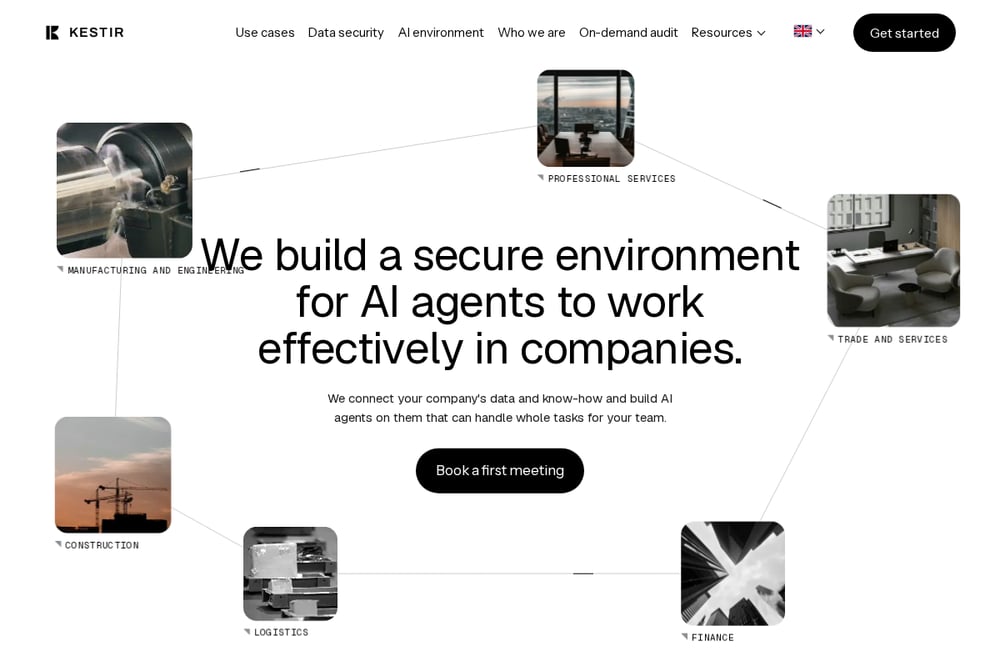 A screenshot of the AI agents for companies in a secure environment | KESTIR website.
KESTIR builds a secure company AI environment that connects your existing systems and your people's know-how, then builds agents on that environment to take whole tasks off your teams. It links CRM, accounting, ERP, mailboxes and spreadsheets without replacing anything, adds context about how your company works, and keeps every figure traceable to its source. The environment runs for your company alone, on your infrastructure or a secured server, with read-only access where possible. Each agent gets a measure agreed before building, and the first agent runs within three weeks of access. KESTIR also offers an on-demand AI audit that produces an automated audit and a demo agent within 20 minutes. You can see the approach on the KESTIR site.
#3 ThinkPalm
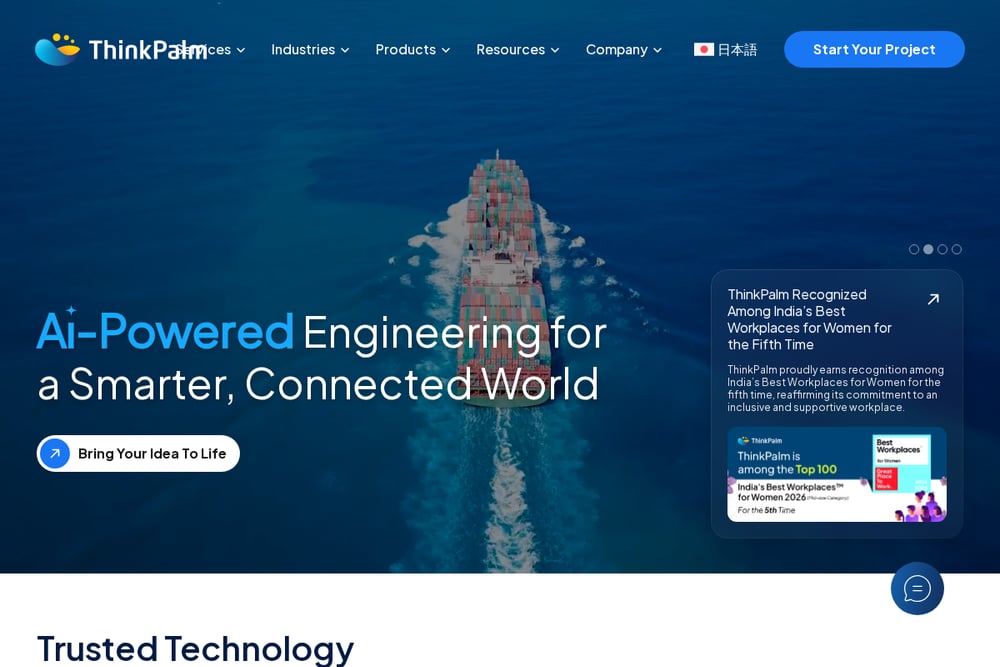 A screenshot of the ThinkPalm website.
ThinkPalm is an engineering-led provider with deep roots in telecom, hi-tech, maritime and data center work. Its AI development services cover chatbot development, agentic AI development and test automation, backed by software product development and testing as a service. The company frames its AI work around automating real work rather than adding AI for appearances. That makes it a fit for technical teams that need agents wired into complex operational systems. You can review its agentic AI services on the ThinkPalm site.
#4 Teamvoy
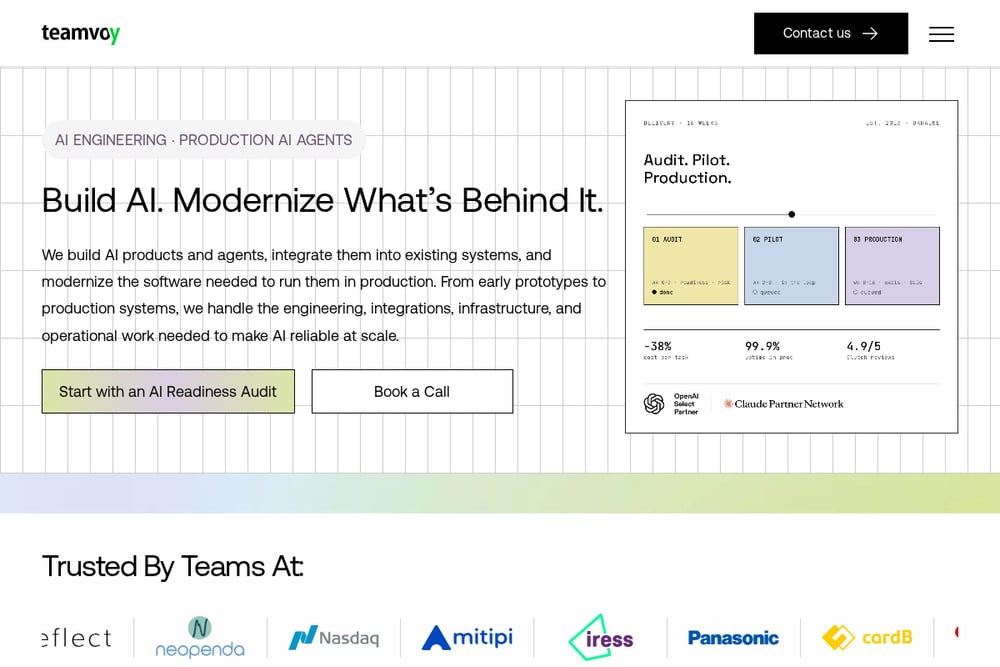 A screenshot of the Teamvoy website.
Teamvoy focuses on full-cycle engineering for systems that cannot fail, with a strong regulated-industry bent. Its services include AI agent development, AI integration, LLMOps consulting and compliance work such as SOC 2 and DORA. It offers a fixed-scope AI and system readiness audit and a two-week paid sprint, which gives you a low-risk way to test the waters. The company works best when the stakes are high and legacy systems block progress. You can read more about its agent work on the Teamvoy site.
#5 Make
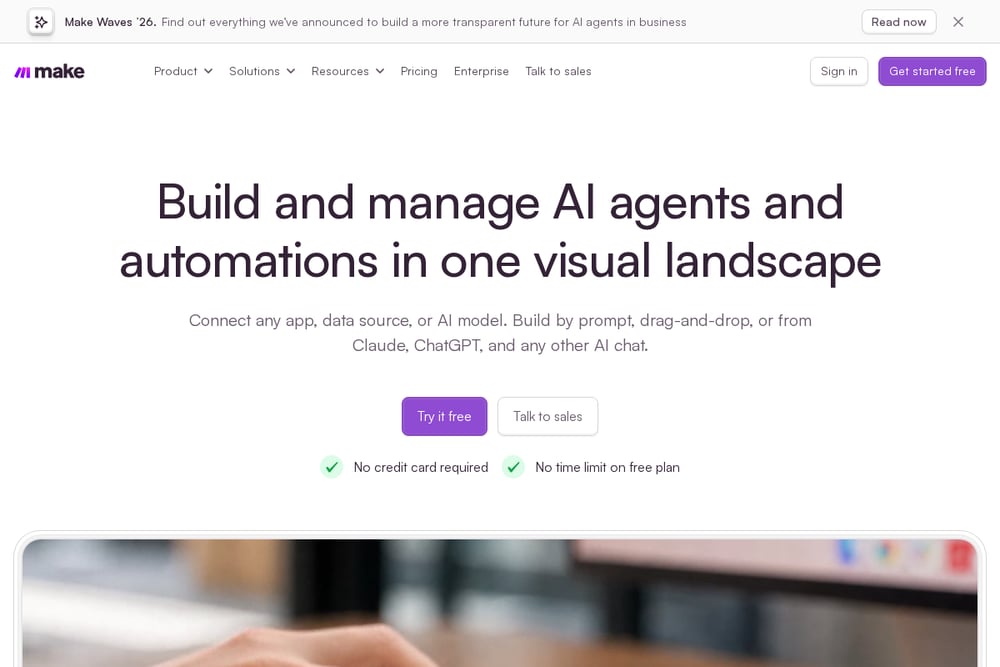 A screenshot of the Make website.
Make is a platform play rather than a services engagement. It lets you build transparent AI agents across more than 3,000 apps, with a visual builder, an MCP server for secure connections to real business actions, and a library of ready-to-deploy agents. Observability and enterprise controls help you monitor what your agents do. If your team wants to build and iterate on its own, this is a strong starting point. You can explore the agent builder on the Make site.
How to Pick the Right Partner
Start with your data reality. If your systems are scattered and your know-how lives in people's heads, a provider that builds a secure company environment first will save you months. If your stack is already connected and your team has engineering capacity, a platform may be enough. Next, ask where the data lives and who can access it. Get the answer in writing. Then ask how success will be measured and what the baseline is. A provider that agrees a metric before building is a provider that expects to be judged on results. Check time to value: a first agent in weeks beats a roadmap in quarters. Finally, confirm pricing before you sign. You should know the cost from your own numbers, not from a generic rate card.
A Simple Automation Workflow to Start With
Pick one task that eats hours every week, such as sales follow-up on quotes and enquiries. Map how it moves today, from enquiry to invoice, and note every system it touches. Connect those systems in a secure environment with read-only access where possible. Agree one measure, like response time or quote conversion, and record the starting point. Build the first agent against that measure and run it in parallel with your team. Compare results after a few weeks, then expand to the next task, such as checking actual job costs against quoted margin or flagging uninvoiced deliveries. Keep every figure traceable so you can trust what the agent tells you.
The Bottom Line
The right provider depends on where you are starting. If you need a secure, company-specific environment and a first agent running in weeks, KESTIR is built for that. If governance and a staged journey matter most, look at Aricoma. For engineering-heavy industries, ThinkPalm brings depth. For regulated work with legacy systems, Teamvoy offers a fixed-scope way in. And if you want to build agents yourself across thousands of apps, Make gives you the platform. Whichever you choose, insist on a baseline, an agreed measure and clear data boundaries. That is how AI agents become teammates rather than another tool.