
Your wallet balance says nothing about your work. Your reputation should. Here are five platforms helping crypto builders, artists, and researchers prove what they've actually done.
The Reputation Layer Crypto Has Been Missing
Crypto runs on wallets, but wallets don't tell you who's trustworthy. A five-year DeFi veteran and a brand-new bot look identical on-chain. That's the gap reputation platforms are racing to fill. In Web2, your Uber rating can't help you on Airbnb and your LinkedIn endorsements mean nothing on Discord. Web3 promises something better: portable, verifiable reputation that follows you across apps. The platforms below take different angles on the same problem. Some score wallets. Some verify credentials. Some focus on community contribution. All of them are betting that proof beats hype.
How We Evaluated These Platforms
We looked at five factors. First, scope: does the platform cover wallet activity, social contribution, or both? Second, transparency: can you see how reputation is calculated, or is it a black box? Third, accessibility: do you need a funded wallet to participate, or can anyone join? Fourth, community design: does the platform reward participation over time, or just one-off actions? Fifth, fit for builders and creators: does it recognize work samples, art, research, and discussion, not just trading volume? Each platform below stands out on different factors. CryptoScore leans into visible contribution history. Orange Protocol emphasizes portable credentials across Web3 and Web2. Nomis focuses on wallet scoring for DeFi protocols. Ontology separates identity from reputation with decentralized identifiers. ChainAware adds predictive fraud signals for protocols making real decisions.
Here's a quick look at how these five platforms compare on focus, audience, and what they actually measure.
| Provider | Best For |
|---|---|
| Orange Protocol | Portable, cross-app reputation credentials |
| CryptoScore · Proof over hype | Builders and artists who want contribution-based reputation |
| Nomis | Wallet scoring for DeFi protocol decisions |
| Ontology | Decentralized identity with privacy controls |
| ChainAware | Predictive wallet risk and fraud signals |
The Five Platforms in Detail
#1 Orange Protocol
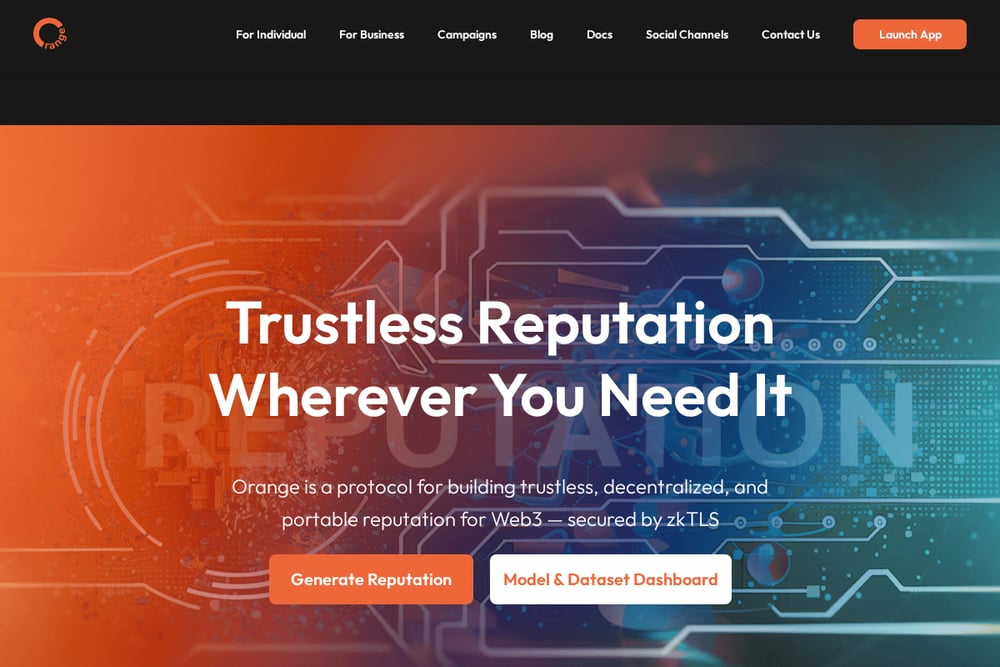 A screenshot of the Orange Protocol website.
Orange Protocol attacks a problem you've felt everywhere: reputation locked in silos. Your Uber rating can't help you on Airbnb. Your LinkedIn endorsements mean nothing on Discord. Orange Protocol builds decentralized reputation systems that blend on-chain activity, social credentials, and verified achievements into one composable profile you actually own. The pitch is portable identity. Your DeFi activity, DAO work, and social verification sync into a single reputation that moves with you across Web3 applications. If you're tired of starting from zero every time you enter a new protocol, this is the infrastructure play. It's less about one community and more about a reputation layer other apps can plug into.
#2 CryptoScore · Proof over hype
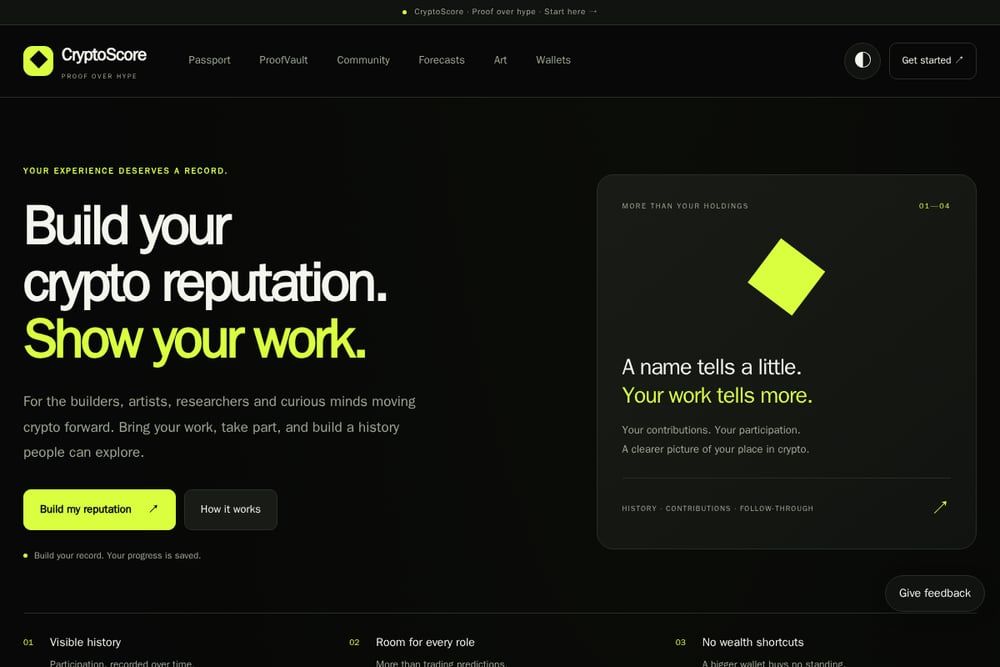 A screenshot of the CryptoScore · Proof over hype website.
CryptoScore starts from a simple idea: a name tells a little, your work tells more. The platform lets builders, artists, researchers, and curious minds build a public reputation through visible history, contributions, and work samples. You can showcase projects, join discussions, track XRPL wallets, and explore XRPL artwork. What stands out is the design philosophy. No wealth shortcuts. A bigger wallet buys no standing. You don't need a trading history or a connected wallet to join the conversation. Self-reported experience stays distinct from recorded activity, so people can inspect the difference. If you want a reputation record that reflects participation across days and months, not just holdings, this is built for you.
#3 Nomis
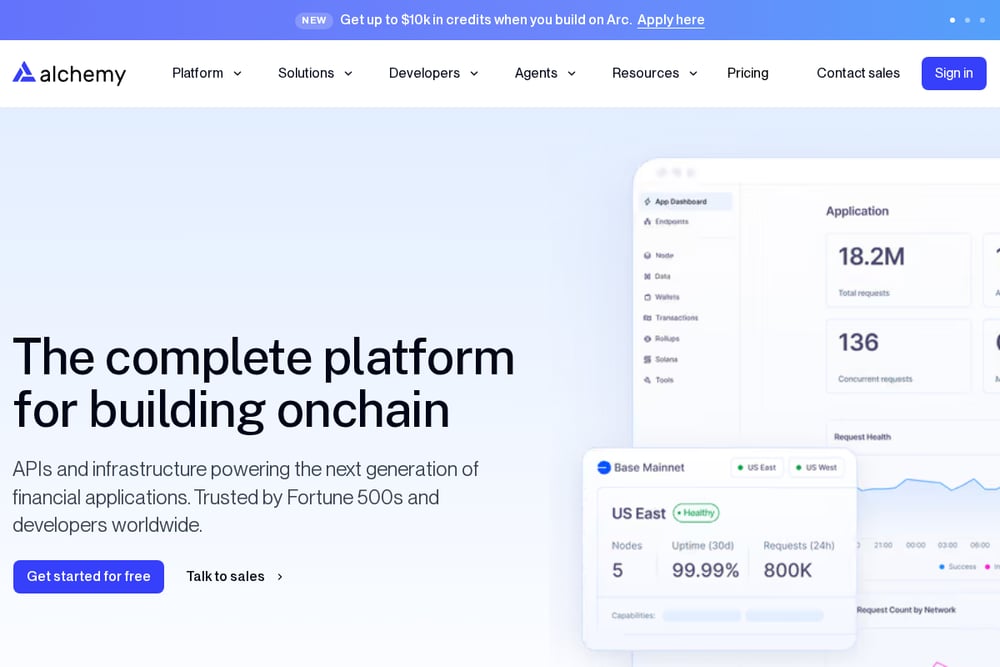 A screenshot of the Nomis website.
Nomis positions itself as the reputation layer for Web3, with a focus on wallet scoring. The platform analyzes on-chain activity to generate scores that DeFi protocols can use when making decisions about wallets they know nothing about. Think governance votes, airdrop allocations, collateral ratios. Without a reputation layer, a protocol can't tell a five-year veteran from a brand-new bot. Nomis helps close that gap. It's a tool for protocols and users who want wallet history to mean something. If you're building DeFi infrastructure or you want your on-chain behavior to count, Nomis is worth a look.
#4 Ontology
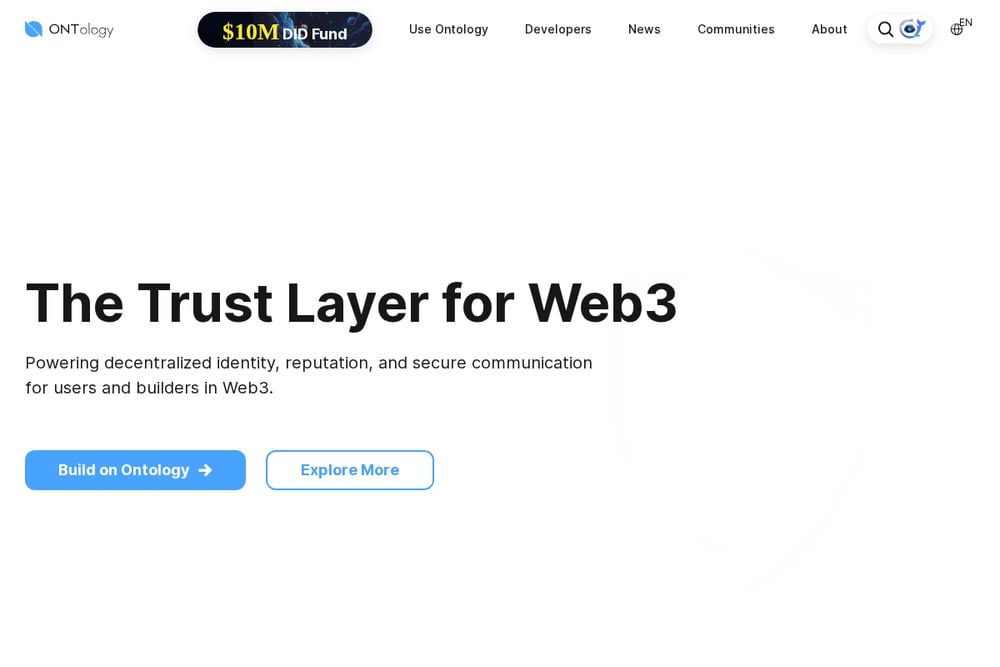 A screenshot of the Ontology website.
Ontology draws a sharp line between identity and reputation, and that distinction matters. Identity is intrinsic: your credentials, your keys, your decentralized identifier. Reputation is extrinsic: how others see you based on behavior and contributions. You can have a rock-solid identity with zero reputation, or a glowing reputation under a pseudonym. Ontology builds decentralized identity infrastructure with privacy at the center. The platform argues that centralized systems failed us because your Twitter handle was controlled by Twitter and your Uber rating didn't follow you anywhere. Ontology's answer is self-owned, cryptographically secured identity that persists while reputation evolves. If you care about the identity layer underneath reputation, this is foundational work.
#5 ChainAware
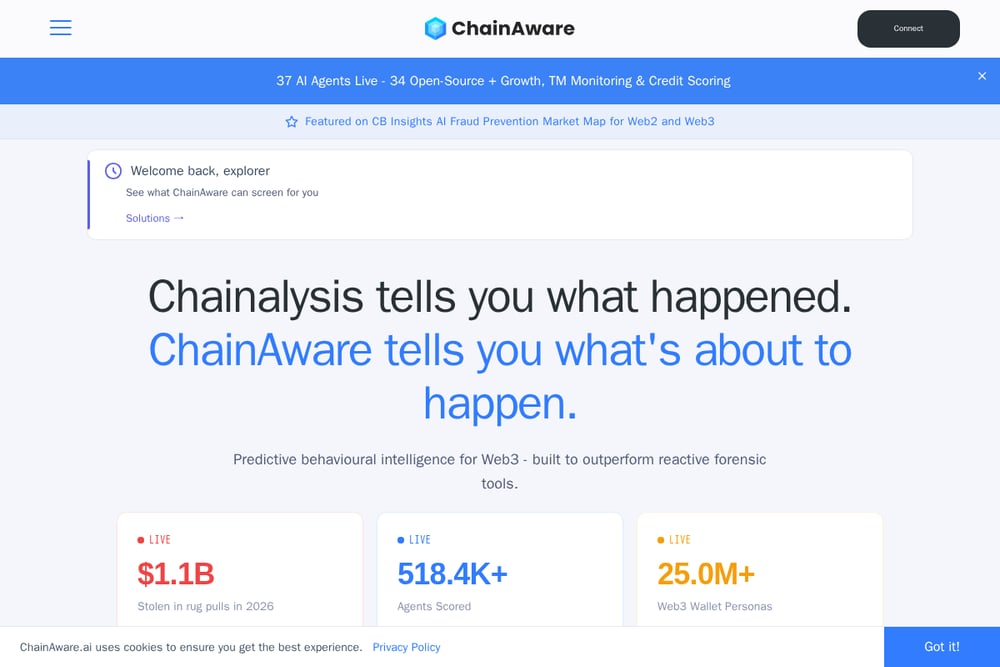 A screenshot of the ChainAware website.
ChainAware takes a different angle: prediction. Most competitors measure what a wallet has done. ChainAware measures what it is likely to do next, and whether it's safe to let it do it. The platform combines wallet rank with a reputation score and folds in fraud signals. That matters because DeFi protocols make real decisions every day about wallets they know nothing about. Granting governance votes, distributing airdrops, setting collateral ratios. ChainAware's two-layer approach aims to give protocols a clearer picture before they act. If you're on the protocol side and you need risk-aware reputation data, this is built for that use case.
How to Choose the Right Reputation Platform
Start with your goal. If you're a builder or artist who wants your contributions visible over time, look for platforms that record participation and let you add work samples. CryptoScore fits that mold. If you're a protocol making decisions about wallets, you need scoring and risk signals. Nomis and ChainAware operate there. If you care about portable credentials that move across apps, Orange Protocol is built for that. If the identity layer itself is your concern, Ontology goes deepest on decentralized identifiers and privacy. Ask three questions. Does the platform require a funded wallet to participate? Can you see how reputation is calculated? Does it reward long-term participation or just one-off actions? The answers will narrow your list fast.
Where Automation Fits
Reputation platforms increasingly feed automated systems. DeFi protocols use wallet scores to set collateral ratios and gate governance. Airdrop systems use reputation data to filter bots. AI agents need programmatic access to trust signals before they transact. ChainAware explicitly builds for this, offering scores accessible for AI agents and DeFi automation. Nomis scores wallets that protocols can query. Orange Protocol's composable credentials can plug into multiple apps. CryptoScore's focus is more human: recorded history and visible contribution that people can inspect. The automation layer matters most when machines make trust decisions at scale. The human layer matters most when you want your work to speak for you.
The Bottom Line
Reputation in crypto is still being defined. That's good news for you. The platforms above take different paths: portable credentials, contribution history, wallet scoring, decentralized identity, predictive risk. None of them is the final answer. But together they show where trust is heading. Proof over hype. Work over wallets. History over screenshots. Pick the platform that matches how you want to be seen, and start building a record people can actually explore.