When your USDT vanishes, the blockchain keeps a receipt. The question is whether you can read it—and turn it into something a lawyer, exchange, or investigator will actually act on.
The New Paper Trail Is On-Chain
Crypto theft doesn't leave a broken window. It leaves a transaction hash. That's why asset tracing has become a specialized professional service, blending blockchain analytics with old-fashioned investigative work. Victims of fraud, exchanges, law firms, and even regulators now rely on these firms to map fund flows, identify counterparties, and prepare evidence for lawful next steps. The field is growing fast, but it's uneven. Some providers are built for large litigation and law enforcement; others focus on helping individuals understand what happened. The common thread: on-chain visibility is a starting point, not a promise of recovery. Freezing, seizure, and restitution still require the right authority and process.
How We Evaluated These Providers
We looked at service scope, clarity of process, and how each firm positions its limits. Scope matters: does the provider handle multiple chains and incident types, or specialize? Process clarity matters: can you tell what happens after you make contact? And local fit matters: are they set up to support US-based legal and regulatory pathways? We also weighed transparency—whether the firm is upfront that tracing is evidence-building, not fund recovery. Each provider below stood out in different ways. Some are built for courtroom-grade expert work; others are built for accessible, evidence-first case preparation. We didn't rank them against each other on a single score. Instead, we noted what each does well so you can match the provider to your situation.
Here's a quick comparison of the five providers in this roundup, based on their public websites and service descriptions. Use it to shortlist, then dig into the details below.
| Provider | Best For |
|---|---|
| Hudson Intelligence | Courtroom-oriented crypto forensics |
| CHAINTRACE — Follow the trail. Find clarity. | Evidence-first case preparation for stolen USDT |
| CNC Intelligence | Actionable investigative leads and law enforcement handoff |
| Maryman | Full-stack digital forensics with crypto expertise |
| StoneTurn | Complex, cross-border disputes and litigation support |
The Five Providers in Detail
#1 Hudson Intelligence
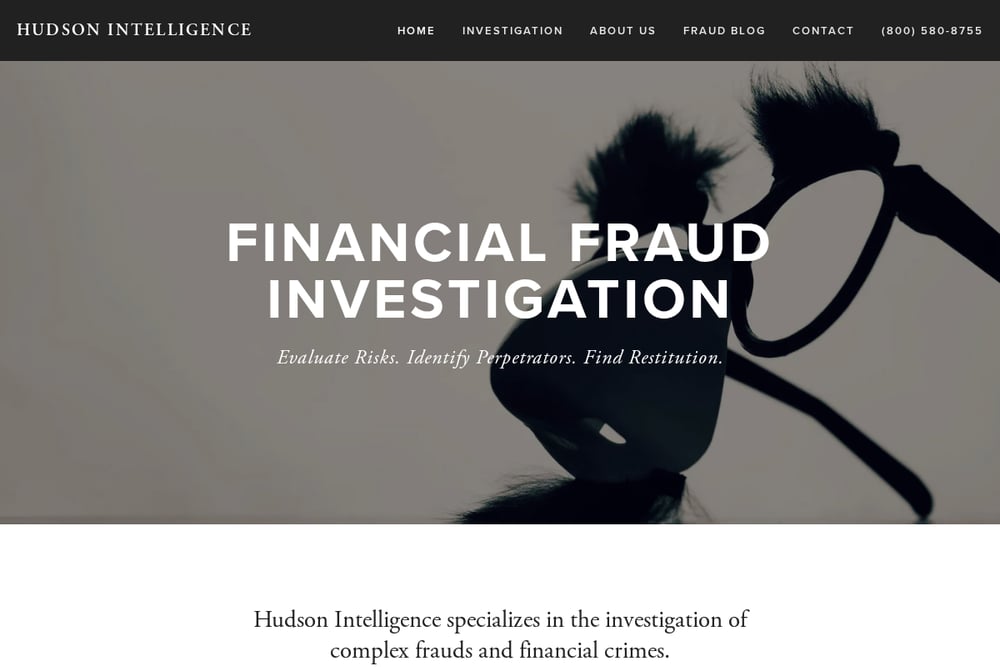 A screenshot of the Hudson Intelligence website.
Hudson Intelligence is a investigations firm that handles cryptocurrency forensics alongside investment fraud, elder fraud, and asset searches. Its tracing work is led by a Cryptocurrency Tracing Certified Examiner and Certified Fraud Examiner, which matters if you need courtroom-ready findings. The firm publishes detailed resources on peel chains, mixers, and high-risk exchanges, so you can get a feel for its investigative depth before you call. It serves law firms, investors, exchanges, regulators, and law enforcement. If your case is likely to end up in civil litigation or a criminal referral, this is a provider worth understanding.
#2 CHAINTRACE — Follow the trail. Find clarity.
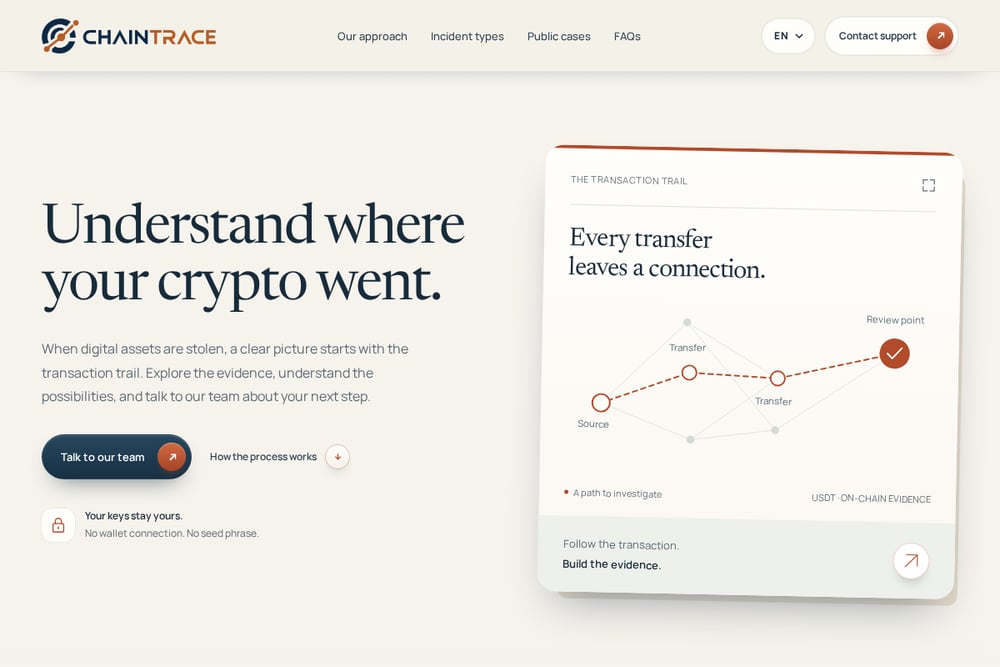 A screenshot of the CHAINTRACE — Follow the trail. Find clarity. website.
CHAINTRACE is built around a simple promise: understand where your crypto went without handing over your keys. The platform focuses on on-chain investigation and case preparation for stolen USDT and other digital assets, with no wallet connection or seed phrase required. You get transaction mapping, timeline analysis, and evidence organization into a reviewable case file. It also helps you prepare information for platform enquiries and official reporting, while being clear that freezing, seizure, and restitution require the appropriate authority. If you want a structured, evidence-first starting point before you talk to lawyers or law enforcement, this service is designed for exactly that.
#3 CNC Intelligence
 A screenshot of the CNC Intelligence website.
CNC Intelligence combines blockchain analytics with human-led investigative analysis. The firm traces digital asset transactions and develops leads on wallets, exchanges, and virtual asset service providers. It's explicit that it does not freeze, seize, or return cryptocurrency—findings are meant to assist law enforcement, attorneys, and financial institutions. That clarity is useful if you need an investigative report rather than a recovery guarantee. CNC also offers law enforcement assistance and certified cryptocurrency investigator training, which signals a professional-grade orientation. For cases that need actionable leads and a clean handoff to authorities, it's a strong fit.
#4 Maryman
 A screenshot of the Maryman website.
Maryman is a digital forensics firm with a broad service catalog that includes blockchain forensics, crypto wallet decryption, and NFT audits. That breadth can be valuable when your case involves devices, cloud accounts, or communications alongside on-chain activity. The firm also provides expert witness testimony and e-discovery support, so it can stay with you through litigation. Its crypto asset identification and forensic services are part of a larger investigative toolkit. If you suspect the theft involved more than a single transaction—or you need device-level evidence—Maryman is worth a closer look.
#5 StoneTurn
 A screenshot of the StoneTurn website.
StoneTurn is a global advisory firm with a dedicated cryptocurrency and blockchain investigations practice. Its asset tracing and recovery services sit alongside forensic accounting, AML investigations, and regulatory compliance work. That makes it a natural fit for complex disputes, class actions, or matters that touch multiple jurisdictions. The firm serves corporate clients, law firms, and regulators, and its investigations often feed into litigation or enforcement. If your situation involves significant sums, cross-border elements, or parallel financial investigations, StoneTurn's integrated approach may be the right match.
How to Choose the Right Tracing Partner
Start with your goal. Do you need to understand what happened, prepare for a legal claim, or support a criminal referral? If you're an individual victim, prioritize providers that explain the process clearly and don't overpromise recovery. If you're an attorney, look for courtroom experience and expert witness credentials. Check the chains and assets covered—USDT on TRON and Ethereum, for example, may require different tooling than Bitcoin. Ask what you'll receive at the end: a report, a case file, or testimony. And confirm the provider's stance on freezing and seizure, because no legitimate tracer can guarantee recovery. Finally, consider cost structure and whether the provider offers an initial consultation. The right fit depends on your facts, not just the firm's reputation.
Where Automation Fits in the Workflow
Automation can speed up the mechanical parts of tracing—pulling transaction histories, flagging known exchange addresses, and building timelines. But interpretation still requires a human. A good workflow uses software to surface patterns, then an investigator to separate verified connections from unconfirmed labels. Evidence organization is another area where automation helps: case files can be assembled faster and kept consistent. What automation cannot do is establish legal authority or replace judgment about next steps. Use it to reduce manual effort, not to skip the analysis.
The Bottom Line
Crypto tracing is not a magic undo button. It's an evidence-building process that can clarify what happened and support lawful next steps. The five providers here approach that work differently: Hudson Intelligence leans into courtroom-ready forensics, CHAINTRACE focuses on accessible, evidence-first case preparation for stolen USDT, CNC Intelligence emphasizes investigative leads and law enforcement handoff, Maryman brings broad digital forensics, and StoneTurn handles complex cross-border matters. Match your choice to your goal, your budget, and the complexity of your case. And keep your expectations grounded: on-chain visibility is a starting point, not a promise of recovery.