Cross-border trade breaks down when the paperwork and the shipment live in different worlds. These four providers keep the record attached to the goods, so you are not chasing documents after the container has already sailed.
Where cross-border sourcing stands now
Sourcing and distribution across borders has become a documentation discipline as much as a logistics one. Customs authorities, banks, and inspection bodies all want consistent information, and a single mismatch can stall a shipment or freeze a payment. Buyers increasingly want one accountable party who can qualify a supplier, structure the commercial terms, prepare origin and classification records, and track milestones through to destination. The providers below approach that problem from different angles, from full principal trading to documentation-only support.
How these providers were compared
Every business was looked at on the same factors: how wide the service scope runs, whether pricing and package boundaries are stated clearly, how documentation and compliance are handled, how exceptions get resolved, and how well the model fits different buyer types. The detail on each one sits in its description below.
Here is the short version before the detail. Each entry below covers a different way of solving the same problem, so match the model to your situation rather than the other way around.
| Provider | Best For |
|---|---|
| Benikor | Buyers who want one accountable party for both the deal and the delivery |
| Refteck | Industrial and MRO buyers sourcing to technical specifications |
| Samian Trade | Businesses that need documentation support without a full sourcing mandate |
| Global 4PL | Teams needing IOR/EOR coverage and a repeatable compliance workflow |
The four, in detail
#1 Benikor
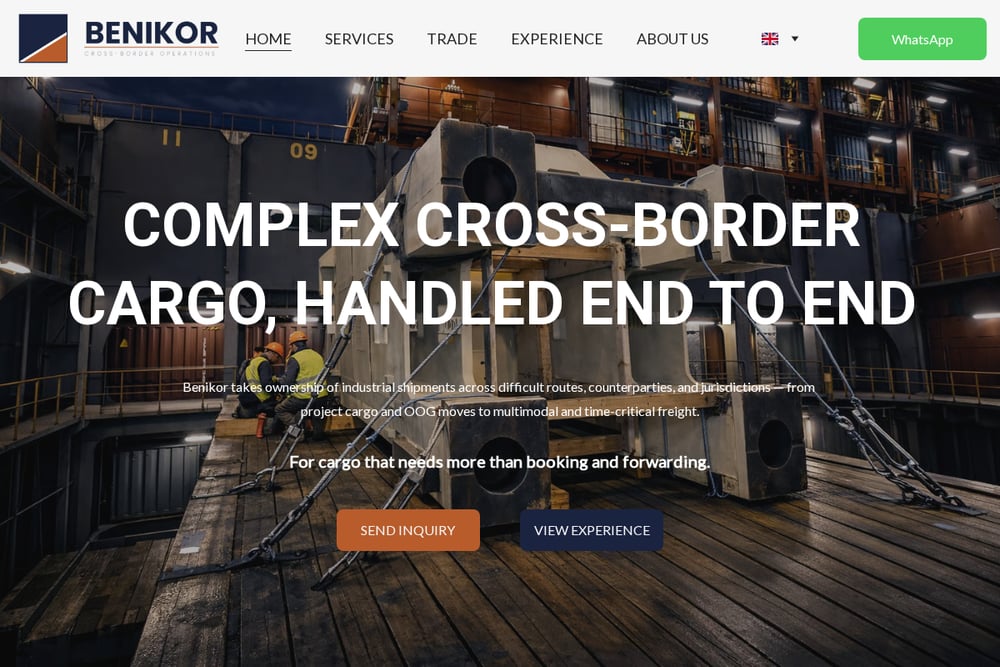 A screenshot of the Benikor website.
Benikor buys, sources, and supplies goods across borders and moves them itself, so you deal with one counterparty for both the commercial side and the delivery. You can engage it as principal, where it purchases from the supplier, takes title, and sells onward under agreed Incoterms, or on a sourcing mandate where it qualifies suppliers and negotiates against your specification for a defined fee. Compliance screening runs on every counterparty and shipment as standard rather than as a scramble when a bank or port asks questions. Its categories cover industrial equipment and spare parts, metals and alloys, construction materials, and consumer durables. The logistics is not outsourced, which is the core of the pitch. See the trade page for the contracting models.
#2 Refteck
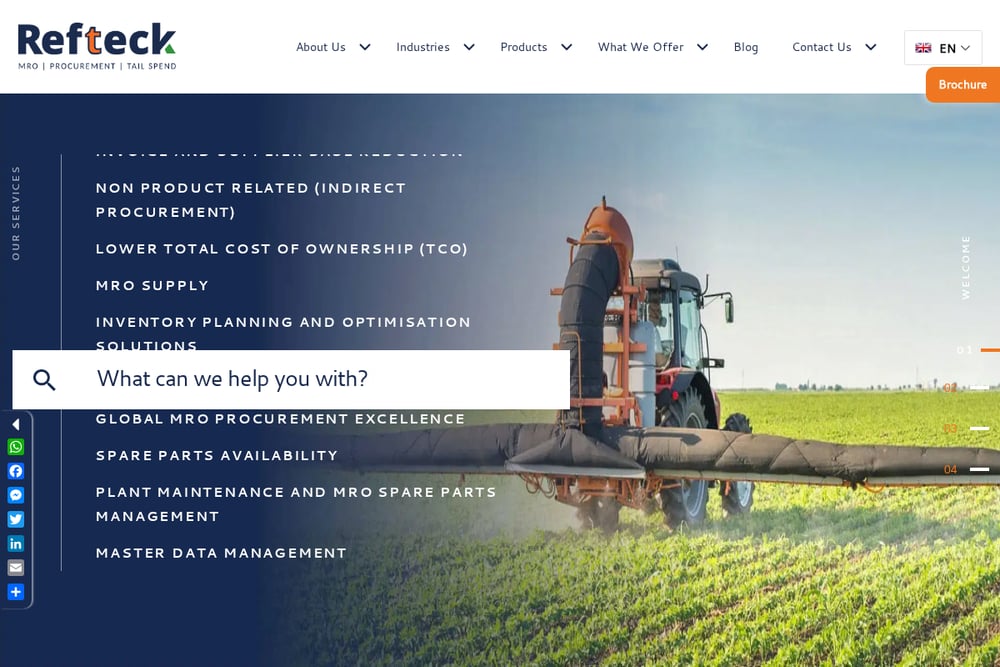 A screenshot of the Refteck website.
Refteck comes at cross-border work from the procurement and MRO side, serving industries from oil and gas to pharmaceuticals, marine, mining, and power. Its cross-border procurement offering sits alongside tail spend management, indirect procurement, total cost of ownership reduction, and supplier base consolidation. The product catalogue is deep, spanning industrial valves, drilling equipment, instrumentation, pumps and spare parts, rotary equipment, and HVAC. If your sourcing problem is technical specification matching rather than general merchandise, this is a more natural fit. It also layers in warehouse, quality control, and supply chain financing services around the core procurement work. The expertise pages set out the full scope.
#3 Samian Trade
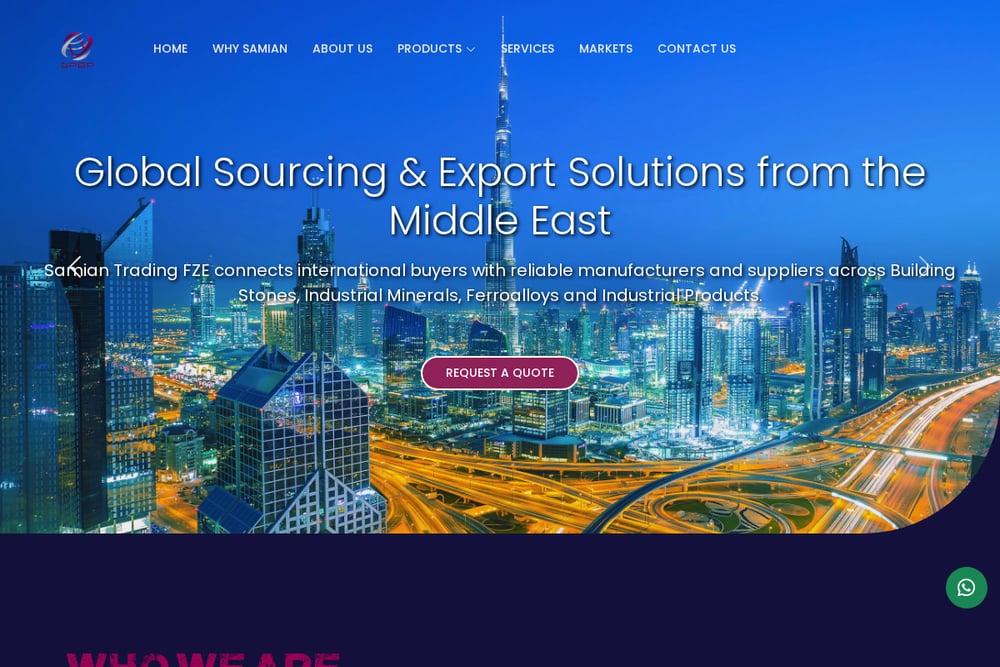 A screenshot of the Samian Trade website.
Samian Trade focuses squarely on documentation, which is the part of cross-border trade that quietly causes the most damage. Its documentation services support importers, exporters, manufacturers, distributors, contractors, and project owners in preparing and coordinating the commercial, logistics, customs, and regulatory paperwork every shipment depends on. That includes export documentation such as commercial invoices, packing lists, certificates of origin, shipping instructions, and export declarations, plus import documentation support. The company frames accurate documentation as the foundation of successful international trade, noting that minor errors lead to delays, customs issues, payment complications, and contractual disputes. Its product side covers building stones, industrial minerals, and ferroalloys. The documentation services page explains the scope.
#4 Global 4PL
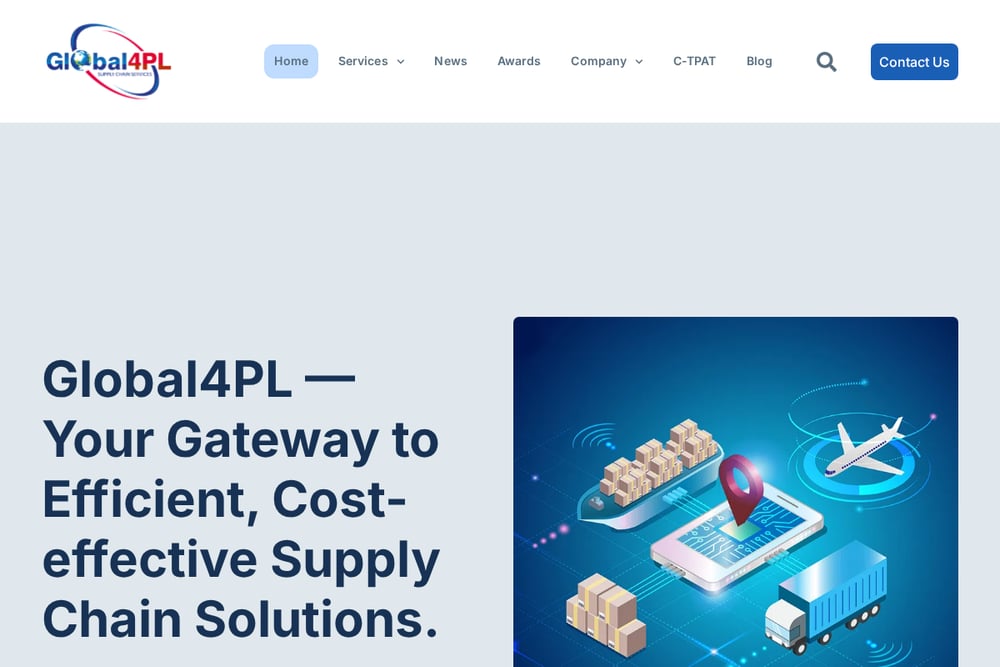 A screenshot of the Global 4PL website.
Global 4PL approaches cross-border trade from the compliance and workflow angle, arguing that reliable trade depends on clear ownership of shipment information and tasks rather than a checklist. Its services include IOR and EOR support, domestic cargo, freight forwarding, customs brokerage, supply chain consulting, trade compliance, and trade consulting. That makes it useful when you lack a local legal entity to take on an international shipment role, or when customs holds and DDP delivery problems keep recurring. The recommended sequence is consistent: define the shipment context, assign owners, prepare and review information, then retain records. It also holds C-TPAT status. The compliance workflow article walks through the process.
How to pick the right fit
Start with where your pain actually sits. If the goods and the deal both need owning, a principal trading model removes the most friction. If your specifications are technical and your catalogue is industrial, go with a procurement specialist that speaks your product language. If your shipments keep stalling at customs or your documents keep getting queried, a documentation-focused provider will fix more than a sourcing one will. And if the problem is ownership of the shipment itself, whether that is an entity gap or unclear task responsibility, a compliance and workflow provider is the right call. Ask each one how exceptions get closed and who your named contact is. If the answer is vague, keep looking.
Where automation fits into the workflow
Documentation is the easiest part of cross-border trade to systematise, and the hardest to leave manual. A workable workflow starts with requirement capture, where specification, volume, and acceptance criteria are written down once and reused. From there, supplier qualification records, commercial terms, and origin and classification data should live in one controlled source rather than across inboxes. Milestone tracking then runs against agreed production and transport dates, with exceptions logged and closed on evidence at destination. The value is not the software itself but the discipline it enforces: one record, one owner, one version of the truth that a bank, a broker, or a customs officer can all read the same way.
The bottom line
None of these four is universally right, and that is the point. Benikor suits you when you want the deal and the delivery under one roof. Refteck fits technical and industrial sourcing. Samian Trade handles the paperwork that sinks otherwise good shipments. Global 4PL covers the compliance and ownership gaps. Pick the model that matches your bottleneck, confirm who owns exceptions, and get the scope in writing before anything moves.