Cross-border trade breaks down when the paperwork and the people handling it don't line up. These five services keep your specifications, documents, and shipment milestones attached to one clear owner.
Where cross-border sourcing stands now
Global sourcing has shifted from a cost exercise to a records exercise. Customs teams, freight partners, and suppliers each touch a shipment, and information quietly drifts between them. Buyers now want one sequence with named owners, from requirement capture through receiving. The services below answer that demand in different ways, some with software, some with people, and some with both.
How these five were compared
Each service was looked at on four things: how much of the trade workflow it actually covers, whether scope and pricing are stated up front, how clearly responsibility is assigned across handoff points, and how well it fits a mid-market B2B buyer without a large trade department. Documentation depth and exception handling carried extra weight.
Here is the short version before the detail. Each entry below covers a different slice of the cross-border workflow, so read them as complements as much as alternatives.
| Provider | Best For |
|---|---|
| Global 4PL | Teams needing IOR/EOR coverage and customs brokerage in one place |
| Northshore International Trading — Home | Buyers who want fixed-scope packages with one named coordinator |
| Infios | Larger operations wanting trade data inside a full supply chain platform |
| Trade Technologies | Exporters who need document prep and trade finance support |
| Thomson Reuters | In-house teams needing classification and regulatory research depth |
The five, in order
#1 Global 4PL
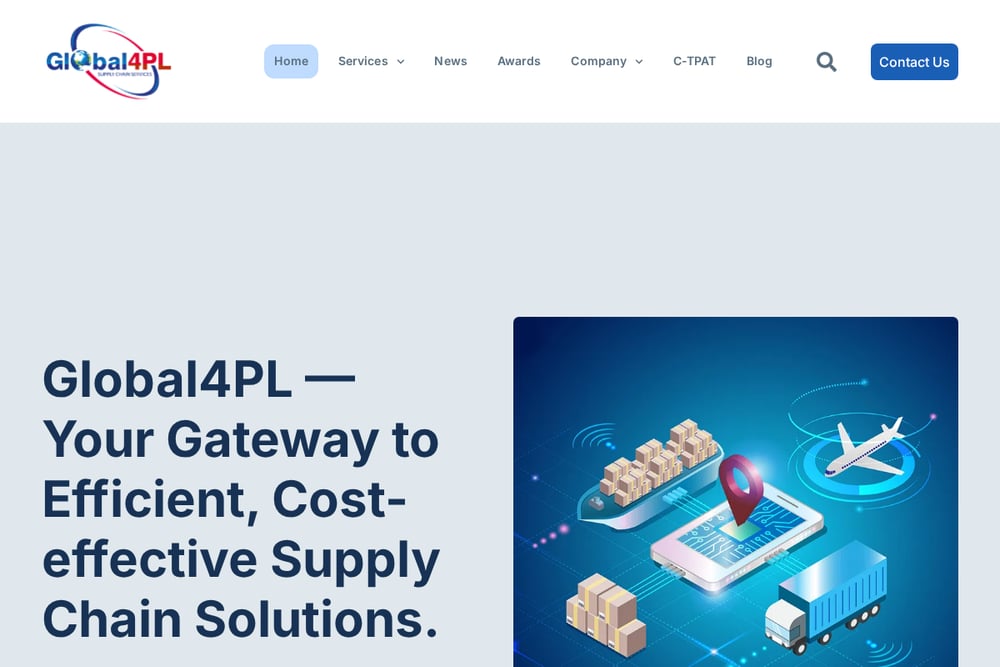 A screenshot of the Global 4PL website.
Global 4PL approaches cross-border compliance as an ownership problem rather than a checklist problem. Its published guidance walks you through defining shipment context, assigning owners, preparing and reviewing information, and retaining records in one repeatable sequence. The firm backs that with IOR and EOR services, customs brokerage, freight forwarding, and supply chain consulting, which matters when you lack a local legal entity to take on an international shipment role. If customs holds or DDP delivery trouble keep recurring, this is the kind of partner that audits the process instead of patching the symptom. It suits teams that want the logistics and the compliance responsibility handled together.
#2 Northshore International Trading — Home
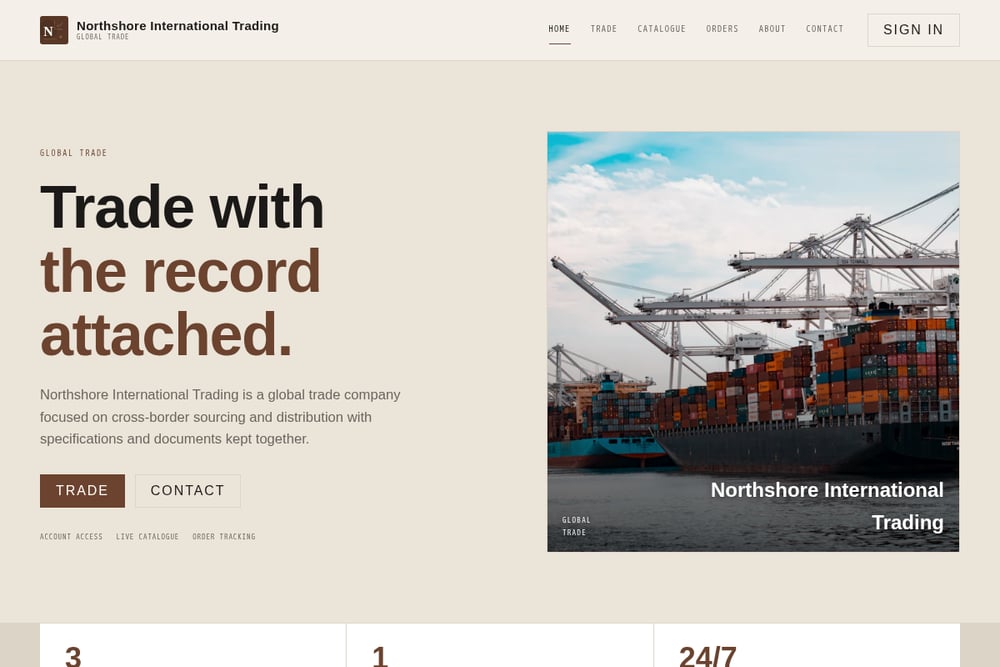 A screenshot of the Northshore International Trading — Home website.
Northshore International Trading is built around a simple promise: trade with the record attached. Each engagement is scoped in writing, assigned to a named lead, and priced up front, with three defined packages covering a sourcing programme, a trade documentation pack, and receiving and exception support. The six-step capability sequence runs from requirement capture and supplier qualification through commercial review, documentation, milestone control, and receiving support. A live catalogue, order tracking, and a 24/7 exception line keep you oriented after the order is placed. It is a strong fit for manufacturers, distributors, project teams, and retail operators who want one coordinator instead of scattered contacts.
#3 Infios
 A screenshot of the Infios website.
Infios brings a supply chain execution platform to global trade, connecting orders, warehouses, and shipments in a single flow. Its global trade solutions target U.S. import and export logistics, centralizing sourcing while reducing regulatory risk and helping partners move goods through the border faster. The pitch is breadth: warehouse management, transportation management, order management, and trade compliance under one roof. That makes it a natural consideration if you already run complex distribution and want trade data living beside inventory and freight data. Smaller importers may find the platform larger than their immediate need.
#4 Trade Technologies
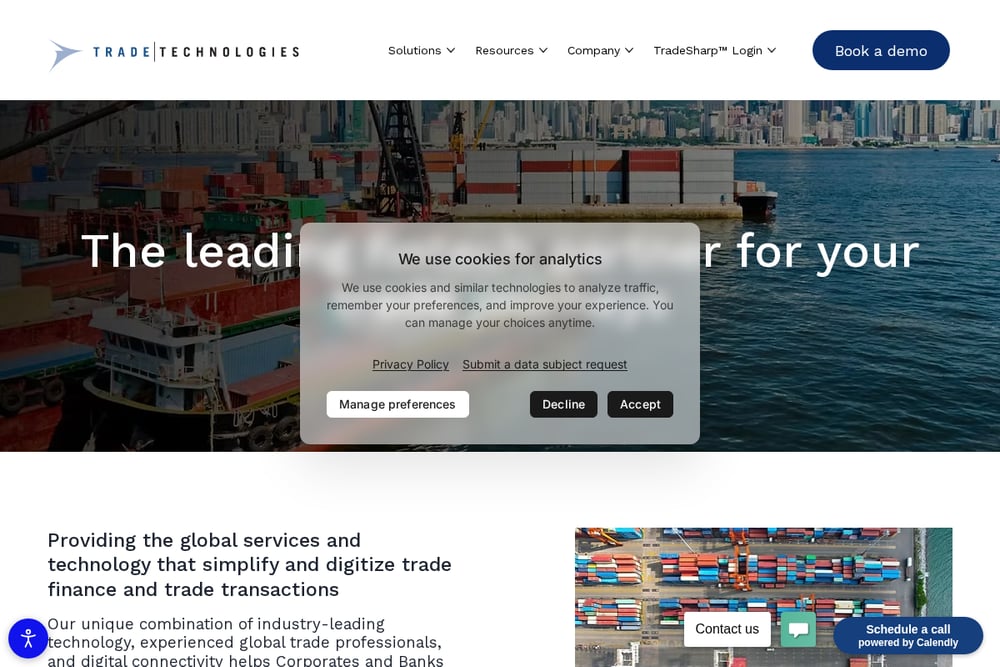 A screenshot of the Trade Technologies website.
Trade Technologies focuses tightly on trade documentation and the finance around it. Its tech-enabled services cover document preparation for letters of credit, documentary collections, and open account transactions, plus certificates and legalization, standby LC and guarantee management, and cargo insurance. Expert teams sit alongside automation tools, which is the combination that reduces errors and speeds up payment. If your bottleneck is getting clean documents to a bank or buyer rather than sourcing itself, this is a precise fit. It works well as a specialist layer on top of a sourcing partner.
#5 Thomson Reuters
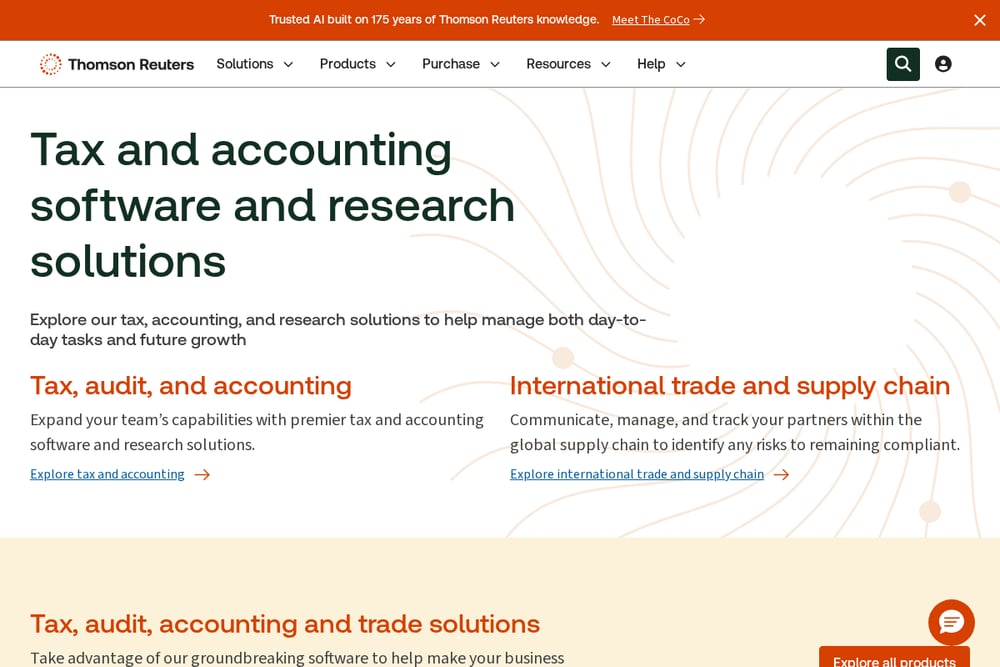 A screenshot of the Thomson Reuters website.
Thomson Reuters applies its long-standing content and AI tooling to cross-border trade, from classification through customs. The offering leans on research depth and compliance intelligence rather than hands-on shipment coordination, which makes it a different kind of tool in this list. You use it to check classifications, monitor regulatory change, and support transactional compliance decisions with a defensible source behind them. For teams that already have logistics partners but want stronger internal knowledge and audit trails, it fills a real gap. Budget and onboarding effort are the main considerations for smaller firms.
Matching the service to your actual gap
Start by naming the failure you keep seeing. If shipments stall at customs or nobody owns the DDP question, look at a partner with brokerage and IOR/EOR capability. If orders arrive but the file is a mess, prioritize written scope, named leads, and documentation packs. If payment is slow because documents get rejected, a documentation specialist pays for itself quickly. And if your team simply lacks regulatory grounding, research and classification tooling closes that gap. Many buyers end up pairing a sourcing coordinator with a documentation or compliance tool rather than expecting one vendor to do everything.
A workflow you can run this quarter
Capture the requirement in writing with volume and acceptance criteria. Screen suppliers on capability, quality, and capacity before price talks begin. Separate commercial terms from logistics so each can be negotiated cleanly. Prepare origin, classification, and shipment records as one checked pack. Track production and transport milestones against agreed dates with a single named contact. Close exceptions at destination on evidence, then file the record so the next shipment starts from a known baseline. Repeat the sequence and the surprises shrink.
The bottom line
None of these five is a universal answer, and that is the point. Global 4PL owns the compliance and logistics handoffs, Northshore International Trading packages sourcing and documentation with a named coordinator, Infios embeds trade in a broader platform, Trade Technologies sharpens the documents that unlock payment, and Thomson Reuters supplies the regulatory knowledge underneath. Pick the one that matches your weakest link, and keep the record attached.