
AI can answer almost anything your child asks. The real skill now is knowing when that answer is wrong. These five resources help you build that habit early.
What are Education & Training services?
Critical thinking for kids has moved from a nice-to-have to a core subject. Parents and teachers want children who can question information, spot errors, and reason through problems instead of accepting the first answer they see. The market reflects that shift. You can find traditional workbooks, online game platforms, printable worksheets, and AI-aware practice sites. Some focus on logic puzzles. Others emphasize memory, attention, or test prep. The strongest options combine short, repeatable practice with clear progress for parents. Pricing models vary widely, from free plans to paid subscriptions and physical books. The common thread is a belief that thinking skills are trainable, not fixed.
What we looked at when researching Education & Training
We evaluated each resource on the same factors: grade-level coverage, clarity of pricing and free access, variety of thinking-skill practice, parent and child usability, and how directly it addresses modern information literacy. GeniusKite stood out for its Pre-K to Grade 12 range, free no-card plan, and explicit focus on questioning AI answers. The Critical Thinking Co. impressed with its deep catalog of award-winning books and printable eBooks across subjects. MentalUP offered a broad set of online games with a strong reasoning and attention angle. Math Playground delivered free logic and strategy games with a math-friendly interface. Smart Tales brought a story-driven, character-based approach with classroom and inclusivity resources.
| Provider | Best For |
|---|---|
| The Critical Thinking Co. | Families who want a structured, book-based critical thinking curriculum |
| GeniusKite: Thinking Skills for Kids in the Age of AI | Parents who want free, AI-aware thinking practice for any grade |
| MentalUP | Kids who engage best with quick, game-style reasoning challenges |
| Math Playground | Free logic and strategy games for classroom or home brain breaks |
| Smart Tales | Story-based thinking games for early elementary and inclusive classrooms |
A closer look at 5 standout Education & Training
#1 The Critical Thinking Co.
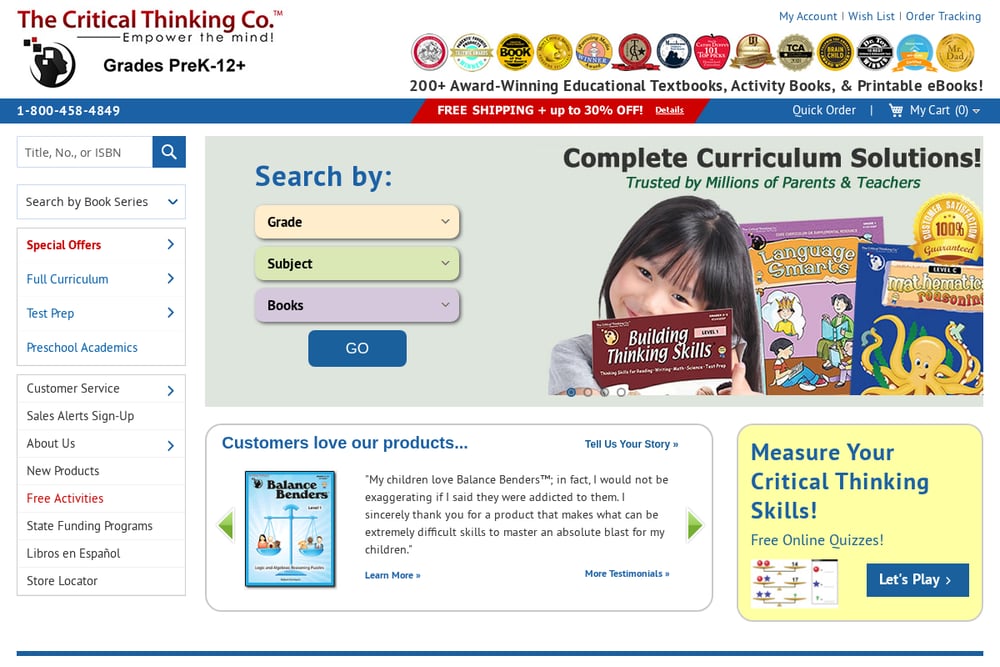 A screenshot of the The Critical Thinking Co. website.
If you want a physical or printable curriculum you can hold, this is the deepest catalog you will find. The site lists 200+ award-winning textbooks, activity books, and printable eBooks spanning reading, writing, math, science, and social studies. You can search by grade from toddler through 12th+ and by subject or book series, which makes it easy to match a child's level. Titles like Building Thinking Skills and Balance Benders are long-standing favorites among homeschoolers and classroom teachers. Pricing is per book or bundle, so you can sample one title before committing to a full curriculum. It is less about quick digital games and more about structured, paper-based reasoning practice.
#2 GeniusKite: Thinking Skills for Kids in the Age of AI
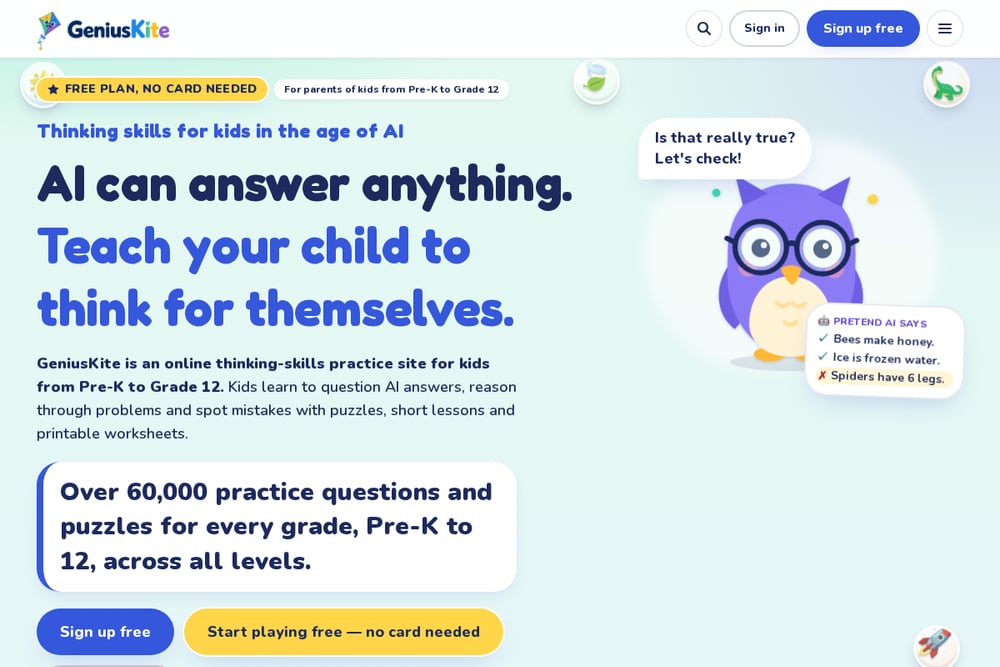 A screenshot of the GeniusKite: Thinking Skills for Kids in the Age of AI website.
GeniusKite is built around one timely idea: teach kids to question AI answers, not just accept them. The site offers over 60,000 practice questions and puzzles for every grade from Pre-K to 12, covering brain games, reasoning, practice exams, and printable worksheets. Kids solve a problem first, then compare their thinking to a pretend AI answer and decide whether it holds up. The free plan requires no credit card and unlocks every game and grade with five rounds a day, saved progress, and a new worksheet each week. A parent dashboard and a no-ads policy make it easy to manage screen time without surprises. It is a practical, low-risk way to add thinking-skills practice to your week.
#3 MentalUP
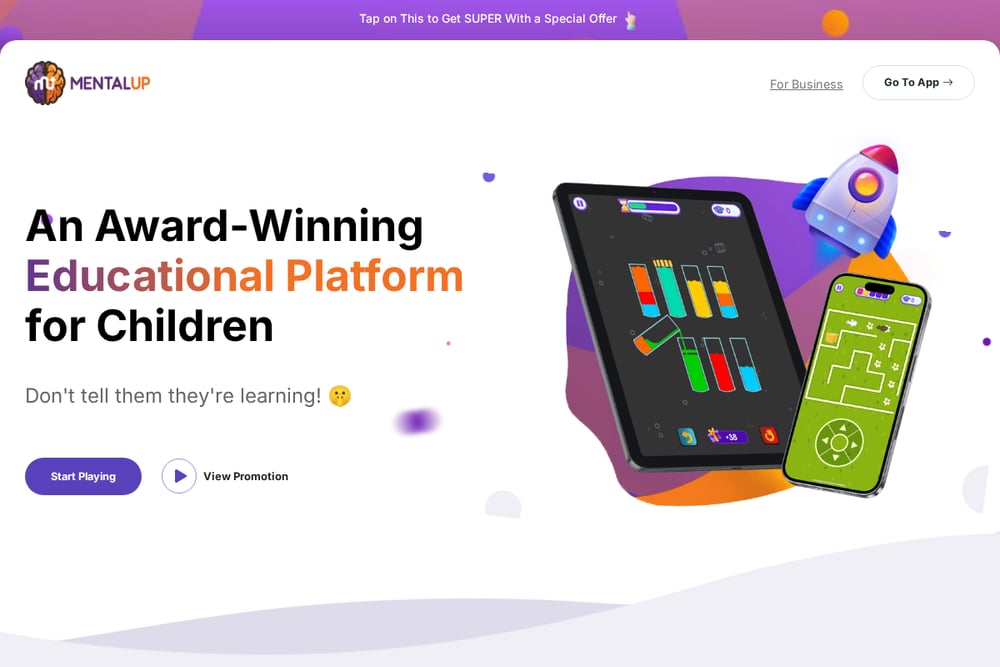 A screenshot of the MentalUP website.
MentalUP leans into short, game-like exercises that target reasoning, attention, and problem-solving. The site groups critical thinking games into quick activities you can play in a browser, from fast reasoning challenges to tangram-style puzzles and math-flavored logic games. It is designed to feel like play, which helps kids stay engaged long enough to build the habit. The platform also markets a family plan and school-oriented features, so you can scale from one child to a classroom. If your child responds better to timed challenges and colorful feedback than to worksheets, this is a strong fit. It works well as a supplement to more structured practice.
#4 Math Playground
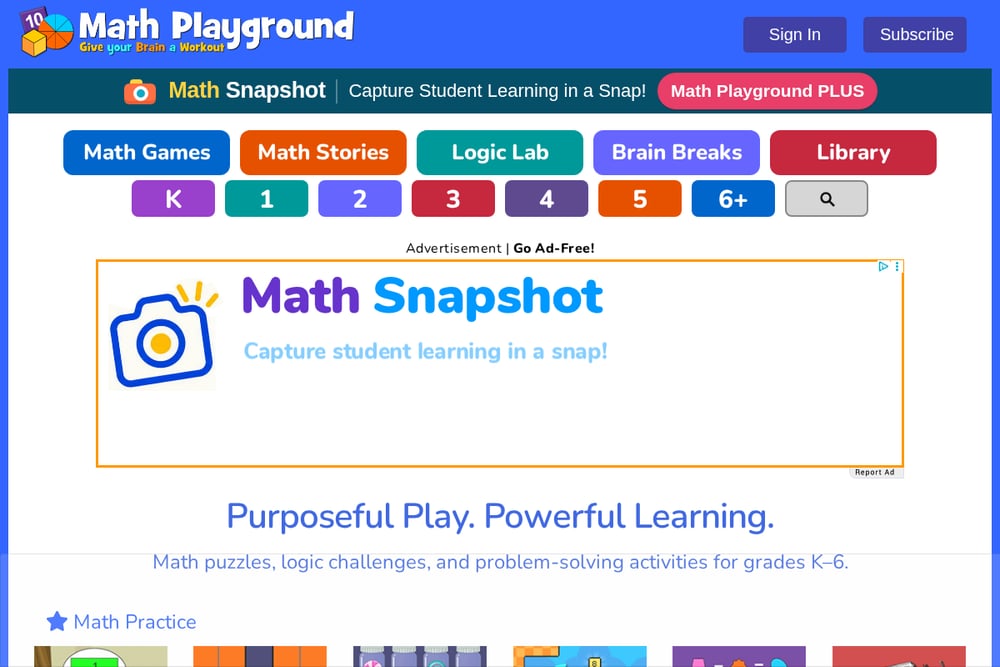 A screenshot of the Math Playground website.
Math Playground is a free, ad-supported site with a large collection of logic and strategy games that build flexible thinking. The Logic Lab section includes puzzles for pattern recognition, spatial reasoning, planning, and perseverance, which are exactly the habits that transfer to critical thinking. You can filter by grade from kindergarten through sixth and beyond, and many games work as warm-ups, centers, or early-finisher activities. The interface is simple and kid-friendly, with no account required to start playing. It is not a dedicated critical thinking curriculum, but it is a reliable free option for daily brain breaks that still stretch reasoning.
#5 Smart Tales
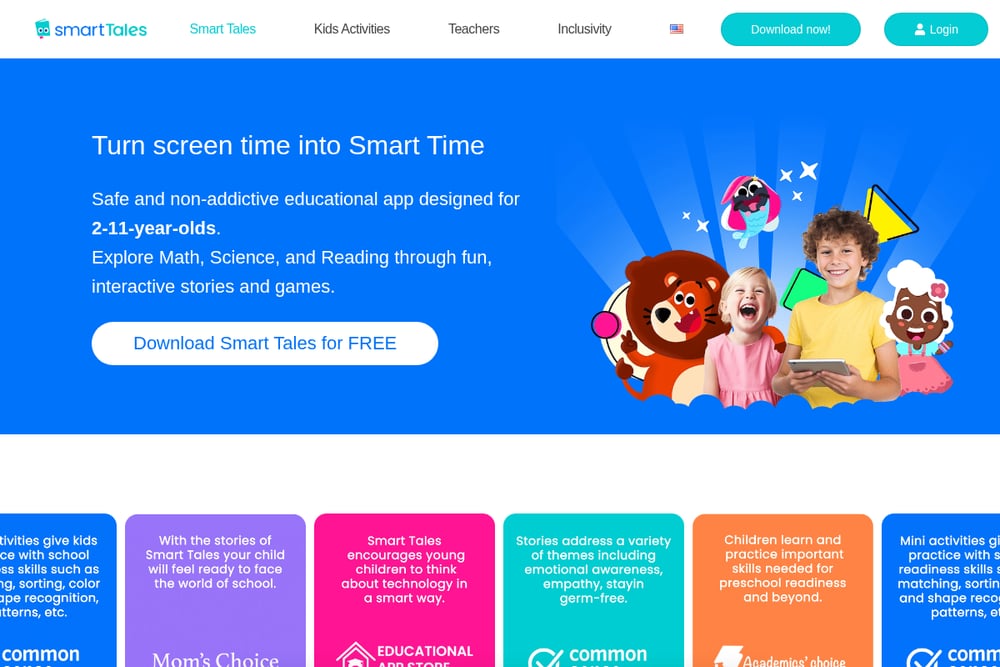 A screenshot of the Smart Tales website.
Smart Tales takes a story-driven approach, pairing educational games and worksheets with characters and narratives that hold younger children's attention. The site organizes activities for kids, teachers, and families, and it explicitly addresses inclusivity with resources for autism, dyslexia, and ADHD. You will find critical thinking games alongside educational stories, which helps children practice reasoning in context rather than in isolation. It also offers classroom curriculum materials and a UNICEF connection, which may appeal to educators looking for vetted content. The emphasis is on early childhood and elementary ages, so it is less suited to high schoolers. For families who want thinking practice wrapped in storytelling, it is a warm and accessible choice.
How to choose the right Education & Training
Start with your child's grade and attention style. If you want a free, no-card way to practice questioning AI answers across all grades, GeniusKite is the most direct fit. If you prefer a printed curriculum you can reuse, The Critical Thinking Co. gives you the widest catalog. For quick digital games, MentalUP and Math Playground both work well, with MentalUP offering more structured reasoning exercises and Math Playground offering free logic puzzles. If your child learns best through stories and you need inclusive classroom resources, Smart Tales is worth a look. Check the free plan or sample pages first, then decide whether a paid tier or a book bundle makes sense for your family.
Expert Conclusion
The common thread across these five resources is repetition. Thinking skills grow through short, regular practice, not one-time lessons. You do not need to pick only one. A free account on GeniusKite for AI-aware reasoning, a logic game on Math Playground for a brain break, and a workbook from The Critical Thinking Co. for deeper practice can work together. The key is to make questioning answers a normal part of your child's day. That habit will serve them long after the current AI tools have changed.