Creators want fair pay for honest recommendations. Brands want measurable growth without burning budget. The platforms below sit right at that intersection.
The Creator Partnership Landscape in 2026
Creator marketing has matured from one-off influencer posts into a structured partnership economy. Brands now expect tracked referrals, transparent payouts, and repeatable workflows. Creators, meanwhile, want to browse opportunities, apply on their own terms, and earn from links they actually control.
The result is a crowded middle layer of platforms. Some are enterprise-grade affiliate engines. Others focus on discovery and campaign management. A newer wave leans into shared upside, where promotional budgets get split between creator rewards and customer savings. Understanding which model fits your size and goals matters more than any feature checklist.
How We Evaluated These Platforms
We looked at the same factors across every platform. First, service scope: does it cover discovery, application, tracking, and payouts, or only part of the chain? Second, pricing clarity: can you understand costs before committing?
Third, creator experience: how easy is it to browse brands, apply, and get referral links? Fourth, brand control: can you allocate budget and see where it goes? Fifth, fit for US-based creators and small-to-mid brands.
Winwoven stood out for its split-budget model and free sign-ups on both sides. impact.com impressed with breadth across affiliate, creator, and referral programs. Creator.co showed strength in discovery and campaign management. Partnero highlighted AI-assisted program setup and a white-label portal. Superfiliate distinguished itself by unifying influencer, affiliate, and ambassador programs with automation.
Here is a quick comparison of the five platforms, ordered for this roundup. Each entry notes what it does well and who it suits, so you can shortlist before reading the deeper breakdowns.
| Provider | Best For |
|---|---|
| impact.com | Enterprise brands running multi-channel partnership programs |
| Winwoven | When one of us wins, we all win | Creators and small brands testing shared-upside partnerships |
| Creator.co | E-commerce brands that need creator discovery and campaign management |
| Partnero | SaaS teams launching affiliate and referral programs quickly |
| Superfiliate | Consumer brands scaling creator and ambassador programs |
The Five Platforms in Detail
#1 impact.com
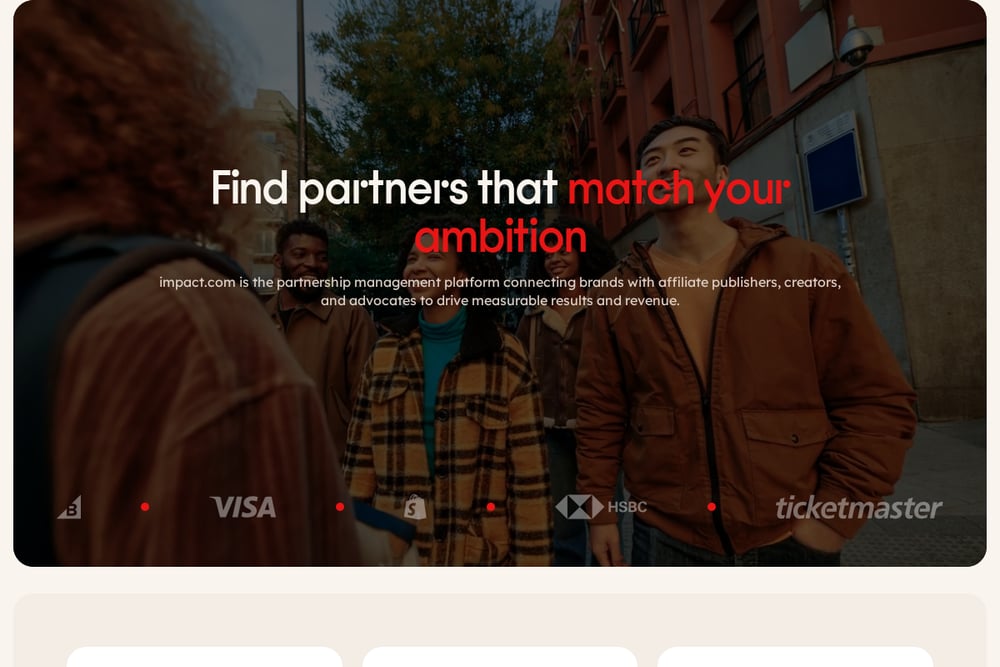 A screenshot of the impact.com website.
impact.com runs affiliate, creator, referral, and retail media partnerships from one platform. You get discovery and recruitment from a large partner network, automated contracts and payouts in dozens of currencies, and always-on fraud protection. Tracking and attribution work across devices, which matters when your creators post on social and link out to product pages. It is built for brands running serious programs at scale, and for publishers who want to join many programs without juggling spreadsheets. The tradeoff is complexity: smaller brands may find the feature depth heavier than they need.
#2 Winwoven | When one of us wins, we all win
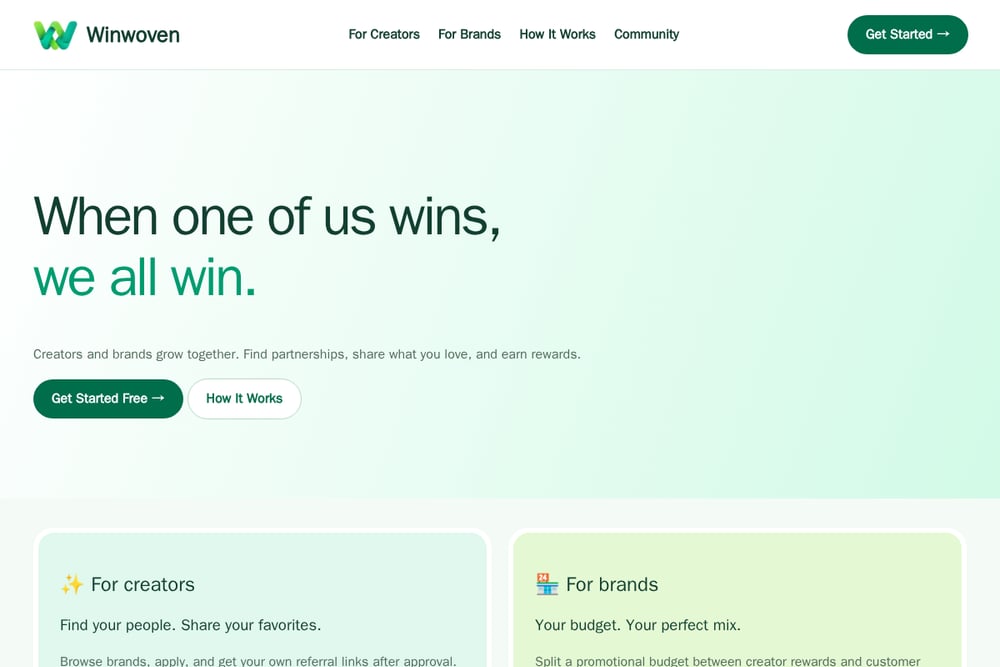 A screenshot of the Winwoven website.
Winwoven takes a collaborative angle: creators and brands grow together. Creators browse brands, apply, and receive their own referral links after approval. Brands split a promotional budget between creator rewards and customer savings, so the same spend drives acquisition and gives buyers a reason to convert. Sign-ups are free for both creators and brands, which lowers the barrier to testing a partnership. The platform is early-stage, with brands like Hippy Chews and Smoke Flutes listed as preparing for launch or integration pending. If you want a simple, shared-upside model without enterprise overhead, this is worth a look.
#3 Creator.co
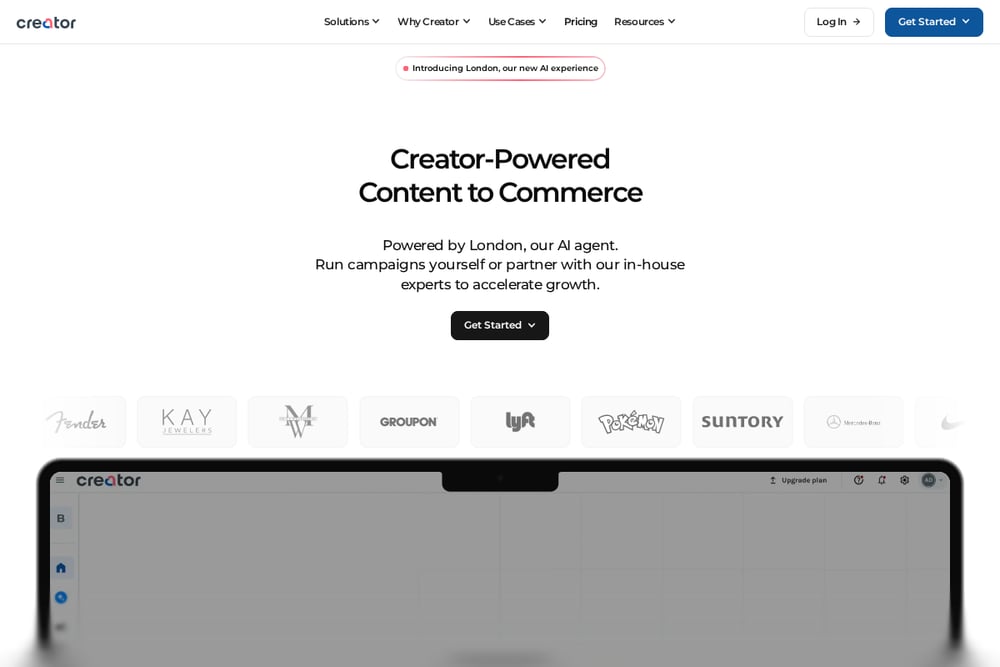 A screenshot of the Creator.co website.
Creator.co focuses on finding and hiring influencers, then managing campaigns end to end. Brands can search a creator community, run campaigns, and track performance, while creators get a path to monetize their content. The platform also supports performance partnership programs where creators, media, and storefronts drive sales. It is a practical fit for e-commerce and direct-to-consumer brands that want discovery plus campaign workflow in one place. Agencies can manage multiple brands through licensing, which helps when you handle several clients.
#4 Partnero
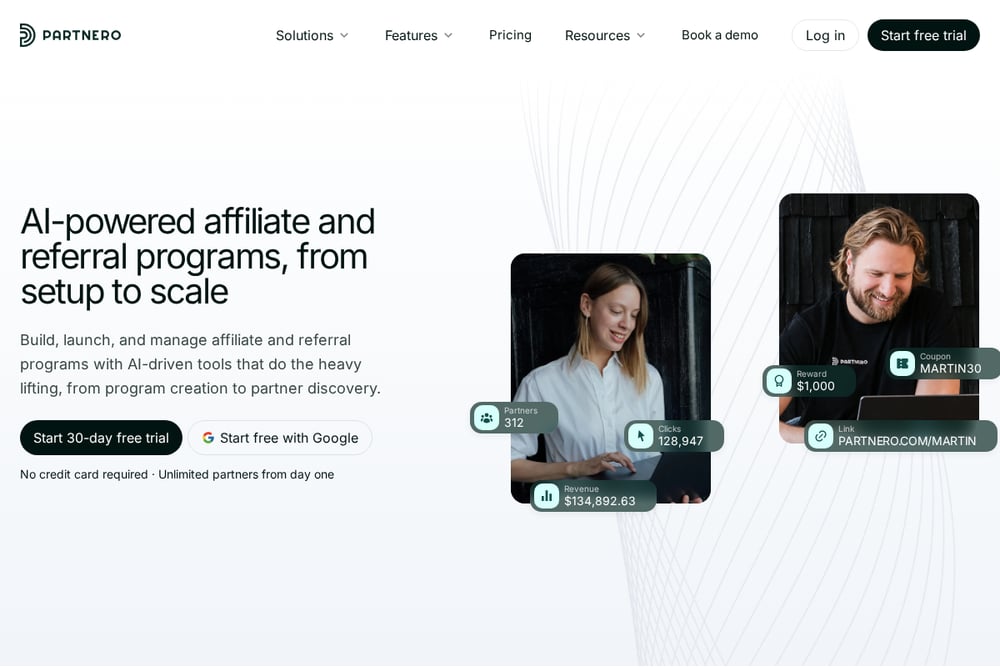 A screenshot of the Partnero website.
Partnero is built for affiliate, referral, influencer, and newsletter programs from a single account. Each program gets its own commission rules, partners, and branded portal, with unlimited partners from day one. AI tools help with setup and partner discovery, and an assistant lets you change rules in plain language. Automated payouts and coupon tracking round out the operational side. It suits SaaS and digital businesses that want a white-label partner portal without stitching together multiple tools.
#5 Superfiliate
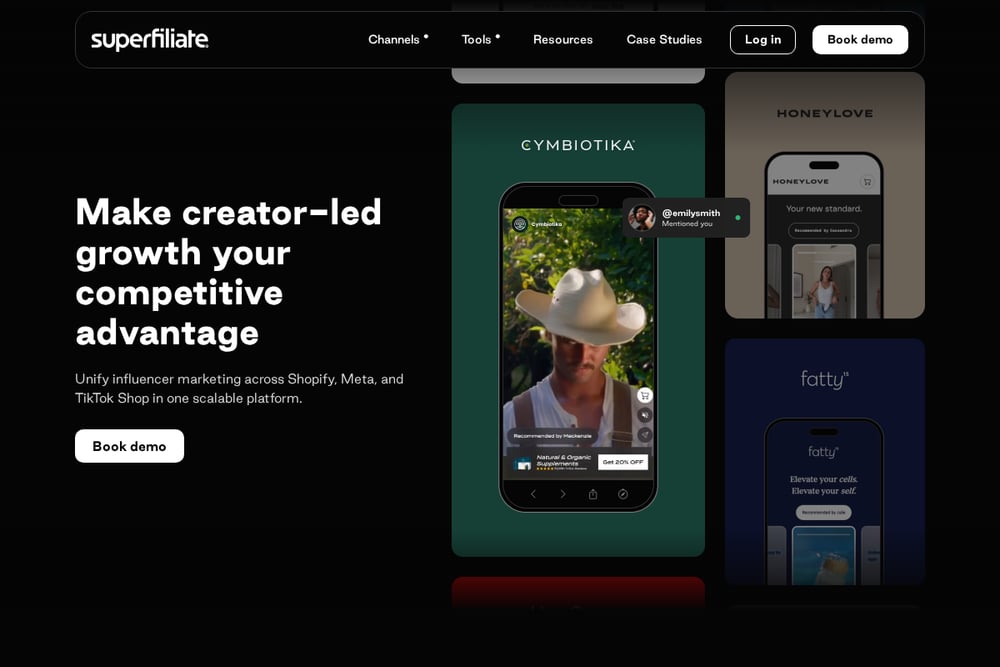 A screenshot of the Superfiliate website.
Superfiliate unifies influencer, affiliate, ambassador, referral, and loyalty programs into one platform. You get cobranded landing pages, cash and store credit rewards, and gifting options for creators. Automations handle discovery, recruitment, and program management, which saves time as your roster grows. It also supports Meta Partnership Ads and TikTok Shop workflows, useful if social commerce is central to your strategy. Brands in beauty, food and beverage, and fashion tend to fit well here.
How to Pick the Right Platform
Start with your budget model. If you want spend to do double duty, rewarding creators and giving customers savings, a shared-upside platform like Winwoven fits. If you need enterprise tracking and fraud protection across many partner types, impact.com is the heavier but broader option.
Next, map your workflow. Do you need discovery and campaign management, or just tracking and payouts? Creator.co and Superfiliate lean toward discovery and campaign execution. Partnero leans toward program infrastructure and white-label portals.
Finally, check the creator side. Ask how easy it is to browse brands, apply, and get links. Free sign-ups and fast approvals reduce friction, and friction is what kills participation.
Where Automation Fits In
Automation should remove busywork, not relationships. Use it to route applications, generate referral links, and trigger payouts once thresholds are met. Set rules for budget splits so creator rewards and customer savings stay balanced without manual review.
On the reporting side, automate attribution and payout summaries so you can see which creators drive sales. Keep human review for onboarding and creative approval. The platforms above handle different slices of this, so pick the one whose automation matches your actual bottleneck.
The Bottom Line
There is no single winner here, only the right fit. impact.com gives you scale and control. Winwoven offers a simple, shared-upside model with free entry on both sides. Creator.co and Superfiliate help you find and manage creators. Partnero gives you program infrastructure with AI assistance.
Start with your budget model and your biggest operational headache. Then test one platform with a small campaign before scaling. When creators and brands both see clear upside, the partnership tends to last.