You need a creative partner who can turn a strange idea into something real, on time, and on budget. These five studios each bring a different flavor to that challenge, from boutique experimentation to AAA co-development muscle.
The creative production landscape
Creative production has blurred the lines between game development, film-style production, and experimental digital work. Studios now compete on range as much as raw output, and clients increasingly want partners who can move between disciplines without losing craft. The result is a crowded field where specialization and personality matter as much as headcount.
How we evaluated these studios
We looked at service scope, clarity of positioning, portfolio depth, and how well each studio communicates what it actually does. We also weighed the fit for different client types, from solo founders to large publishers. Pricing transparency and ease of first contact factored in too, since a great studio you cannot reach is no help at all.
Here is a quick look at the five studios, ordered to help you compare their strengths at a glance.
| Provider | Best For |
|---|---|
| Abstraction | Large-scale co-development and ports |
| Ideas Beyond the Ordinary | Leaky Glass | Boutique creative work with an experimental edge |
| Kevuru Games | Game art outsourcing at scale |
| Nasty Rodent | Structured 3D asset production |
| iXie Gaming | End-to-end development and QA |
The five studios in detail
#1 Abstraction
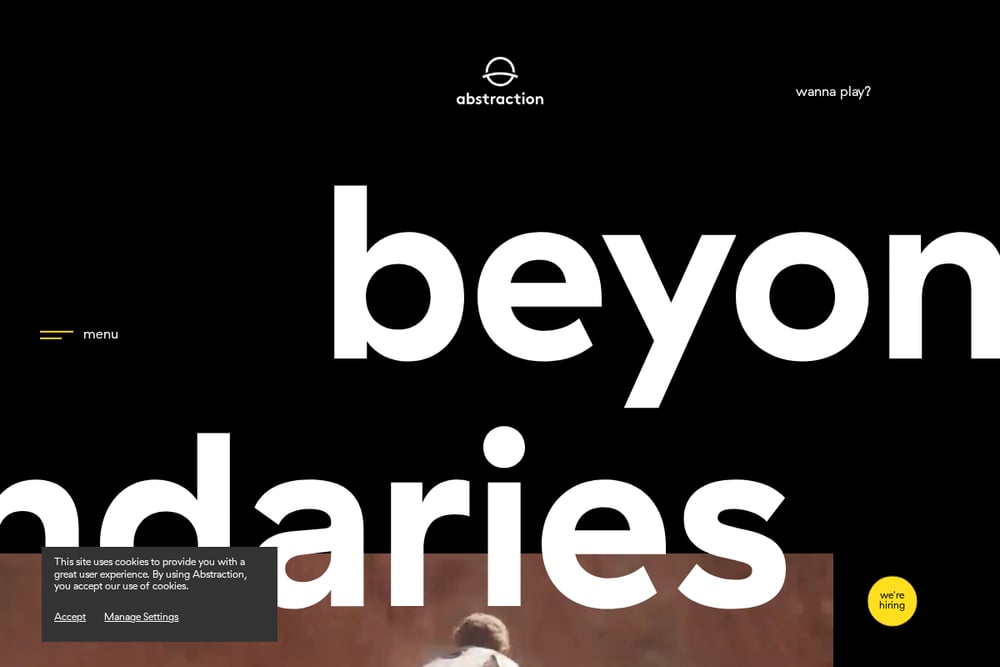 A screenshot of the Abstraction website.
Abstraction positions itself as a creative game studio built for AA, AAA, and III full-cycle and co-development work. Its portfolio includes creative co-development on Dune: Awakening and adaptation work on Mass Effect: Legendary Edition, Halo: The Master Chief Collection, and Baldur's Gate 3. That is a serious résumé for teams that need proven pipeline experience at scale. The studio also handles ports and adaptations, which makes it a practical choice when your project spans platforms. If you want a partner who has already shipped alongside major publishers, this is the heavyweight on the list.
#2 Ideas Beyond the Ordinary | Leaky Glass
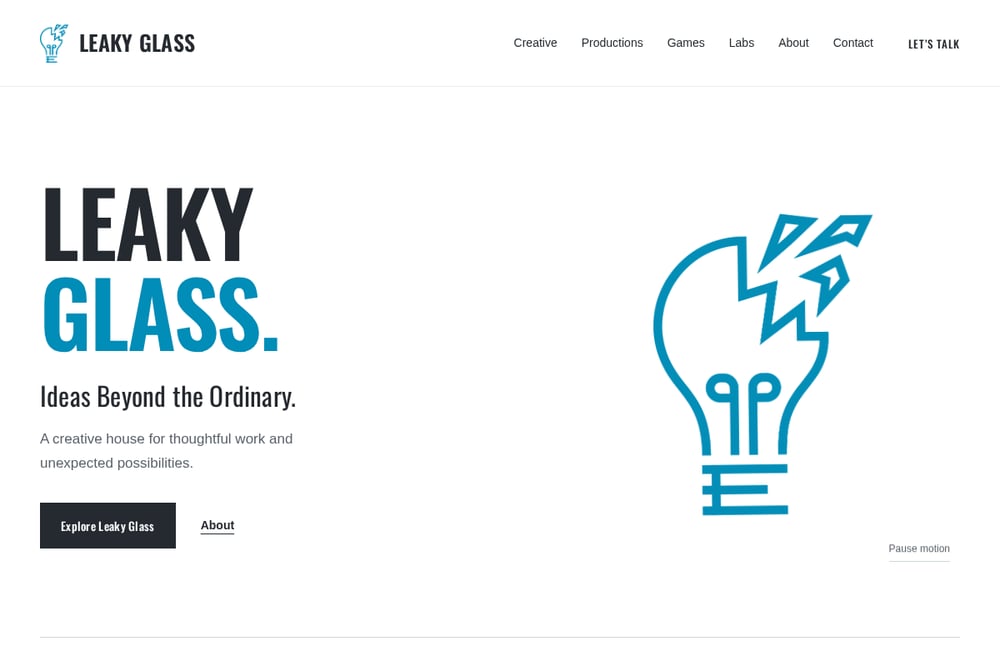 A screenshot of the Ideas Beyond the Ordinary | Leaky Glass website.
Leaky Glass describes itself as a creative house for thoughtful work and unexpected possibilities, and the site backs that up with a deliberately broad menu. You will find Creative, Productions, Games, and Labs as distinct tracks, which suggests a studio comfortable moving between client work and self-driven experiments. That Labs arm is the interesting part, because it signals a team that prototypes and explores rather than only executing briefs. For a boutique operation, the positioning is unusually clear about values: thoughtful craft first, novelty second. If you want a partner who treats your project as a creative problem rather than a ticket, start here.
#3 Kevuru Games
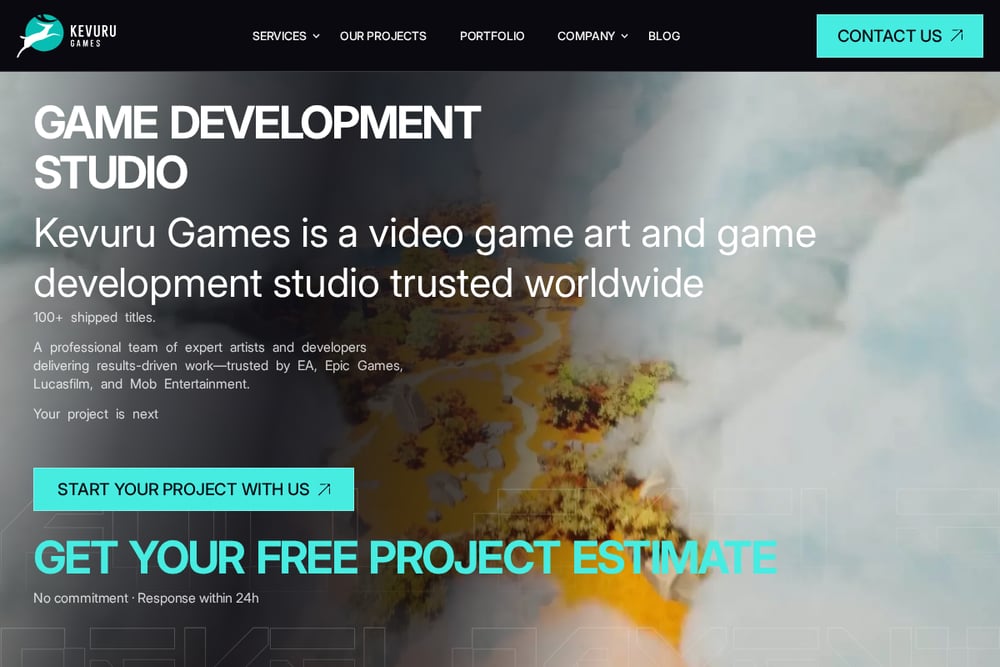 A screenshot of the Kevuru Games website.
Kevuru Games is a well-known name in game art and full-cycle development outsourcing, with a broad service catalog spanning concept art, 3D characters, environments, and UI. The studio has worked across stylized and realistic pipelines, which gives it flexibility for different art directions. Its site was not fully accessible during our review due to a Cloudflare block, so we could not verify current portfolio details firsthand. That is worth noting if you are doing due diligence, since you will want to request a deck directly. Still, its reputation in the outsourcing market makes it a name worth shortlisting for art-heavy production.
#4 Nasty Rodent
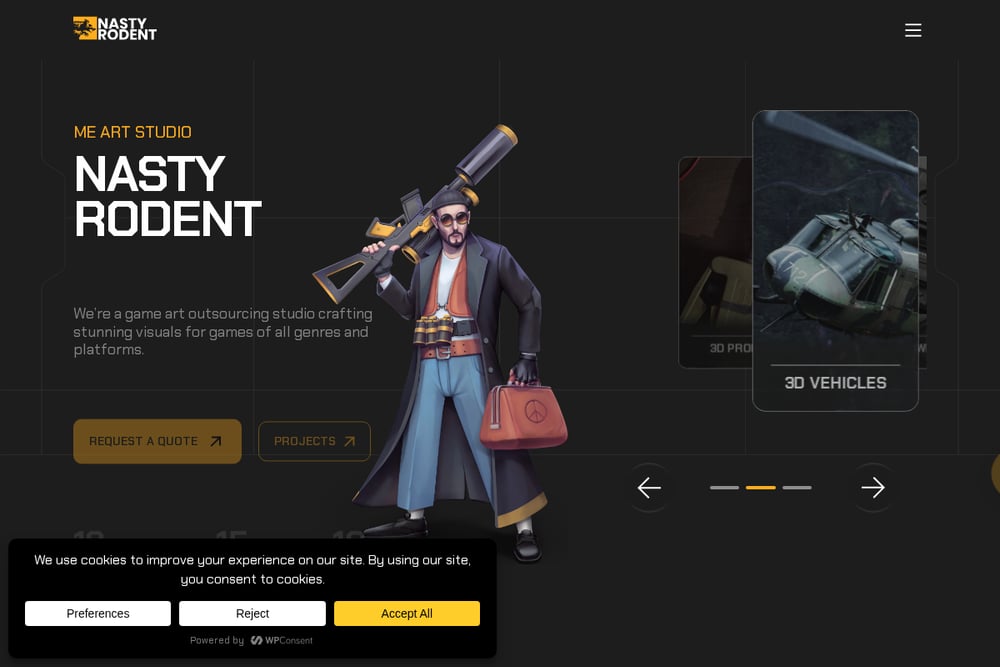 A screenshot of the Nasty Rodent website.
Nasty Rodent is an art production studio with credits on notable titles including Squad, Mutant Year Zero: Road to Eden, and Starship Troopers: Extermination. Its service list covers 3D weapons, characters, environments, props, vehicles, plus UX/UI and concept art, so it can cover most asset needs in one place. The studio also publishes practical industry content, like its breakdown of game production roles, which suggests a team that thinks about process and not just pixels. Its intake form asks for asset type, style, scope, deadline, and engine, which is a good sign of a structured workflow. If you need dependable asset production with a clear brief-to-delivery process, this is a solid fit.
#5 iXie Gaming
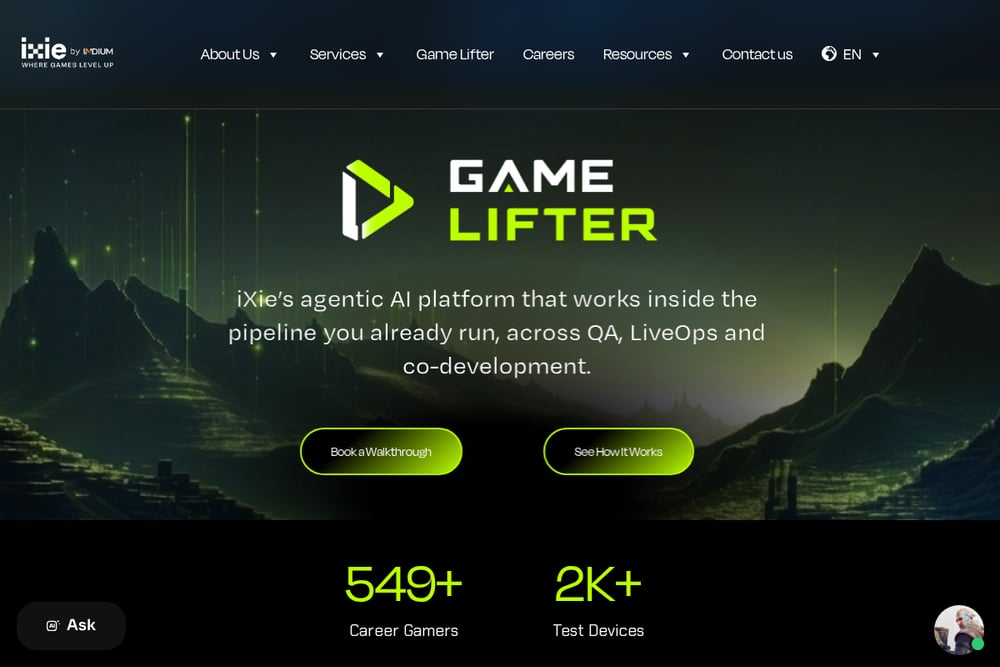 A screenshot of the iXie Gaming website.
iXie Gaming is part of the larger iXie group and offers a wide spread of services including full SKU development, co-development, porting and remastering, game art, LiveOps, analytics, and QA. That breadth makes it a one-stop option for teams that want fewer vendors to manage. The studio also invests in AI-assisted tooling, with offerings around AI-powered QA and NPC systems, which could appeal if you are exploring automation in your pipeline. Its art production content shows a genuine interest in how visuals drive player engagement. For projects that need art plus testing plus live support under one roof, iXie is worth a conversation.
How to choose the right studio
Start with the shape of your project, not the size of the studio. If you need co-development on a large title, prioritize proven pipeline experience and references from shipped games. If you are prototyping something unusual, a boutique with an experimental arm will likely serve you better than a large outsourcing shop. Ask every candidate for a sample brief response and check how clearly they scope work. Finally, confirm who you will actually talk to day to day, because communication quality often predicts project quality more than any portfolio reel.
Where automation fits into your workflow
Automation will not replace creative judgment, but it can remove the friction around it. Use structured intake forms, like the brief-based request flow Nasty Rodent uses, to standardize how projects start. Set up shared asset trackers so art, QA, and production stay in sync across vendors. If you work with a studio like iXie that offers AI-assisted QA, pilot it on a small slice before committing. And keep a simple decision log for creative approvals, so feedback loops stay short and nothing gets lost between calls.
The bottom line
There is no single right studio here, only the right fit for your project. Abstraction brings heavyweight co-development credentials, Leaky Glass offers boutique creative range with an experimental streak, Kevuru and Nasty Rodent cover art production from different angles, and iXie delivers breadth across development and QA. Match the studio to the shape of your work, ask hard questions about process, and you will end up with a partner who makes the project better rather than just busier.