
If you sell toys, baby gear, or kids' apparel in the US, a single missing test report can get your listing blocked overnight. Here are five CPSIA testing resources worth knowing so you can get compliant without the guesswork.
The CPSIA Testing Landscape in 2026
The rules got stricter this year. Since July 8, 2026, eFiling is mandatory for children's product certificates, and marketplaces like Amazon, Walmart, and TikTok Shop are enforcing it hard. You need a CPSC-accepted lab, a valid Children's Product Certificate (CPC), and tracking labels that match your production runs. Costs vary widely: simple plush toys run $400–$800 per SKU, plastic toys $500–$1,800, and complex baby products can hit $12,000 or more. The challenge isn't finding a lab — it's finding one that fits your product, your budget, and your marketplace paperwork. That's where this roundup comes in.
How We Evaluated These Resources
We looked at five factors. First, service scope: does the resource cover the full CPSIA stack — lead, phthalates, ASTM F963, flammability, small parts — or just one slice? Second, pricing clarity: are costs published, or do you have to beg for a quote? Third, marketplace fit: does it understand Amazon, Walmart, and TikTok Shop document requirements? Fourth, local US support: can you get a CPSC-accepted lab without shipping samples overseas? Fifth, added value: free tools, done-for-you options, or educational guides that save you time. Each resource below stood out on at least one of these factors, and we note where each one shines.
Here's a quick look at the five resources, from a cost-guide and lab-matching site to full-service testing labs.
| Provider | Best For |
|---|---|
| TTL Laboratories | US-based sellers who want a domestic CPSC-accepted lab with published test methods |
| KidsTestingLabs.com — CPSIA Testing Labs, Costs & CPC Guide for Amazon, Walmart and TikTok Shop Sellers | Amazon, Walmart, and TikTok Shop sellers who want cost transparency and lab matching |
| V-Trust Lab | Sellers sourcing from Asia who need CPC support and multi-market compliance |
| Materials Analytical Services | Brands that need advanced chemical testing for heavy metals and phthalates |
| Eurofins | Larger brands needing global lab coverage and deep compliance resources |
The 5 Resources in Detail
#1 TTL Laboratories
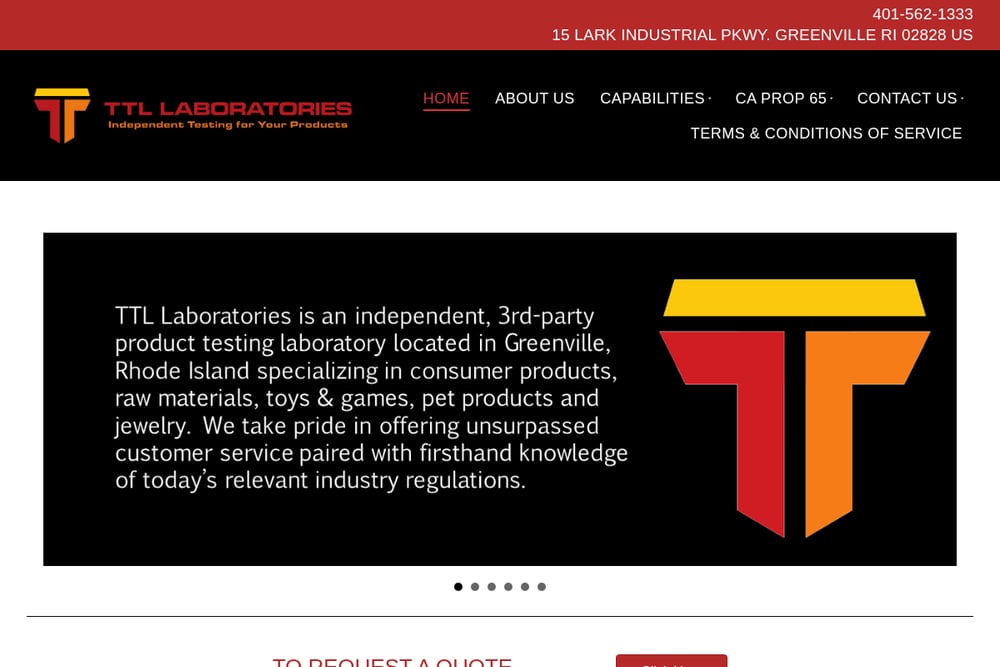 A screenshot of the TTL Laboratories website.
TTL Laboratories is a CPSC-accepted third-party testing lab based in Greenville, Rhode Island. They handle CPSIA lead testing using CPSC-CH-E1003-09, CPSC-CH-E1002-08.2, and CPSC-CH-E1001-08.2 methods, plus phthalates via CPSC-CH-C1001-09.4. If you sell toys or children's products on Amazon, they also offer Amazon-specific testing packages. Their scope includes small parts testing, toy safety standard compliance, and raw materials testing. For US sellers who want a domestic lab with clear method references, TTL is a solid starting point.
#2 KidsTestingLabs.com — CPSIA Testing Labs, Costs & CPC Guide for Amazon, Walmart and TikTok Shop Sellers
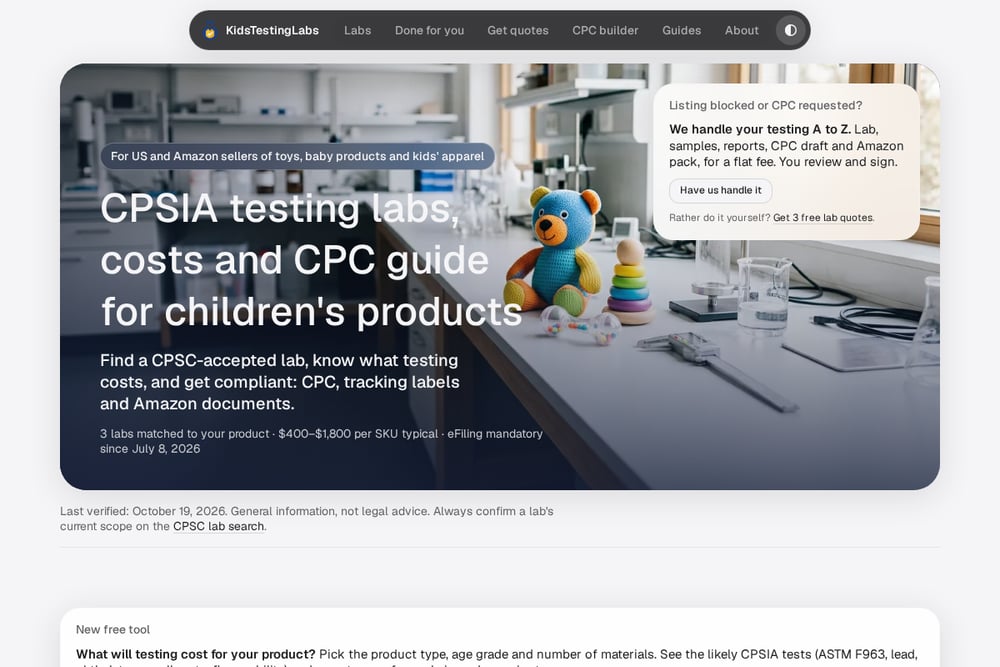 A screenshot of the KidsTestingLabs.com website.
KidsTestingLabs.com is built for one thing: helping you understand CPSIA testing costs and get matched with the right lab. You can use their free test cost estimator to pick your product type, age grade, and materials, then see likely tests and a cost range in under a minute. They publish real per-SKU estimates — plush toys at $400–$800, plastic toys at $500–$1,800, kids' apparel flammability at $150–$400 per fabric — so you can budget before you commit. If you're stuck with a blocked listing or a CPC request, they offer a done-for-you service that handles lab, samples, reports, CPC draft, and Amazon pack for a flat fee. They also match you with three CPSC-accepted labs for free quotes, which saves you hours of outreach.
#3 V-Trust Lab
 A screenshot of the V-Trust Lab website.
V-Trust Lab is a China-based testing provider with a strong focus on Children's Product Certificates (CPC) and CPSIA compliance. They cover ASTM F963, CPSIA, California Proposition 65, and EN 71 for toys and juvenile products. Their resource center includes regulatory updates, recall cases, and sample reports, which helps you see what a finished CPC package looks like. If you manufacture in Asia and need a lab that understands both US and EU requirements, V-Trust is worth a look. They also offer material analysis and packaging review, which can catch labeling issues before they hit the marketplace.
#4 Materials Analytical Services
 A screenshot of the Materials Analytical Services website.
Materials Analytical Services (MAS) is a CPSC-approved third-party lab that focuses on chemical analysis for children's products. They test for phthalates, flame retardants, lead, cadmium, chromium, mercury, and other heavy metals. Their capabilities extend to dust, wipes, and air samples, which is useful if you need to investigate contamination beyond the product itself. They work with manufacturers, importers, distributors, and retailers to meet CPSIA obligations. If your risk is chemical rather than mechanical, MAS brings deep analytical firepower.
#5 Eurofins
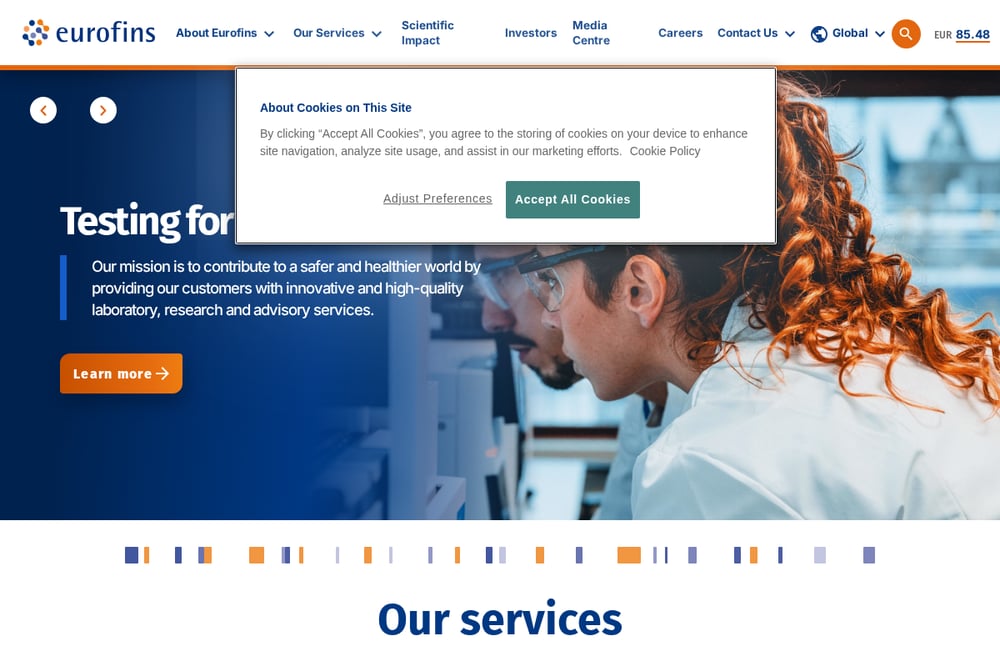 A screenshot of the Eurofins website.
Eurofins is a global testing giant with a dedicated consumer product testing division covering softlines and hardlines. They publish guides like 'Mastering US CPSIA Children's Product Certificate' that walk compliance managers through CPC requirements step by step. Their network spans labs worldwide, so you can test near your manufacturing base and still get US-compliant reports. They handle toys, juvenile products, electricals, and more, with services ranging from testing to inspection and certification. For larger brands that need scale and global coverage, Eurofins is a heavyweight option.
How to Choose the Right CPSIA Testing Resource
Start with your product type. If you sell simple plush toys, a cost guide and lab match like KidsTestingLabs.com may be all you need. If you sell durable infant products or cribs, you'll want a lab with deep experience in CPSC final rules — and you should budget $4,000–$12,000 for crib testing alone. Next, check pricing transparency. Some labs publish per-test benchmarks; others quote only after you submit samples. If you're on a tight margin, transparency matters. Then consider marketplace fit. Amazon, Walmart, and TikTok Shop each have slightly different document requirements, and eFiling is now mandatory. A resource that understands those platforms saves you back-and-forth. Finally, decide between DIY and done-for-you. If you have time, free lab quotes and a cost estimator work fine. If your listing is already blocked, a flat-fee service that handles everything from samples to CPC draft can be worth the premium.
A Simple Workflow to Get Compliant Fast
Step 1: Identify your product's age grade and materials. Step 2: Use a free cost estimator to get a budget range. Step 3: Request quotes from at least three CPSC-accepted labs. Step 4: Send samples and confirm the test scope covers lead, phthalates, ASTM F963, small parts, and flammability as applicable. Step 5: Review the draft CPC and tracking label requirements. Step 6: File via eFiling and upload documents to your marketplace seller portal. Step 7: Keep records for five years in case of a CPSC audit. If any step stalls, consider a done-for-you service to unblock your listing.
The Bottom Line on CPSIA Testing
CPSIA compliance isn't optional, and in 2026 the enforcement is real. The good news is you have options. KidsTestingLabs.com gives you cost clarity and lab matching, which is perfect for Amazon and TikTok Shop sellers who need answers fast. TTL Laboratories offers a domestic CPSC-accepted lab with published methods. V-Trust Lab supports Asia-based sourcing with CPC expertise. Materials Analytical Services goes deep on chemical testing. Eurofins brings global scale and educational resources. Pick the one that matches your product, your budget, and your timeline — then get your CPC filed before your next listing review.