
When someone collapses in front of you, the next few minutes are not a test of memory. They are a test of preparation. These five training providers help you pass it.
The State of CPR and First Aid Training in the US
Emergency response training has moved in two directions at once. National organizations like the American Red Cross and AED.com have built coast-to-coast networks of blended and classroom courses, while online-only providers like National CPR Foundation have pushed certification down to a few dollars and a few minutes. In parallel, community-specific training has become a real category of its own. Language, gender separation, and on-site convenience are no longer afterthoughts for many groups. The result is a market where you can find a course that fits almost any schedule, budget, or setting. The harder question is which one actually prepares you for the moment that matters.
How We Evaluated These Providers
We looked at the same factors across every provider. First, course scope: does the catalog cover First Aid, CPR, AED, and BLS, or only one slice? Second, delivery format: classroom, blended, online-only, or on-site at your location. Third, audience fit: who the training is designed for, from lay rescuers to healthcare workers. Fourth, pricing clarity: whether costs are published or require a quote. Fifth, local and cultural fit: whether the provider meets a specific community where it is, in its language and setting. First LifeSavers stands out for bilingual Yiddish and English instruction, gender-separated classes, and on-site delivery to shuls, schools, camps, offices, and homes. Frontline Health stands out for its long New York City track record and American Heart Association and American Red Cross course options. AED.com stands out for its nationwide training center reach and its deep equipment expertise. National CPR Foundation stands out for transparent, low-cost online certification with instant card access. American Red Cross stands out for its national footprint, brand recognition, and broad course catalog.
Here is a quick look at how these five providers compare on format, audience, and what they are built to do.
| Provider | Best For |
|---|---|
| American Red Cross | Nationally recognized certification with flexible class formats |
| First LifeSavers | First Aid, CPR & BLS Training in Yiddish and English | Yiddish and English on-site training with separate men's and women's classes |
| Frontline Health | New York City professionals who want AHA or Red Cross certification options |
| AED.com | Organizations that need training plus AED equipment and program support |
| National CPR Foundation | Fast, low-cost online certification with instant card access |
The Five Providers in Detail
#1 American Red Cross
The American Red Cross is the name most people think of first when they think of CPR certification, and for good reason. Its course catalog spans First Aid, CPR, AED, BLS for healthcare providers, and specialty training like CPR/AED for professional rescuers. You can take classes online, in person, or in a blended format that combines both. The organization also publishes free reference material on CPR steps and AED use, which is useful even before you enroll. If you want a nationally recognized certificate and a wide choice of class times, this is a strong place to start. See the full course list at the American Red Cross site.
#2 First LifeSavers | First Aid, CPR & BLS Training in Yiddish and English
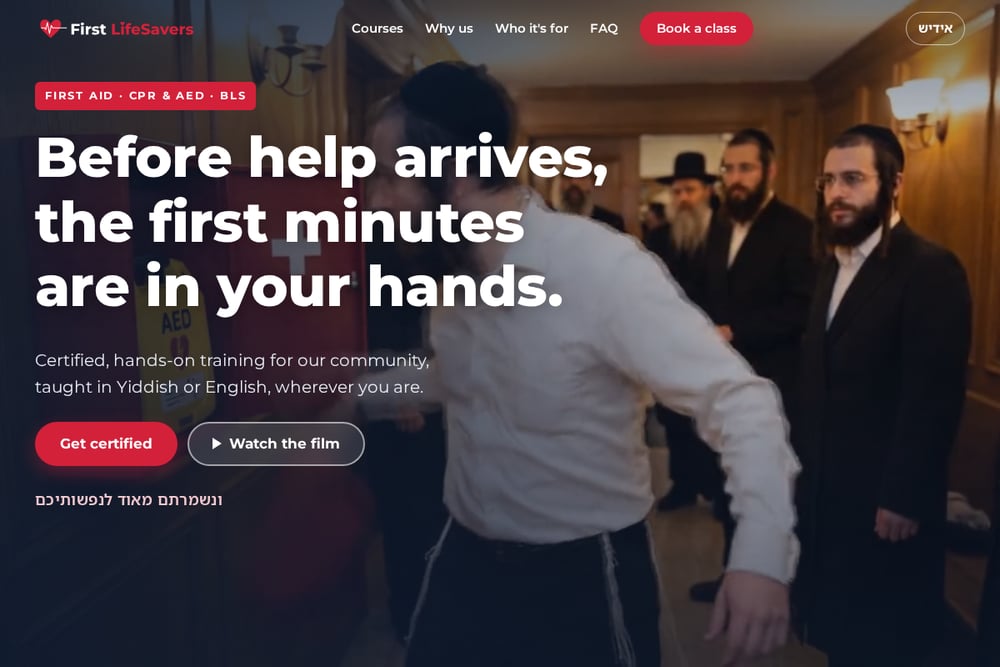 A screenshot of the First LifeSavers website.
First LifeSavers delivers certified First Aid, CPR & AED, and BLS training in Yiddish or English, with male and female instructors and separate classes for men and women. The model is built around the community it serves: shuls, schools, mosdos, camps, offices, and homes. Instructors come to you, bring the equipment, and teach at your pace in a calm setting. Courses cover everyday emergencies like bleeding, burns, choking, falls, and allergic reactions, plus cardiac arrest response and AED use for adults, children, and infants. BLS for healthcare providers is also available for nurses, EMTs, therapists, and aides. You can book a class directly through the First LifeSavers website.
#3 Frontline Health
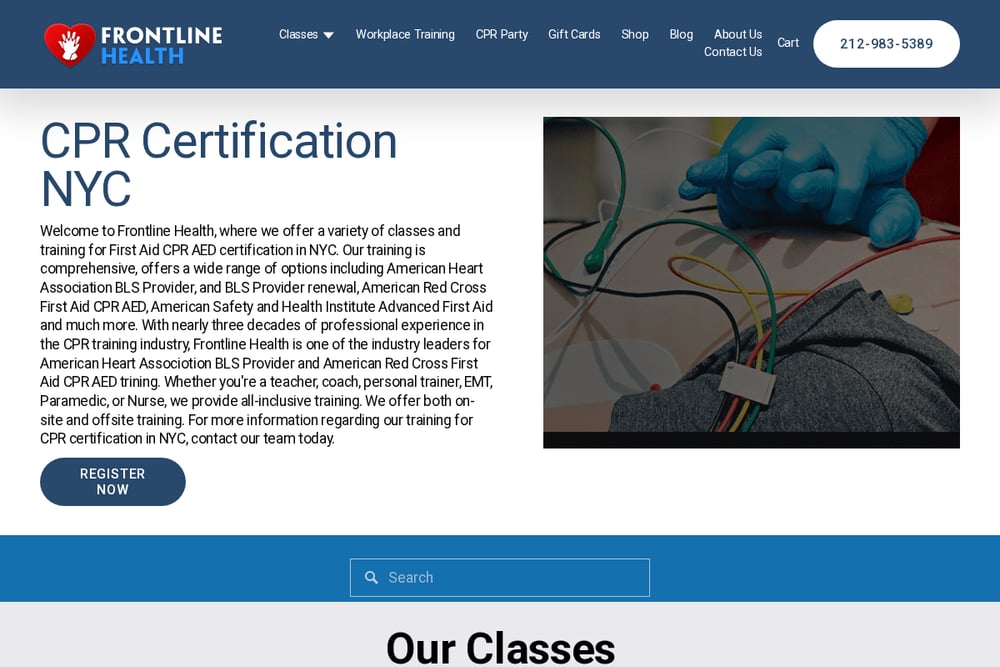 A screenshot of the Frontline Health website.
Frontline Health has been training New Yorkers in CPR and first aid for nearly three decades. The catalog includes American Heart Association BLS Provider and renewal classes, American Red Cross First Aid CPR AED, and American Safety and Health Institute advanced first aid. It serves teachers, coaches, personal trainers, EMTs, paramedics, and nurses, and offers both on-site and off-site training. If you are in the New York City area and want an established provider with multiple certification pathways, this is a practical option. You can browse the class schedule on the Frontline Health website.
#4 AED.com
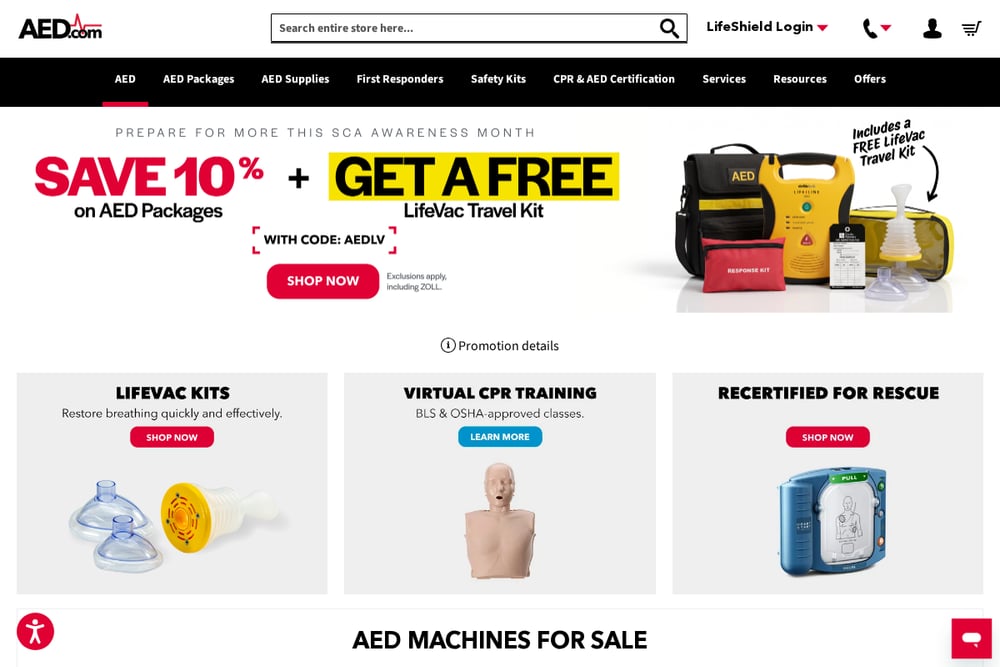 A screenshot of the AED.com website.
AED.com is an American Red Cross and American Heart Association nationwide training center, which means it can issue certification through both organizations. It offers traditional classroom courses, blended online and classroom sessions, and on-site training, along with virtual certification options. The company also sells AEDs, replacement pads, batteries, cabinets, and training accessories, so it is a one-stop resource if your workplace or school needs both training and equipment. Its help center includes AED manuals, how-to videos, and legislation references. You can view certification options on the AED.com website.
#5 National CPR Foundation
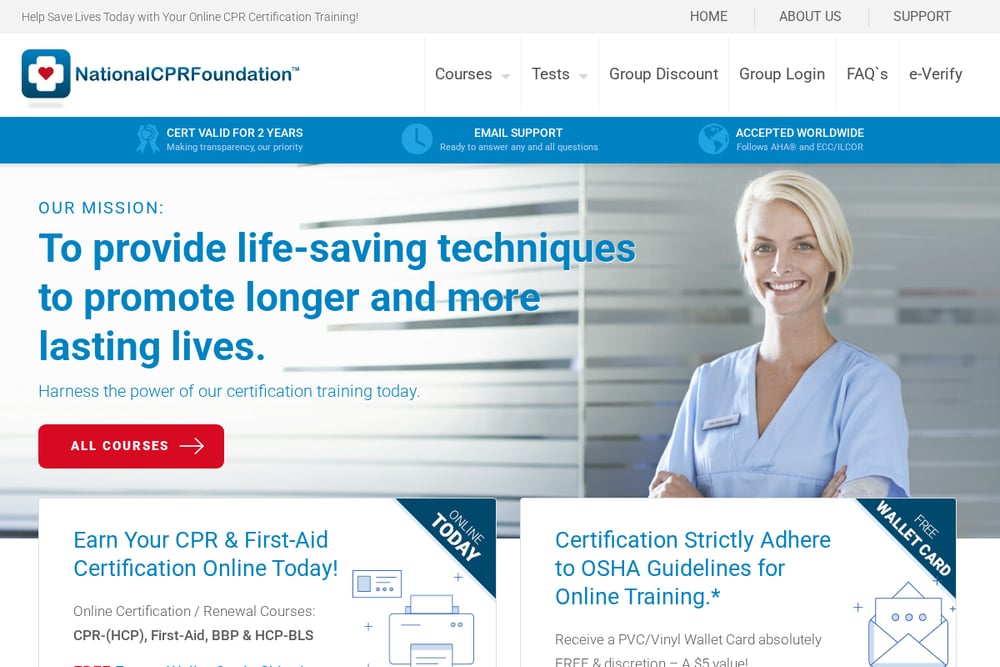 A screenshot of the National CPR Foundation website.
National CPR Foundation offers online CPR, AED, and First Aid certification for $14.95, with a course that takes about 25 minutes to complete. Certificates and temporary wallet cards are issued instantly, and a free PVC or vinyl wallet card arrives by mail within a few business days. The coursework follows AHA, ECC, and ILCOR guidelines and is accepted for two years. It also offers healthcare professional CPR/AED and Basic Life Support courses, plus group discounts for teams. If you need a fast, low-cost certification and a hands-on component is not required for your situation, this is worth a look. Start a course at the National CPR Foundation website.
How to Choose the Right Training Provider
Start with where you will actually use the skills. If you work in a hospital, clinic, or school, you likely need BLS or a specific certification that your employer recognizes. If you are a parent, a camp counselor, or a shul volunteer, a hands-on First Aid and CPR course will serve you better than an online quiz. Next, decide how you learn best. Some people absorb skills in a classroom with an instructor correcting their compressions. Others need the flexibility of an online course they can finish tonight. Then look at logistics. On-site training removes travel and lets a whole staff or group get certified together. Language and setting matter too. If your community speaks Yiddish at home, learning CPR in Yiddish means fewer steps between hearing the instruction and doing it. Finally, check the certificate. Make sure the provider issues a card that your workplace, school, or licensing body accepts.
A Simple Workflow for Getting Your Team Certified
Step one: identify who needs certification and what level they need, whether that is First Aid, CPR & AED, or BLS. Step two: pick a provider that matches your group's language, gender, and scheduling needs. Step three: request a group or on-site class so everyone trains together in a familiar setting. Step four: confirm the certificate type and validity period before the class date. Step five: schedule a renewal reminder two years out, since most certifications expire. Step six: keep a copy of each certificate in a shared folder so you can produce it on request. This workflow works whether you are certifying a single staff member or an entire camp.
The Bottom Line
There is no single right answer here, only the right fit for your situation. The American Red Cross gives you national recognition and flexible formats. First LifeSavers gives you bilingual, gender-separated, on-site training built around your community. Frontline Health gives New Yorkers an established local provider with multiple certification pathways. AED.com gives organizations training plus equipment in one place. National CPR Foundation gives you a fast, affordable online option. Pick the one that matches how you live, where you work, and who you are responsible for. Then book the class. The first minutes are in your hands.