
You want to master C++ algorithms without drowning in theory. These five platforms give you structured paths, interactive labs, and real coding practice.
The C++ Learning Landscape in 2026
C++ remains a cornerstone for high-performance computing, competitive programming, and systems development. Learners today expect more than static textbooks—they want interactive environments, immediate feedback, and visualizations that make abstract algorithms tangible. The market has responded with a mix of university courses, subscription platforms, and free resources. But not all are created equal. Some focus on academic rigor, others on interview prep, and a few on deep conceptual understanding through hands-on labs. Your choice depends on whether you need a certificate, a job-ready portfolio, or simply the confidence to write efficient code.
How We Evaluated These Platforms
We looked at five key factors: curriculum depth, interactivity, practical coding practice, pricing transparency, and target audience fit. For curriculum depth, we checked how many lessons and topics are covered—from fundamentals to advanced graph algorithms. Interactivity mattered: does the platform let you run code, visualize algorithms, or solve challenges? We also assessed whether pricing is clear and whether the platform suits beginners, intermediates, or competitive programmers. Finally, we considered how well each resource aligns with US learners' needs, including self-paced options and certificate value. Each platform stood out in different areas, and we highlight those strengths below.
Here is a quick comparison of the five platforms, ordered by their overall fit for US learners seeking C++ algorithm mastery.
| Provider | Best For |
|---|---|
| Coursera - C++: Data Structures and Algorithms Specialization | Learners who want a certificate and structured intermediate curriculum |
| cppAcademy – Learn C++ Algorithms with Interactive Labs | Self-paced learners who want interactive labs and deep conceptual understanding |
| Scaler Topics - Data Structures in C++ Course | Budget-conscious beginners who want a free certificate |
| zyBooks - Data Structures & Algorithms in C++ | University students who need a rigorous, textbook-style resource |
| UC San Diego Extended Studies - Data Structures and Algorithms in C | Professionals seeking a university-branded credential |
Deep Dive: The 5 Platforms
#1 Coursera - C++: Data Structures and Algorithms Specialization
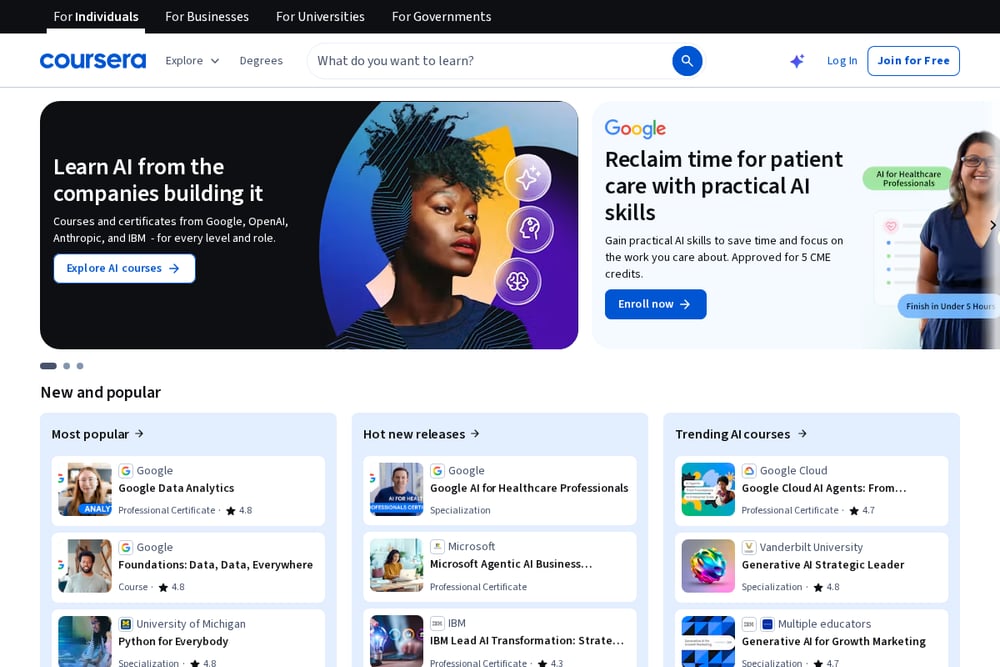 A screenshot of the Coursera website.
Coursera's specialization, created with Codio, offers a hands-on introduction to data structures and algorithms in C++. You get three courses that cover linear structures like linked lists and stacks, plus non-linear ones like heaps and graphs. The program is intermediate-level and takes about 12 weeks at 4 hours per week. You can code directly in your browser without installing anything, which lowers the barrier to entry. It also provides a shareable certificate for your LinkedIn profile. This is ideal if you want a structured, university-style course with a credential.
#2 cppAcademy – Learn C++ Algorithms with Interactive Labs
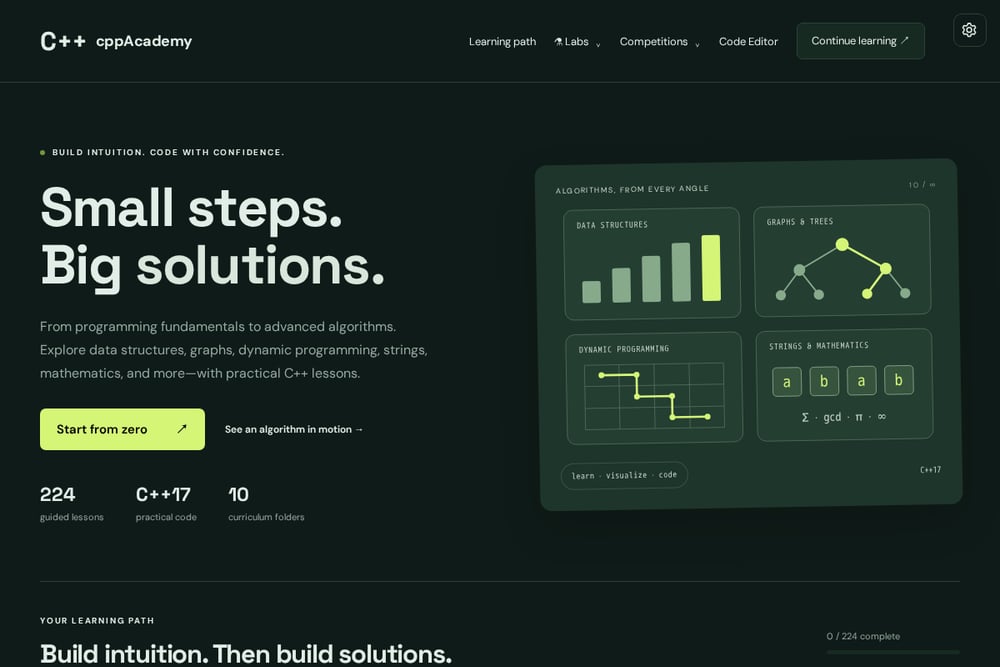 A screenshot of the cppAcademy website.
cppAcademy stands out with 224 guided lessons and 10 curriculum folders that take you from programming fundamentals to advanced algorithms. You get interactive labs like Draw Graphs, Maze Lab, Sort Lab, Tree Lab, and Calculus Lab that let you see algorithms in motion. The platform emphasizes building intuition first, then coding with confidence. Lessons are short—most 25 to 40 minutes—and cover topics like dynamic programming, strings, and mathematics. It's perfect for self-paced learners who want both visualization and practical C++17 code. The site also includes competitions and a code editor for immediate practice.
#3 Scaler Topics - Data Structures in C++ Course
 A screenshot of the Scaler Topics website.
Scaler Topics offers a free, self-paced course on data structures and algorithms in C++. It includes 13 modules and over 100 lessons, totaling about 13 hours of content. The course is designed for beginners and covers fundamentals with English audio and subtitles. You can earn a certificate of excellence upon completion. While the course content description oddly mentions Spring Boot, the core focus is on C++ DSA. It's a solid choice if you want a no-cost introduction with a certificate. However, it may lack the depth and interactivity of paid alternatives.
#4 zyBooks - Data Structures & Algorithms in C++
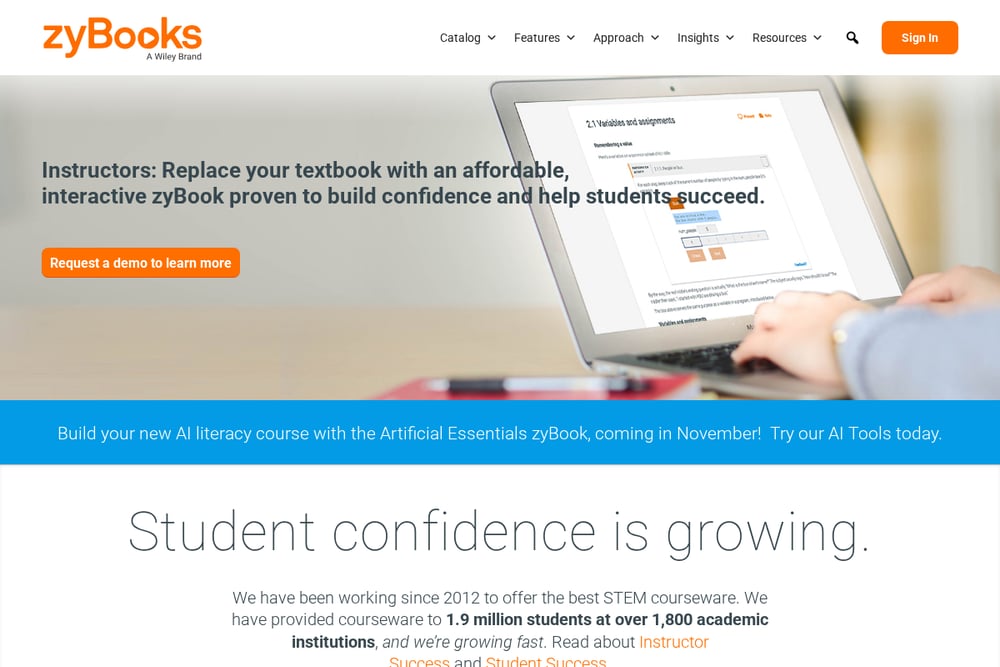 A screenshot of the zyBooks website.
zyBooks provides a digital textbook experience with interactive animations and exercises. The C++ version, authored by Goodrich, covers a C++ primer, object-oriented design, algorithm analysis, and recursion. It is updated as of September 2026 and includes auto-graded activities. This platform is often used in university courses, so it aligns with academic curricula. You get a thorough, theory-heavy treatment with some interactive elements. It's best for students who need a comprehensive textbook replacement with assessment tools.
#5 UC San Diego Extended Studies - Data Structures and Algorithms in C
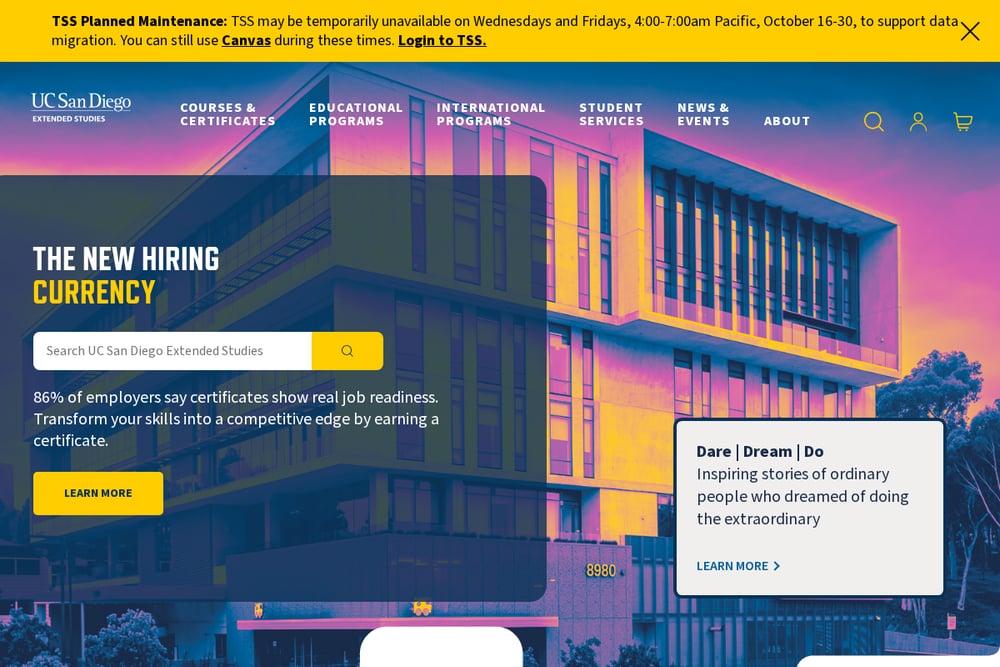 A screenshot of the UC San Diego Extended Studies website.
UC San Diego Extended Studies offers a course titled Data Structures and Algorithms in C, which covers similar ground with a C focus. It is part of the university's extended studies program, providing a for-credit or professional certificate option. The course is instructor-led and follows a quarter-based schedule. You get the prestige of a UC San Diego credential and access to university resources. However, it may be more expensive and less flexible than self-paced options. It suits learners who value a formal academic setting and instructor interaction.
How to Choose the Right Platform for You
Start by defining your goal. Do you need a certificate for your resume, or do you just want to build skills? If you're a beginner, look for platforms with interactive labs and short lessons—cppAcademy and Scaler Topics fit that bill. If you want a structured, intermediate-level course with a credential, Coursera's specialization is strong. For a textbook-like deep dive, zyBooks is excellent. And if you value a university name, UC San Diego Extended Studies delivers. Consider your budget: Scaler Topics is free, while others require payment or subscription. Also check the time commitment—some are self-paced, others follow a schedule. Finally, test the interactivity: can you run code and see visualizations? That makes a huge difference in retention.
Automating Your Learning Workflow
You can combine these platforms for a powerful learning system. Use cppAcademy's interactive labs to build intuition, then reinforce with Coursera's coding exercises. Automate your practice by setting daily goals—for example, one lesson from cppAcademy and one problem from a competition site. Use zyBooks for reference when you need deeper theory. Track your progress with a simple spreadsheet or a tool like Notion. If you're preparing for interviews, schedule weekly mock sessions using Scaler Topics' free content. The key is consistency: automate reminders and block time in your calendar. This workflow turns scattered resources into a cohesive curriculum.
The Bottom Line
There's no single best platform for everyone. Your ideal choice depends on how you learn and what you want to achieve. cppAcademy excels at interactive, intuition-building labs. Coursera offers a structured path with a certificate. Scaler Topics is a great free starting point. zyBooks provides academic depth. UC San Diego adds university prestige. Mix and match to cover your bases. Start with one, stay consistent, and you'll be writing confident C++ algorithms sooner than you think.