Your team has AI tools. Your team doesn't have AI habits. These five providers close that gap with training built around the work your people already do.
The state of corporate AI training
Most organizations bought AI licenses before they built AI skills. The result is a familiar pattern: a few power users, a lot of abandoned chats, and leadership wondering why adoption stalled. Corporate AI training has grown up around that gap, shifting from generic "what is AI" sessions to role-based, hands-on workshops that use your actual documents, spreadsheets, and inboxes. The strongest providers now pair training with workflow design, so what people learn on Tuesday is still running on Friday.
How we evaluated these providers
We looked at four things: whether the training maps to real job tasks rather than theory, how clearly the offering and pricing are structured, whether the provider can go beyond teaching into building workflows, and how well the format fits a working team's schedule. We also weighed tool-agnostic flexibility against depth in specific platforms like Copilot and Gemini.
Here's the short version before the detail. Each provider below takes a different angle on the same problem, so match the angle to your team's starting point.
| Provider | Best For |
|---|---|
| Improving | Teams wanting a structured course ladder with public pricing |
| Practical AI training for teams | PlainClever | Teams that want training tied directly to daily tasks |
| Correlation One | Enterprises that need skills measurement alongside training |
| Iternal AI | Regulated teams needing training plus governance advisory |
| Teamland | Teams wanting an engaging workshop with a readiness check |
The five providers in detail
#1 Improving
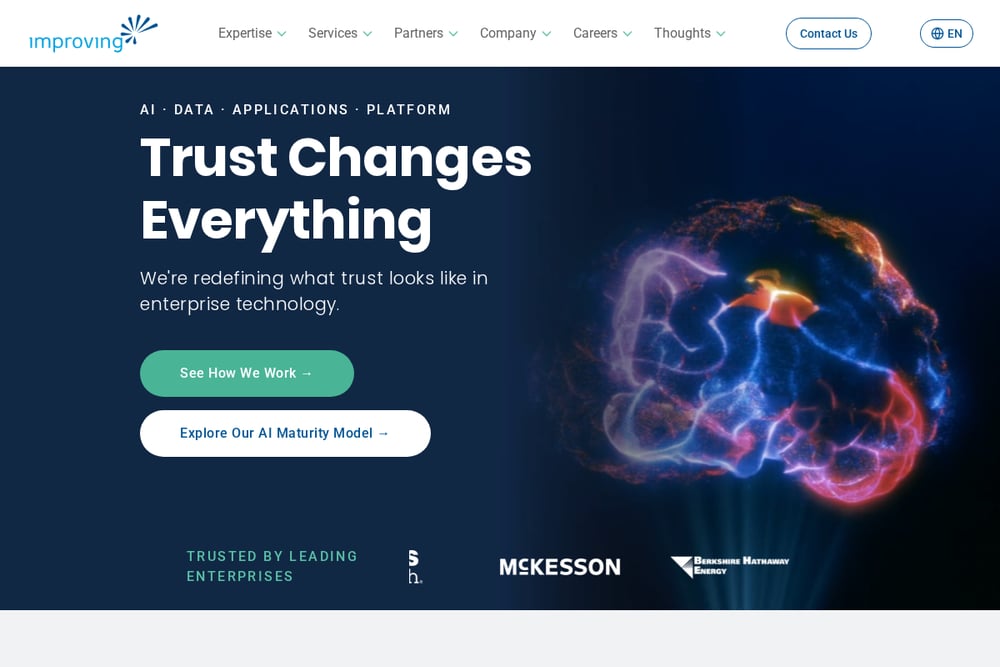 A screenshot of the Improving website.
Improving runs role-based AI training for executives and delivery teams, delivered onsite or virtually, with a curriculum that moves from a four-hour Essentials workshop into strategic and certification tracks. The sessions are tool-agnostic and align to whatever stack you already run, including Microsoft Copilot, Google Gemini, and ChatGPT. Pricing is unusually transparent for this category, with public classes listed at a per-student rate. It's a strong fit if you want a structured ladder from awareness to certification rather than a single offsite. See the course structure at Improving's AI training page.
#2 Practical AI training for teams | PlainClever
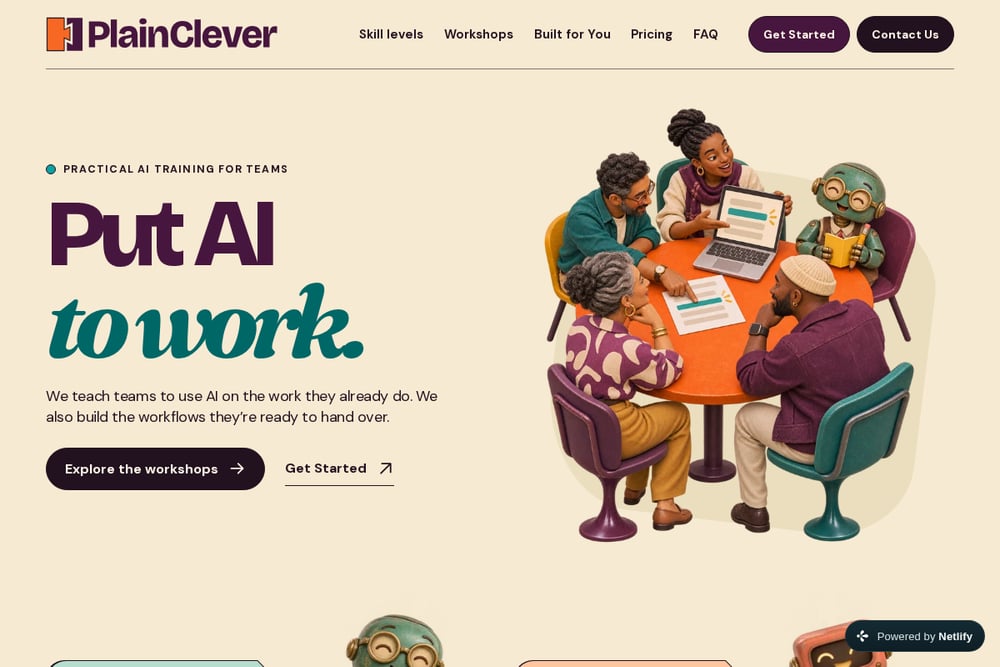 A screenshot of the Practical AI training for teams | PlainClever website.
PlainClever teaches teams to use AI on the work they already do, then builds the workflows they're ready to hand over. The workshop ladder is refreshingly concrete: beginners set up privacy and security settings and practise drafting email in their own voice, intermediate users build and verify an Excel report against source data, and advanced operators assemble a documented workflow with human approval checkpoints. Small-group practice and one-to-one coaching run alongside the sessions, so nobody hides at the back. Separately scoped workflow builds cover agents and integrations that connect your existing tools. Start with the workshop overview on the PlainClever site.
#3 Correlation One
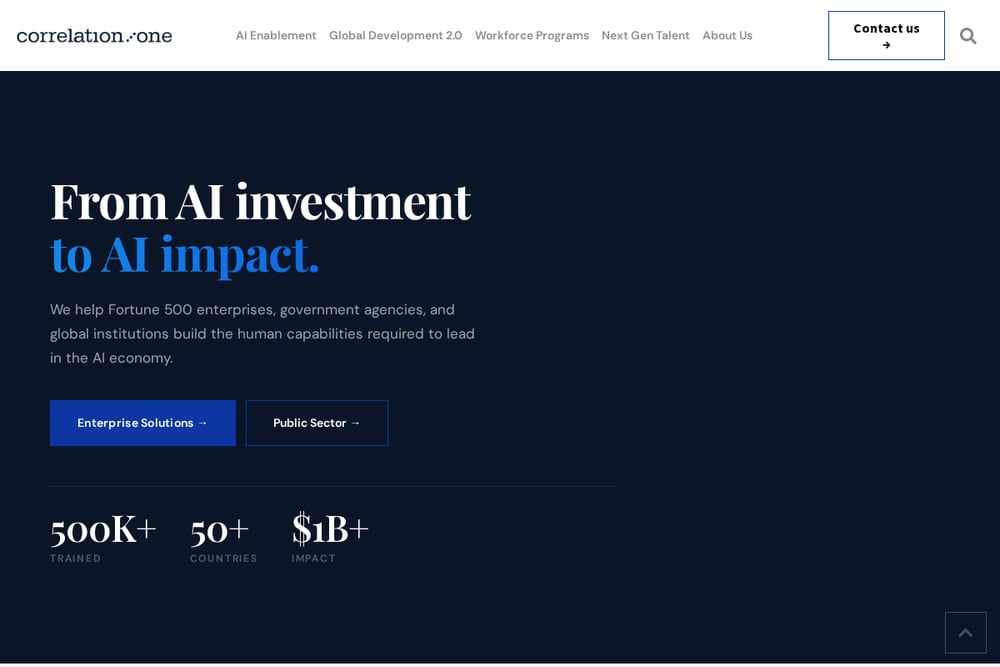 A screenshot of the Correlation One website.
Correlation One builds custom generative AI programs for large enterprises, with role-specific tracks for executives and platform-specific training for ChatGPT Enterprise, Claude, Gemini, and Microsoft Copilot. What sets it apart is measurement: an AI skills assessment and maturity diagnostic benchmark where your organization actually stands before and after training. That makes it a natural choice when you need to justify AI spend to a board. The focus is scale, so expect a program design engagement rather than a single workshop. Explore the enterprise offering at Correlation One's AI training page.
#4 Iternal AI
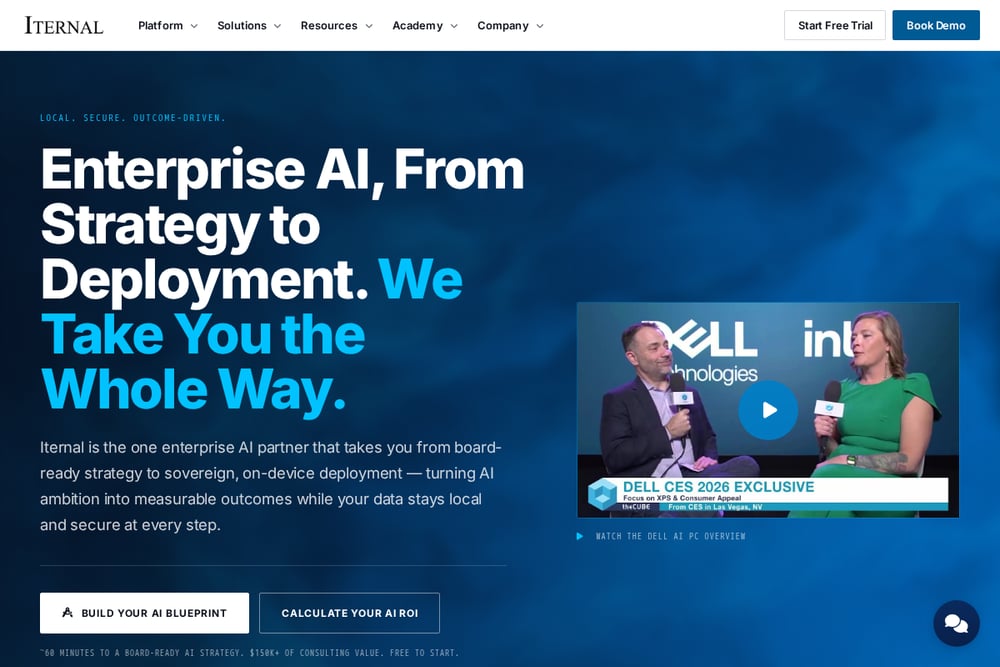 A screenshot of the Iternal AI website.
Iternal AI pairs hands-on team training with a broader advisory bench, including AI strategy consulting, fractional Chief AI Officer support, and governance work. That combination suits regulated and public-sector organizations that need training to sit inside a compliance framework rather than float above it. The platform side includes an AI Blueprint Builder for prioritizing initiatives across value, feasibility, and risk. If your training conversation keeps turning into a strategy conversation, this is the provider built for that. See the team training track on Iternal AI's site.
#5 Teamland
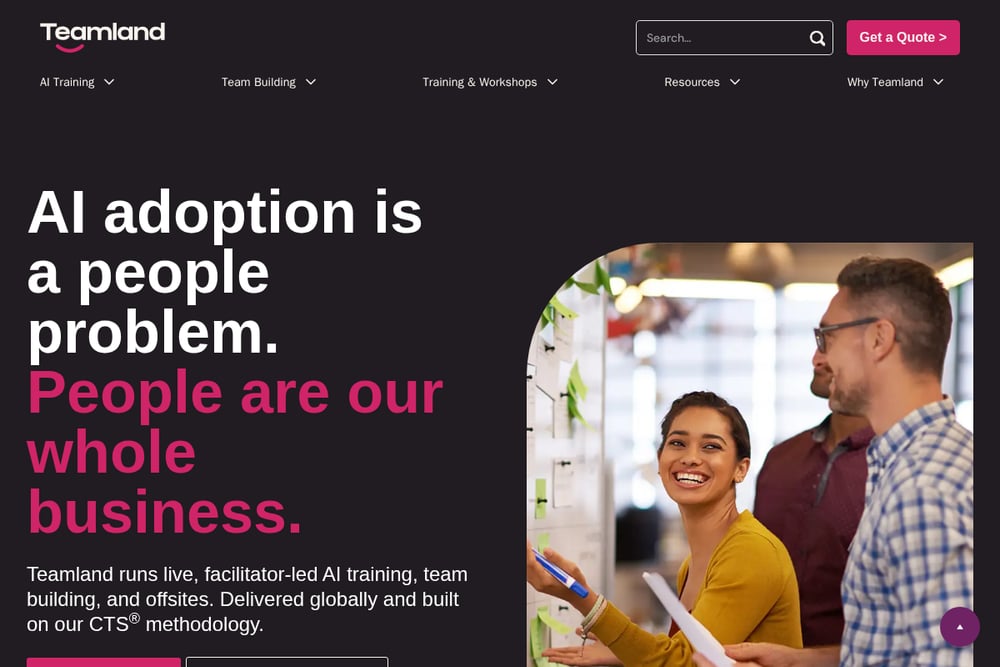 A screenshot of the Teamland website.
Teamland approaches AI training from its team-building roots, with a flagship AI First workshop and a methodology designed to make skills stick after the session ends. Training is organized by tool, including Microsoft 365 Copilot, Anthropic Claude, ChatGPT, and Google Gemini, and by role, from executives to frontline employees. There's also a free twelve-question readiness report that scores your organization and maps gaps before you commit. It's a good entry point for teams that want energy in the room and a clear next step. Browse the programs at Teamland's AI training page.
How to choose the right fit
Start with your team's actual starting point. If people are still nervous about opening a chat window, you need beginner practice with real tasks, not a strategy deck. If you already have power users, look for a provider that can turn their habits into documented, repeatable workflows. Then ask two questions: does the provider use your tools and your documents in the session, and can they help after the workshop ends? Finally, check pricing structure early. Transparent per-seat or per-workshop pricing saves weeks of procurement friction.
Where training meets automation
Training sticks when it produces something that keeps running. The most effective pattern is to pick one repeatable job, such as an inbox request that needs a draft reply, and walk your team through it end to end: what AI drafts, where a person checks or approves, and how to pause the workflow when something looks wrong. Document the steps so a colleague can run it next month. That single loop teaches prompting, verification, and governance at once, and it gives you a measurable result to show leadership.
The bottom line
AI adoption fails quietly when training stays theoretical. The five providers here all push toward practice, but they start from different places: Improving from a structured course ladder, PlainClever from the tasks on your team's desk, Correlation One from measurement at scale, Iternal AI from governance, and Teamland from engagement. Pick the starting point that matches your team's reality, and insist that whatever you learn in the room is still running a month later.