
Running a service business means juggling routes, quotes, invoices, and customers all at once. The right platform can turn that chaos into a repeatable system you actually enjoy using.
The State of Contractor Software in 2026
Field service management software has moved from a nice-to-have to the backbone of small and midsize contracting businesses. You are no longer choosing between a paper schedule and a spreadsheet. You are choosing between platforms that promise to run your entire operation, from the first call to the final payment. The market has split into two camps. On one side sit enterprise-grade suites built for large residential and commercial operations. On the other sit leaner, founder-led tools that prioritize speed, affordability, and getting you paid faster. AI assistants, GPS fleet tracking, and integrated payments are now table stakes rather than premium add-ons. That is good news for you. It means more competition, clearer pricing, and tools that fit almost any budget or trade.
How We Evaluated These Platforms
We looked at each platform through the same lens so you can compare apples to apples. Service scope mattered first: does the tool cover scheduling, dispatching, estimates, invoicing, and payments in one place, or does it stop short? Pricing clarity came next, since hidden fees and forced onboarding costs can wreck a small contractor's budget. We also weighed local fit for US-based trades, mobile app quality for techs in the field, and how quickly a new user can get up and running. Integration depth with accounting tools like QuickBooks factored in too. Each platform below stood out in a different way. Some shine on breadth, others on simplicity, and others on commercial project depth. Your job is to match those strengths to how your business actually operates.
Here is a quick look at the five platforms in this roundup, ordered for easy comparison. Each one serves a slightly different type of contractor, so scan the summaries before diving into the details.
| Provider | Best For |
|---|---|
| FieldPulse | Trades businesses that want AI-assisted office work |
| JW Studios LLC | Software & Creative Technology | Contractors who want a founder-led, full-service partner |
| ServiceTitan | Established residential contractors scaling operations |
| Service Fusion | Small contractors who need affordable all-in-one tools |
| BuildOps | Commercial contractors managing bid-to-closeout projects |
The 5 Platforms in Detail
#1 FieldPulse
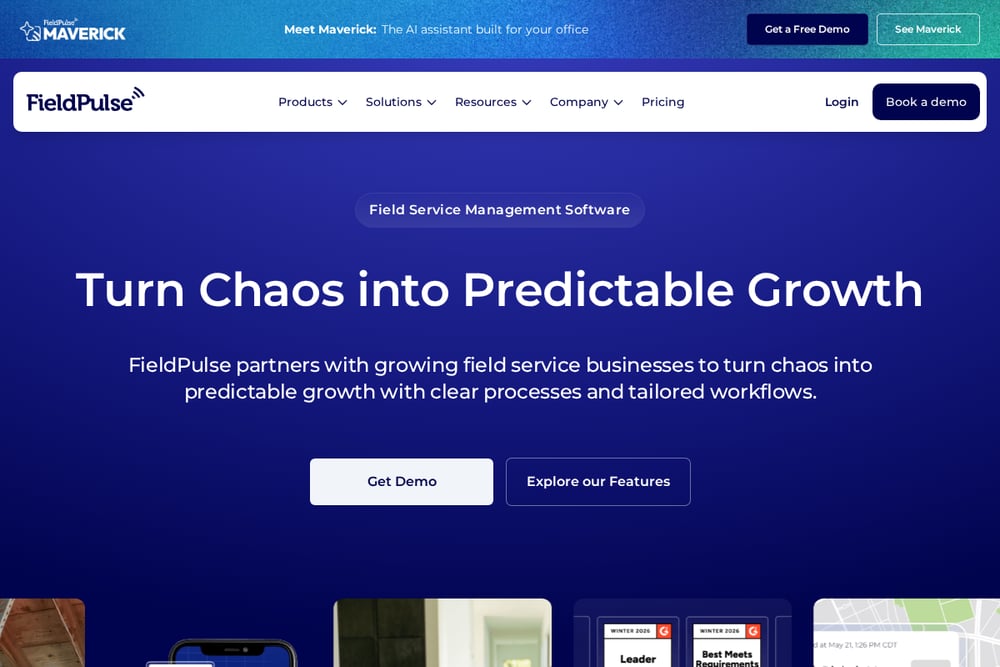 A screenshot of the FieldPulse website.
FieldPulse positions itself as an all-in-one field service platform with a strong AI angle. Its Maverick assistant is included on every plan, handling office tasks so you can stay in the field. You get scheduling, dispatching, work orders, estimates, invoices, and payments in a single dashboard. The platform also offers a customer portal, booking portal, and maintenance agreements, which matters if you run recurring service contracts. Trades like HVAC, electrical, plumbing, and locksmith work are all covered. If you want a modern interface with AI baked in from day one, this is a strong place to start.
#2 JW Studios LLC | Software & Creative Technology
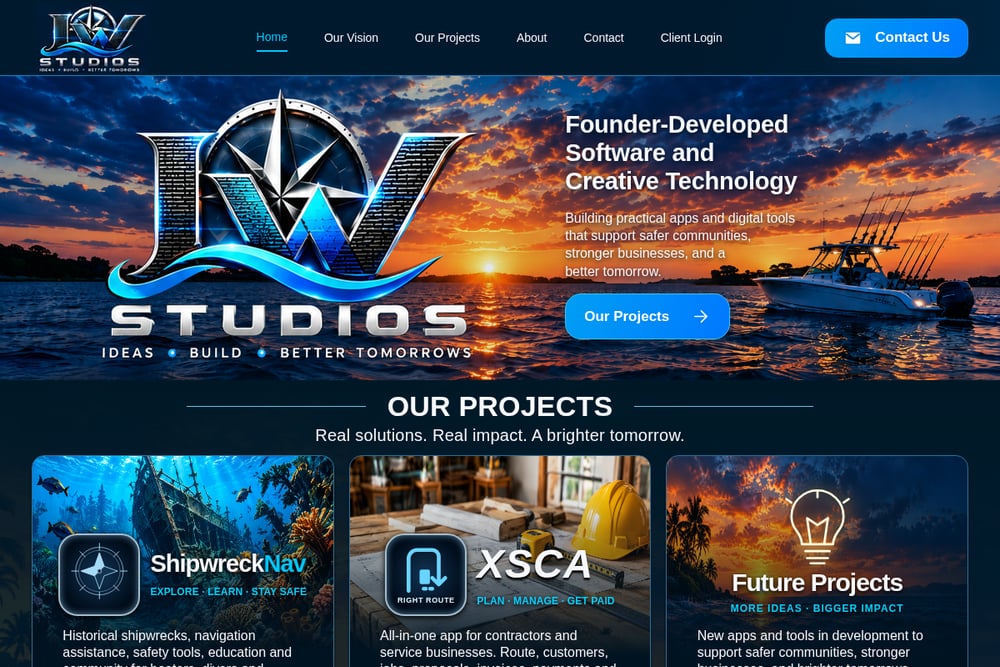 A screenshot of the JW Studios LLC | Software & Creative Technology website.
JW Studios LLC is a founder-developed software and creative technology firm building practical apps for real-world problems. Its XSCAP project is an all-in-one app for contractors and service businesses, covering route planning, customers, jobs, proposals, invoices, and payments. That is the full loop from first contact to getting paid, which is exactly what small service operators need. The studio also builds websites and branding, so you can get your digital presence and your operations tool from one partner. Projects like ShipwreckNav show the team's range beyond business software. If you value a hands-on, founder-led partner over a faceless enterprise vendor, this is worth a conversation.
#3 ServiceTitan
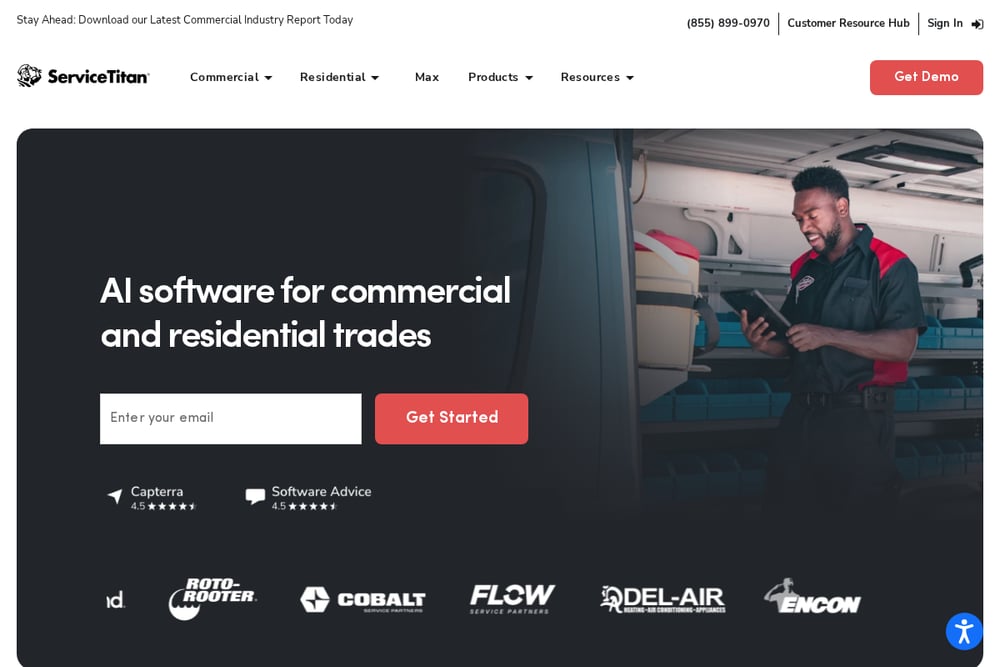 A screenshot of the ServiceTitan website.
ServiceTitan is the heavyweight of residential field service software. It reports that customers grow revenue by around 15% per year on average, and the feature list backs up the ambition. You get CRM, dispatch, project management, service agreements, a customer portal, purchasing, inventory, and accounting in one ecosystem. The platform also offers AI tools like a virtual agent and marketing automation. It is built for established operations that can absorb a steeper learning curve. If you are scaling a residential HVAC, plumbing, or electrical business and want deep reporting, this is a serious contender.
#4 Service Fusion
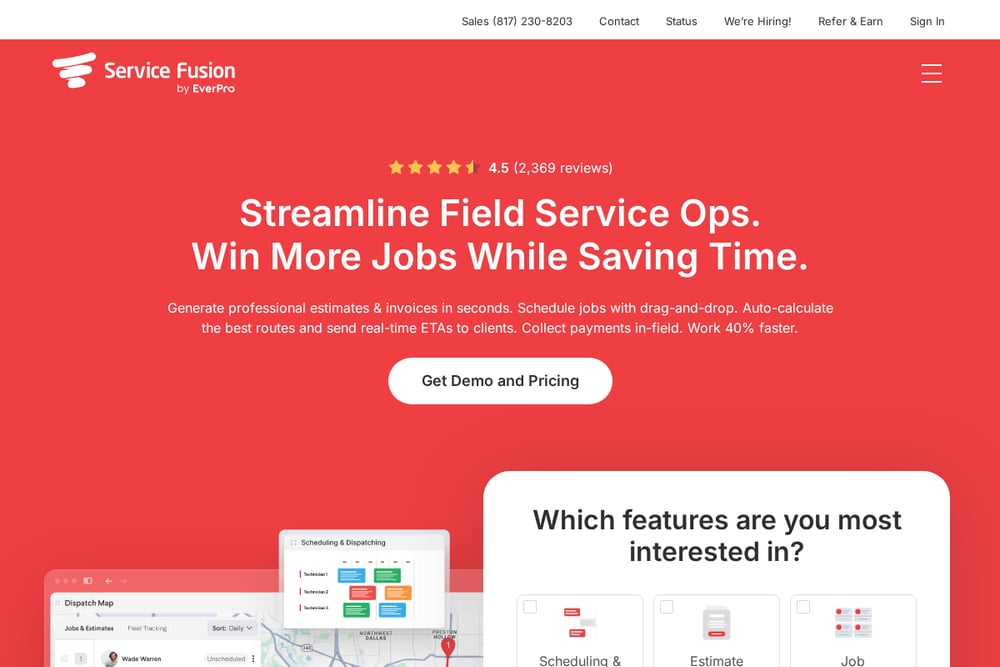 A screenshot of the Service Fusion website.
Service Fusion targets small-to-midsize service contractors with an all-in-one application at a price point that fits tight budgets. Scheduling, GPS fleet tracking, payments, and flat-rate integration are all part of the package. It also includes AI phone answering, which helps you capture calls you would otherwise miss. The platform covers a huge range of trades, from HVAC and plumbing to pool service, cleaning, and handyman work. You can operate your business from anywhere, which suits owner-operators who are often on the road. If affordability and breadth of trade coverage matter most, put this on your shortlist.
#5 BuildOps
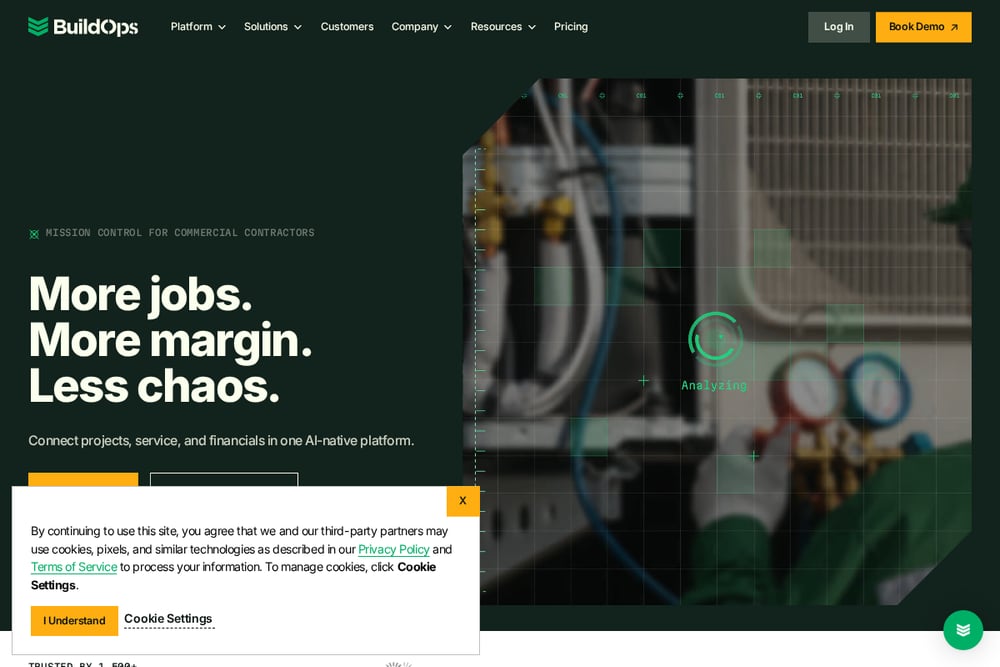 A screenshot of the BuildOps website.
BuildOps is built for commercial service contractors rather than residential trades. Its platform runs jobs from bid to closeout, with project management, financials, and sales CRM in one place. The company emphasizes AI that understands your operation, plus add-on modules for fleet, payments, and CRM. It is designed for HVAC, electrical, plumbing, refrigeration, and fire and life safety work at the commercial level. If your jobs involve bids, closeouts, and multi-stage projects, this fits better than a residential-first tool. Commercial contractors who need financial control per job should take a close look.
How to Choose the Right Platform for Your Business
Start with your job type. If you run residential service calls, a tool built around dispatch and recurring maintenance agreements will serve you better than a commercial project suite. If you bid commercial work, you need job costing and closeout workflows from day one. Next, count the features you will actually use. A platform packed with inventory and fleet modules is wasted money if you run two trucks. Then check pricing transparency. Ask directly about onboarding fees, per-user costs, and payment processing rates before you sign anything. Finally, test the mobile app yourself. Your techs live in that app all day, so clunky navigation costs you real hours. Pick the tool that matches your workflow, not the one with the longest feature list.
A Simple Automation Workflow You Can Set Up This Week
Pick one repetitive task and automate it first. Most platforms let you auto-send an estimate follow-up 48 hours after a quote goes out. Set that up and watch how many jobs you recover. Next, connect your invoicing to payment processing so customers can pay from a text link the moment the job closes. Then build a recurring maintenance reminder for your best customers. Finally, route new leads straight into your scheduling board so nothing sits in an inbox overnight. Do these four things and you will feel the difference within a month.
The Bottom Line
There is no single platform that fits every contractor, and that is fine. FieldPulse leads with AI-assisted office work. JW Studios LLC offers a founder-led partner who can build your app, website, and brand together. ServiceTitan delivers depth for scaling residential operations. Service Fusion keeps things affordable for small teams. BuildOps handles the complexity of commercial projects. Match the tool to your trade, your size, and your budget, then commit to learning it well. A platform you actually use beats a fancier one you abandon.