
You are organizing a small conference and need peer review software that does not overwhelm you. Here are five tools worth knowing.
The State of Conference Peer Review Software
Academic conferences rely on robust peer review software to manage submissions, coordinate reviewers, and build programs. In 2026, the market offers a range of solutions, from lightweight platforms for small events to comprehensive systems for large societies. Many organizers seek tools that balance functionality with cost, especially for conferences with limited budgets. Key features include abstract management, reviewer matching, blind review options, and program export. The rise of AI and automated checks, such as fake-reference screening, is also shaping the landscape. As you evaluate options, consider your conference size, workflow complexity, and need for integrations.
How We Evaluated These Tools
We assessed each platform on service scope, pricing clarity, local fit, and standout features. Service scope covers submission handling, review workflows, and program creation. Pricing clarity reflects how transparently costs are presented. Local fit considers suitability for US-based conferences and support. Standout features highlight unique capabilities like fake-reference screening or reviewer matching. Each tool has strengths that may align with different organizer needs.
Here is a quick comparison of the five tools, with details on what makes each one distinct.
| Provider | Best For |
|---|---|
| Fourwaves | Conferences needing an all-in-one event platform |
| SympoDesk | Small conferences on a tight budget |
| Leconfe | Organizers wanting simplicity and speed |
| Ex Ordo | Research conferences with complex workflows |
| Dryfta | Events needing extensive management features |
A Closer Look at Each Platform
#1 Fourwaves
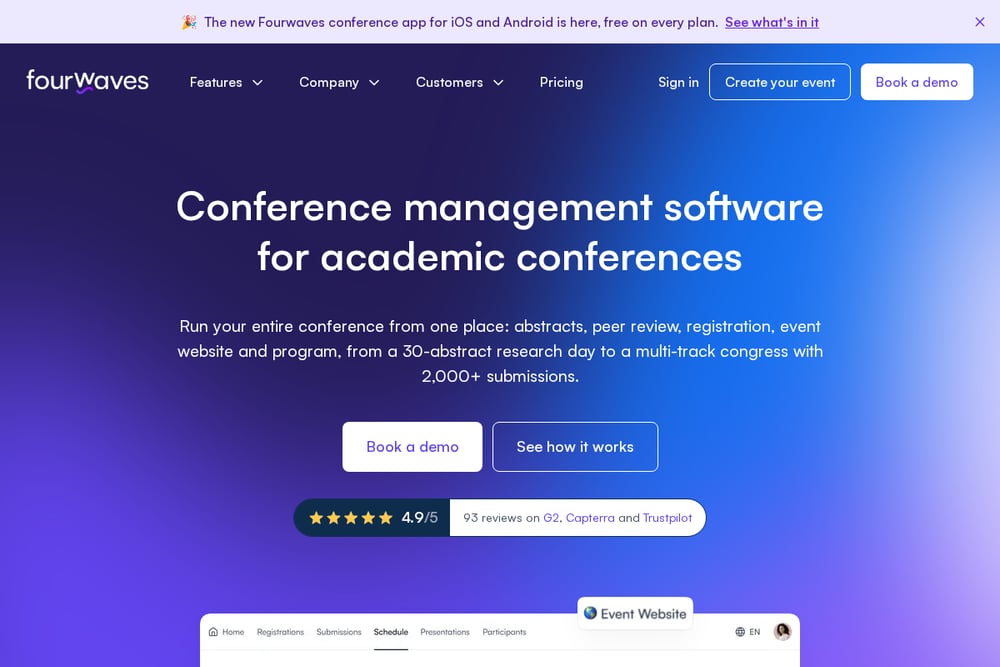 A screenshot of the Fourwaves website.
Fourwaves offers a comprehensive peer review system designed for academic conferences. It includes customizable review forms, single and double-blind options, and automated reviewer assignments. The platform integrates with event websites, registration, and a conference app. According to Fourwaves, their software is trusted by top organizations and aims to make peer review enjoyable for reviewers. You can learn more about their peer review features on their website.
#2 SympoDesk
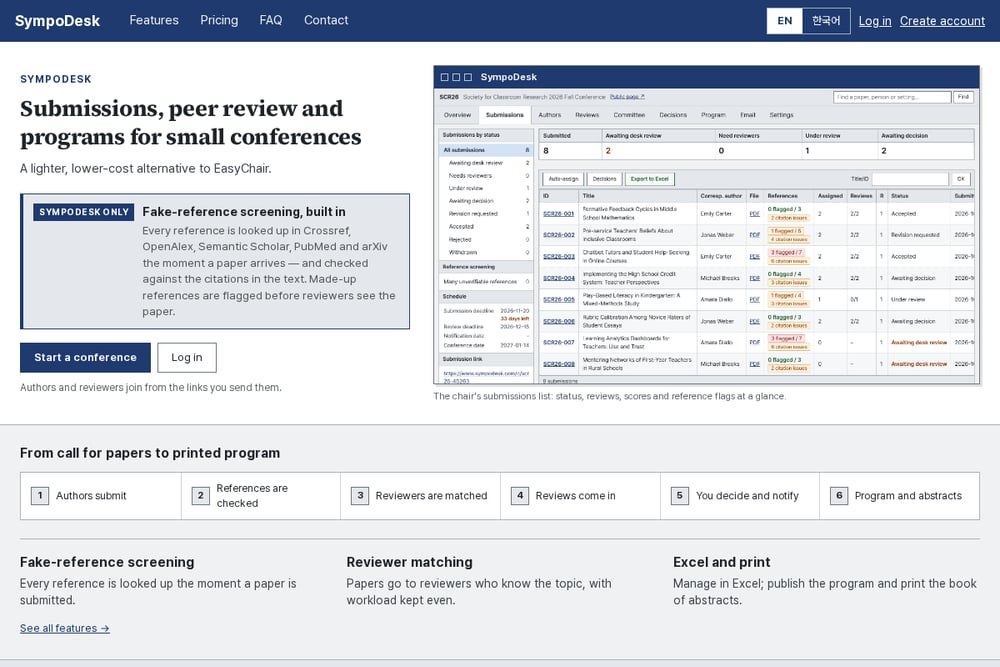 A screenshot of the SympoDesk website.
SympoDesk is a lightweight, cost-effective platform for managing submissions, peer review, and program creation for small conferences. It positions itself as a lower-cost alternative to EasyChair. A standout feature is built-in fake-reference screening: every reference is checked against Crossref, OpenAlex, Semantic Scholar, PubMed, and arXiv upon submission, flagging made-up references before reviewers see the paper. Reviewer matching assigns papers to knowledgeable reviewers while balancing workload. You can export programs to Excel or print a book of abstracts. SympoDesk is ideal for small conferences seeking an affordable, focused solution.
#3 Leconfe
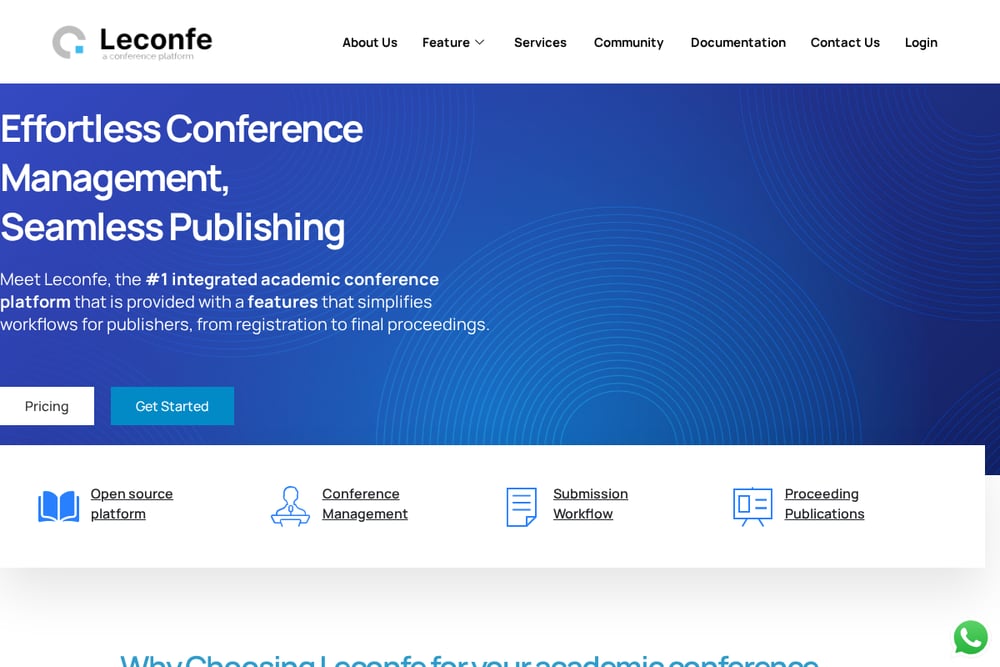 A screenshot of the Leconfe website.
Leconfe provides peer review software simplified for academic conferences. It emphasizes a clean, intuitive interface for reviewers, authors, and editors. The platform supports customizable review forms, single and double-blind review, and transparent workflow tracking. Leconfe also offers registration and payment features, academic conference website building, and abstract management. Their peer review software is designed to save time and maintain academic integrity. You can explore their features on their website.
#4 Ex Ordo
 A screenshot of the Ex Ordo website.
Ex Ordo is a trusted peer review software platform built for research conferences. It handles intricate peer review processes with ease, offering abstract management, registration, and virtual event capabilities. Ex Ordo provides a programme management system and supports hybrid conferences. Their software is designed for scholarly events, with a focus on painless peer review. Case studies from organizations like IPRA and WDA highlight their effectiveness. You can find more details on their product page.
#5 Dryfta
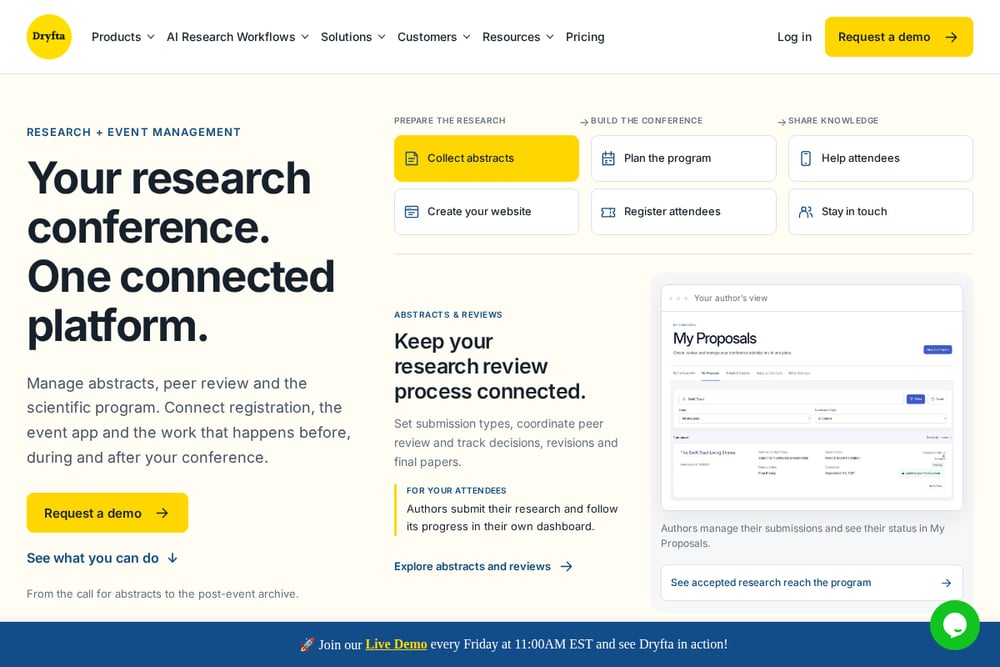 A screenshot of the Dryfta website.
Dryfta offers peer review software as part of a broader event management suite. It includes abstract management, research submissions, peer review, and decision-making tools. Dryfta also provides registration, ticketing, event scheduling, and a mobile event app. Their platform incorporates AI research workflows for abstract quality checks and reviewer assistance. Dryfta emphasizes dependable performance during peak submission times. You can read their guide on choosing peer review software for more insights.
How to Choose the Right Peer Review Software
Start by assessing your conference size and budget. Small conferences may prioritize affordability and simplicity, while larger events might need advanced features like AI checks or virtual session support. Consider the review workflow: do you need single-blind, double-blind, or both? Check if the platform offers reviewer matching and fake-reference screening, which can save time and uphold integrity. Evaluate pricing transparency and whether the tool integrates with your existing systems. Finally, look for program export options, such as Excel or print-ready formats, to streamline your post-review process.
Automation in Peer Review
Automation can significantly reduce manual effort in peer review. Look for features like automatic reference checking, which flags fake citations before review. Reviewer matching algorithms can assign papers based on expertise and balance workloads. Some platforms offer AI-assisted abstract quality checks and conflict detection. These tools help you focus on decision-making rather than administrative tasks. When evaluating software, consider how automation aligns with your conference's needs and whether it maintains transparency and control for your committee.
Final Thoughts
Choosing the right peer review software depends on your conference's unique needs. Fourwaves and Ex Ordo cater to larger, complex events with comprehensive features. SympoDesk stands out for small conferences seeking an affordable, focused solution with unique fake-reference screening. Leconfe offers simplicity and speed, while Dryfta provides extensive event management capabilities. Evaluate your budget, workflow, and desired automation to find the best fit. With the right tool, you can streamline submissions, ensure integrity, and deliver a smooth experience for authors and reviewers.