
You need computer vision that works in the real world, not just in a demo. These five US-friendly development partners bring different strengths to the table.
The State of Computer Vision Development in 2026
Computer vision has moved from research labs into everyday business operations. Companies now use it for quality control on production lines, automated inventory tracking, security and access systems, and real-time analytics from video feeds. The demand for custom models, edge deployment, and integration with existing hardware has created a crowded field of development partners. Some focus on enterprise-scale AI, while others specialize in embedded systems or full-stack product engineering. Choosing the right partner means understanding where their expertise actually lies.
How We Evaluated These Computer Vision Partners
We looked at service scope, industry focus, and how clearly each company communicates its process. We also considered technical depth in areas like model training, edge deployment, and hardware integration. Pricing transparency and local fit for US-based businesses played a role too. Each company on this list stood out in at least one of these areas, whether through specialized computer vision services, end-to-end product development, or a strong track record in regulated industries.
Here is a quick look at five companies building computer vision solutions for modern businesses.
| Provider | Best For |
|---|---|
| Appinventiv | Enterprise-scale AI and computer vision integration |
| PCD | Code. Solve. Empower. | Software Development Company | Custom computer vision with hardware integration for startups and SMBs |
| InData Labs | Data-intensive computer vision and AI consulting |
| Cardinal Peak | Edge and embedded computer vision for hardware products |
| Geniusee | Full-cycle AI product development with computer vision |
A Closer Look at Each Company
#1 Appinventiv
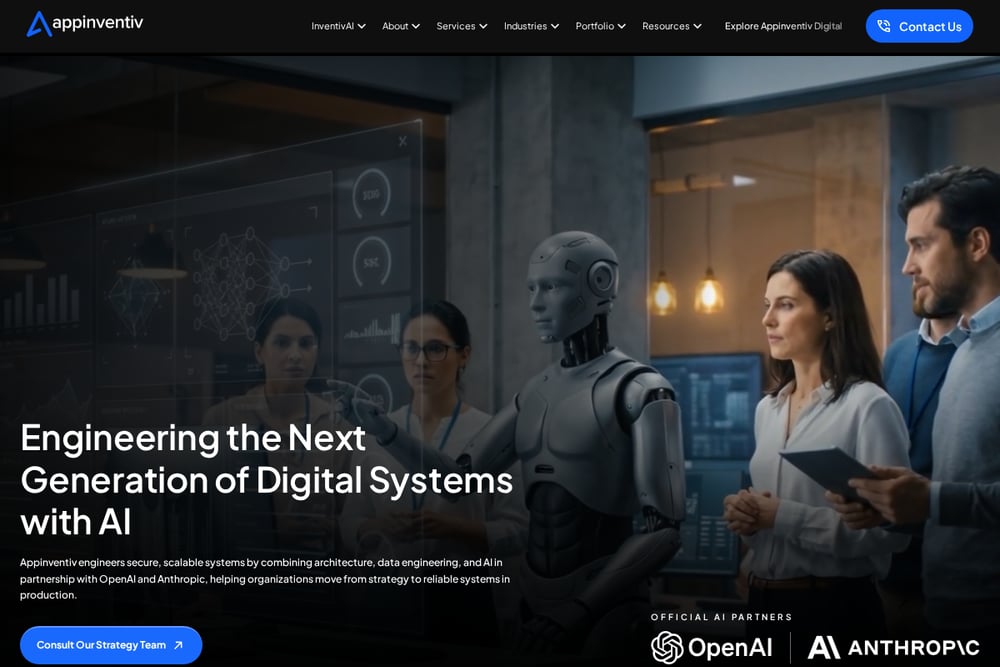 A screenshot of the Appinventiv website.
Appinventiv is a large digital product engineering firm with a dedicated computer vision practice. They offer AI development, consulting, and integration services for enterprises that need to embed vision capabilities into existing systems. Their team works across industries like transportation, real estate, and automotive, often combining computer vision with other AI technologies such as generative AI and agentic workflows. If you are looking for a partner with broad enterprise experience and a structured delivery model, Appinventiv is worth a conversation. You can explore their computer vision services to see if their approach matches your project scope.
#2 PCD | Code. Solve. Empower. | Software Development Company
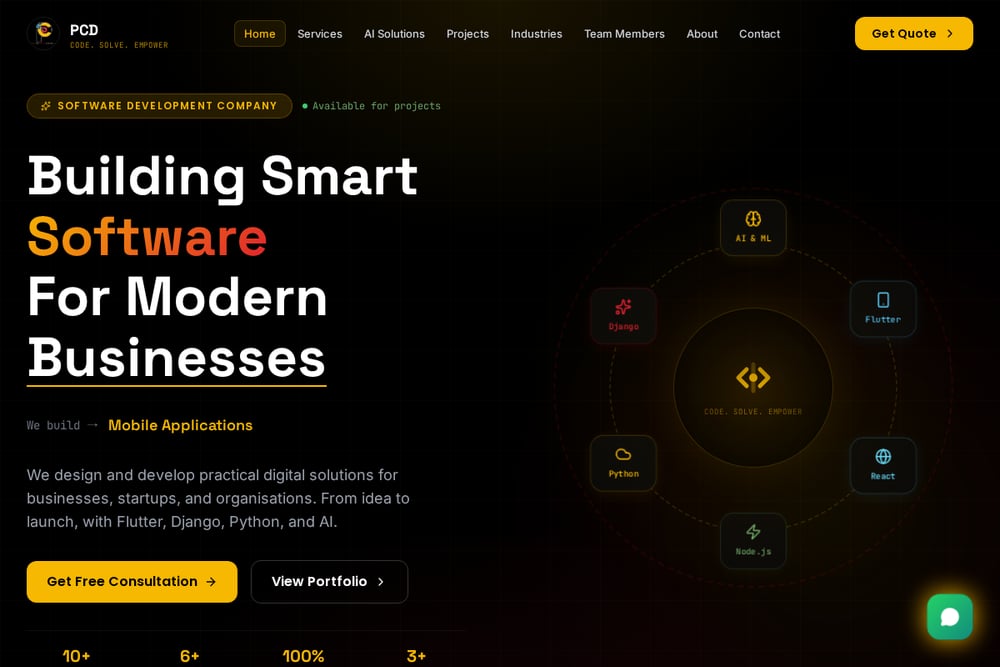 A screenshot of the PCD | Code. Solve. Empower. | Software Development Company website.
PCD is a boutique software development company that builds mobile apps, web platforms, and AI-based solutions for businesses and startups. Their computer vision work includes custom dataset preparation, OpenCV image processing, and real-time object and number plate detection using YOLO and Python. What sets them apart is their focus on understanding the operational problem first, then engineering the right technical solution around it. They also handle hardware integration, connecting cameras, sensors, and embedded SDKs into unified platforms. If you need a hands-on partner who can take you from idea to launch with custom code, PCD is a strong fit.
#3 InData Labs
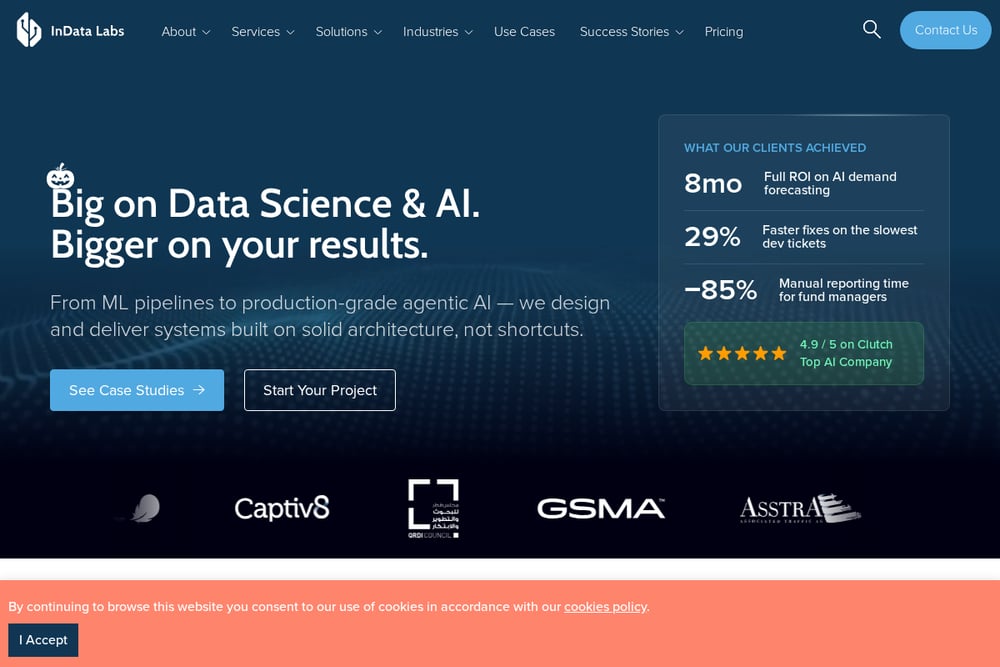 A screenshot of the InData Labs website.
InData Labs is an AI and data science company with a dedicated computer vision service line. They offer custom large language models, image recognition, natural language processing, and data capture with OCR. Their team serves industries like fintech, healthcare, logistics, and retail, often focusing on full-cycle AI development from consulting to deployment. If your project involves heavy data engineering or you need to integrate vision models with existing analytics pipelines, InData Labs brings deep expertise. Their computer vision solutions page outlines their capabilities in detail.
#4 Cardinal Peak
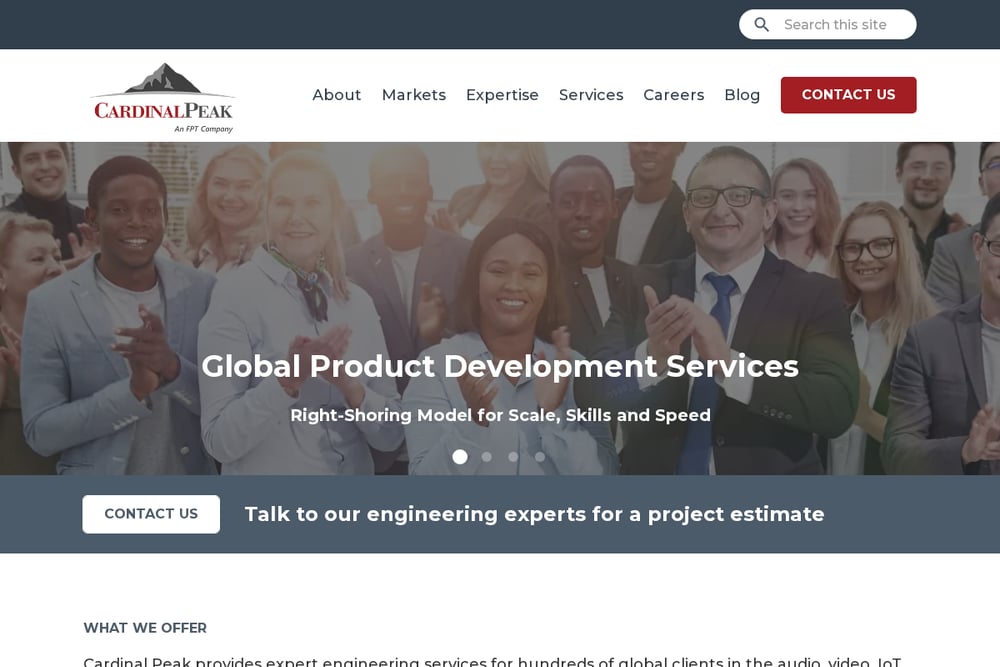 A screenshot of the Cardinal Peak website.
Cardinal Peak specializes in custom computer vision development for edge, embedded, and video analytics applications. They have deep expertise in hardware-adjacent engineering, including FPGA design, embedded AI, and IoT product development. Their team works on projects that require tight integration between software and physical devices, such as security cameras, robotics, and healthcare devices. If you are building a product that needs computer vision running on constrained hardware, Cardinal Peak is a natural fit. Their custom computer vision page highlights their edge and embedded focus.
#5 Geniusee
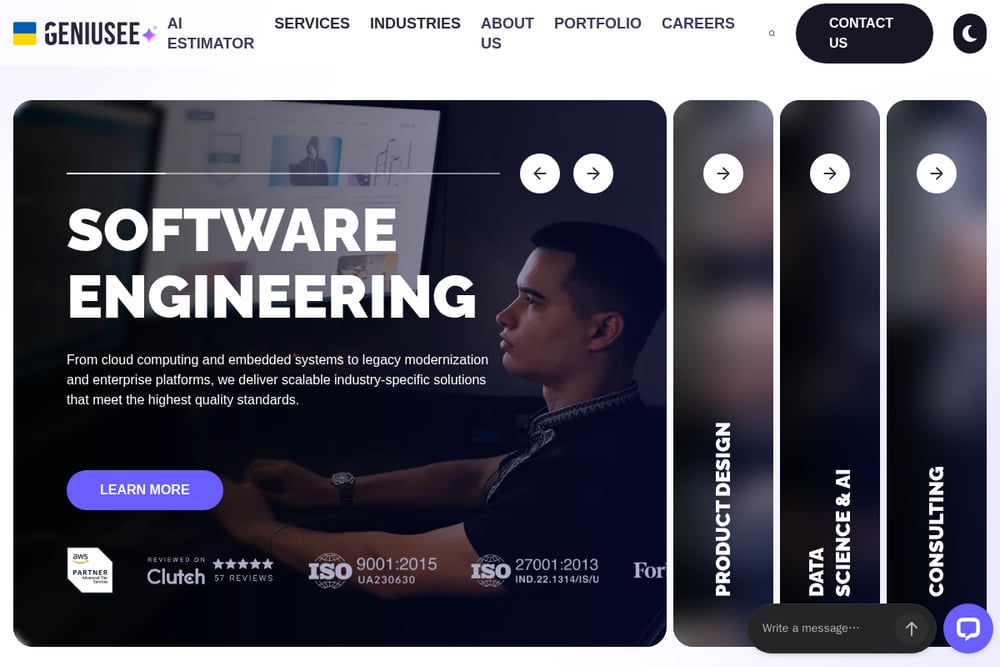 A screenshot of the Geniusee website.
Geniusee is a software development and AI company that offers generative AI computer vision services alongside broader product engineering. They provide AI agent development, intelligent automation, and mobile app development with AI integration. Their team supports full-cycle delivery, from discovery and UI/UX to deployment and post-release support. If you want a partner who can handle both the computer vision model and the surrounding application, Geniusee offers that end-to-end capability. Their generative AI computer vision page gives a good overview of their approach.
How to Choose the Right Computer Vision Partner
Start by defining your problem clearly. Are you detecting objects in real time, reading text from images, or analyzing video streams? Next, consider where the processing needs to happen. Cloud-based models are easier to update, but edge deployment reduces latency and bandwidth costs. Look for a partner who has experience with your specific hardware or industry constraints. Ask about their process for dataset preparation, model training, and ongoing maintenance. Finally, check if they offer the full scope you need, from API development to front-end integration. A good fit will save you months of back-and-forth.
Where Automation Fits In
Computer vision often works best when combined with automation. For example, a vision system can detect a defective product on a line, then trigger an automated alert or halt the process. Or a camera can read a license plate and automatically open a gate. When you evaluate partners, ask how they handle event workflows and system integration. The ability to connect vision outputs to your existing business logic is just as important as the model accuracy itself.
The Bottom Line
The right computer vision partner depends on your specific needs. If you are an enterprise looking for broad AI integration, Appinventiv or InData Labs may be your best bet. For edge and embedded projects, Cardinal Peak brings deep hardware expertise. If you want a boutique partner who can handle custom code, hardware integration, and end-to-end delivery, PCD is a strong choice. And if you need full-cycle product development with AI at the core, Geniusee is worth exploring. Take the time to match your project requirements to each company's strengths.