
You want to learn computer science, but the sheer volume of textbooks out there is overwhelming. From massive publishers to niche series, each option promises to be the one that finally makes coding click. I've dug into five major players
Why Computer Science Books Still Matter in 2026
In an age of StackOverflow, YouTube tutorials, and AI coding assistants, you might wonder why anyone would pick up a textbook. The answer is depth. Books are written for comprehension, not just search engine rankings. They provide structured, vetted knowledge that builds on itself, giving you context that a blog post or a single video can't offer. Whether you're a middle schooler just starting out or a professional brushing up on theory, the right book series can be the difference between surface-level understanding and true mastery.
How We Ranked These Book Series
I evaluated each option based on four criteria: accessibility for beginners, depth of content, quality of supporting materials (like online platforms or labs), and overall reputation in the computer science education community. I also considered whether the series is actively updated—outdated tech books are worse than useless. The goal was to find series that actually teach you to code, not just ones that look good on a shelf.
Here's a quick comparison of the five computer science book series to help you decide which one fits your learning style.
| Provider | Best For |
|---|---|
| CodeHS | Interactive, project-based learning |
| McGraw Hill | Rigorous academic study |
| MIT Press | Deep theoretical understanding |
| Rose Valley Publication | Beginner-friendly, approachable learning |
| Amazon | Wide selection and discovery |
Deep Dive: The Top 5 Computer Science Book Series
#1 CodeHS
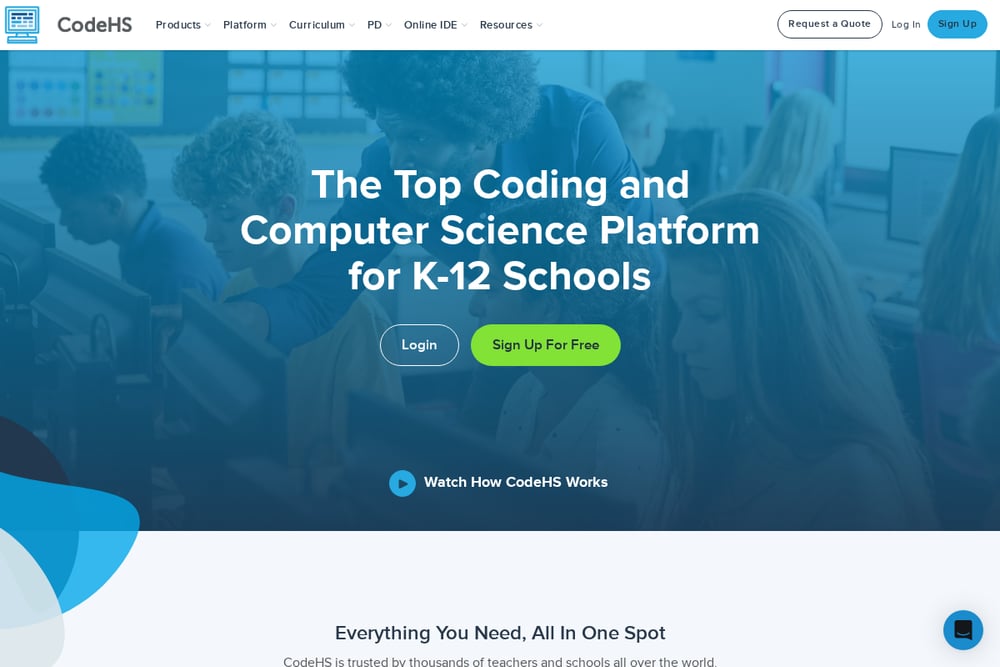 A screenshot of the CodeHS website.
CodeHS isn't just a textbook; it's a full-blown interactive platform that combines a web-based IDE with a customizable K-12 curriculum. You get assignments, grading tools, and real-time data tracking, all built around their own computer science book series. The platform's AI Creator and Vibe Coding tools let you generate lessons and guide students through AI-assisted coding projects. For self-study, this means you can write, run, and debug code without ever leaving the browser. It's the most hands-on option here, turning passive reading into active learning.
#2 McGraw Hill
 A screenshot of the McGraw Hill website.
McGraw Hill is a heavyweight in educational publishing, and their computer science textbooks are used in countless college courses across the US. Their materials cover everything from introductory programming to advanced topics like data structures and algorithms. You get the rigor of a traditional academic textbook backed by decades of pedagogical research. The downside is that these books can feel dense and less approachable for absolute beginners. Still, if you want a comprehensive, university-level foundation, McGraw Hill delivers.
#3 MIT Press
MIT Press is the gold standard for authoritative computer science texts, often written by the very researchers who pioneered the field. Their catalog includes classics like "Structure and Interpretation of Computer Programs" and cutting-edge titles on AI and machine learning. These books assume a high level of mathematical maturity and are best suited for advanced students or professionals. You won't find hand-holding here, but you will find the deepest, most accurate explanations available. It's the choice for those who want to understand computer science at its theoretical core.
#4 Rose Valley Publication
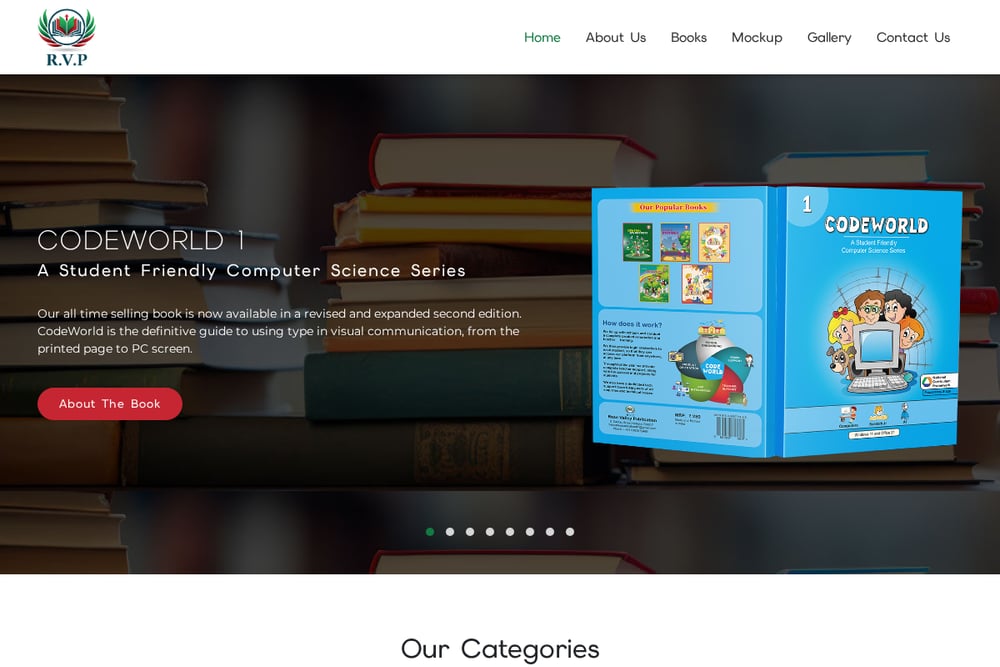 A screenshot of the Rose Valley Publication website.
Rose Valley Publication takes a different approach with its CodeWorld series, a student-friendly computer science book line now in its revised second edition. Unlike the massive catalogs of McGraw Hill or MIT Press, this is a small, focused operation dedicated to making CS concepts accessible. The books are designed to be approachable for beginners, breaking down complex topics into digestible lessons. It's a niche player, but for students who feel intimidated by traditional textbooks, CodeWorld offers a gentler on-ramp. You won't find the breadth of a major publisher, but you will find a clear, consistent voice throughout the series.
#5 Amazon
 A screenshot of the Amazon website.
Amazon isn't a publisher, but it's the world's largest bookstore and the first place most people go to find computer science books. You can browse over 60,000 results for "computer science books," from bestsellers like "Code: The Hidden Language of Computer Hardware and Software" to niche self-published guides. The problem is that you have to do all the filtering yourself—reviews, ratings, and publication dates are your only guides. It's a firehose of options, which can be paralyzing if you don't know exactly what you need. Use Amazon as a discovery tool, but be prepared to spend time separating the gems from the duds.
How to Choose the Right Computer Science Book Series for You
Start by asking yourself what you want to achieve. If you're a complete beginner, Rose Valley Publication's CodeWorld series offers a gentle introduction without overwhelming you. If you prefer learning by doing, CodeHS's interactive platform will keep you engaged. For a traditional, college-level education, McGraw Hill provides the structure you need. Advanced learners should look to MIT Press for theoretical depth. And if you just want to browse and compare, Amazon gives you the widest selection. Match the series to your experience level and learning style.
Automating Your Learning Workflow
You can supercharge your study routine by pairing these book series with automation tools. For example, use a flashcard app like Anki to automatically schedule reviews of key concepts from your chosen textbook. Set up a daily reminder to code for 30 minutes using the exercises from CodeHS or CodeWorld. If you're using McGraw Hill, create a spreadsheet to track your progress through each chapter and automatically calculate your completion rate. The goal is to turn passive reading into an active, repeatable habit.
The Final Verdict
There's no single best computer science book series for everyone. CodeHS wins for interactivity, McGraw Hill for academic rigor, and MIT Press for depth. Rose Valley Publication is the dark horse for beginners who need a friendly start, while Amazon remains the ultimate marketplace for discovery. Pick the one that matches your current skill level and learning preferences, and commit to working through it. The book won't teach you—only you can do that.