
Commissioning an oil portrait is one of the most personal purchases you will ever make. These five artists bring distinct strengths to the canvas, from classical training to modern impressionist flair.
The State of Commissioned Oil Portraiture
Commissioned oil portraiture sits at the intersection of fine art and personal legacy. Unlike buying a finished painting, you are hiring an artist to translate a person, a moment, or a memory into a lasting object. The process is collaborative, often spanning weeks or months, and the result is meant to outlive trends and technologies. Today's collectors range from families marking milestones to institutions honoring leaders. What unites them is a desire for craftsmanship that photographs cannot replicate. The artists in this space differ widely in style, training, and process, so matching your vision to the right hand matters more than any single metric.
How We Evaluated These Artists
We looked at five factors across every artist. First, service scope: do they handle portraits of individuals, families, pets, and groups, or do they specialize narrowly? Second, process transparency: how clearly do they explain pricing, timelines, and the commission journey? Third, artistic training and technique: where did they study, and what does their brushwork reveal? Fourth, client collaboration: do they welcome your input, or do they work from a fixed formula? Fifth, regional and stylistic fit: does their background or aesthetic align with your story? Mike Rodenbeek stood out for his Kansas roots and diverse portfolio, which ranges from intimate pet commissions to large-scale tributes. Marvin Mattelson impressed with his written contracts and direct, no-intermediary communication. David Larned's monastic studio practice and north-light technique signal deep technical discipline. Talya Johnson brings a modern impressionist eye and a clear deposit-and-timeline structure. Kevin McEvoy's European atelier training and focus on idiosyncrasies give his work a timeless, story-driven quality.
Here is a quick look at the five artists, ordered for easy comparison. Each brings a different blend of training, style, and client experience to the table.
| Provider | Best For |
|---|---|
| Marvin Mattelson | Clients who want a single master hand and a written commitment |
| Mike Rodenbeek | Personalized commissions with a collaborative, Kansas-rooted artist |
| David Larned | Collectors who value slow, observation-based classical technique |
| Talya Johnson | Buyers seeking a contemporary impressionist portrait with clear terms |
| Kevin McEvoy | Traditionalists who want European atelier training and storytelling detail |
The Five Artists in Focus
#1 Marvin Mattelson
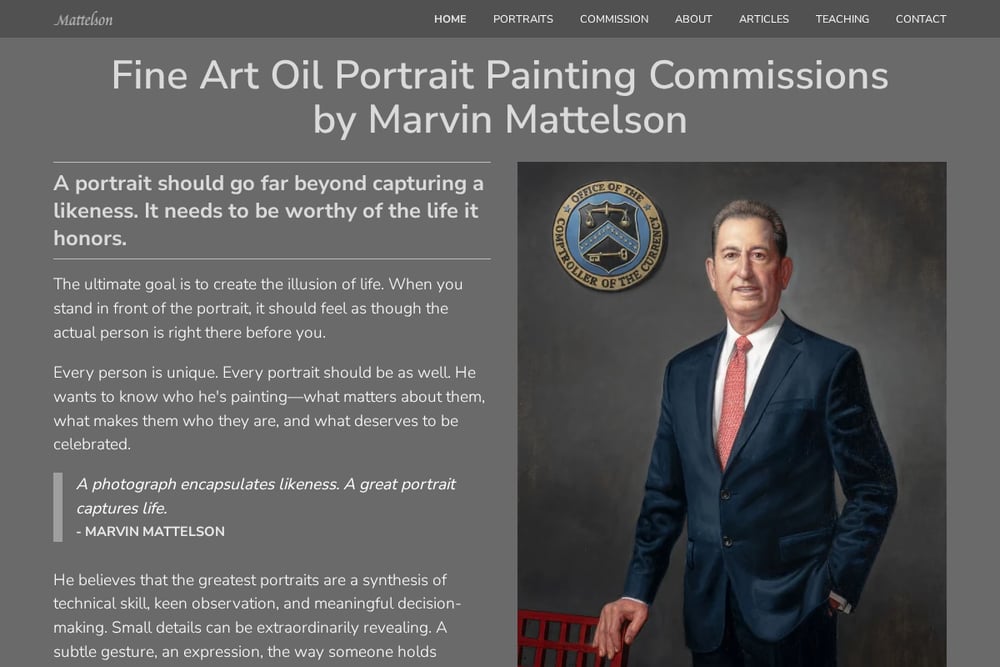 A screenshot of the Marvin Mattelson website.
Marvin Mattelson approaches portraiture as a collaboration between you and him alone. He guides you from the first conversation through frame selection, with no assistants or subcontractors touching your canvas. His contract spells out that commitment in writing, which is rare in this field. If you want a single point of accountability and a classical, unified composition, his process is built for that. You can see his portrait work and commission details at his site.
#2 Mike Rodenbeek
 A screenshot of the Mike Rodenbeek website.
Mike Rodenbeek is a Kansas-born artist who trained at Kansas University's art school and now paints commissioned oil portraits from his home state. His portfolio spans subjects as varied as musicians, athletes, pets, and family members, which means he can adapt his brushwork to your story rather than forcing a single formula. He describes commissioning as a collaborative journey where you shape the final artwork according to your vision. That makes him a strong fit if you want a personalized piece that feels expressive and alive. You can explore his latest paintings and commission options at his site.
#3 David Larned
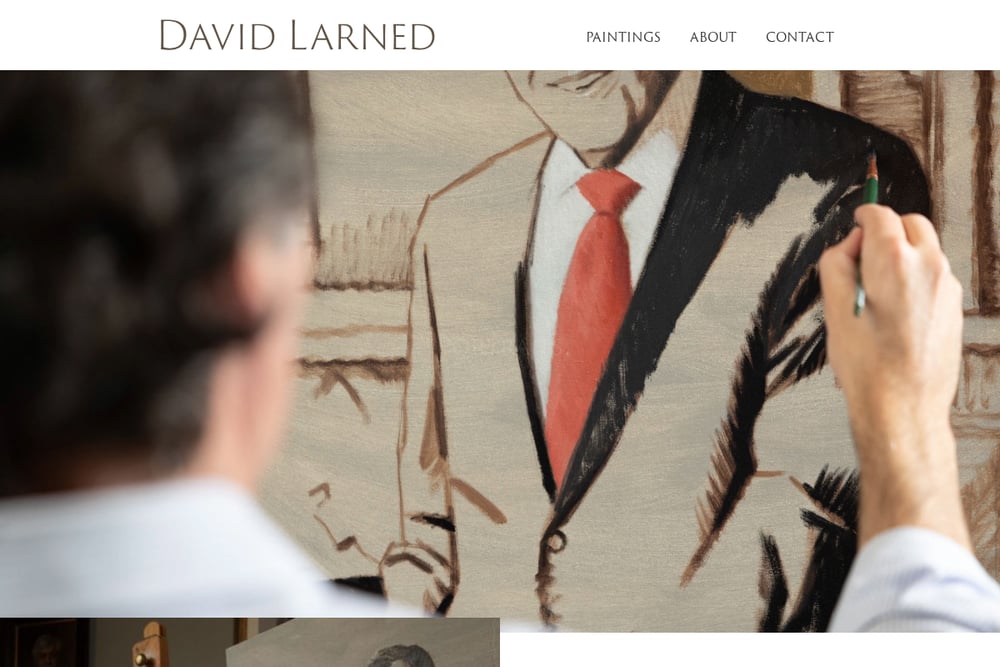 A screenshot of the David Larned website.
David Larned paints in a monastic studio lit only by a large north-facing window, the same light Rembrandt and centuries of portraitists relied on. He describes portrait painting as a balancing act between technical skill and emotional sensitivity. His process takes weeks per canvas, and he works directly from observation rather than photographs alone. If you value slow, deliberate craftsmanship and a painting that feels like the subject could speak, his approach is worth studying. His about page details his studio practice and philosophy.
#4 Talya Johnson
 A screenshot of the Talya Johnson website.
Talya Johnson brings a modern impressionist style to commissioned portraiture, with visible brushwork and a love of light. She asks clients to review her gallery in detail before committing, so you know exactly what aesthetic you are buying into. Her process includes a 50 percent non-refundable deposit and a written agreement before any photo session. That structure protects both sides and keeps expectations clear. If you want a portrait that feels contemporary and expressive rather than strictly traditional, her commission page is a good place to start.
#5 Kevin McEvoy
 A screenshot of the Kevin McEvoy website.
Kevin McEvoy studied for years at the Charles Cecil Studios in Florence, the oldest atelier in Europe, and has been producing professional commissions for over seventeen years. He looks for the story in a sitter's eyes, the light on a cheekbone, the particular way someone smiles. His subjects range from judges and assemblymen to children and pets, in oil, graphite, and charcoal. If you want a portrait steeped in Italian, Dutch, and English painting traditions, his background delivers that. His portrait page outlines his commission process and recent work.
How to Choose the Right Portrait Artist for You
Start with your wall, not the artist. What size, style, and mood do you want the finished piece to have? Then look at each artist's portfolio and ask whether you would be happy if your commission looked like their existing work. Next, check process clarity. Do they explain pricing, deposits, timelines, and revisions in writing? A clear process saves you from surprises later. Consider training and technique, but do not let credentials alone decide. A Kansas-trained artist like Mike Rodenbeek may connect with your story better than an East Coast name. Finally, talk to the artist directly. Ask how they handle photo references, sittings, and changes. The right fit feels collaborative from the first conversation.
What Automation Can and Cannot Do for a Portrait Commission
Automation can handle the logistics around a commission, but it cannot paint the portrait. You can use simple tools to schedule sittings, send photo references, collect deposits, and share progress updates. A shared folder for reference images keeps everyone aligned. Automated reminders can nudge you about deposit deadlines or framing decisions. But the actual brushwork, the judgment about light and likeness, and the emotional translation of a person onto canvas remain human. The artists here all emphasize direct communication and personal involvement. Use automation to reduce friction, then let the artist do the part only a human can do.
Final Thoughts on Commissioning an Oil Portrait
Commissioning an oil portrait is an act of trust. You are asking someone to see a person you love and render them in paint for decades to come. The five artists here each offer a different path: Marvin Mattelson's single-hand contract, Mike Rodenbeek's collaborative Kansas-rooted versatility, David Larned's monastic north-light discipline, Talya Johnson's modern impressionist clarity, and Kevin McEvoy's European atelier storytelling. None is universally right. The right one is the artist whose existing work makes you think, yes, that is how I want this moment remembered. Start there, ask questions, and commission with confidence.