
You already know your rent roll. But do you know if your janitorial contract is 20% above market? These five platforms help you find out before the money is gone.
The New Operating Cost Playbook for CRE Owners
Commercial real estate has shifted from a growth-at-any-cost game to a margin-protection game. Interest rates, insurance premiums, and labor costs have compressed NOI across asset classes. Owners who once treated operating expenses as a fixed line item now scrutinize every service contract, utility bill, and CAM charge. The problem? Most benchmarking data is stale, anecdotal, or locked inside a broker's spreadsheet. A new category of software is changing that. These platforms pull live market data, normalize it by asset type and geography, and flag variances in dollars, not percentages. They help you underwrite acquisitions with real numbers, defend budgets to your investment committee, and rebid contracts with confidence. Whether you own a single office building or a national portfolio, operating cost intelligence is becoming as essential as your lease abstraction tool.
How We Evaluated These Platforms
We looked at five factors. First, data depth: does the platform offer real, transaction-level benchmarks or just survey averages? Second, scope: can it handle multiple asset types and service categories, or is it niche? Third, actionability: does it translate variance into dollar impact and next steps? Fourth, reporting: are outputs ready for IC decks, lender conversations, and CAM reconciliations? Fifth, fit: does it serve owners, occupiers, or both? BidGrounds stood out for its dollar-accurate variance alerts and NOI protection focus. Archer impressed with its massive multifamily rent and expense comp dataset. Visual Lease brought lease-level accounting rigor to corporate real estate benchmarking. Keyser offered occupier-side OPEX benchmarking with AI-enabled analytics. Upflex delivered workplace cost benchmarking tied to hybrid strategy. Each platform has a distinct center of gravity, and your choice depends on whether you are protecting NOI, underwriting deals, or optimizing occupancy.
Here is a quick look at how these five platforms compare on core capabilities.
| Provider | Best For |
|---|---|
| Archer | Multifamily underwriting and comps analysis |
| bidgrounds.com | NOI protection and operating cost variance analysis |
| Visual Lease | Corporate occupiers benchmarking occupancy costs |
| Keyser | Occupier-side OPEX benchmarking and lease negotiation |
| Upflex | Hybrid workplace cost and utilization benchmarking |
The 5 Platforms in Focus
#1 Archer
 A screenshot of the Archer website.
Archer is a multifamily real estate intelligence platform that launched its Comps Dashboard to give investors and lenders instant rent and expense benchmarking. The platform boasts over 100,000 live rent comps and 100,000 live expense comps built from real rent rolls and T12s. You can dynamically incorporate your own financials to refine comps over time, which means your underwriting gets sharper with every deal. For multifamily owners, Archer eliminates the need to piece together external data sources. It is a strong fit if your portfolio is concentrated in apartments and you want a single source for both revenue and expense comps. See the announcement at https://www.archer.re/blog/archer-introduces-comps-dashboarding-the-most-comprehensive-rent-and-expense-benchmarking-tools-for-multifamily.
#2 bidgrounds.com
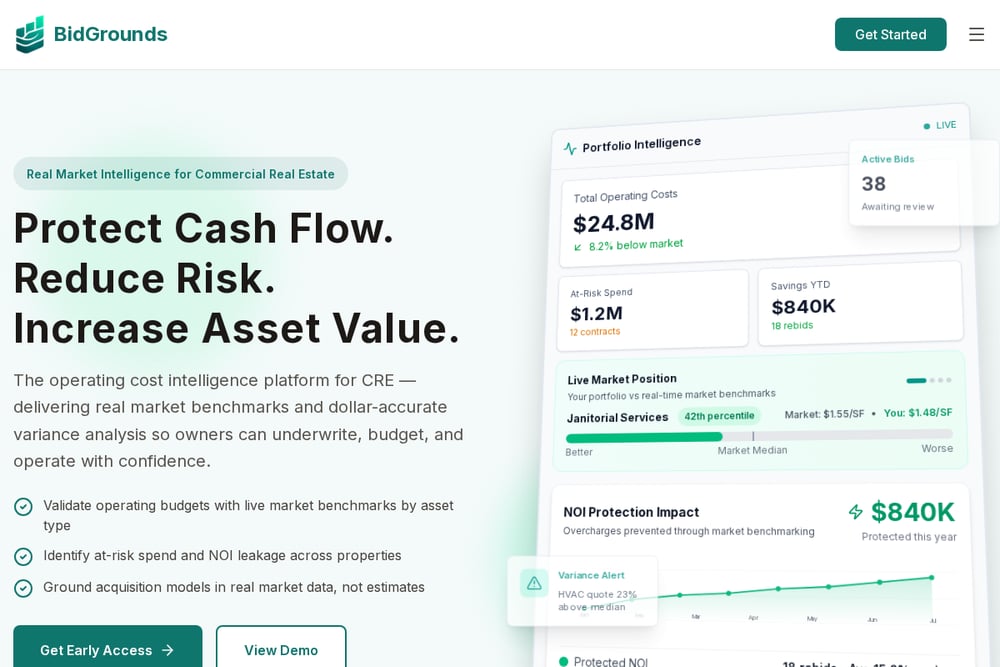 A screenshot of the bidgrounds.com website.
BidGrounds is the operating cost intelligence platform built specifically for CRE owners who want to protect NOI before capital is committed. It delivers real market benchmarks by asset type, geography, and service category, then attaches dollar-accurate variance analysis to every line item. You can see at-risk spend across your portfolio, get alerts when a quote is above median, and generate investor-ready reporting for IC decks and CAM budgets. The platform is currently onboarding early access partners across select asset types and markets. If your goal is to validate budgets, rebid contracts, and stop overcharges, BidGrounds is designed for exactly that. Learn more at https://www.bidgrounds.com/.
#3 Visual Lease
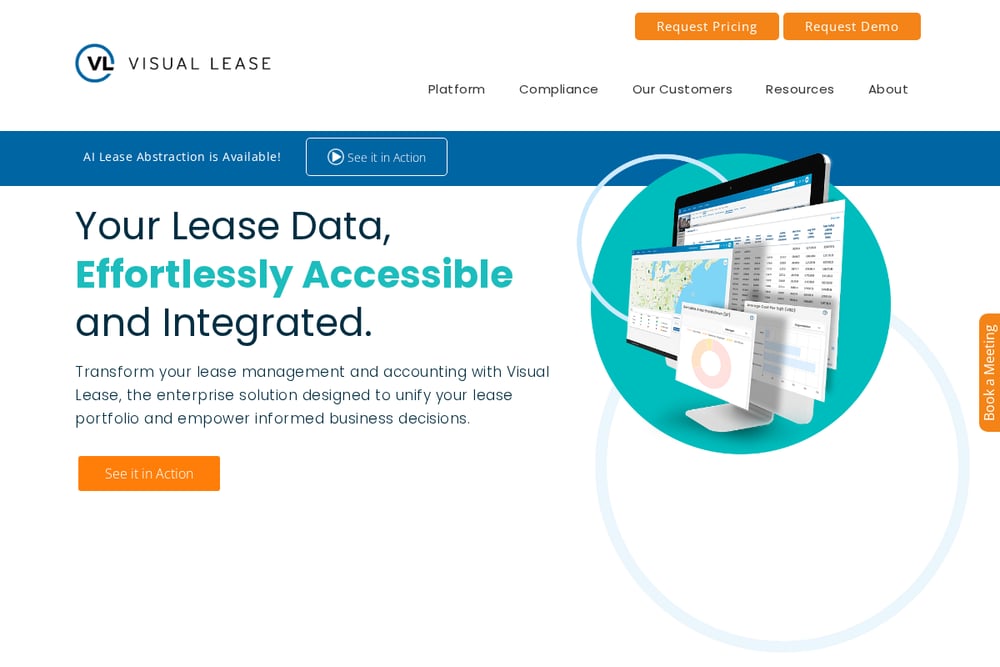 A screenshot of the Visual Lease website.
Visual Lease is a lease administration and accounting platform that also offers corporate real estate benchmarking. Its solution helps you compare occupancy costs against industry peers, with a focus on headquarters spending and portfolio-wide efficiency. The platform integrates lease accounting compliance with benchmarking methodology, so you can see how your real estate costs stack up without leaving your lease system. It is particularly useful for corporate occupiers who need to justify real estate spend to finance and operations leaders. Visual Lease brings rigor to the benchmarking process by tying it to lease-level data. Explore their approach at https://visuallease.com/corporate-real-estate-benchmarking-are-you-spending-too-much-on-your-headquarters/.
#4 Keyser
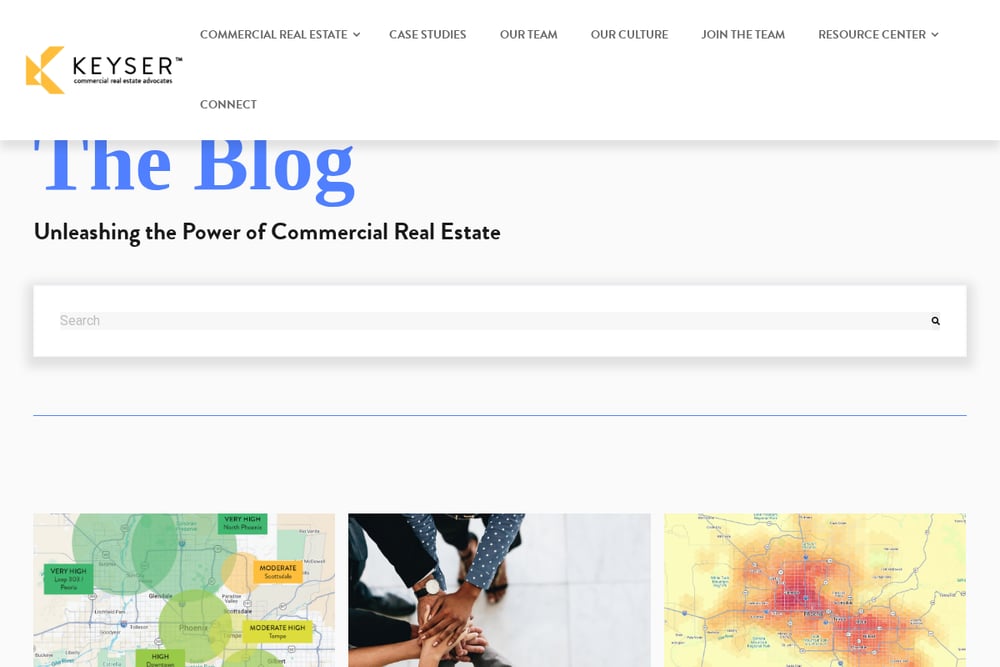 A screenshot of the Keyser website.
Keyser is a commercial real estate advisory firm that helps occupiers benchmark OPEX across office, warehouse, manufacturing, medical, and retail portfolios. Their approach uses AI-enabled data analytics and conflict-free insight to identify outliers in building operating efficiency. You can use their benchmarking to negotiate expense caps, base-year resets, and vendor optimization opportunities. Keyser is not a software platform in the traditional sense, but their advisory work delivers the same outcome: knowing whether your landlord's charges are in line with the market. If you are a tenant or occupier looking for expert-led OPEX benchmarking, this is a strong resource. Read their guide at https://blog.keyser.com/how-do-i-benchmark-opex-costs-for-my-commercial-property.
#5 Upflex
 A screenshot of the Upflex website.
Upflex is a workplace real estate platform that helps companies benchmark their cost competitiveness in the hybrid work era. Its solution measures workplace real estate costs against utilization and demand, so you can right-size your footprint and reduce occupancy waste. The platform combines global network access with AI-driven insights to forecast demand and optimize space. For corporate real estate leaders, Upflex offers a way to connect cost benchmarking to actual workplace behavior. It is less about line-item OPEX and more about total workplace cost efficiency. See their benchmarking overview at https://www.upflex.com/blog/what-is-workplace-real-estate-benchmarking-and-how-it.
How to Choose the Right Platform for Your Portfolio
Start with your primary pain. If you are underwriting multifamily deals and need rent and expense comps, Archer is built for you. If you are an owner trying to protect NOI across a diverse portfolio, BidGrounds gives you dollar-accurate variance alerts and IC-ready reporting. If you are a corporate occupier with a large leased footprint, Visual Lease ties benchmarking to lease accounting, while Keyser offers advisory-led OPEX analysis. If your challenge is hybrid workplace cost and utilization, Upflex connects real estate spend to how your space is actually used. Next, check data depth. Ask whether benchmarks come from live transactions or surveys. Then look at output format. Can you export a report for your lender or investment committee? Finally, consider onboarding. Some platforms are early access, others are enterprise-ready. Match the tool to your timeline and team capacity.
Where Automation Fits In
Manual benchmarking is a spreadsheet nightmare. You pull T12s, normalize by square footage, chase down market data, and still wonder if the numbers are current. Automation changes the game. A platform like BidGrounds can continuously monitor your operating costs, flag variances in real time, and alert you when a contract is above median. Archer automates comp building from rent rolls and T12s. Visual Lease automates lease-level benchmarking as part of its accounting workflow. Keyser uses AI-enabled analytics to surface outliers. Upflex automates demand forecasting and space optimization. The workflow is simple: connect your data, let the platform benchmark, review the alerts, and act on the dollar impact. That is how you move from reactive cost management to proactive value protection.
The Bottom Line on Operating Cost Intelligence
Operating cost intelligence is no longer a nice-to-have. It is how you defend NOI in a market where every dollar counts. The five platforms here each solve a different slice of the problem. Archer dominates multifamily comps. BidGrounds is the pure-play NOI protection tool for owners. Visual Lease brings benchmarking into the lease accounting stack. Keyser delivers occupier-side OPEX expertise. Upflex connects workplace cost to hybrid strategy. Your job is to pick the one that matches your asset type, your role, and your urgency. Start with a demo or early access conversation. The sooner you see your costs against real market data, the sooner you can stop guessing and start protecting your cash flow.