Your checkout is where intent meets infrastructure, and one weak link can quietly cost you revenue. Here are five providers worth knowing if you are wiring storefronts, order systems, and payment workflows together.
The Integration Layer Behind Modern Checkout
Online merchants rarely fail at selling. They fail at connecting. A storefront, an order management system, a payment provider, and a reconciliation process all need to agree on what happened and when. Commerce technology and payment integration services exist to make those handoffs reliable, whether you are adding a gateway, switching to hosted checkout, or reconciling refunds weeks after the sale.
How These Providers Were Evaluated
Each provider was looked at on service scope, clarity of technical documentation, breadth of checkout options, merchant workflow support, and how well the offering fits businesses that need practical integration help rather than a full replatform. Pricing transparency and developer resources also factored in. The detail on each business is in its description below.
Here is a quick comparison of the five providers, from integration specialists to full payment platforms.
| Provider | Best For |
|---|---|
| NMI | ISOs and SaaS platforms building embedded payments |
| DREAMCACHE — Commerce Technology & Payment Integrations | DREAMCACHE | Merchants who need checkout and provider connectivity done right |
| Checkout.com | High-volume merchants needing global payment performance |
| Integrate Payments | Smaller merchants and developers wanting a hands-on gateway |
| SPD Technology | Custom payment engineering and orchestration builds |
The Five Providers in Detail
#1 NMI
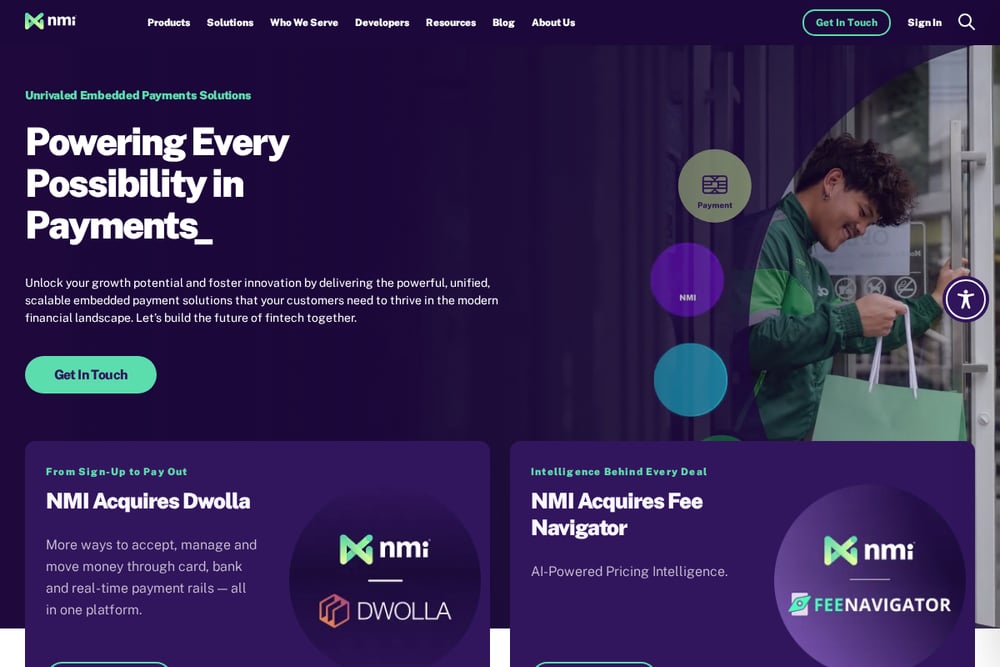 A screenshot of the NMI website.
NMI positions itself as an embedded payments platform for ISOs, SaaS platforms, banks, and payment facilitators. Its stack covers merchant onboarding, underwriting, boarding, reporting, and residuals management, which makes it a strong fit if you are building a payments business rather than just accepting cards. The gateway and value-added solutions layer supports ecommerce, in-person, mobile, and unattended payments, with a fraud defense suite on top. Developers get a sandbox, documentation, SDKs, and APIs, and the platform is pre-certified across processors and devices. If you need to manage a portfolio of merchants, NMI is built for that job.
#2 DREAMCACHE — Commerce Technology & Payment Integrations | DREAMCACHE
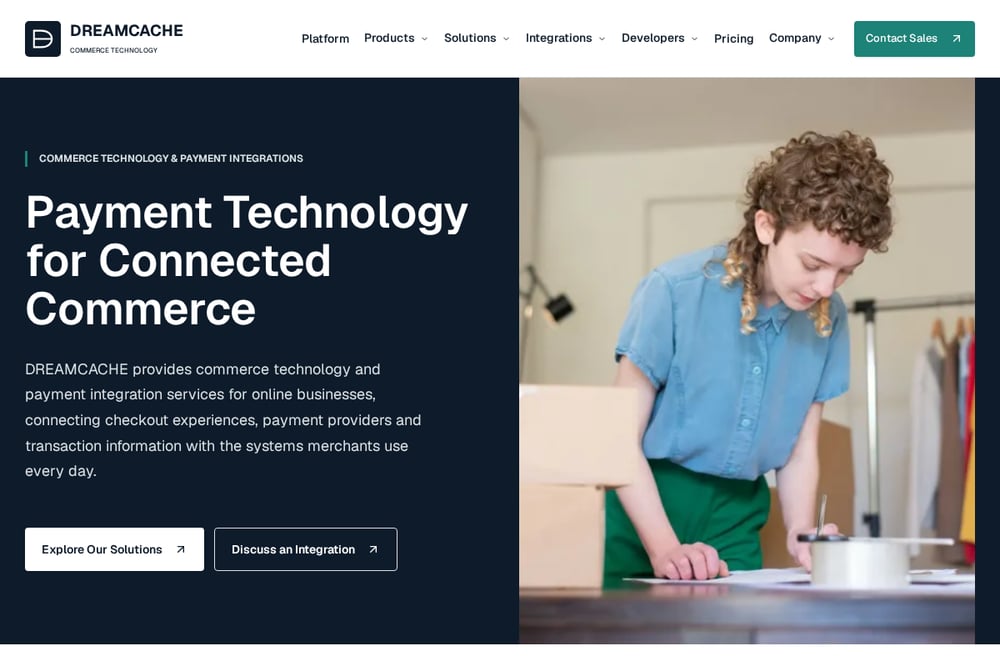 A screenshot of the DREAMCACHE website.
DREAMCACHE focuses on the connections around a payment rather than the payment itself. Its core services include payment gateway integration, hosted checkout, embedded checkout, payment links, and merchant onboarding technology. The emphasis is on keeping sessions, payment references, and provider events aligned with your merchant workflow, including failures, refunds, and reconciliation requirements. Authenticated server-to-provider connections and order status mapping are treated as first-class concerns, which matters when your order system and your provider need to agree. If you want practical, reliable integration work for storefronts and order systems, this is the specialist to talk to.
#3 Checkout.com
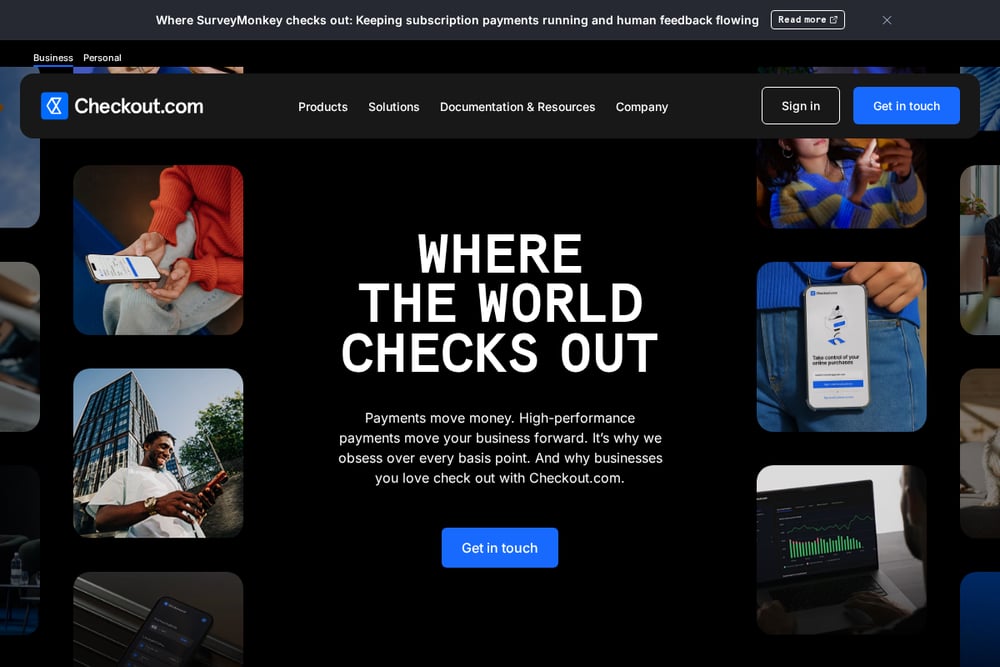 A screenshot of the Checkout.com website.
Checkout.com offers a broad payment services platform with a unified payments API, hosted payment page, mobile SDK, payment links, and plugins for common platforms. Beyond acceptance, it covers acquiring, payment methods, issuing, payouts, fraud detection, authentication, identity verification, disputes, and vaulting. Intelligent acceptance and network tokens are aimed at improving authorization rates, which is where the platform earns its keep for high-volume merchants. It is a heavier lift than a pure integration shop, but the depth is there if you need global coverage and performance tooling.
#4 Integrate Payments
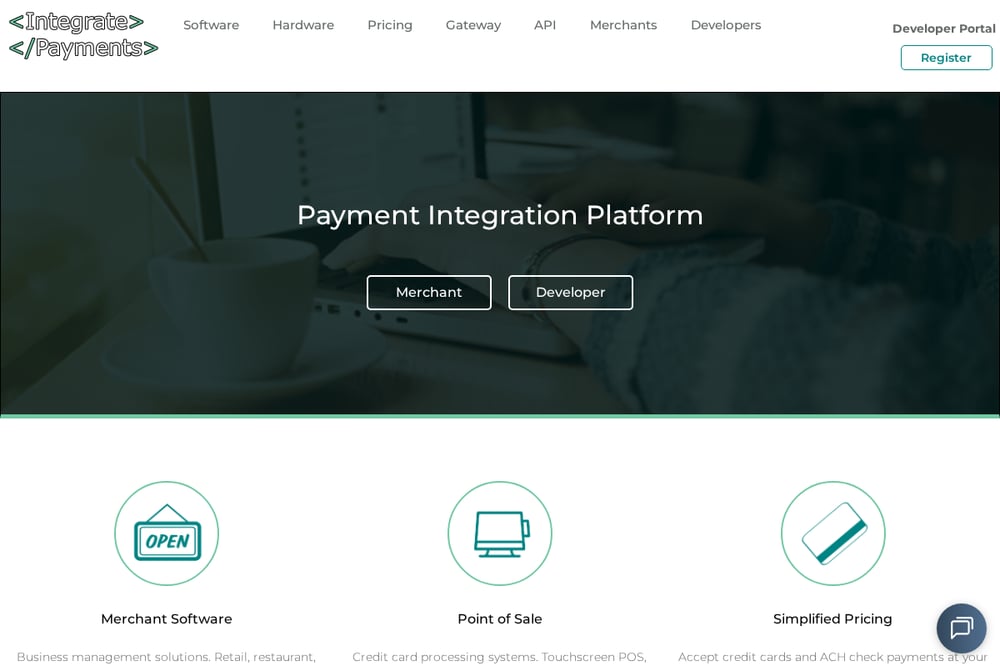 A screenshot of the Integrate Payments website.
Integrate Payments is built around a payment gateway and API for merchants and software developers. The offering includes website checkout forms, point of sale equipment, customer vault, recurring billing, ACH check processing, virtual terminal, and payment buttons. Developers get a portal, API credentials, SDKs for iOS and Android, tokenization, a three-step redirect API, and 3D Secure 2.0 support. There is also a developer program with commissions for integrating payments into custom software, websites, or apps. It suits smaller merchants and developers who want a straightforward gateway with hands-on integration options.
#5 SPD Technology
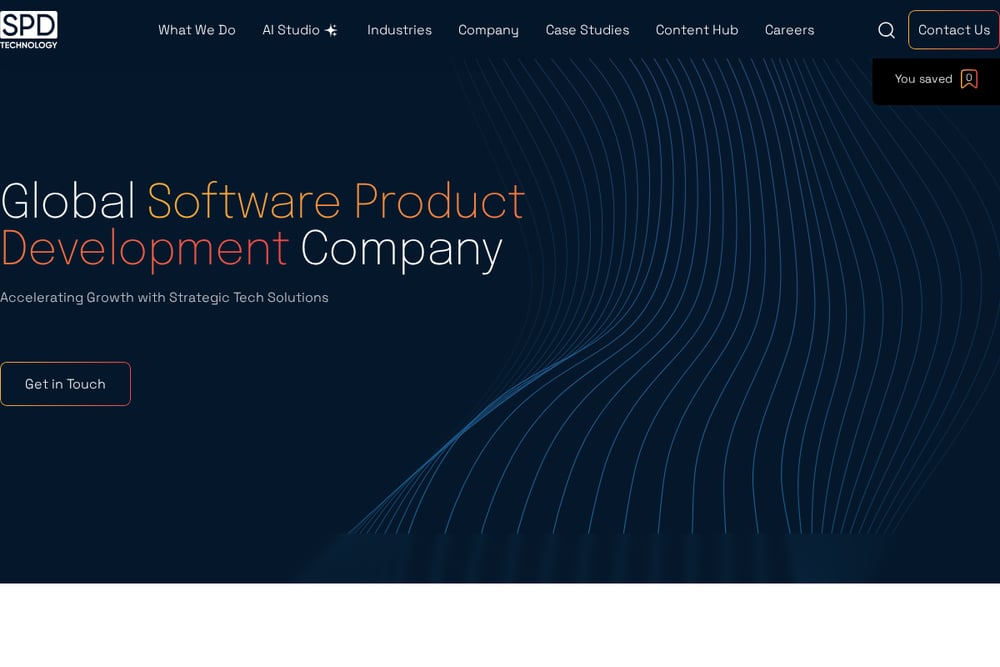 A screenshot of the SPD Technology website.
SPD Technology is a software product development firm with a dedicated fintech and payments practice. Its payment gateway integration services cover Adyen and other providers, alongside payment system architecture consulting, payment software development, POS software, fraud detection, PayFac platform development, and payment orchestration. Merchant onboarding solutions and billing software development round out the fintech offering. This is a services engagement rather than a platform subscription, so it fits companies that need custom engineering around payments. If your integration problem is really a product problem, SPD is the engineering partner in this group.
How to Choose the Right Integration Partner
Start with what you are actually buying. If you need a gateway and merchant portfolio tools, look at platform providers. If you need someone to wire your storefront to a provider and make reconciliation sane, look at integration specialists. Check the documentation before the sales call, because docs tell you how the integration will feel six months from now. Ask about failure handling, refunds, and status mapping, since those are where integrations break. Finally, match the engagement model to your team: a platform subscription, a developer program, or a custom engineering project are three very different commitments.
Where Automation Fits
Automation belongs in the seams. Map payment status events to order states automatically so your team is not reconciling by hand. Trigger refund and failure workflows from provider webhooks rather than manual review. Use payment links to connect invoices to orders without custom code for every case. Keep onboarding verification provider-hosted and sync capability updates back to your records. The goal is not to automate everything, but to make the connections reliable enough that exceptions are the only thing your team touches.
The Bottom Line
The right choice depends on whether you are building a payments business, running a high-volume storefront, or fixing the connections between systems you already have. NMI suits portfolio builders, Checkout.com suits scale and performance, Integrate Payments suits smaller merchants and developers, and SPD Technology suits custom engineering. DREAMCACHE sits in the middle of that list for a reason: it focuses squarely on the integration work that makes checkout, providers, and transaction records agree. Pick the provider whose scope matches your actual problem, and verify the details in their documentation before you commit.