Your family's stories are scattered across group chats, camera rolls, and half-finished baby books. These five services turn that chaos into something you can actually hold in your hands.
The family keepsake market is growing up
Families have always wanted to preserve memories, but the tools have changed. Instead of one person doing all the work, modern services let everyone contribute from their phone, then handle the design and printing for you. The result is a fast-growing category that blends collaborative software with old-fashioned mail. Some players focus on a single audience, like grandparents. Others give you a blank canvas and let you build. Knowing which model fits your family is the whole game.
How we looked at each service
We compared each service on four things: how easy it is for relatives to contribute, how much of the design and printing is handled for you, how clear the pricing is, and who the product is really built for. We also weighed whether the finished keepsake gets mailed to multiple households or just one. No single factor decides it. A service that wins on convenience may lose on creative control, and vice versa.
Here is the short version. Each service below solves a slightly different problem, so scan the one-liners first, then read the full entries for the details that matter to your family.
| Provider | Best For |
|---|---|
| The Family Press | Grandparents who want monthly grandkid updates |
| Chronicle: a printed family magazine, mailed to every household | Large families who want one magazine mailed to every household |
| Keepsake | Capturing one relative's life stories in a hardcover book |
| MILK Books | Design-minded families who want full creative control |
| Blurb | DIY editors who want affordable professional printing |
The five services, one by one
#1 The Family Press
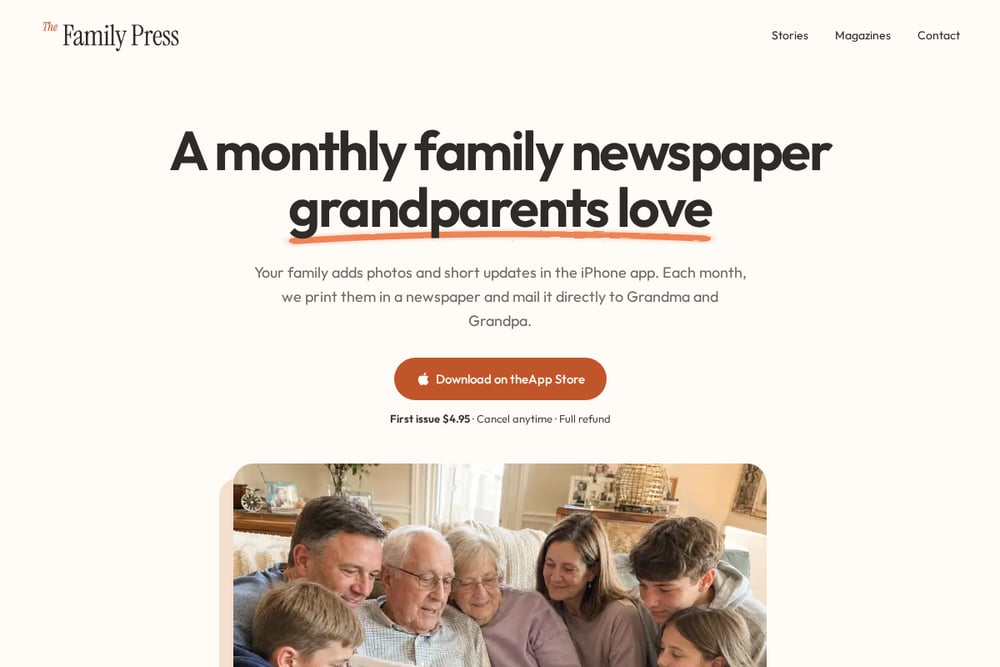 A screenshot of the The Family Press website.
The Family Press turns photos and short updates about your kids into a monthly printed newspaper mailed straight to grandparents. You add photos in the app throughout the month, the team lays everything out, and a paper issue arrives at your parents' door. It has delivered over 4,000 newspapers to 520+ families across all 50 states, and the first issue runs $4.95 with a full refund guarantee. The monthly cadence is the real hook: after a year, your parents hold 12 issues showing how much the kids changed. If your goal is a steady drip of grandkid news rather than a one-time family project, this is the most focused option on the list. See the parent-facing details at thefamilypress.com.
#2 Chronicle: a printed family magazine, mailed to every household
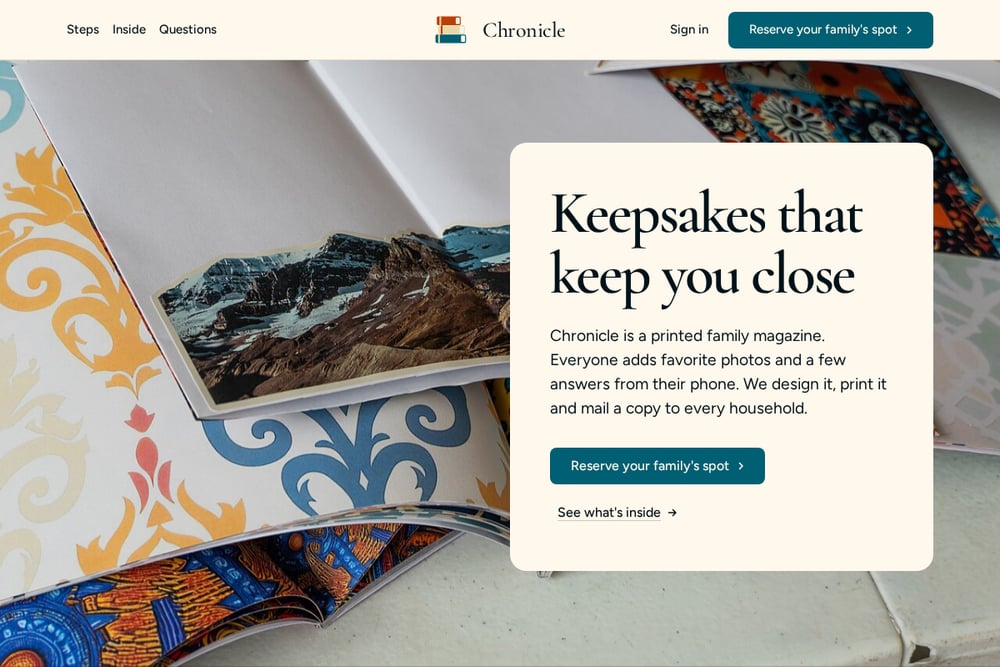 A screenshot of the Chronicle: a printed family magazine, mailed to every household website.
Chronicle is a printed family magazine that everyone contributes to from their phone, with no app and no password. You send one link, each person answers four to seven short questions and adds photos, video, or voice notes, and answers save as they type so slower relatives can finish later. Chronicle designs every page, you review it, and a full-color 8.5 by 11 magazine is printed and mailed to every household. The sections are genuinely thoughtful: grandparents' stories with a QR code to hear them tell it, recipes printed from the handwritten card, kids' artwork, and a word search built from your family's answers. Page count grows with what your family sends, and sections nobody wrote for are simply left out. It is the only service here built around mailing copies to multiple households at once, which makes it the strongest fit for a sprawling family spread across the country.
#3 Keepsake
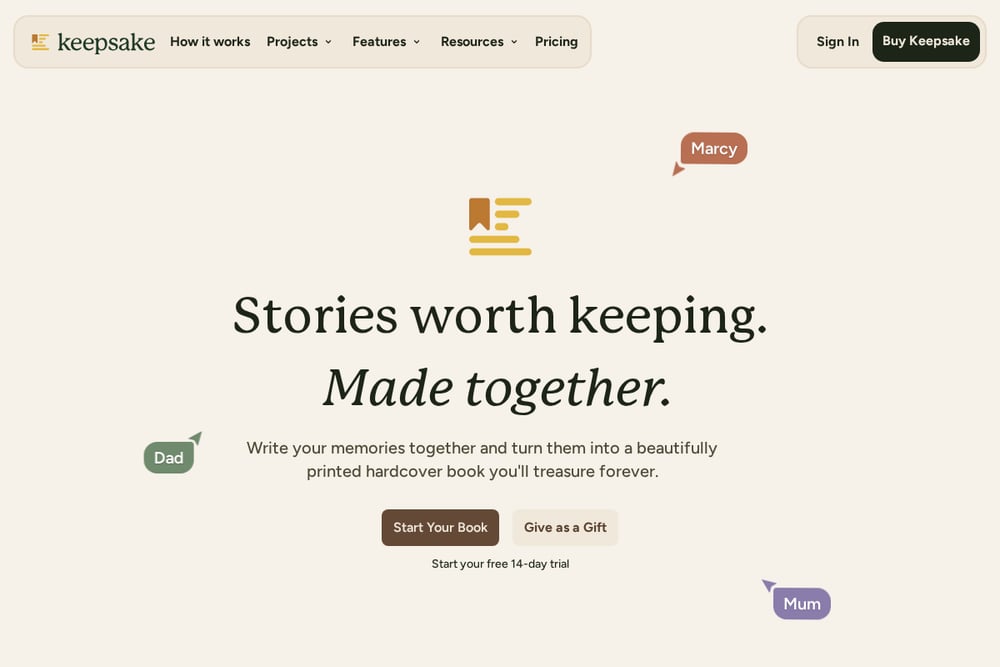 A screenshot of the Keepsake website.
Keepsake is a collaborative memoir platform built around unlimited free storytellers and a premium hardcover book. You invite relatives to answer prompts, they contribute at no per-person cost, and you choose from 560+ design combinations before printing in one of five countries. It positions itself as a Memorygram alternative, and the comparison is fair: no QR dependency, no per-storyteller fees, and a free trial to test the workflow. The focus is on depth of story rather than a recurring publication, so it suits families who want a substantial book of memories. If you have a relative with a lifetime of stories to capture, Keepsake gives you the structure to do it properly. The trade-off is that it is a book project, not a mailed magazine, so you will be the one handing out copies.
#4 MILK Books
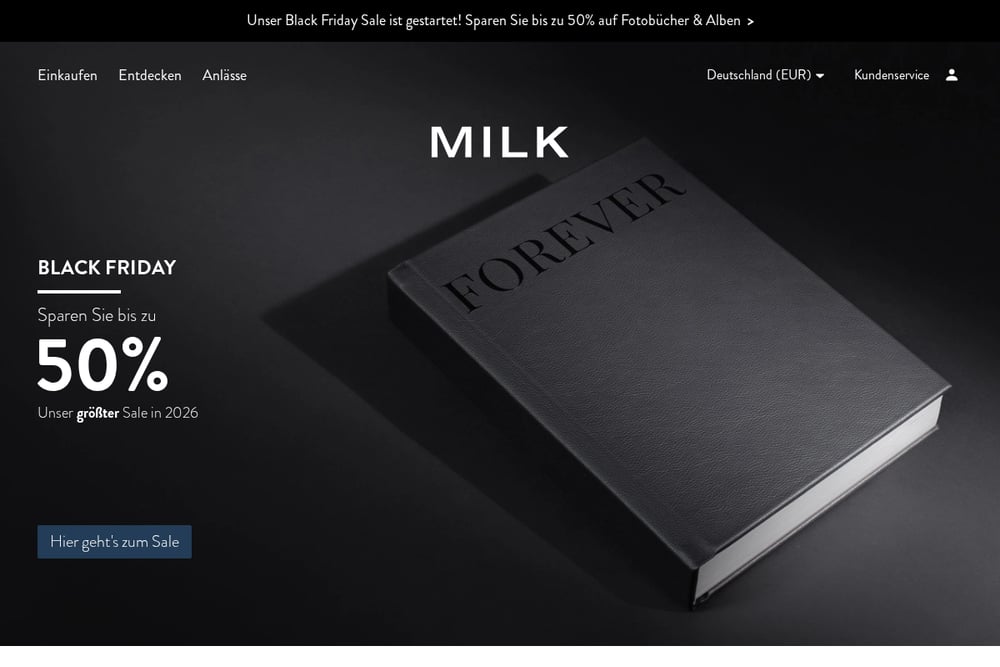 A screenshot of the MILK Books website.
MILK Books is a premium photo book and magazine maker with a dedicated family magazine product. You build the layout yourself using their design tools, choose paper stocks and binding, and order finished copies. The quality is high and the material options are extensive, which is why photographers and design-minded families gravitate to it. What you will not get is the collaborative collection layer: relatives do not fill out prompts from a shared link, so you are gathering the content and doing the design. That is fine if you enjoy the creative control and want a specific look. It is less fine if your family is scattered and you need help chasing contributions. Think of MILK Books as the craft option on this list.
#5 Blurb
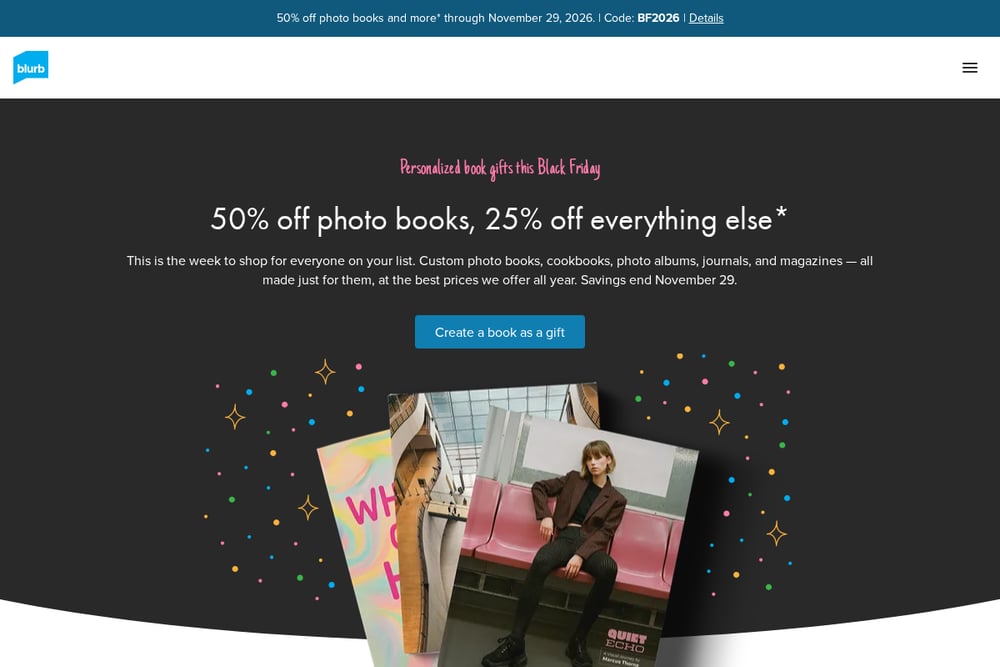 A screenshot of the Blurb website.
Blurb is the most flexible printing platform here, offering newsstand-quality magazines starting around $7 with designer templates and on-demand printing. You can build a serialized family magazine or a standalone issue, use their online editor or BookWright, and even sell or distribute through their bookstore. The upside is range: photo books, magazines, notebooks, and wall art all live under one roof. The downside is that Blurb is a printing and design tool, not a family collaboration service. Nobody sends your relatives a link with friendly reminders, and no one mails copies to each household for you. If you are comfortable assembling the content yourself and want professional print quality at a low entry price, Blurb delivers. If you want the family to do the filling-in, look elsewhere.
Pick the model, not the brand
Start with one question: who is doing the work? If you want relatives to contribute without you chasing them, choose a service with a shared link and reminders, like Chronicle or Keepsake. If you want to control every page, choose a design tool like MILK Books or Blurb. Next, decide on the output. A recurring mailed publication suits grandparents who live far from the kids, while a single hardcover book suits a legacy project. Then check the pricing model carefully. Per-issue subscriptions, one-time book purchases, and per-copy printing costs behave very differently over a year. Finally, confirm where copies get mailed. Only some services will send a copy to every household, and that detail matters more than any template gallery.
Where automation actually helps
The tedious part of any family keepsake is collection, not printing. A good workflow looks like this: one person creates the project and shares a single link in the family chat. Each relative gets a short set of prompts and adds photos, video, or voice notes on their own schedule, with answers saving automatically. A reminder goes out before the deadline so nothing stalls. From there, the service assembles the layout, you approve a proof, and printing and mailing happen without further input from you. Services that automate the reminder and the mailing steps remove the two places where family projects usually die. If you have to manually collect photos and ship copies yourself, budget real hours for it.
The bottom line
There is no single winner here, because these five services are answering different questions. The Family Press wins if you want a monthly grandkid newspaper for the grandparents. Chronicle wins if your family is large, spread out, and you want one collaborative magazine mailed to every household. Keepsake is the pick for a deep hardcover memoir, MILK Books for premium design control, and Blurb for affordable DIY printing. Match the service to how your family actually behaves, and the keepsake will get finished instead of sitting in a drafts folder.