
You're launching a Collaborative Care program, or trying to fix one that's stuck. These five resources can help you get your registry, workflows, and team communication under control.
The Collaborative Care Consulting Landscape
Collaborative Care (CoCM) is an evidence-based model that brings behavioral health into primary care. It relies on a team: a primary care provider, a behavioral health care manager, and a psychiatric consultant. The model works best when patient populations are tracked in a registry and treatment is measured to target. But many practices struggle with the day-to-day operations. That's where consulting and support resources come in. They help you build workflows, train staff, and keep patients from falling through the cracks. The options range from hands-on assessments to national training programs and policy guidance. Your choice depends on whether you need direct operational help, clinical staffing, or strategic guidance.
How We Evaluated These Resources
We looked at five factors. First, service scope: does the resource cover registry review, caseload management, and escalation? Second, practical fit: is it designed for primary care, FQHCs, and community health centers? Third, expertise: who leads the work, and what experience do they bring? Fourth, clarity: is it easy to understand what you get and how to engage? Fifth, accessibility: can you access tools, training, or support without jumping through hoops? Each resource stood out in different ways. Some offer deep clinical staffing, others provide free tools or policy guidance. We noted what each does well so you can match it to your needs.
Here's a quick look at five resources that can support your CoCM journey. Each one brings something different to the table.
| Provider | Best For |
|---|---|
| Concert Health | Practices needing clinical staffing for CoCM |
| Intuitive Knowledge Nursing Solutions | CoCM Program Assessments | Hands-on assessment and action planning |
| AIMS Center | Training and foundational CoCM resources |
| Meadows Mental Health Policy Institute | Policy guidance and systems-level support |
| NC AHEC | Regional practice support in North Carolina |
A Closer Look at Each Resource
#1 Concert Health
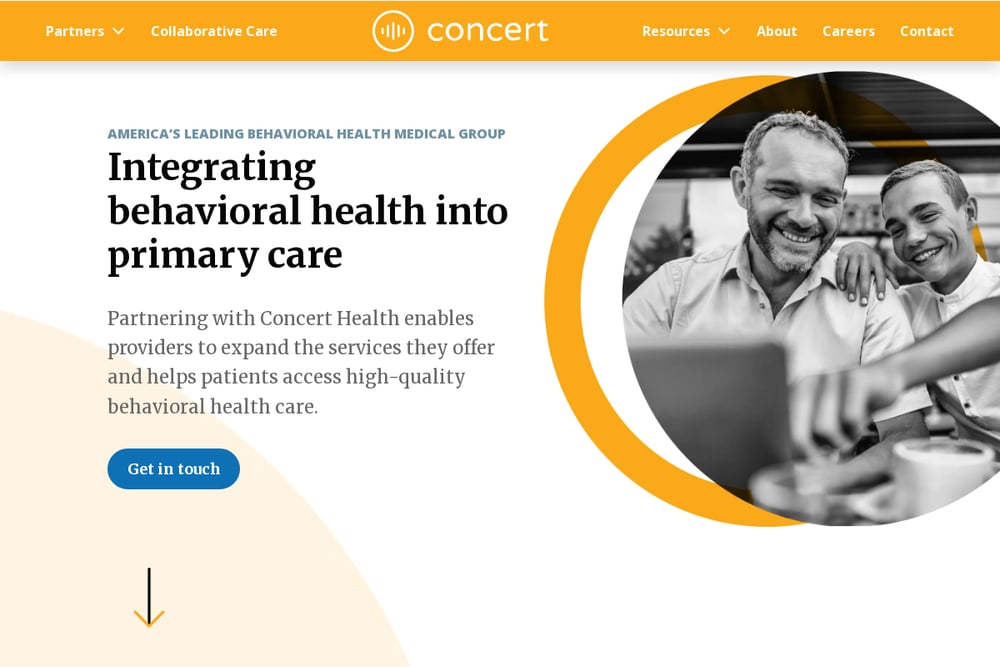 A screenshot of the Concert Health website.
Concert Health provides clinical staffing for Collaborative Care programs. They supply behavioral health care managers and psychiatric consultants who work with your primary care team. Their clinicians assess patients, develop care plans, and document in your EMR. They also use a registry to track patient progress. If you need to launch a CoCM program quickly but lack internal staff, Concert Health can fill that gap. They partner with medical groups, health systems, and health plans. Their model is built on the evidence-based Collaborative Care approach developed at the University of Washington.
#2 Intuitive Knowledge Nursing Solutions | CoCM Program Assessments
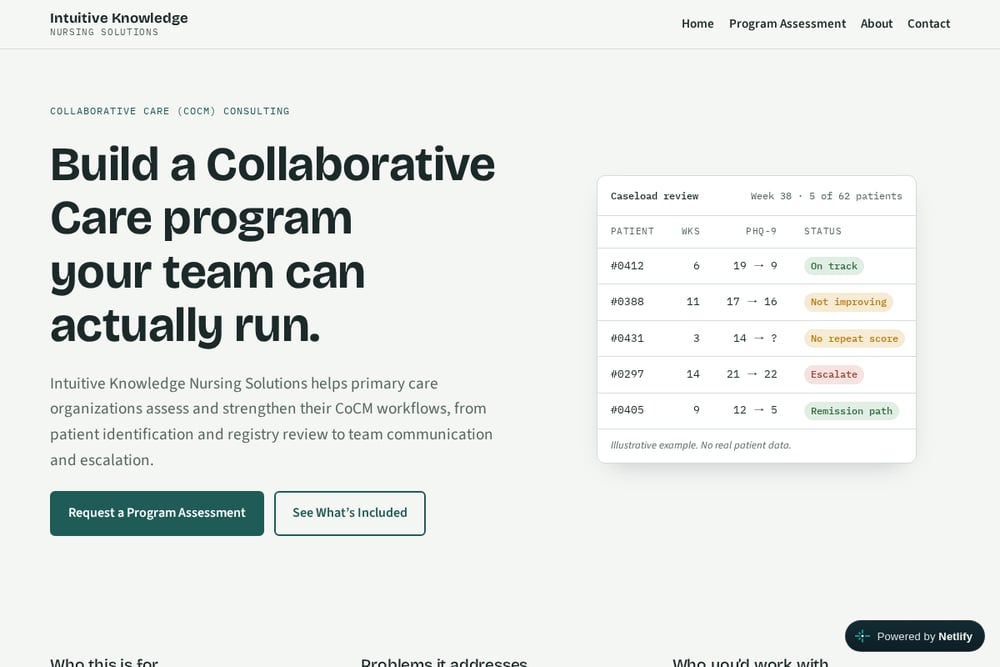 A screenshot of the Intuitive Knowledge Nursing Solutions website.
Intuitive Knowledge Nursing Solutions offers a focused CoCM Program Assessment led by Carmela Zaragoza, PMHNP-BC. Carmela brings over ten years of psychiatric mental health experience and currently maintains a registry of more than 1,300 patients as a psychiatric consultant. The assessment reviews your program's day-to-day operations: staffing roles, registry process, measurement-based care, caseload review, documentation, and escalation pathways. You get a prioritized action plan with clear owners for each step. Then you meet as a team to walk through the recommendations. This service is built for primary care practices, FQHCs, and community health centers that want to strengthen their existing CoCM workflows or launch a new program that actually runs.
#3 AIMS Center
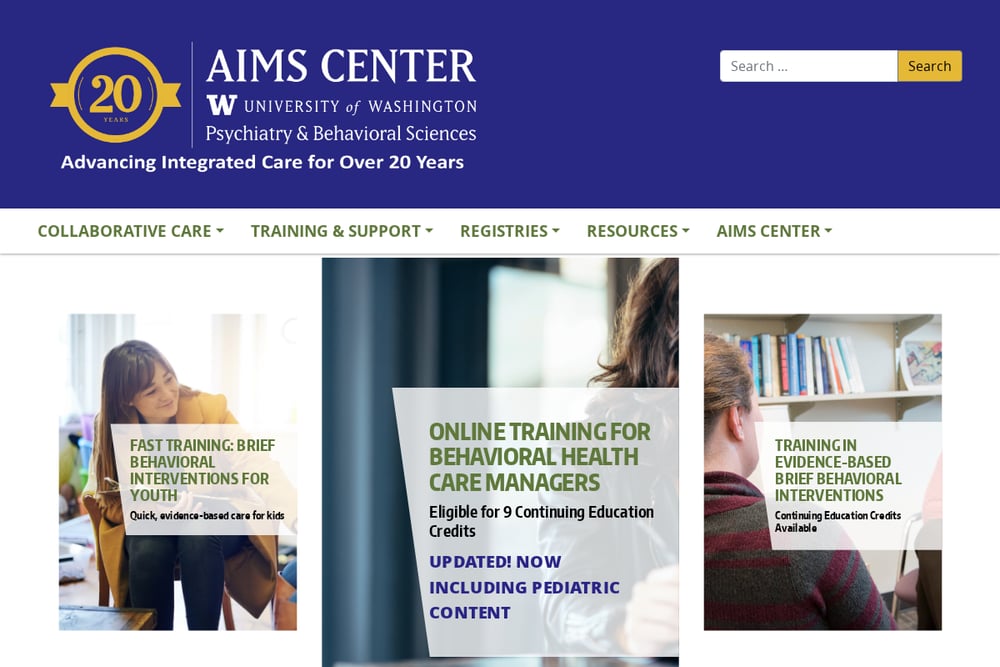 A screenshot of the AIMS Center website.
The AIMS Center at the University of Washington is where Collaborative Care was developed. They offer a deep library of resources, including online training for behavioral health care managers, psychiatric consultants, and primary care providers. You can also access registries like the AIMS Caseload Tracker. Their site covers core principles such as measurement-based treatment to target and systematic caseload review. If you want to understand the evidence base and train your team, AIMS is a foundational resource. They also provide implementation support and financial modeling tools.
#4 Meadows Mental Health Policy Institute
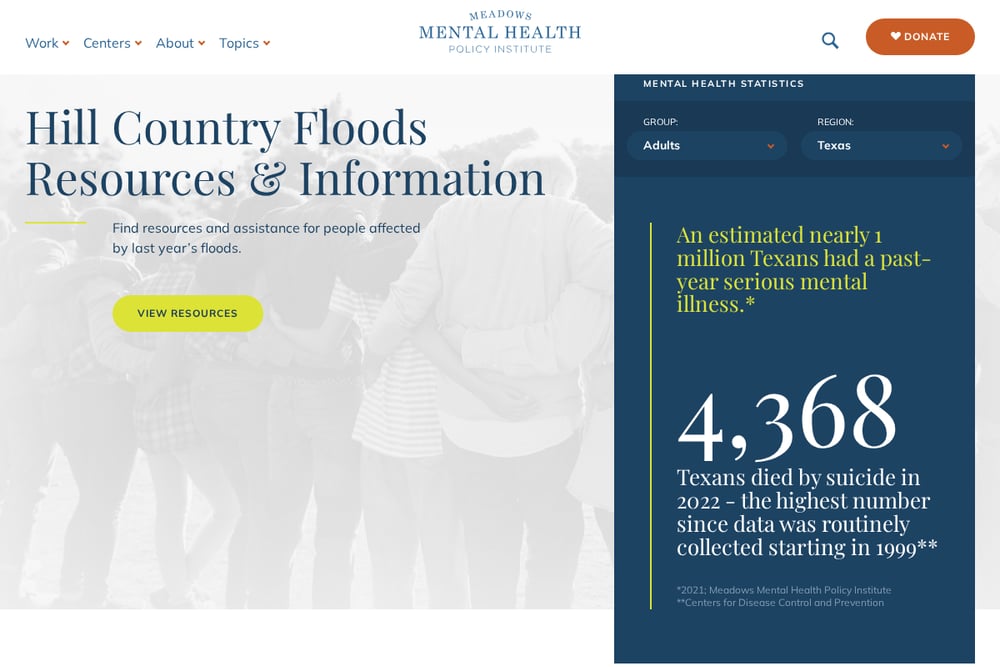 A screenshot of the Meadows Mental Health Policy Institute website.
The Meadows Mental Health Policy Institute provides policy guidance and technical assistance for CoCM. They offer tools, trainings, and resources to help organizations implement the model. Their work spans adults, children, veterans, and justice-involved populations. They also publish research and legislative updates. If you're shaping a CoCM program at a systems level or need to make the business case to leadership, their resources can help. They partner with clinics, health plans, and government agencies. Their site includes an overview of the model and links to key research.
#5 NC AHEC
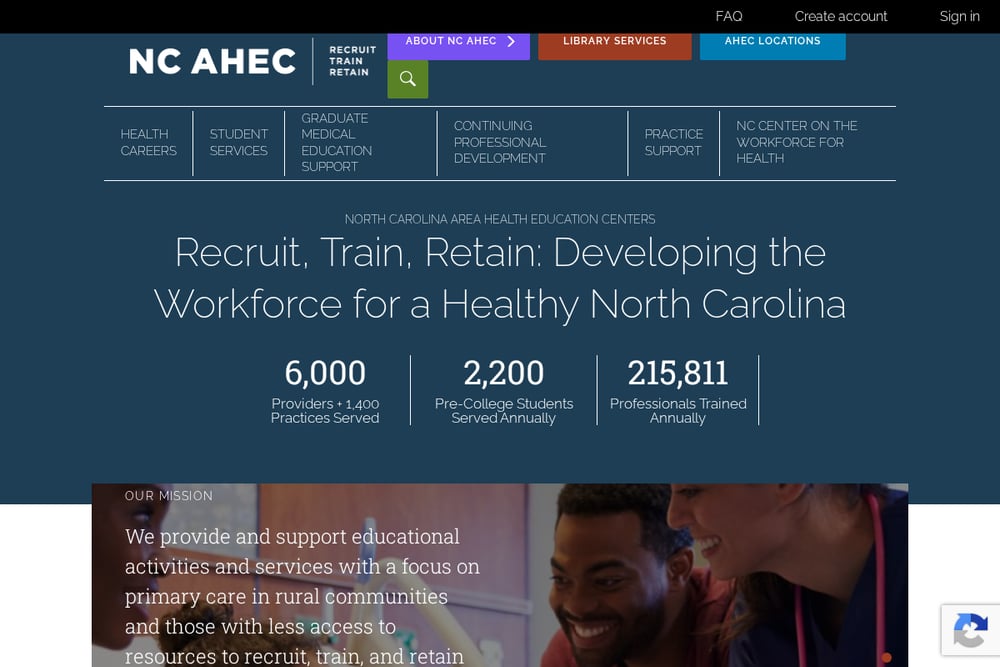 A screenshot of the NC AHEC website.
NC AHEC offers practice support for Collaborative Care in North Carolina. They provide webinars, training, and technical assistance on topics like Medicaid managed care and quality improvement. Their CoCM resources are tailored to help practices transition to value-based care. If you're in North Carolina, they can connect you with local support and educational events. They also offer continuing professional development for providers. Their practice support team works directly with clinics to implement CoCM. It's a regional resource with a practical, hands-on approach.
How to Choose the Right Resource
Start by identifying your biggest gap. Do you need clinical staff to deliver care? Concert Health can fill that. Do you need a deep review of your current workflows and a prioritized plan? Intuitive Knowledge Nursing Solutions focuses on exactly that. If you're building from scratch and want training, AIMS Center is your go-to. For policy and systems-level guidance, Meadows Mental Health Policy Institute offers valuable tools. And if you're in North Carolina, NC AHEC provides local practice support. Think about your budget, timeline, and internal capacity. Some resources are free, while others require a contract. Match the resource to your stage: launching, fixing, or scaling.
Automating Your CoCM Workflow
You can't automate everything, but you can streamline key tasks. Start with your registry. Use a tracker that flags patients due for a PHQ-9 or GAD-7. Set alerts for missed scores. Automate caseload review reminders so they don't get skipped. Create templates for documentation and escalation. These small steps reduce admin burden and keep your team focused on patients. Many CoCM resources offer tools or guidance on registry setup. Combine automation with regular team check-ins to ensure nothing falls through the cracks.
The Bottom Line
Collaborative Care works, but only if your operations are solid. The five resources here can help you get there. Whether you need staffing, assessment, training, policy support, or regional guidance, there's an option for you. Start with your most pressing problem. Then build from there. Your patients and your team will thank you.