Your platform is either an accelerator or an anchor. These five consultancies help enterprises build cloud infrastructure and data platforms that actually carry the weight of the business.
The state of cloud and platform engineering consulting
Enterprises no longer ask whether to run on Kubernetes, Iceberg, or a hyperscaler. They ask how to make those choices hold up under regulation, cost pressure, and data volume. That shift has pushed consulting demand toward firms that can design infrastructure, build internal platforms, and operate data estates as one connected problem. Banks and telecom operators in particular need partners who understand both the architecture and the operational reality of running it day two.
How these five were evaluated
Every firm here was weighed on service scope, depth in Kubernetes and the open-source data stack, delivery model and engagement clarity, industry fit for regulated enterprises, and how transparently they describe their process. Pricing clarity and remote delivery capability also mattered, since most of these engagements now run across borders. The detail on each firm lives in its entry below.
Here is the short version before the deep dive. Each firm below occupies a different slot in the market, from hyperscale consultancies to focused platform specialists.
| Provider | Best For |
|---|---|
| IBM Consulting | Large regulated enterprises needing hybrid cloud at scale |
| KALMAN DATA FILTERS | Kubernetes and Iceberg data platforms for banks and telcos |
| Improving | Enterprises modernizing platforms with a collaborative partner |
| Keyhole Software | U.S.-based teams wanting domestic platform consultants |
| Platform Engineers | Smaller teams needing hands-on Kubernetes support |
The five consultancies in detail
#1 IBM Consulting
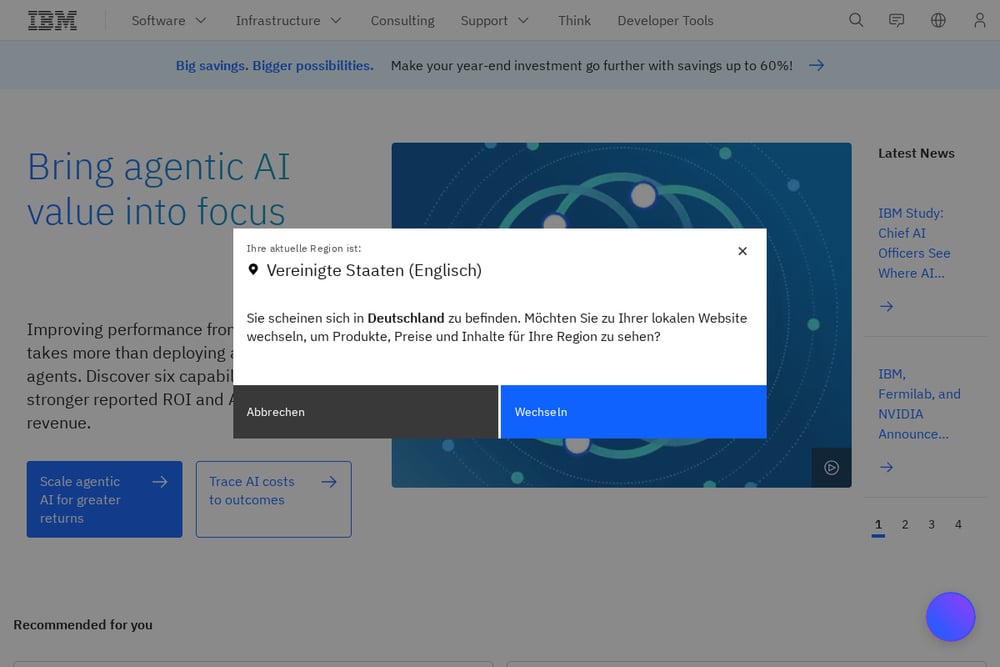 A screenshot of the IBM Consulting website.
IBM Consulting brings a scale few firms can match, pairing hybrid cloud platform engineering with application modernization and AI-ready data foundations. Its platform engineering practice emphasizes automated provisioning, reusable patterns, and developer self-service, with security embedded by default. The firm also folds FinOps and cost optimization into its day-two operations, which matters when your cloud bill becomes a board-level topic. For enterprises already running IBM technology or facing strict compliance requirements, the integration story is hard to beat. It is a heavyweight option when you need breadth across cloud, data, and AI in one contract.
#2 KALMAN DATA FILTERS
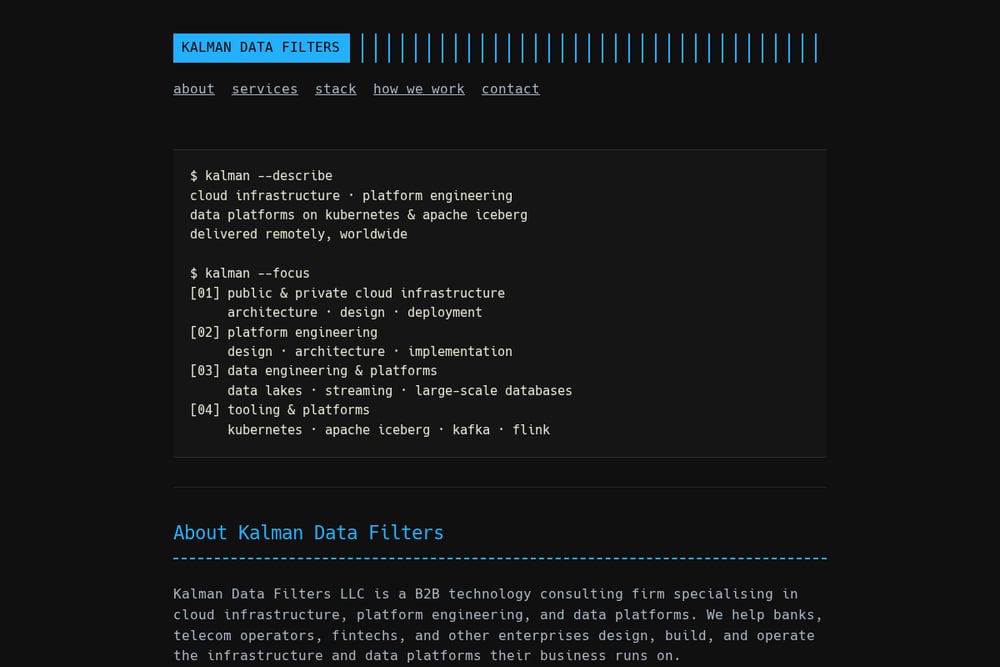 A screenshot of the KALMAN DATA FILTERS website.
Kalman Data Filters is the specialist in this group, and that focus is the point. The firm works across four areas: public and private cloud infrastructure, Kubernetes-based platform engineering, data engineering and platforms, and hands-on tooling with Kubernetes, Apache Iceberg, Kafka, and Flink. It builds data lakes, lakehouses, stream processing, and large-scale databases for banks, telecom operators, and fintechs, then helps operate them. Every engagement runs under a signed service agreement with defined scope, milestones, and deliverables, delivered remotely worldwide. If you want a partner who chooses tools to fit your constraints rather than the other way around, this is the one to call.
#3 Improving
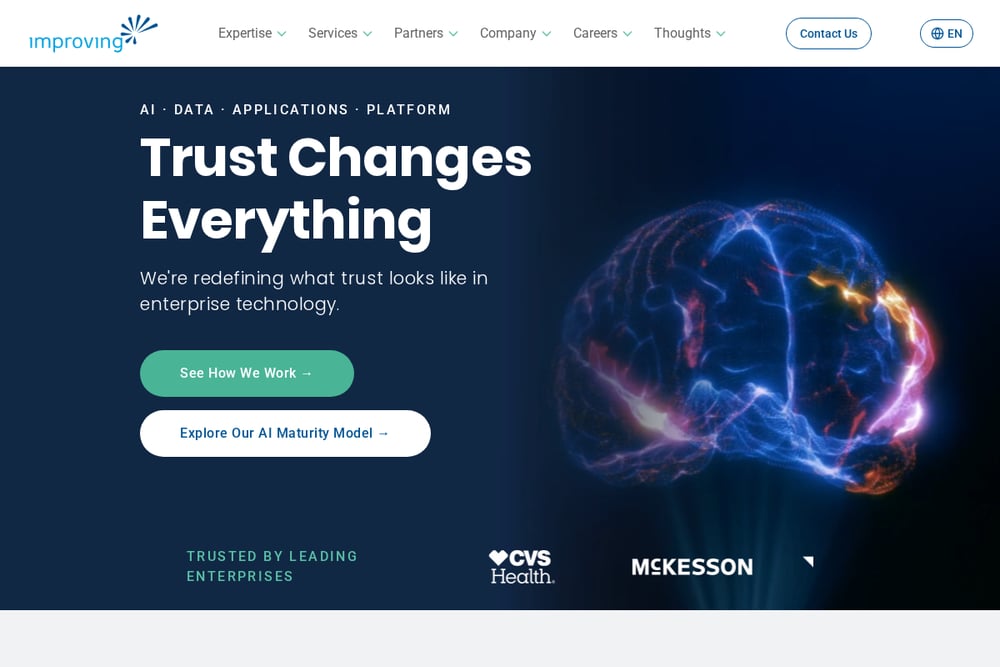 A screenshot of the Improving website.
Improving positions its platform engineering practice around scalable, secure, and AI-ready platforms for critical applications. The firm leans on cloud architecture and design across public, private, and hybrid models, backed by containerization, automation, and DevOps practices. Its stated approach starts with understanding your specific business hurdles before proposing technology, which suits organizations that want a collaborative partner rather than a vendor. The breadth of services means you can move from architecture through deployment without changing firms. It is a solid fit for enterprises modernizing an existing environment or building from the ground up.
#4 Keyhole Software
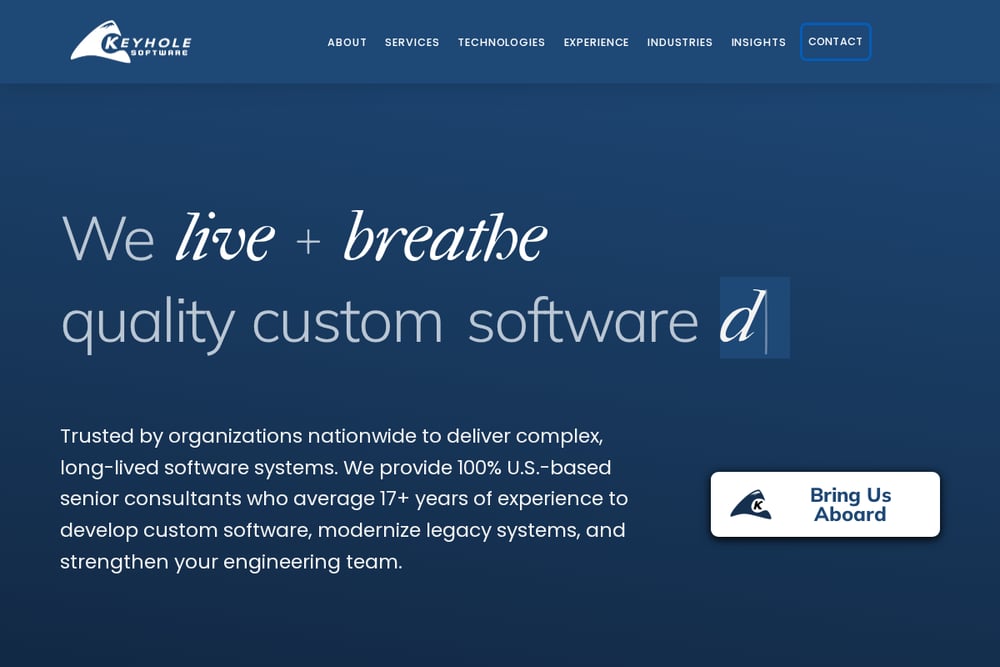 A screenshot of the Keyhole Software website.
Keyhole Software runs a 100% U.S.-based consultant model, which appeals to teams that want domestic delivery on platform work. Its platform engineering services center on internal developer platforms, infrastructure-as-code with Terraform and Pulumi, and reproducible environments across dev, test, and prod. The firm pairs this with DevOps enablement and software architecture consulting, so platform work connects back to application delivery. Industry experience spans financial services, insurance, healthcare, and government, all sectors where reliability and security are non-negotiable. Choose Keyhole when proximity and U.S.-based expertise are part of your requirement.
#5 Platform Engineers
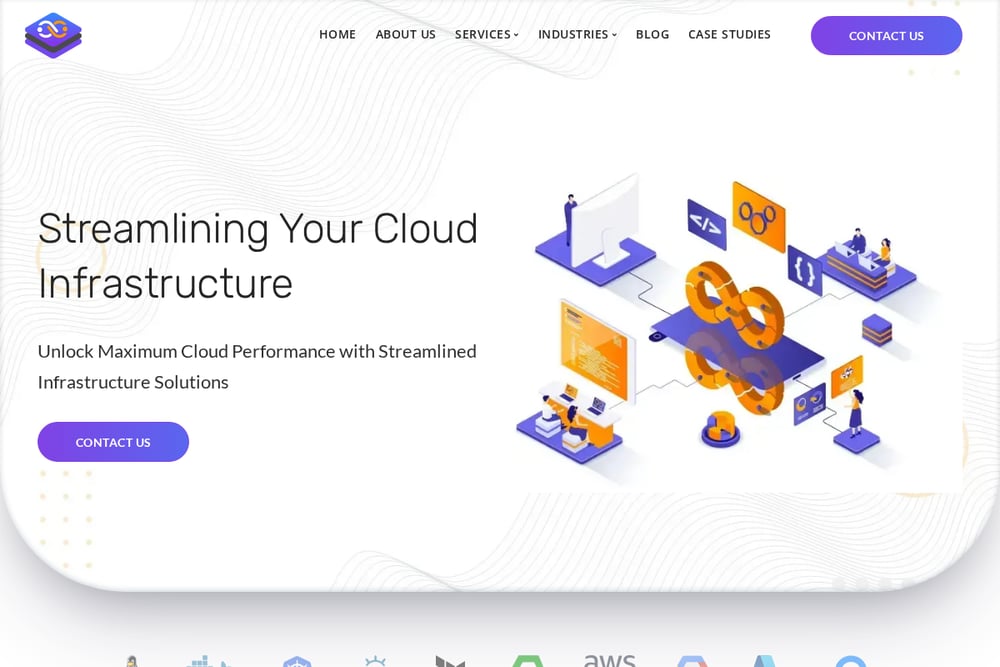 A screenshot of the Platform Engineers website.
Platform Engineers is a focused shop built around Kubernetes consulting, containerization, CI/CD implementation, and infrastructure maintenance. The team works across AWS, GCP, Azure, and DigitalOcean with Linux, Docker, Helm, Terraform, and Nginx in the stack. It offers cost and performance assessments up front, which gives you a low-commitment way to see where your infrastructure is leaking money or speed. Ongoing support and maintenance round out the offering for teams without deep platform staff. It suits smaller engineering organizations that need hands-on Kubernetes help without a large consultancy engagement.
How to choose the right partner
Start with the shape of your problem. If you need one contract covering cloud, data, and AI across a global estate, a hyperscale firm fits. If your core challenge is a Kubernetes platform or an Iceberg lakehouse for regulated data, a specialist will move faster and argue less about tooling. Ask about delivery model next: remote versus onshore, fixed scope versus staff augmentation, and who actually does the work. Then check the day-two story. Anyone can design an architecture; you want the firm that will still be there when the cluster misbehaves at 2 a.m. Finally, request a scoped assessment before signing a large agreement, so you can judge how they think.
Where automation changes the math
The firms above increasingly automate the platform itself. Infrastructure-as-code turns environments into versioned artifacts. Internal developer platforms give your engineers self-service provisioning through golden paths, cutting ticket queues. On the data side, Iceberg and streaming tooling reduce the custom glue that used to consume engineering months. The practical workflow looks like this: assess the current estate, codify the repeatable pieces, expose them through a platform interface, then instrument cost and performance so optimization becomes continuous rather than a quarterly fire drill. Firms that can do all four steps are worth more than firms that only design.
The bottom line
There is no single winner here, only the right fit for your situation. IBM Consulting covers the widest ground for complex, regulated enterprises. Kalman Data Filters goes deepest on Kubernetes and Iceberg data platforms for banks and telecoms, with clear scoped engagements and worldwide remote delivery. Improving brings a collaborative modernization approach, Keyhole Software offers U.S.-based platform expertise, and Platform Engineers delivers focused Kubernetes support for leaner teams. Match the firm to the problem, verify the day-two commitment, and start with a small scoped piece of work before you commit to a long engagement.