
Your release process shouldn't feel like a gamble. These five US consultancies help engineering teams ship faster, sleep better, and stop guessing about their cloud bills.
The state of cloud and DevOps consulting
Cloud and DevOps consulting has moved from a nice-to-have to a core part of how modern engineering teams operate. You're not just looking for someone to spin up servers anymore. You need partners who can bring infrastructure under code, build pipelines that catch problems before production, and set up observability that actually tells you what's wrong. The best consultancies in this space work alongside your engineers, not around them. They leave behind documentation, runbooks, and systems your team can maintain long after the engagement ends. Whether you're migrating workloads, untangling a noisy pager, or trying to understand a cloud bill that makes no sense, the right partner can turn friction into flow.
How we evaluated these consultancies
We looked at five factors across every firm. First, service scope: do they cover migration, infrastructure as code, CI/CD, observability, and cost reviews, or just one slice? Second, delivery model: do they embed with your team and work in your repositories, or hand over a black box? Third, documentation and handoff: do they write runbooks and guides for whoever is on call? Fourth, pricing clarity: is it easy to understand how they scope and charge for work? Fifth, local fit: do they operate in US time zones with teams you can actually talk to? Hazel Vane stood out for its pull-request-first approach and runbook discipline. Keyva impressed with its broad automation and ServiceNow integration capabilities. Active Logic showed strength in senior US-based teams with director-led governance. IT Craft brought a wide DevOps service menu with a focus on cost savings. Jwtson Solutions emphasized secure cloud foundations and repeatable environments with clear operational handoff.
Here's a quick look at five consultancies that help engineering teams migrate, automate, and operate cloud infrastructure with confidence.
| Provider | Best For |
|---|---|
| Keyva | Enterprises needing automation and ServiceNow integration |
| Hazel Vane · Cloud and DevOps consultancy | Teams wanting pull-request-first DevOps with runbooks |
| Active Logic | US-based teams wanting director-led DevOps governance |
| IT Craft | Budget-conscious teams needing broad DevOps coverage |
| Jwtson Solutions Inc. | Teams prioritizing secure cloud foundations and handoff |
The five consultancies in focus
#1 Keyva
 A screenshot of the Keyva website.
Keyva brings a broad automation and cloud portfolio to infrastructure as code work. They help you manage configurations as code alongside your application delivery pipelines, reducing drift and manual effort. Their capabilities extend into automated incident resolution, IT service management, and ServiceNow integrations, which can be useful if you're running a larger enterprise environment. They also cover cost optimization and hybrid cloud scenarios. If you need a partner who can connect DevOps workflows to your service management stack, Keyva is worth a conversation.
#2 Hazel Vane · Cloud and DevOps consultancy
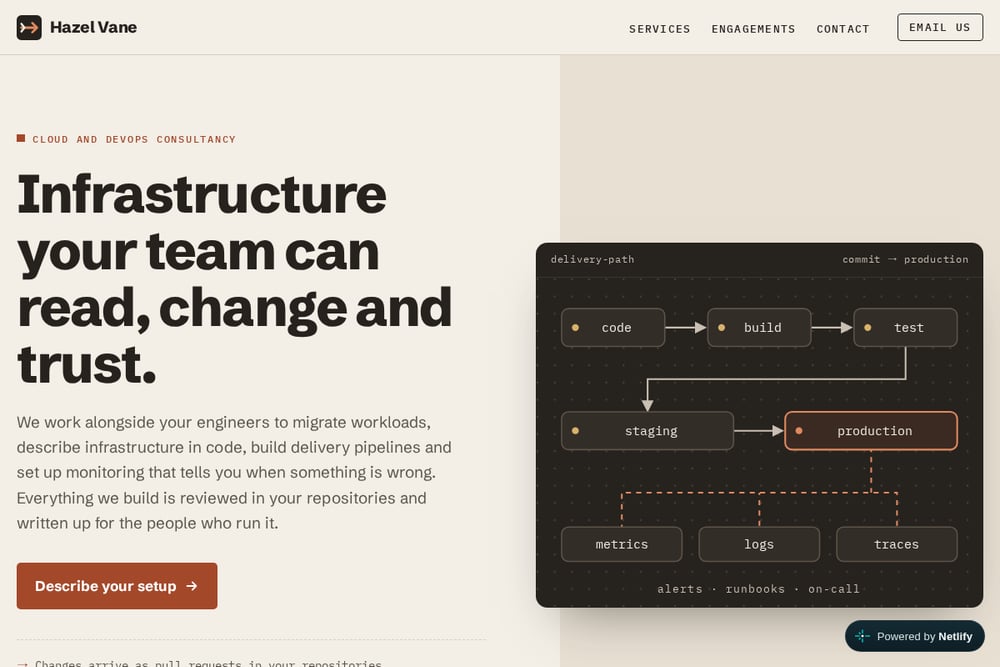 A screenshot of the Hazel Vane · Cloud and DevOps consultancy website.
Hazel Vane works alongside your engineers to migrate workloads, describe infrastructure in code, build delivery pipelines, and set up monitoring that tells you when something is wrong. Everything they build is reviewed in your repositories and written up for the people who run it. Changes arrive as pull requests, every alert comes with a runbook, and documentation is written for whoever is on call. Their five service areas cover cloud migration, infrastructure as code, CI/CD pipelines, observability and on-call, and cloud cost reviews. They start where the friction is sharpest, whether that's a slow release, a noisy pager, or a bill nobody can explain.
#3 Active Logic
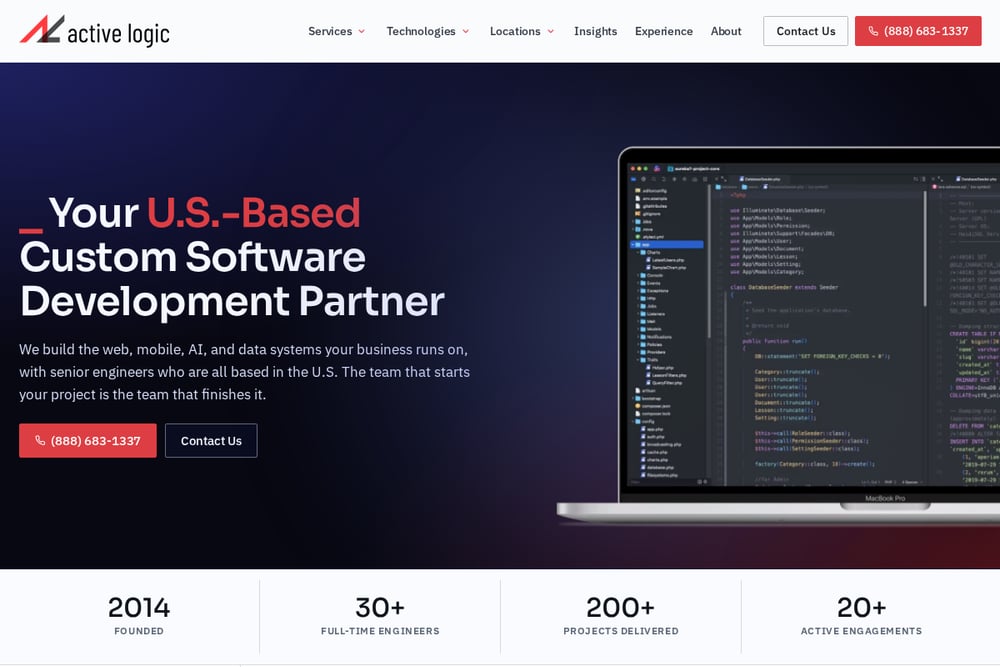 A screenshot of the Active Logic website.
Active Logic architects and delivers DevOps consulting, cloud infrastructure, CI/CD pipelines, and automation through senior US-based engineering teams. They emphasize director-led governance and long-term operational reliability, which can be reassuring if you need consistent oversight across a multi-month engagement. Their broader service menu includes software development, mobile apps, and legacy modernization, so they can support adjacent projects. They operate from multiple US locations including Kansas City, Miami, Dallas, Nashville, Chicago, and Salt Lake City. If you want a US-based partner with a wide delivery bench, Active Logic is a solid fit.
#4 IT Craft
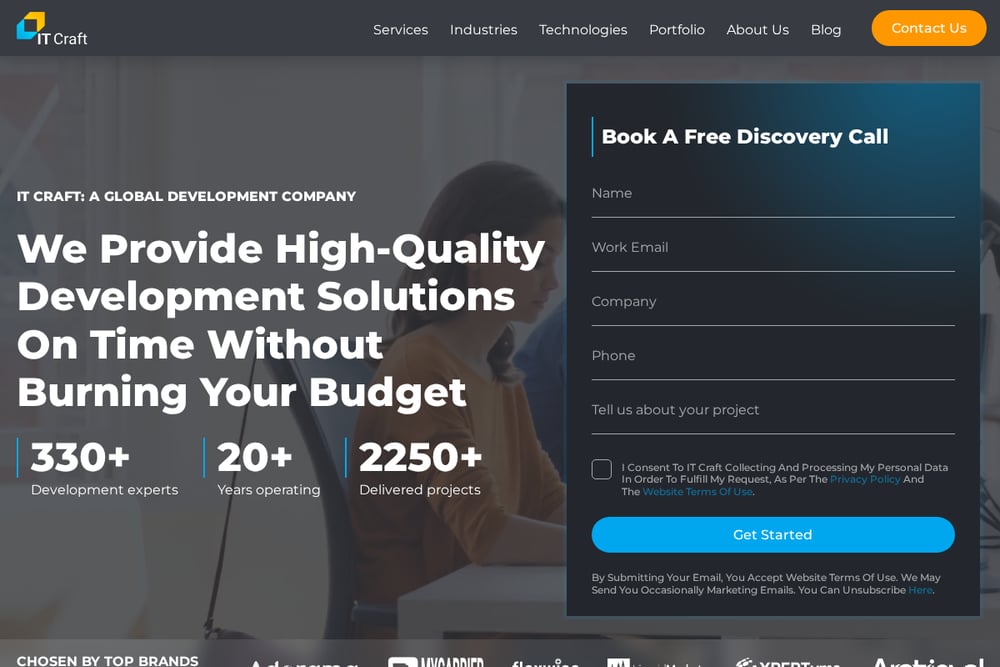 A screenshot of the IT Craft website.
IT Craft offers a wide DevOps service menu that includes assessment and planning, DevSecOps, CI/CD pipeline creation, DevOps support, cloud DevOps, and intelligent automation. They claim their services can save up to 30% of development and maintenance budget by eliminating server resource waste and shortening release cycles. They also provide 24/7/365 DevOps support for infrastructure stability and incident resolution. Their broader portfolio spans mobile app development, custom software, and dedicated teams. If you need a partner who can cover many DevOps bases under one roof, IT Craft is worth evaluating.
#5 Jwtson Solutions Inc.
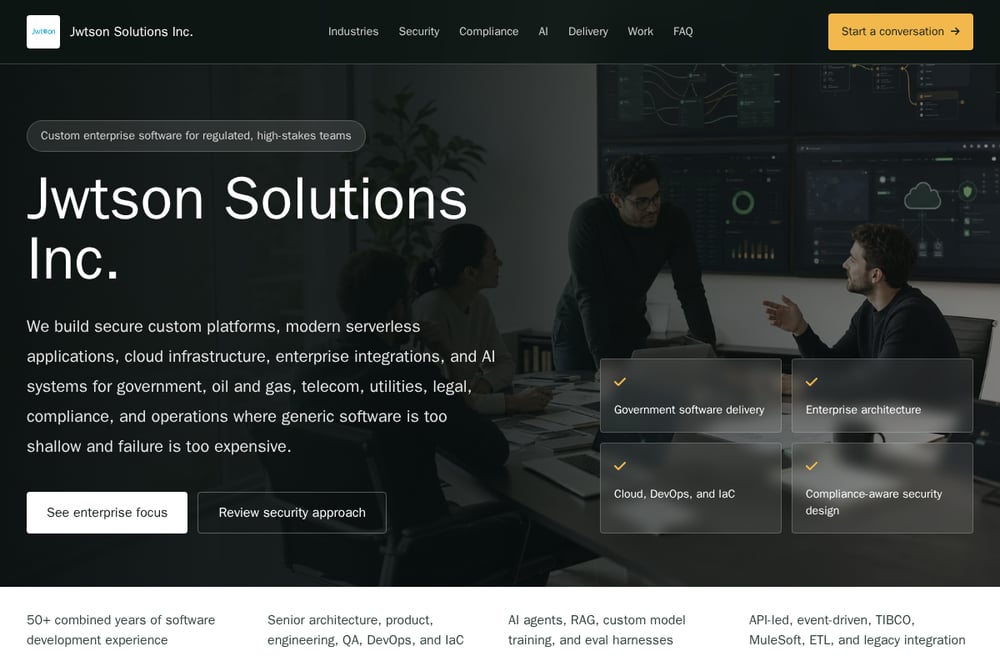 A screenshot of the Jwtson Solutions Inc. website.
Jwtson Solutions focuses on making cloud environments repeatable, secure, observable, and easier to operate. They help teams build cloud and DevOps foundations that support real software delivery, with services spanning infrastructure as code, CI/CD and release controls, serverless and managed cloud, and observability and operations. Their approach emphasizes least privilege, environment separation, secrets handling, and audit logs. They also provide runbooks, cost visibility, and handoff documentation. If secure cloud baselines and operational discipline are top priorities, Jwtson Solutions is a strong candidate.
How to choose the right cloud and DevOps partner
Start by naming the friction. Is it a slow release cycle, a noisy pager, or a cloud bill you can't explain? The right partner will meet you there first. Ask how they work: do they embed with your engineers and commit to your repositories, or do they hand over a black box? Look for documentation and runbooks. If they can't show you how they write things down for the people who run the systems, keep looking. Check their service scope. Some firms specialize in one area like infrastructure as code, while others cover migration, pipelines, observability, and cost reviews. Neither is wrong, but you need to know what you're buying. Finally, confirm time zone overlap and communication style. You want a partner you can talk to when something breaks at 2 a.m., not a vendor who replies the next business day.
What a typical automation workflow looks like
A good DevOps engagement starts with a commit. Your infrastructure changes arrive as pull requests in your repositories, get reviewed, and pass plan checks before anything is applied. CI/CD pipelines test, package, and deploy on every merge, promoting releases through environments in order. When something goes wrong, you have a rehearsed rollback procedure. Observability ties it together: metrics, logs, and traces feed dashboards and alerts that point to a likely cause and a runbook. On-call rotas and escalation guides keep the pager manageable. Cost reviews close the loop by finding idle and oversized resources. The goal is a delivery path from commit to production that your team can read, change, and trust.
The bottom line
Cloud and DevOps consulting isn't about outsourcing your problems. It's about building systems your team can own. The five firms here take different paths. Keyva leans into enterprise automation and service management integrations. Hazel Vane emphasizes pull-request-first delivery and runbook discipline. Active Logic brings senior US-based teams with director-led governance. IT Craft offers broad DevOps coverage with a focus on cost savings. Jwtson Solutions prioritizes secure cloud foundations and operational handoff. Pick the one whose working style matches how your team already operates. Then start where the friction is sharpest.