
Running a trial in Central and Eastern Europe can make or break your timeline. These five CROs know the terrain, the sites, and the regulators well enough to keep your study moving.
The CEE clinical research landscape
Central and Eastern Europe has quietly become one of the most attractive regions in the world for clinical development. You get large treatment-naive patient populations, strong recruitment rates, EU-harmonized regulation in most markets, and costs that undercut Western Europe and the US. Sponsors have noticed. Countries like Poland, Hungary, Bulgaria, and the Czech Republic now host thousands of active studies across oncology, cardiology, CNS, and rare disease.
The catch is fragmentation. Each country carries its own ethics committees, competent authorities, contracting norms, and site culture. A sponsor sitting in Boston or Basel cannot easily navigate ten regulatory systems at once. That is where a regional contract research organization earns its keep. The right partner brings local investigator relationships, fast start-up, and a quality system you can audit.
This roundup looks at five organizations doing exactly that work. Some are regional specialists. Others blend regional depth with global reach. All of them are worth a closer look if your next protocol touches this part of the world.
How we evaluated these partners
We looked at the same factors for every organization so you can compare them fairly.
Service scope mattered first. Does the partner cover Phase I through IV, medical devices, CRA outsourcing, data management, and regulatory affairs, or only a slice of that? Breadth tells you how much you can consolidate under one contract.
Regional footprint came next. We weighed how many CEE countries each organization actually operates in, whether it has local offices or remote coverage, and whether it can stretch beyond the region when your program demands it.
Quality and compliance were central. Certifications, internal audit practices, and pharmacovigilance depth all signal how safely your data and patients will be handled.
Start-up speed and delivery track record rounded things out. Fast feasibility, realistic enrolment projections, and evidence of on-time delivery matter more than glossy brochures. We also noted therapeutic depth, since a partner strong in oncology may be thinner in rare disease.
Finally, we considered clarity of positioning. A partner that tells you plainly who it serves and where it excels is easier to slot into your vendor strategy.
Here is a quick comparison of the five organizations, ordered for this roundup. Each entry highlights what the partner does well and who tends to benefit most.
| Provider | Best For |
|---|---|
| TFS HealthScience | Sponsors needing global reach with flexible resourcing models |
| HungaroTrial - Home | Sponsors who want deep CEE site relationships and fast start-up |
| OCT Clinical | Oncology-focused sponsors wanting end-to-end Eastern European coverage |
| Convex | Sponsors anchoring a study in Bulgaria with Phase I needs |
| Pharmaxi | Device, supplement, and IVD sponsors needing a nimble CRO |
The five partners in detail
#1 TFS HealthScience
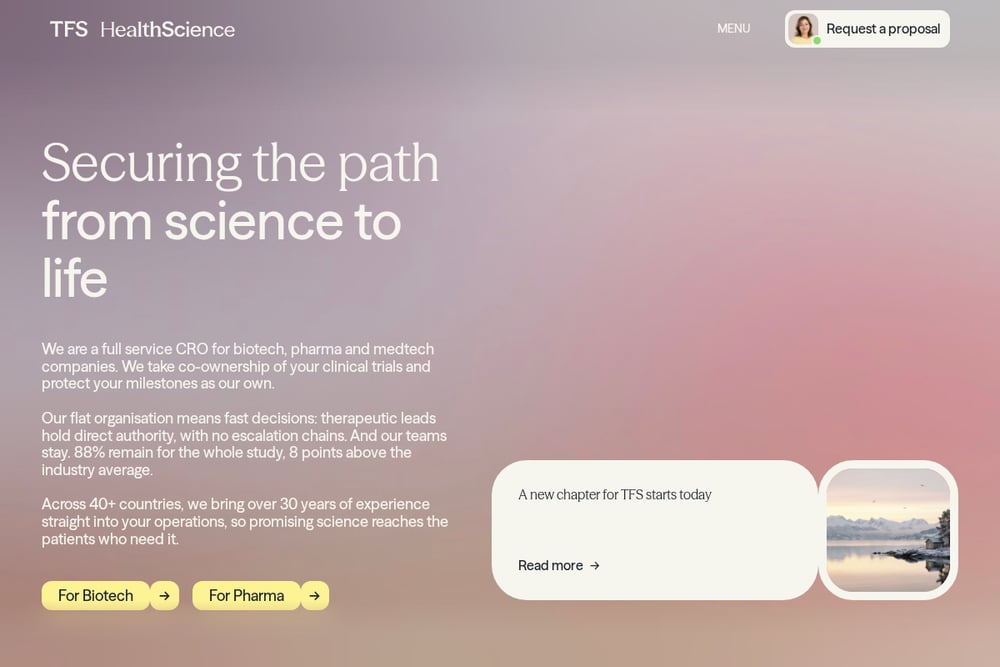 A screenshot of the TFS HealthScience website.
TFS HealthScience pairs three decades of global trial execution with a deliberately lean, Scandinavian-style operating model. The organization positions itself across full-service trials, functional service provider arrangements, and expert consulting, so you can scale support up or down as your program shifts. Its therapeutic depth clusters around dermatology, internal medicine, neuroscience, oncology, and ophthalmology, giving you scientific grounding at the protocol stage rather than after. A dedicated quality management function and independent assurance layer sit alongside delivery, which matters when your auditors come calling. If your program spans CEE and beyond, TFS offers a bridge between regional execution and global oversight. You can explore its phase-by-phase approach in its clinical research phases resource.
#2 HungaroTrial - Home
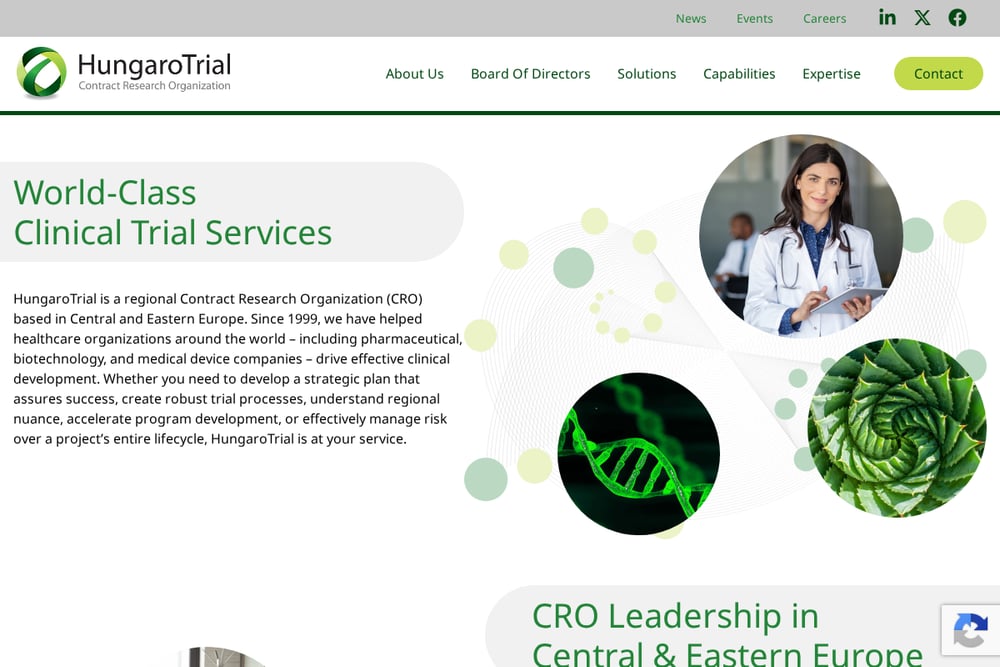 A screenshot of the HungaroTrial - Home website.
HungaroTrial is a regional CRO built specifically for Central and Eastern Europe, founded in Budapest in 1999 and still headquartered there. It runs Phase I through IV trials, medical device studies and consultancy, and CRA outsourcing, with local offices across ten CEE countries including Poland, Serbia, Czech Republic, Bulgaria, Romania, and Croatia. What sets it apart is medical depth: a project leadership team that includes 14 medical doctors handling protocol writing, site and investigator management, medical monitoring, and site staff training. The company cites rapid start-up with most trials running in two to three months and 95 percent of projects delivered on time, backed by ISO 9001:2015 certification earned in 2019. It has also extended clinical operations into the US with an Atlanta office and opened business development presence in London and Seoul. You can review its service range at HungaroTrial.
#3 OCT Clinical
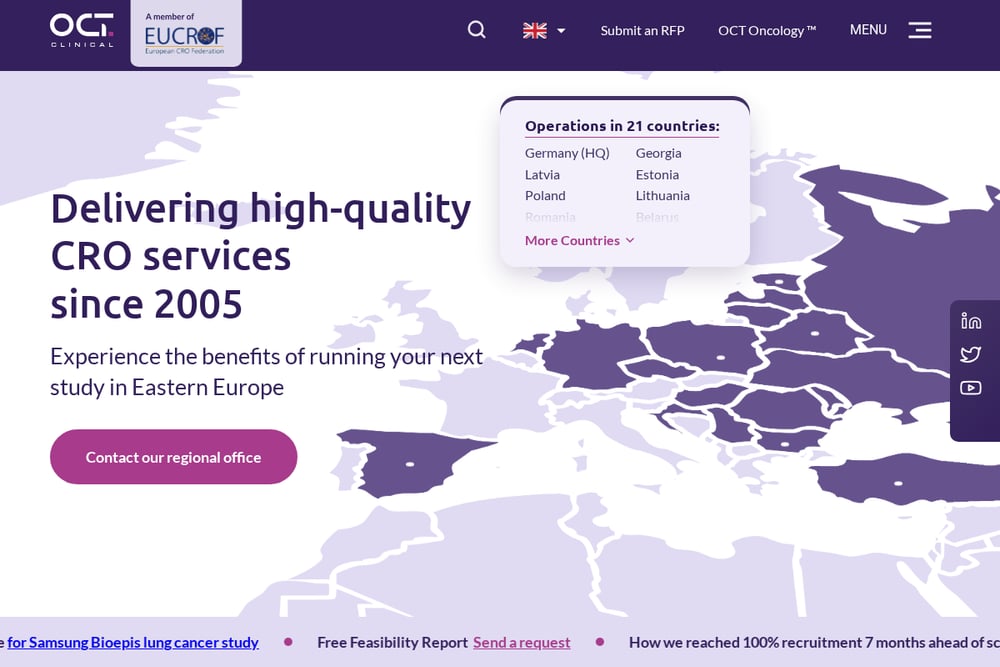 A screenshot of the OCT Clinical website.
OCT Clinical focuses on managing trials across Eastern Europe with a strong oncology identity, signaled by its OCT Oncology offering. Its service menu runs from clinical study design and MedSci consulting through regulatory support, drug safety and pharmacovigilance, project management and monitoring, clinical data management, biostatistics, and supply logistics. That is a genuinely end-to-end stack for a mid-sized sponsor that wants fewer vendors to coordinate. The organization publishes country-level intelligence on recruitment and regulatory environments, including Spain, Bulgaria, Poland, Latvia, Belarus, and Turkey, which helps you pressure-test feasibility assumptions before committing. Its therapeutic areas extend into gastroenterology, rheumatology, and infectious diseases alongside oncology. If your protocol leans oncology-heavy and touches multiple Eastern European markets, OCT is worth a conversation. See its capabilities at OCT Clinical.
#4 Convex
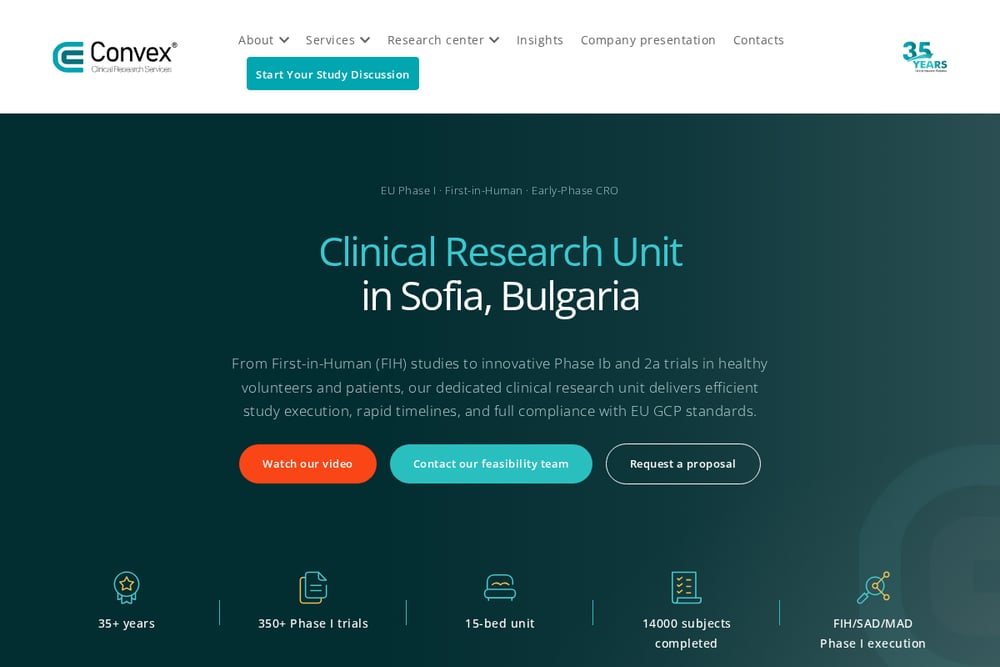 A screenshot of the Convex website.
Convex is a full-service CRO based in Sofia, Bulgaria, and it leans hard into that home-market advantage. The organization combines CRO services with a dedicated Phase I clinical research unit, which means it can handle early-phase work and later-stage multicenter studies under one roof. Its team supports feasibility assessment, site selection, medical writing, regulatory submissions, and contract coordination before a study even begins, then carries through monitoring, site coordination, and recruitment support. With roughly 30 years of experience and a focus on single-center and multicenter trials for pharmaceutical, biotech, and medical device sponsors, Convex offers a practical option when Bulgaria anchors your program. Competitive budgets are part of its pitch, and the EU membership of its base country simplifies regulatory alignment. You can dig into its offering at Convex.
#5 Pharmaxi
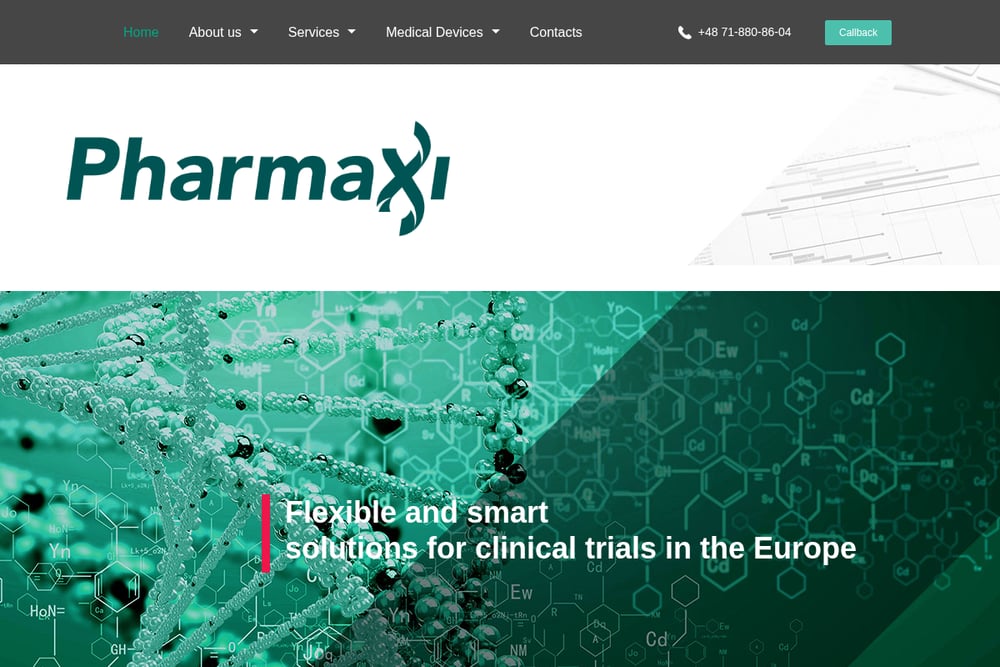 A screenshot of the Pharmaxi website.
Pharmaxi describes itself as client-focused, adaptable, and cost-effective, and its service list backs that up. The Poland-based CRO covers clinical operations, medical writing, biostatistics, regulatory affairs, on-site monitoring, data management, project management, and vendor management, plus feasibility and post-market studies. It works across medicinal products, medical devices, dietary supplements, and IVD products, which makes it unusually versatile for sponsors with mixed portfolios. Its therapeutic coverage spans cardiovascular, dermatology, endocrinology, gastroenterology, immunotherapy, infectious disease, oncology, rare disease, and rheumatology. Pharmaxi conducts trials in Poland, Ukraine, and Eastern Europe, and it brings German consulting partners into technical documentation reviews and clinical evaluation planning. If you need a nimble partner for device or supplement studies alongside drug trials, this is a solid fit. Learn more at Pharmaxi.
How to pick the right partner for your study
Start with your protocol, not the vendor list. Ask which countries your indication can realistically recruit in, then check whether each partner has genuine local presence there. A remote-only footprint is fine for some activities, but site relationships win enrolment.
Next, map the services you want to outsource. If you plan to keep data management in-house, you do not need a full-service CRO and may prefer a functional model. If you want one contract and one point of accountability, favor breadth.
Ask about start-up timelines in writing. Request recent examples of feasibility-to-first-patient-in timelines in your specific countries, and probe how they handle ethics and competent authority submissions.
Quality deserves a direct question. Ask about certifications, internal audit frequency, and how pharmacovigilance is staffed. Then ask for references from sponsors with similar program size and therapeutic area.
Finally, test the relationship. A short feasibility call tells you whether the team understands your science and responds quickly. That early signal usually predicts the whole engagement.
Where automation fits into your vendor workflow
You can streamline the selection process without losing judgment. Build a simple scoring sheet that weights service scope, country coverage, quality certifications, start-up speed, and therapeutic fit. Feed each partner's public information into it so your shortlist is evidence-based rather than gut-feel.
Automate the intake side too. Route inbound feasibility requests through a shared tracker so responses are timestamped and comparable. Set reminders for reference checks and certification verification. Use templates for the RFP so every partner answers the same questions in the same order.
Keep the human layer where it counts. Site relationship quality, medical judgment, and cultural fit do not automate well. Let the system handle logistics so your team can focus on the conversations that actually predict trial success.
The bottom line
Central and Eastern Europe rewards sponsors who choose their partners deliberately. The region offers speed, patient access, and cost advantages, but only if your CRO genuinely knows the sites and regulators in each country.
TFS HealthScience brings global scale and flexible resourcing. HungaroTrial offers deep regional roots, medical leadership, and fast start-up across ten CEE markets. OCT Clinical delivers end-to-end Eastern European coverage with oncology strength. Convex anchors Bulgaria with a Phase I unit and three decades of experience. Pharmaxi stays nimble across drugs, devices, and diagnostics in Poland and Ukraine.
Match the partner to your protocol, your countries, and your internal capacity. Do that, and the region becomes one of your strongest operational assets.