Clinical reasoning is the skill that separates a confident clinician from a nervous one, and it is rarely taught in a textbook. These five tools give you a low-stakes place to practice thinking like a professional before a real patient is watching.
Why Clinical Reasoning Training Is Having a Moment
Healthcare education is shifting from memorization toward decision-making. Students and early-career clinicians are expected to collect clues, weigh differentials, and justify a plan, yet classroom time rarely offers enough repetition. Digital simulation fills that gap. Platforms now range from full virtual patient simulators with reactive physiology to quick daily games you can finish on a coffee break. Educators are also adopting these tools for assessment, since a scored case gives a clearer signal than a multiple-choice quiz. The result is a crowded but exciting market, with options for physiotherapy students, medical students, residents, and the faculty who teach them.
How We Evaluated These Tools
We looked at the same factors across every tool. First, clinical scope: does it cover physiotherapy, medicine, or both, and does it include red flags, neurology, anatomy, and pharmacology? Second, evidence grounding: are cases reviewed by clinicians and linked to sources, and does the feedback reflect current guidelines rather than habit? Third, accessibility and cost: can you try it free, and does it work on web and mobile? Fourth, feedback quality: does the tool explain why an answer was right or wrong? Fifth, fit for educators: can a class or program use it for teaching and assessment? Each tool below stood out on different factors, so match the list to your own goals.
Here is a quick comparison of the five tools, from daily games to full simulators, so you can see which one fits your study routine.
| Provider | Best For |
|---|---|
| Petrha | Structured, exam-style physiotherapy case practice |
| Fesera Rounds: Daily Clinical Reasoning Case Game | Students and clinicians who want a free daily reasoning habit |
| Body Interact | Immersive virtual patient simulation for programs and teams |
| PhysioU (Clinical Pattern Recognition) | DPT and PTA programs needing video plus simulation |
| GPSA Clinical Reasoning Game | Group discussion and bias-spotting in medical training |
The Five Tools in Detail
#1 Petrha
 A screenshot of the Petrha website.
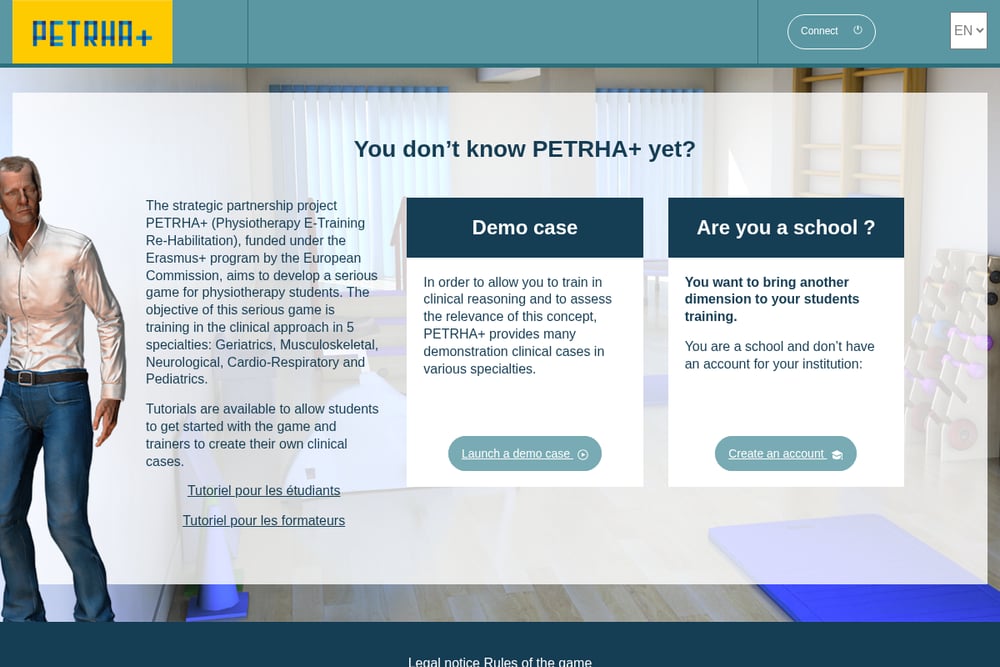
Petrha is a serious game built specifically to sharpen clinical reasoning through structured physiotherapy cases. Each case is created and reviewed by specialists, and some carry a certification seal so you know the content has been vetted. You work through three steps: investigation, diagnosis, and goals for the patient. A timer and action points force you to prioritize which information matters, which mirrors the pressure of a real assessment. You can filter cases by difficulty, type, and theme, making it easy to target weak areas. It is a strong choice if you want depth and a formal scoring system.
#2 Fesera Rounds: Daily Clinical Reasoning Case Game
 A screenshot of the Fesera Rounds: Daily Clinical Reasoning Case Game website.
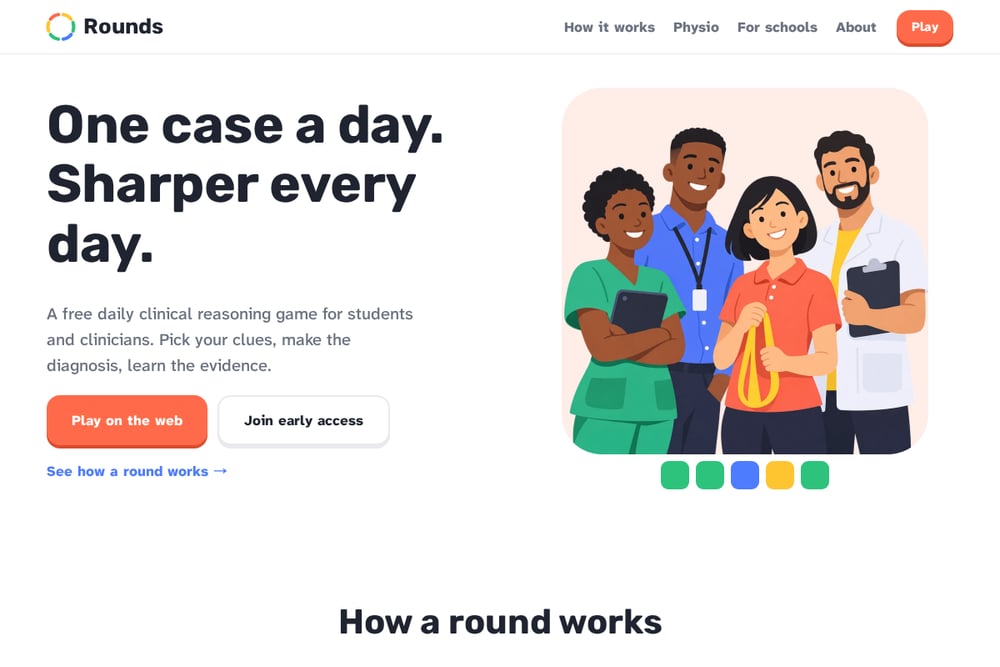
Fesera Rounds turns clinical reasoning into a five-minute daily habit. You meet one real-style patient, the same case for everyone that day, and pick your clues across six turns with three options each. You never see what comes next, so you learn to reason rather than guess. Every plan puts the evidence-based option next to the tempting habit, and you see the guideline's verdict straight away. Cases cover red flags, neurology, anatomy, and pharmacology, and each one is reviewed by a clinician with linked sources. It is free, works on web, iOS, and Android, and adds a weekly University Cup for friendly class rivalry.
#3 Body Interact
 A screenshot of the Body Interact website.
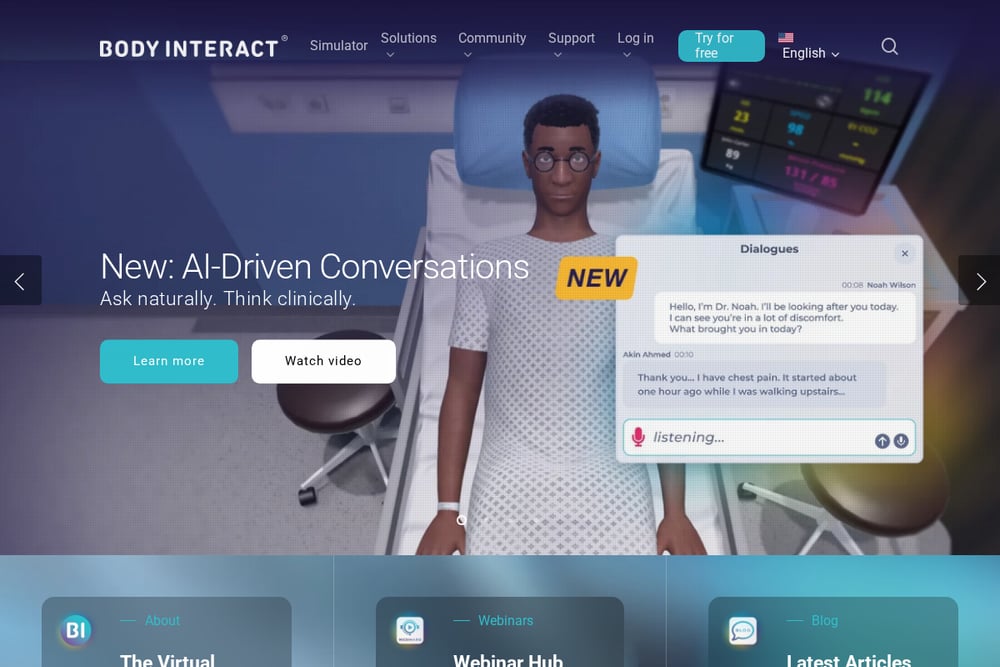
Body Interact is a virtual patient simulator that aims to feel close to real life. Patients breathe, speak, and react in real time, and every decision changes their trajectory. It is built for educators as much as learners, with tools to measure competence and debrief with clarity. The platform spans medicine, nursing, EMS, and high school health programs, so it suits interprofessional training. New AI-driven conversations let you ask questions naturally and think clinically. If you want immersive, consequence-driven practice, this is the heavyweight option.
#4 PhysioU (Clinical Pattern Recognition)
 A screenshot of the PhysioU (Clinical Pattern Recognition) website.
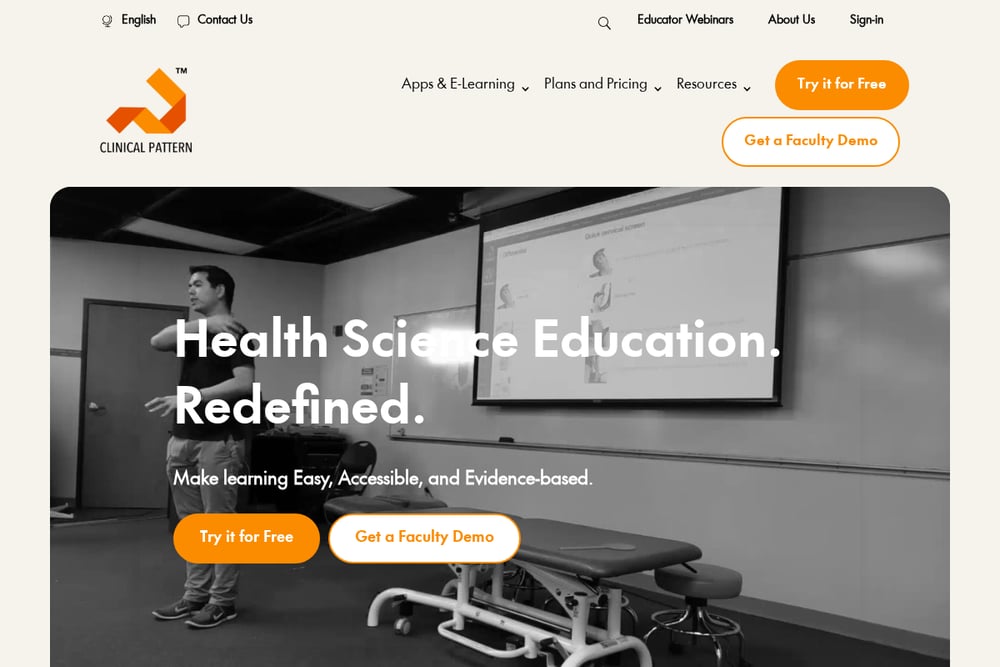
PhysioU is a broad e-learning suite built to support physical therapy teaching and learning. It pairs clinical simulations with thousands of professionally recorded videos from professors and specialists. Content is mapped to curricular standards and aligned with current practice guidelines, which helps faculty slot it into existing courses. You can develop clinical reasoning through evidence-based simulations while also building hands-on skills. It offers free trials and faculty demos, so you can test the fit before committing. It is a natural pick for DPT and PTA programs that want one platform for many needs.
#5 GPSA Clinical Reasoning Game
 A screenshot of the GPSA Clinical Reasoning Game website.
The GPSA Clinical Reasoning Game is a flexible, discussion-friendly format for medical students, pre-vocational doctors, and GP registrars. You draw random presentation cards and build a differential diagnosis list, refining it as new information arrives. The game ends when a single diagnosis can no longer explain everything, which teaches you to notice when your thinking breaks down. There is no right answer and no competition, so it works well in groups and supervision sessions. It is a simple, low-cost way to practice reasoning models and spot your own biases.
How to Choose the Right Tool for You
Start with your goal. If you want a daily habit that fits in five minutes, pick a game-style tool you can play on your phone. If you are preparing for exams or assessments, look for structured cases with scoring and clinician review. If you teach a cohort, prioritize educator features like class dashboards, debriefing, and curricular mapping. Check the evidence grounding next: does the feedback cite guidelines, and are cases reviewed by clinicians? Then test accessibility. Free tiers and trials let you try before you commit. Finally, consider scope. A physiotherapy-focused tool will go deeper on movement and anatomy, while a medical simulator will cover broader physiology. Match the tool to your discipline and your schedule.
Building a Weekly Reasoning Workflow
You do not need hours to get better at reasoning. Build a simple weekly loop. On weekdays, play one short daily case and read the evidence verdict, noting any clue you missed. Twice a week, run a deeper structured case and write down your differential before you commit. Once a week, review your missed clues and turn them into three flashcards or a short note. If you are in a class, use a group game session to talk through reasoning out loud, since explaining your thinking exposes gaps fast. Track your streak and your scores so you can see progress over a month. Small, consistent reps beat cramming every time.
The Bottom Line
Clinical reasoning is a muscle, and these five tools give you different ways to train it. Petrha offers structured, specialist-reviewed cases for deep practice. Fesera Rounds makes reasoning a free, five-minute daily habit with evidence feedback built in. Body Interact brings immersive virtual patients to programs and teams. PhysioU bundles video and simulation for physical therapy education. GPSA keeps it simple with a discussion-based game that sharpens differential thinking. Pick one for your daily reps and one for deeper sessions, and you will think more clearly when it counts.