
You turn away work every week. The question is whether that lost revenue walks out the door or comes back to you as a check. These five referral networks each solve that problem differently.
The Referral Economy Is Bigger Than You Think
Local businesses lose money in the gaps. A plumber is booked solid, an HVAC tech is out of zone, a locksmith can't make a night call. Historically that demand evaporated. Today a growing category of platforms exists to capture it, either by formalizing the referrals you already give informally or by matching overflow demand with nearby businesses that have capacity. The tools range from email-only exchanges with no accounts to full networking communities with millions of members. What they share is a simple premise: your reputation with other business owners is an asset you can monetize. What separates them is how much friction, cost, and commitment sit between you and that first referral payment.
How We Evaluated These Networks
We looked at the same factors across every platform. Service scope mattered first: does the tool handle one-to-one client passing, group networking, or automated customer referral programs? Pricing clarity came next, since hidden fees or mandatory subscriptions change the math on a small referral. We weighed setup friction, including whether you need an account, a login, or a sales call before anything happens. Local fit was another factor, meaning how well the platform maps to independent service businesses rather than enterprise marketing teams. Finally we considered payout mechanics, because a referral network is only as good as the speed and transparency of the money. Each platform below stands out on a different combination of these factors, and the right pick depends on whether you want a lightweight exchange, a structured tracking tool, or a broad networking community.
Here is the short version. Each entry below covers what the platform does, who it suits, and where it fits in your week.
| Provider | Best For |
|---|---|
| ChamberForge | Referral groups that need tracking and accountability |
| takemyclients · exchange clients between local businesses | Solo operators with overflow clients and no time for software |
| TEAM Referral Network | Business owners who prefer structured in-person networking |
| Alignable | Owners who want a large free networking community |
| Referral Rock | Businesses automating customer referral programs |
The 5 Networks in Detail
#1 ChamberForge
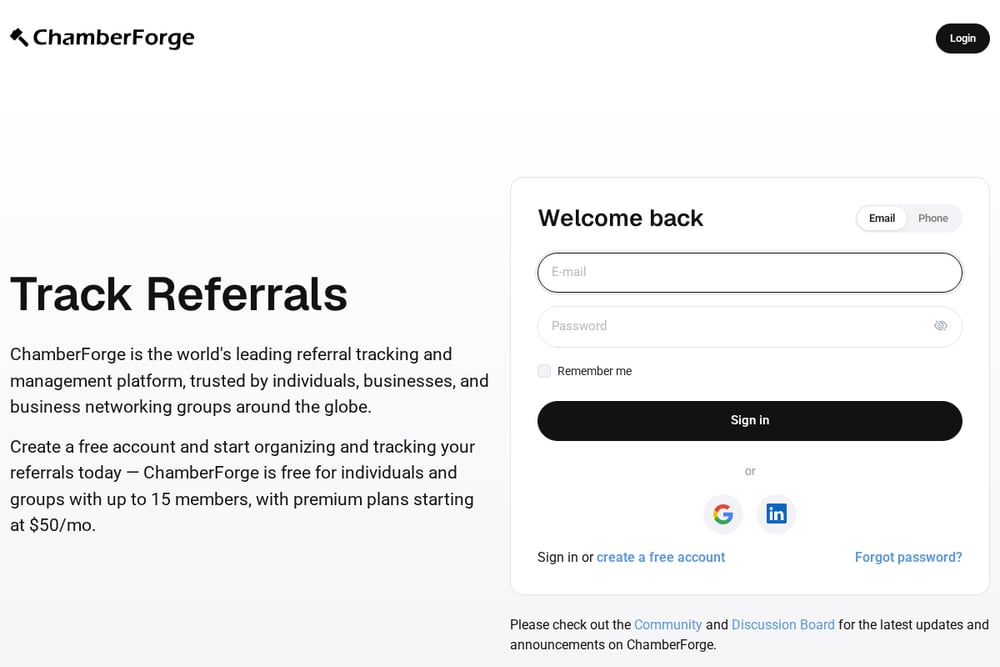 A screenshot of the ChamberForge website.
ChamberForge is built for people who already trade referrals and want to stop losing track of them. You log referrals, watch their status change, and see the revenue each one generates, which turns vague networking into a measurable channel. It is free for individuals and groups up to 15 members, with premium plans starting around $50 per month. Networking groups, leadshare chapters, and chambers of commerce get member management, meeting RSVPs, and dues collection in the same place. If you run a BNI-style group and need accountability, this is the tracking layer that makes it work.
#2 takemyclients · exchange clients between local businesses
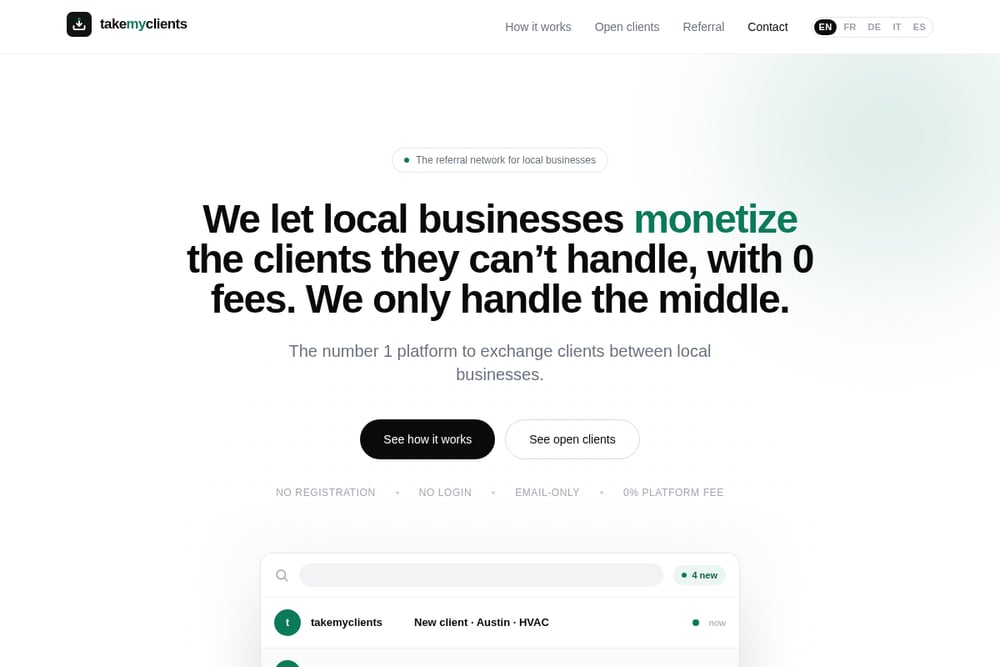 A screenshot of the takemyclients · exchange clients between local businesses website.
takemyclients does one thing and does it without ceremony: it moves a client you can't serve to a business that can. There is no registration, no login, and no dashboard. A client lands in your inbox, you pass it on, and the receiving business pays through a secure link. The platform takes 0% of the referral fee, so you keep 100% of what the other business pays. It positions itself as a neutral middle layer between local businesses, with matching handled privately by email. For a solo operator with overflow work and no patience for software, this is the lowest-friction option on the list.
#3 TEAM Referral Network
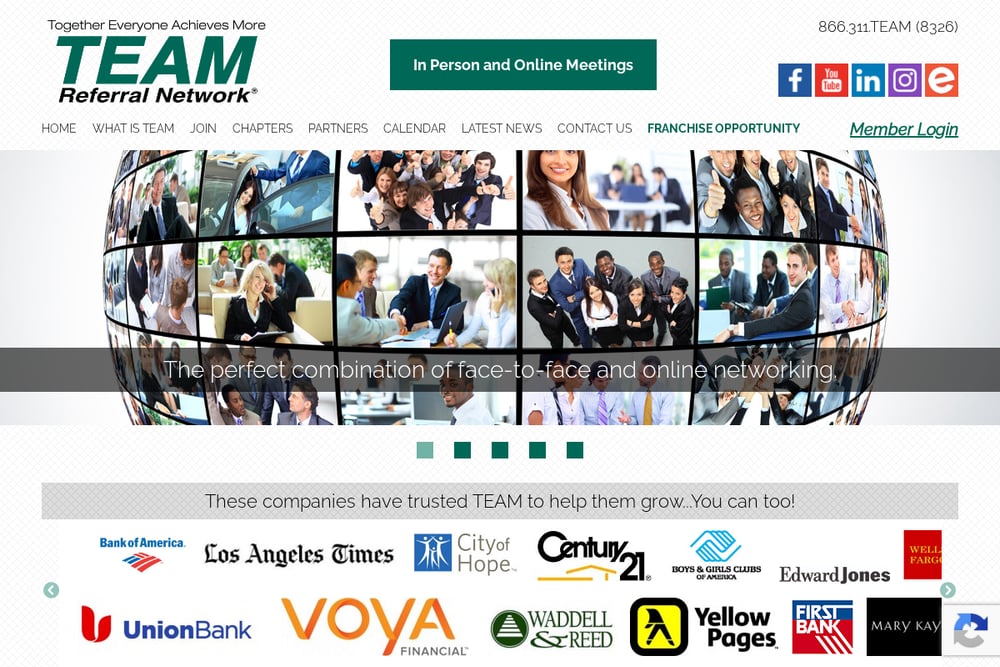 A screenshot of the TEAM Referral Network website.
TEAM Referral Network blends in-person chapter meetings with online networking, built around relationship marketing rather than transactions. Members join chapters, meet weekly, and pass referrals within a trusted group of professionals. The organization emphasizes trust, integrity, and ethical standards, and it offers a franchise opportunity for people who want to run a chapter themselves. It is a commitment-heavy option: you show up, you build relationships, and referrals follow over months rather than days. Businesses that thrive on face time and long-term trust tend to get the most from it.
#4 Alignable
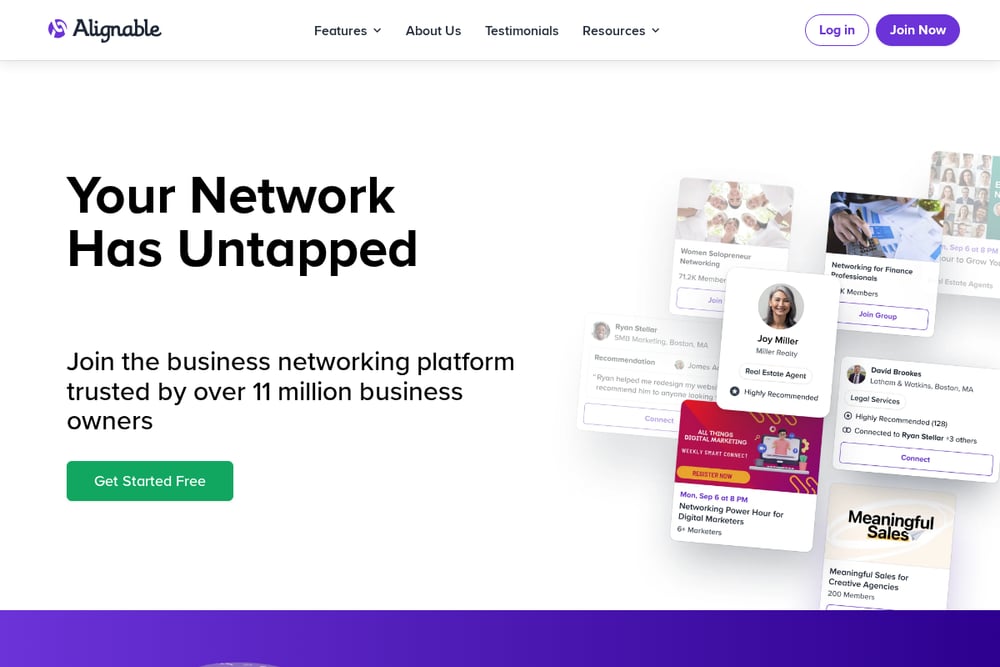 A screenshot of the Alignable website.
Alignable is a networking platform with roughly 11 million business owners, and its pitch is that your existing contacts already hold untapped referrals. The technology maps your connections and surfaces introductions their networks can provide. You join groups relevant to your business, meet owners in adjacent industries, and build the kind of relationships that produce referrals organically. It is free to join, which lowers the barrier to testing whether the community fits. The tradeoff is scale: with millions of members, you have to be deliberate about who you engage to get real value.
#5 Referral Rock
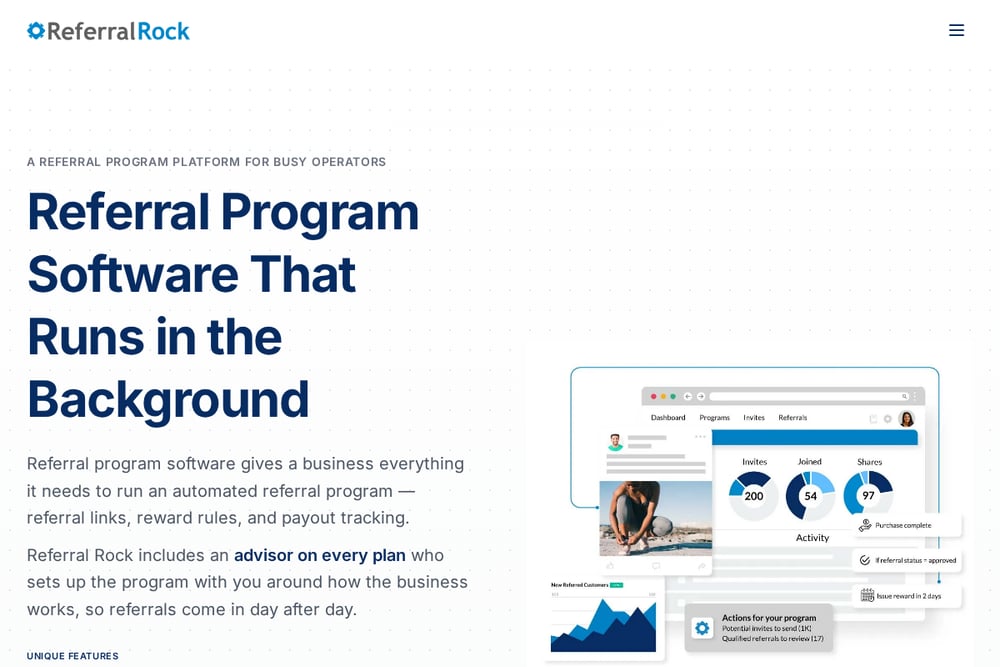 A screenshot of the Referral Rock website.
Referral Rock is a different animal: it runs automated customer referral programs rather than business-to-business client passing. You get referral links, reward rules, and payout tracking, plus an advisor on every plan who sets the program up around how your business actually works. Branded member portals, automated invite emails, and a recruiter portal for frontline staff keep the program running without babysitting. It is trusted by home services, professional services, clinics, franchises, and agencies. If your growth goal is getting existing customers to bring you new ones at scale, this is the tool for that job.
How to Pick the Right Network for You
Start with the type of referral you actually need. If clients are walking out your door because you're booked, you want an exchange built for overflow, not a networking community. If you already belong to a group and the problem is follow-through, a tracking tool solves it. If your growth comes from customers rather than peers, an automated referral program is the right category entirely. Then check the friction. Ask whether you need an account, a subscription, or a sales call before the first referral moves. Look hard at the fee structure, because a percentage cut on every referral adds up fast for high-ticket service work. Finally, consider your own temperament. Some owners thrive in weekly chapter meetings. Others want an email and a payment link. Pick the model you'll actually stick with.
Where Automation Fits In
Referral handling has three steps: capture, match, and settle. Automation can own all three. Capture means the client details land somewhere structured instead of a sticky note. Match means the right business gets the details without a chain of phone calls. Settle means money moves through a payment link and both sides can see it happened. The lightest setups handle this entirely by email, which is enough for a solo operator passing a handful of clients a month. Heavier setups add portals, reward rules, and payout dashboards, which pay off when volume grows or when you're running a program across a team. Match the automation to your volume, not to the demo.
The Bottom Line
Every business turns away work. The difference between the owners who capture that value and the ones who don't is a system, however simple. ChamberForge gives referral groups accountability. takemyclients gives solo operators a zero-fee, zero-login way to monetize overflow. TEAM Referral Network builds trust through face-to-face chapters. Alignable opens a massive free community. Referral Rock automates customer-driven growth. Pick based on where your referrals come from today, then remove every step that stops you from passing the next client along.