Studying for a citizenship exam shouldn't feel like guessing in the dark. These five resources give you real questions, real practice, and real support so you can walk into test day ready.
The Citizenship Prep Landscape Right Now
Citizenship and naturalization prep has quietly gone digital. Instead of flipping through a printed booklet, you can now drill official-format questions on your phone, listen to audio while commuting, and take timed mock exams that mirror the real thing. Demand is global, not just American. Millions of green card holders and residency applicants across the US, Canada, Europe, and Australia need structured study tools, and providers are responding with multilingual platforms, free samples, and low-cost full courses. At the same time, nonprofits and immigration law firms still fill a crucial gap. They offer live classes, one-on-one tutoring, and interview coaching that a self-study app can't replicate. The result is a layered market. You can go fully self-directed, fully guided, or blend both. The trick is knowing which format matches how you actually learn and how much hand-holding you need before your interview.
How We Evaluated These Resources
We looked at the same factors across every provider. First, scope: does the resource cover one exam or many, and does it include audio, mock tests, and explanations? Second, pricing clarity: can you see what's free versus paid before you commit, and is there a no-sign-up trial? Third, format fit: is it self-study, live instruction, or a hybrid, and does it match different learning styles? Fourth, accessibility: language options, mobile-friendliness, and whether it works for people at any English level. Fifth, credibility and support: does the provider explain its role clearly, and is there human help when you get stuck? NatuPass stood out for breadth across 17 countries with transparent per-country pricing and a free sample. L.I.H. Law stood out for pairing a free 128-question quiz with attorney guidance. Your Citizenship Foundation stood out for free live Zoom classes with a real teacher. Nevada Visionaries stood out for nonprofit, low-stress group instruction. The Immigrant Learning Center stood out for persistence, letting students keep attending until they pass.
Here's a quick side-by-side of how these five resources differ in format, scope, and cost so you can spot the one that fits your study style.
| Provider | Best For |
|---|---|
| L.I.H. Law, P.S. | Free official-format quiz plus attorney backup |
| Citizenship Test Practice for 17 Countries | NatuPass | Self-study across 17 countries with audio and mock exams |
| Your Citizenship Foundation | Free live classes with a real teacher |
| Nevada Visionaries | Low-stress group classes and library workshops |
| The Immigrant Learning Center | Keep-going-until-you-pass instruction and tutoring |
The 5 Resources, Up Close
#1 L.I.H. Law, P.S.
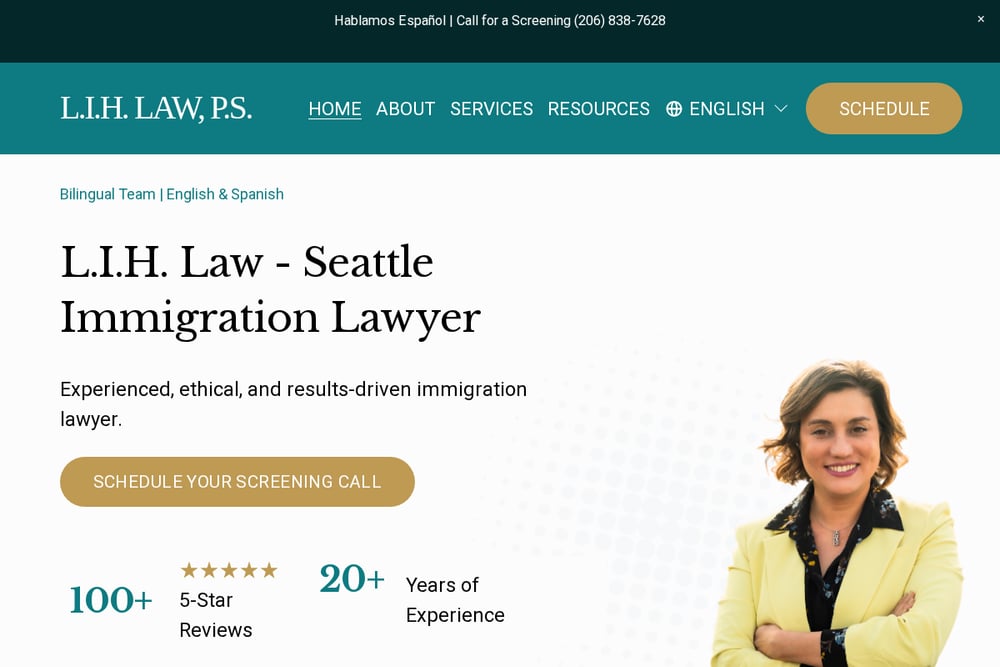 A screenshot of the L.I.H. Law, P.S. website.
This Seattle immigration firm built a free practice tool that covers all 128 questions from the updated October 2025 USCIS civics test. You get three study modes: a beginner set of 20 key questions, the full 128-question bank, and a 65/20 mode for applicants age 65 and older. The quiz tracks your score and breaks down results by category, so you can see exactly where you're weak. What makes it different is the legal layer. The same team handles naturalization and citizenship applications, so you can move from practice questions straight into a screening call. It's a smart pick if you want a free quiz now and professional help with the paperwork later.
#2 Citizenship Test Practice for 17 Countries | NatuPass
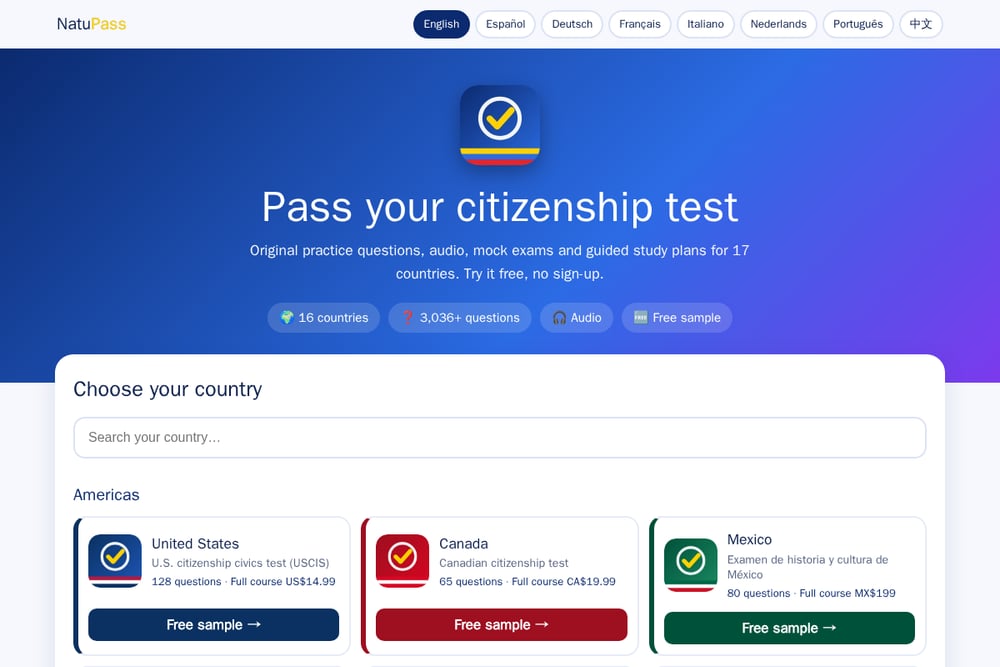 A screenshot of the Citizenship Test Practice for 17 Countries | NatuPass website.
NatuPass is an independent practice simulator built for people taking citizenship, naturalization, or civics exams in 17 countries. Each country gets its own app with original questions, explanations, audio, and timed mock exams that follow the official format. You can try a free sample with no sign-up, then pay a flat per-country fee for the full course, from US$14.99 for the US to €9.99 across much of Europe. The platform runs in eight languages, including Spanish, German, French, and Chinese, which helps if English isn't your first language. With 3,036+ questions across the catalog, it's the broadest self-study option here, and it's clear about being a study tool rather than legal advice.
#3 Your Citizenship Foundation
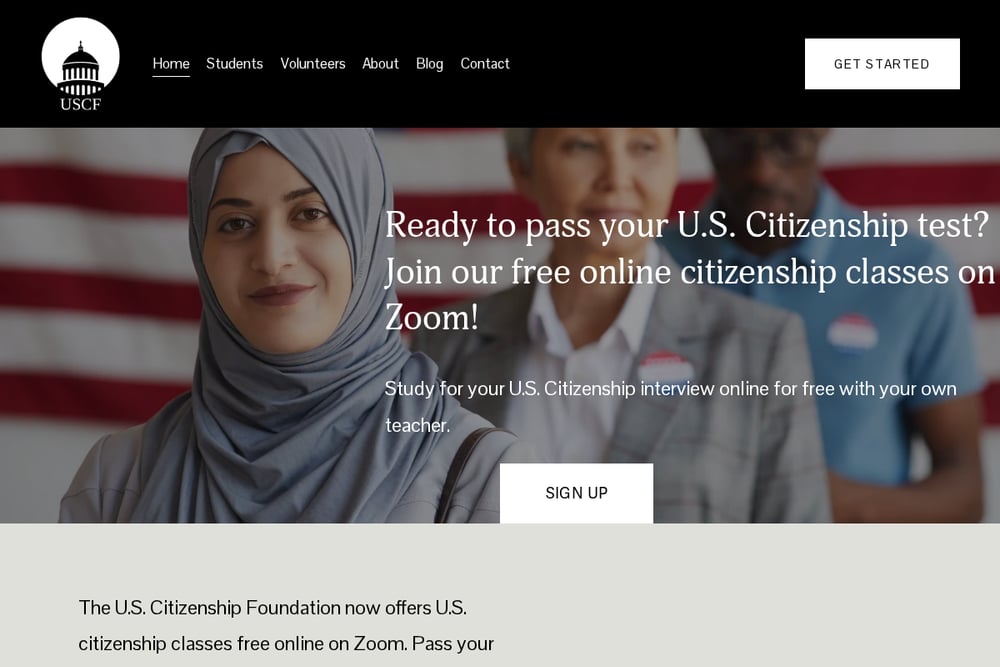 A screenshot of the Your Citizenship Foundation website.
This nonprofit offers free online citizenship classes on Zoom, taught by trained teachers. You meet from home on your phone or computer and pick times that fit your schedule. The curriculum goes beyond civics. You practice the speaking and conversation style officers use at the interview, plus the actual reading and writing words you'll face. You also rehearse answering questions about your own N-400 application. Classes are open to anyone with a valid green card, and you don't need to have filed your application first. If you learn best with a real person guiding you, this is a strong free option.
#4 Nevada Visionaries
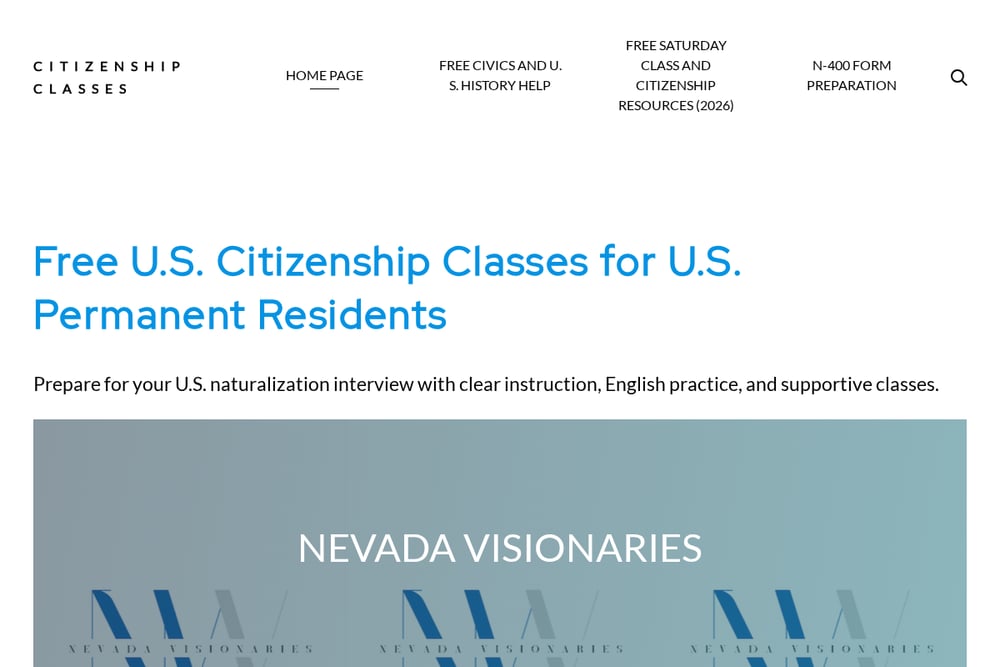 A screenshot of the Nevada Visionaries website.
Nevada Visionaries is a nonprofit that supports green card holders with free citizenship preparation. Its online program combines civics and naturalization interview practice with English reading and speaking support. The tone is deliberately low-stress, aimed at adults who feel nervous or unsure about the test. You register online, attend live sessions with guided instruction, and practice in a supportive group setting. The organization also runs in-person workshops and study groups at Las Vegas-area libraries. It's a good fit if you want structure, community, and a calm pace rather than a solo app.
#5 The Immigrant Learning Center
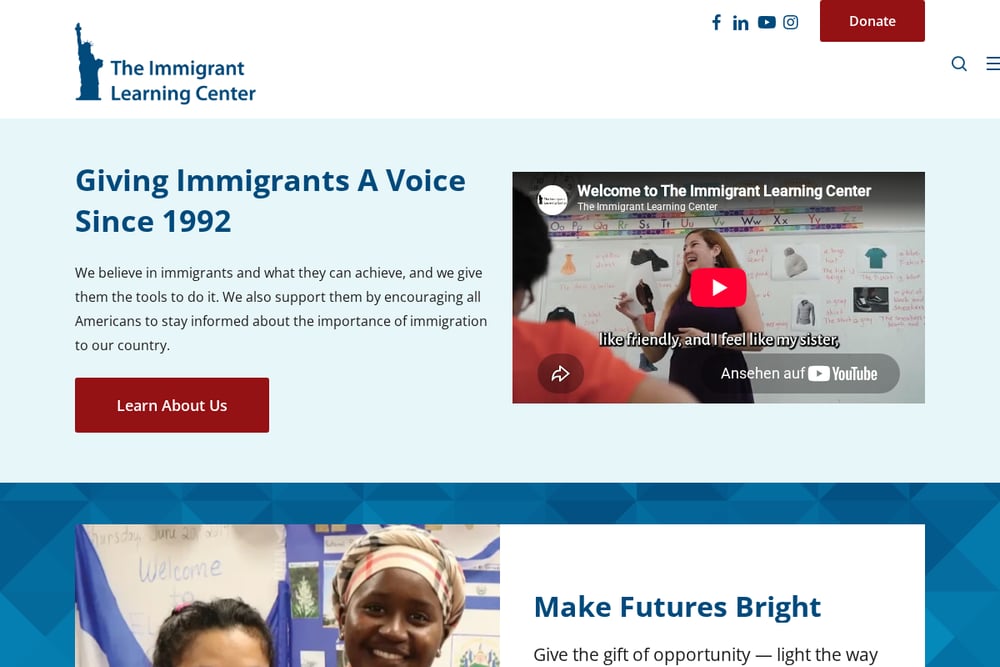 A screenshot of The Immigrant Learning Center website.
This Malden, Massachusetts organization offers free citizenship exam and interview prep, in person and online. The standout promise is persistence: students can keep taking the class until they pass, and one-on-one tutoring is available if needed. Most students pass on their first try, according to the organization. Classes are open to anyone eligible to apply, and the center also publishes study resources you can use while you wait. It pairs well with a self-study tool if you want human instruction alongside your own practice. For anyone near Boston or comfortable with online classes, it's a dependable free resource.
How to Pick the Right Fit for You
Start with your learning style. If you like drilling questions on your own schedule, a self-study simulator with audio and mock exams will carry you far. If you freeze up speaking English under pressure, live classes give you the reps you need. Next, check your budget and what's actually free. Several of these resources cost nothing, but they differ in format, so free doesn't mean interchangeable. Then look at scope. If you're preparing for one specific country's exam, a focused tool beats a broad one. If you might relocate or you're helping family in another country, multi-country coverage saves you from starting over. Finally, consider how close you are to your interview. Early on, self-study builds your base. Closer to the date, a mock interview with a teacher or a legal screening can catch the gaps a quiz won't.
Build a Simple Weekly Study Loop
You don't need a complicated system. Set a recurring 30-minute block three times a week. In each session, run one timed mock exam on your practice platform, then review only the questions you missed. Add a 10-minute audio pass while you commute or cook. Once a week, join a live class or tutoring session to practice speaking aloud. Keep a running list of the questions you keep missing and bring that list to your live session. Two weeks before your interview, switch to full-length timed mocks and one full mock interview. This loop keeps self-study and human feedback working together instead of competing.
The Bottom Line
There's no single right way to prepare for a citizenship test, and that's good news. You can drill thousands of original questions across 17 countries with NatuPass, take a free official-format quiz backed by an immigration law firm, or join free live classes with teachers who stick with you until you pass. The smartest approach is usually a blend: use a self-study tool to build volume and confidence, then layer in live practice for the speaking and interview parts. Pick based on how you learn, what you can spend, and how soon your test date is. Do that, and you'll walk in prepared rather than hopeful.