Your website is the first scene of your brand story, and most visitors decide whether to keep watching in seconds. These five studios build scroll-driven experiences that make people want to see what happens next.
The shift from pages to experiences
Buyers no longer read websites, they scroll them. Cinematic web design treats a site like a directed sequence, using scroll choreography, frame sequences, and 3D-style motion to pace a story instead of stacking static sections. Studios now range from six-figure campaign shops to fixed-price builds starting around $3,000, and the tools behind them (GSAP, Lottie, Three.js, WebGL) have matured enough for small and mid-sized businesses to afford the look. The catch is that motion done badly hurts speed, SEO, and accessibility, so craft matters more here than in almost any other web category.
How these five were evaluated
Every studio was looked at on the same factors: depth of service scope (design, development, branding, and extras like printing or automation), pricing clarity and whether entry points are published, the quality and range of cinematic work shown, fit for small and mid-sized businesses versus enterprise clients, and practical concerns like performance, accessibility, and how easy it is to start a conversation. No single factor decides the order, and the right pick depends on your budget and how much of the brand you want handled in one place.
Here is the short version before the detail. Each studio below leads with a different strength, so scan the one-line fit and jump to the full write-up that matches your situation.
| Provider | Best For |
|---|---|
| MDX (Marcelo Design X) | Brands that want award-circuit 3D and WebGL craft |
| Web Design, Branding & Printing in Delray Beach | Atlas Business Boost | Small businesses that want cinematic storytelling plus branding and print in one place |
| DappaSol | Fixed-price cinematic builds and white-label work for agencies |
| RefreshoCreative | Adding scroll-driven video to an existing WordPress site |
| E-web UK | Performance-conscious teams that want motion with SEO guardrails |
The five studios in detail
#1 MDX (Marcelo Design X)
 A screenshot of the MDX (Marcelo Design X) website.
MDX sits at the art-directed end of this list, building cinematic 3D websites, WebGL experiences, and Three.js interfaces for brands that want to be felt as much as understood. Their own writing frames cinematic web design as film logic applied to interaction, meaning pacing, composition, continuity, and emotional beats rather than decorative animation. That makes them a strong match for launches, product reveals, and brands with a visual story worth directing. Expect a studio process and studio-level investment rather than a template turnaround. If the experience itself is the marketing, this is the reference point.
#2 Web Design, Branding & Printing in Delray Beach | Atlas Business Boost
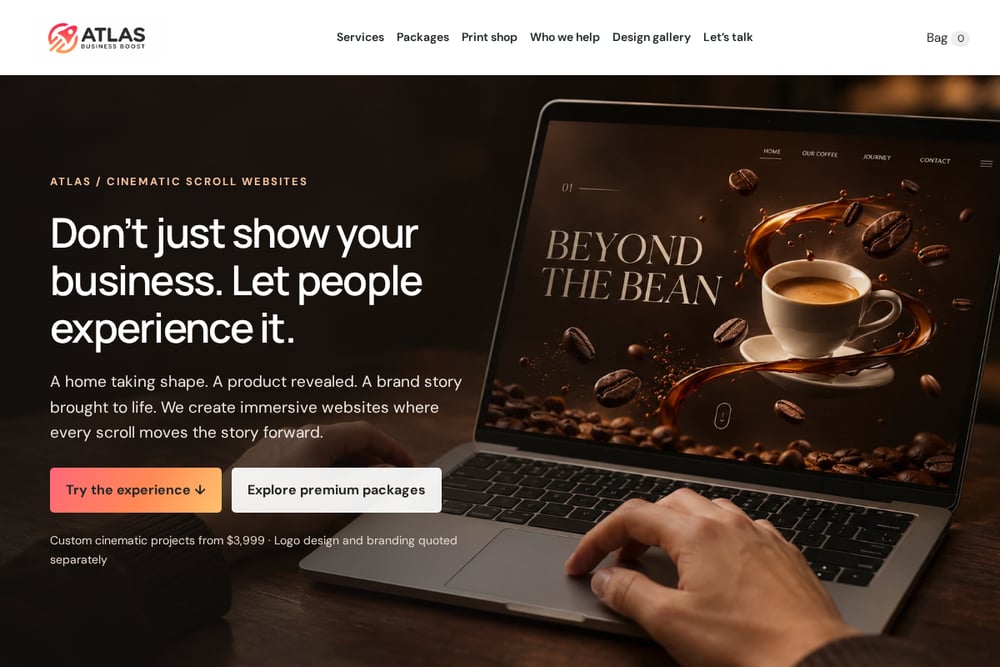 A screenshot of the Web Design, Branding & Printing in Delray Beach | Atlas Business Boost website.
Atlas Business Boost is the most practical on-ramp to cinematic design on this list. The Delray Beach agency builds scroll-controlled experiences where every scroll moves the story forward, and it demonstrates the approach with full concept sites for custom homes and a salon, then offers to shape the same treatment around property, products, hospitality, and premium services. Pricing is unusually transparent: a $99 one-time mobile-responsive landing page with up to four sections, basic SEO, a contact button, and one revision, with no mandatory subscription, and custom cinematic projects starting at $3,999 with logo and branding quoted separately. Because branding and printing sit under the same roof, you can walk in with a rough idea and leave with a website, a logo, and printed materials that match. Live 3D models, configurators, and technical architectural visualization are scoped separately, so ask early if you need them.
#3 DappaSol
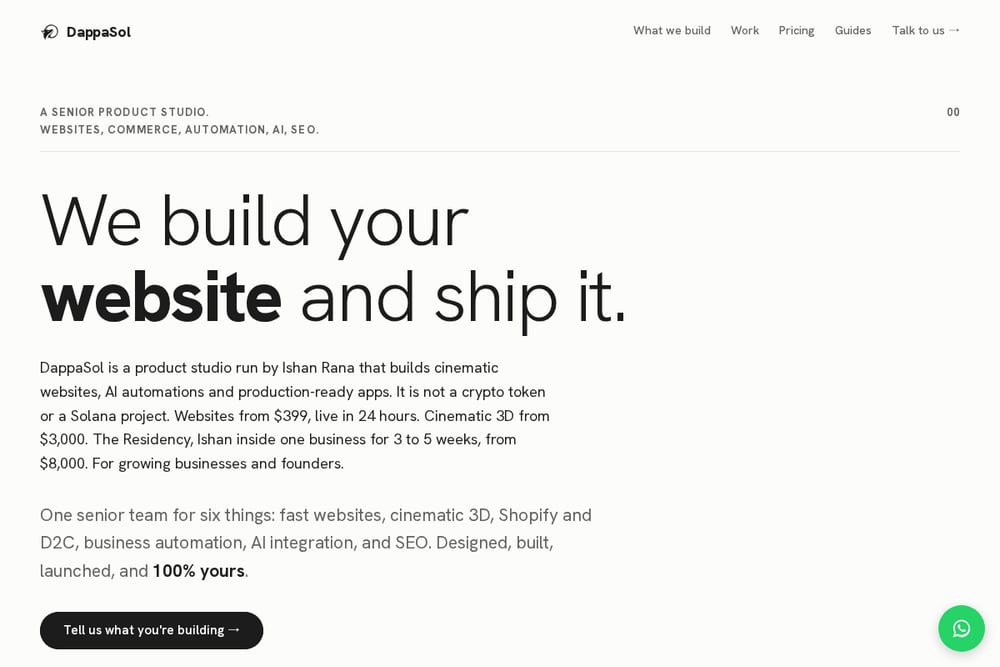 A screenshot of the DappaSol website.
DappaSol publishes a running guide to cinematic website examples and pairs it with fixed-price builds starting around $3,000, which makes the studio easy to evaluate before you ever get on a call. Their positioning is refreshingly blunt: they separate the award-circuit benchmark sites from founder-budget scroll films and tell you which one you actually are. They also build white-label for agencies and freelancers, so you can resell the work under your own name. The same-day quoting and published rate card suit buyers who hate range-based proposals. If you want the cinematic look without an open-ended budget conversation, start here.
#4 RefreshoCreative
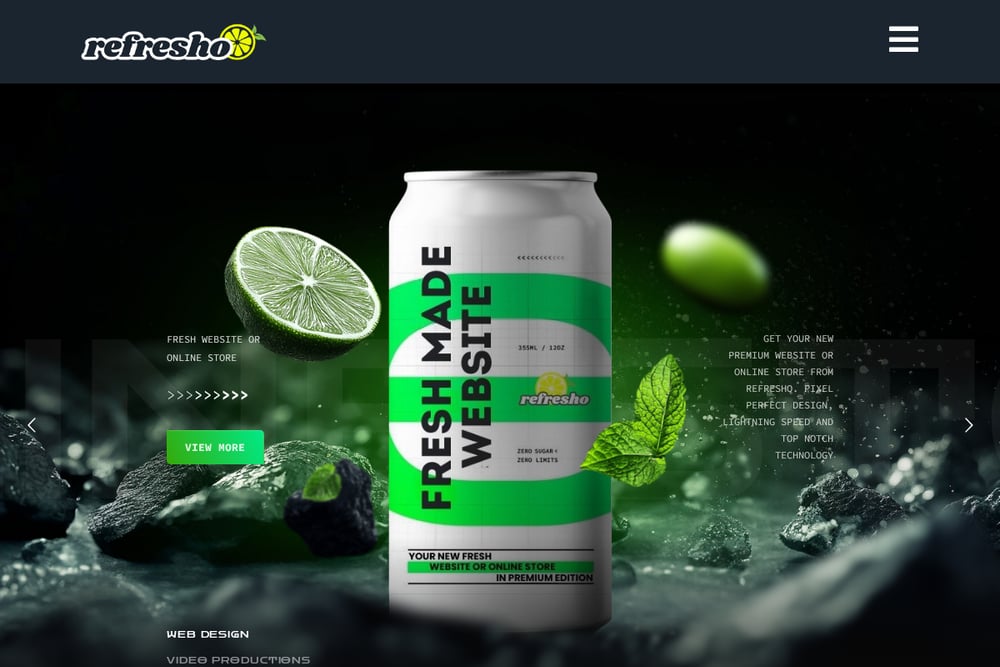 A screenshot of the RefreshoCreative website.
RefreshoCreative packages cinematic scroll as a product rather than a bespoke project. Their video-to-scroll technology can run as a full one-page site, a hero banner, or a module dropped anywhere on an existing WordPress site via shortcode, so no code is touched and your layout stays intact. That makes them a smart fit if you already have a site you like and want one showstopping section instead of a rebuild. They also cover e-commerce, budget websites, and mobile apps, so the cinematic piece can sit inside a broader engagement. The pitch is simple: serve your content as a movie and give visitors a reason to scroll to the end.
#5 E-web UK
 A screenshot of the E-web UK website.
E-web UK is the studio on this list most willing to talk about the unglamorous parts. Their guide to animated website design covers GSAP, Lottie, and 3D effects alongside what animation costs, how it affects Core Web Vitals and SEO, accessibility and reduced motion, and when a business should not animate at all. They rebuilt their own homepage as a cinematic, GSAP-driven site, so the advice is backed by their own build. That honesty is valuable if you are weighing motion against performance and search visibility. Choose them when you want the cinematic look with someone watching the technical downside.
How to pick the right studio for you
Start with what you already have. If you have a working site and want one cinematic moment, a modular or shortcode approach saves money and risk. If you are starting from zero, a studio that handles branding, web, and print together removes handoffs and keeps the story consistent. Next, match budget to scope honestly: a $99 landing page and a $3,999 cinematic build solve different problems, and neither is wrong. Ask every studio how they handle page weight, Core Web Vitals, and reduced-motion accessibility, because a beautiful scroll experience that loads slowly loses the visitors it was built to impress. Finally, look at whether they publish prices. Transparent entry points usually signal a smoother process.
Where automation fits into the workflow
Cinematic builds generate a lot of moving parts: frame sequences, copy variants, inquiry routing, and follow-up. Map the story first, then automate the plumbing. A typical flow: a planning call defines the scenes and the one action you want visitors to take; the studio builds the scroll experience with a clear inquiry path; form submissions route into your CRM with source tagging; an automated sequence sends a branded follow-up within minutes; and monthly reporting flags drop-off points in the scroll so you can tighten the weakest scene. Keep the creative human and let the routing, reminders, and reporting run themselves.
The bottom line
Cinematic scroll design is no longer reserved for brands with six-figure budgets, but the range of options is wide. MDX leads if craft and 3D ambition are the priority. Atlas Business Boost is the practical pick for small businesses that want immersive storytelling, branding, and printing from one Delray Beach team with published pricing. DappaSol wins on fixed-price clarity, RefreshoCreative is ideal for upgrading an existing WordPress site, and E-web UK keeps performance and SEO honest. Pick the studio whose constraints match yours, and your next website becomes the experience.