
Your film work deserves a home that sells your vision. These five platforms help you organize, track, and share your cinema projects without the usual headaches.
The State of Cinema Portfolio Platforms
Filmmakers and visual storytellers face a unique challenge: your work is dynamic, often collaborative, and needs to convey emotion in seconds. Traditional website builders weren't built for reels, behind-the-scenes content, or client inquiries. That's why specialized portfolio platforms have emerged. They combine stunning galleries with backend tools like CRM dashboards, contract management, and payment processing. Whether you're a solo director or a small studio, the right platform lets you focus on creating while it handles the business side. In 2026, the best options balance visual flair with operational muscle.
How We Evaluated These Platforms
We looked at five key factors: service scope (does it cover portfolio, CRM, and payments?), pricing clarity (are costs transparent?), local fit (does it serve US-based creatives well?), ease of use (can you launch without a developer?), and unique features (what makes it stand out?). McCoy Visuals Digital impressed with its all-in-one data management for cinema. Portfoliobox stood out for its free plan and e-commerce tools. Format shone with its filmmaker-specific templates and workflow features. Fabrik delivered deep customization for visual storytellers. Andrew Cussens offered a real-world example of a high-converting personal portfolio. Each platform has strengths that suit different needs.
Here's a quick comparison of the five platforms, from all-in-one studio tools to personal portfolio inspiration.
| Provider | Best For |
|---|---|
| Portfoliobox | Creatives who want an easy, all-in-one portfolio with selling tools |
| McCoy Visuals Digital | Filmmakers and studios needing an all-in-one portfolio and CRM |
| Format | Directors and filmmakers who want proven, filmmaker-specific templates |
| Fabrik | Visual storytellers who want customizable, profession-specific themes |
| Andrew Cussens | Filmmakers seeking inspiration from a real-world, high-converting portfolio |
A Closer Look at Each Platform
#1 Portfoliobox
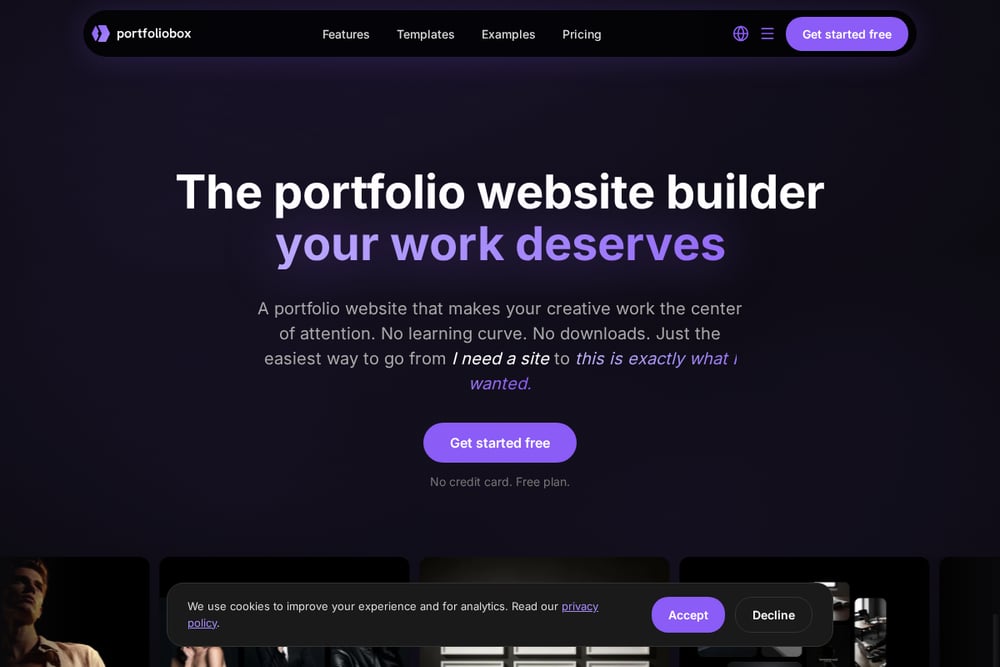 A screenshot of the Portfoliobox website.
Portfoliobox makes it dead simple to build a portfolio that looks professional from day one. You get hundreds of templates, full-bleed galleries, and built-in e-commerce with zero commission. It's all browser-based, so there's no software to install. The free plan lets you start without a credit card, and you can upgrade for a custom domain and email. For filmmakers who want to sell prints, bookings, or services directly from their site, this is a strong choice. As noted on their site, you can run your entire business from your portfolio.
#2 McCoy Visuals Digital
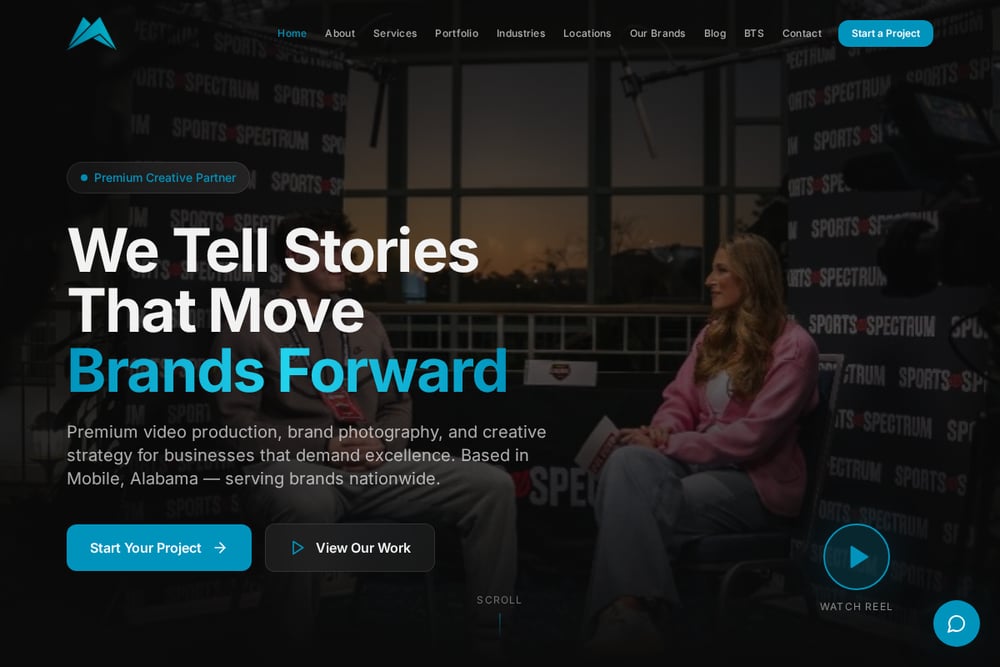 A screenshot of the McCoy Visuals Digital website.
McCoy Visuals Digital is a premium platform built specifically for cinema professionals. It manages five data types, including contact inquiries, so you can organize, track, and share your work in one place. The admin dashboard acts as a CRM, helping you manage clients, contracts, and quotes without leaving the site. You also get a public portfolio, blog, and behind-the-scenes pages to showcase your process. For teams and solo users, it's a centralized hub that keeps your creative and business operations in sync. If you're tired of juggling multiple tools, this platform brings it all together.
#3 Format
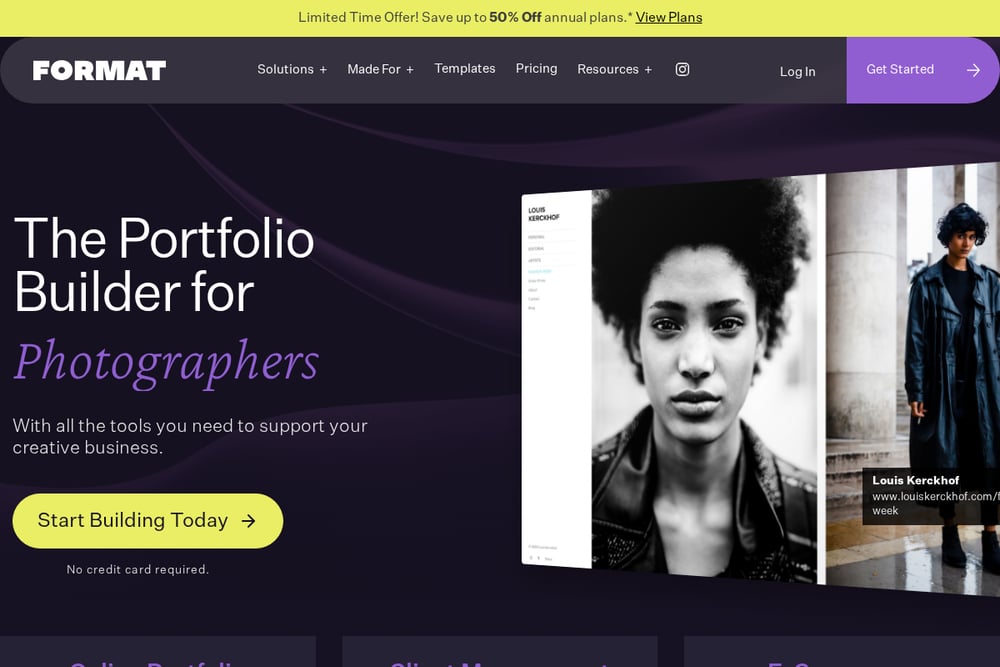 A screenshot of the Format website.
Format is a heavy hitter in the creative portfolio space, with a dedicated section for film directors. Their site features real examples from directors like Maurine Pagani and Jessie Lee, showing off templates that highlight reels and visual storytelling. You get robust workflow tools to run your photography or film business, plus options for prints and client galleries. The 14-day free trial lets you test the waters. Format is ideal if you want a polished, industry-recognized portfolio with business features baked in. Their director examples prove you can look like a pro from the start.
#4 Fabrik
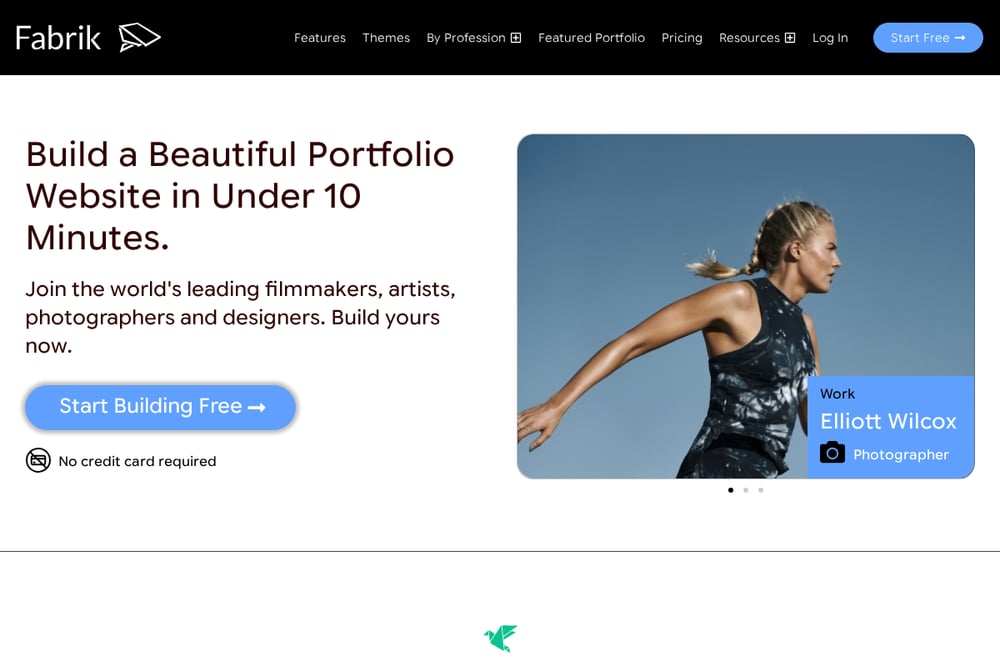 A screenshot of the Fabrik website.
Fabrik caters to visual storytellers with themes tailored by profession, including a dedicated filmmaker showcase. Their blog deep-dives into 120 portfolio websites, offering insights on what makes a film portfolio stand out. You get features to present films, reels, and behind-the-scenes content in a cinematic way. The platform emphasizes customization, so you can build a portfolio that reflects your unique style. It's a great fit for directors, cinematographers, and editors who want more control over their presentation. If you value inspiration and community examples, Fabrik delivers.
#5 Andrew Cussens
 A screenshot of the Andrew Cussens website.
Andrew Cussens is an award-winning filmmaker whose personal portfolio demonstrates the power of a well-curated site. His work page lets you filter projects by sector—corporate, commercial, documentary, and film & TV. Client testimonials from Nikon, BBC, and others add instant credibility. While this isn't a platform you can sign up for, it serves as a masterclass in showcasing diverse experience. If you're building your own portfolio, study how Cussens organizes over 1000 projects into a clean, navigable showcase. It's proof that a strong portfolio can win high-profile clients.
How to Choose the Right Platform for Your Film Work
Start by listing your must-haves. Do you need to sell services or products? Then prioritize platforms with e-commerce and payment processing, like Portfoliobox or McCoy Visuals Digital. If you mainly need to showcase reels and attract clients, Format or Fabrik might be enough. Consider your technical comfort—some tools are drag-and-drop, while others offer deeper customization. Also think about scalability: if you plan to grow a team, a CRM dashboard like McCoy's could save you hours. Finally, check pricing transparency and free trials. Test two or three options before committing. Your portfolio is your storefront, so choose a platform that makes you look good and work smart.
Automating Your Workflow with the Right Tools
Imagine this: a client fills out your contact form. The platform automatically creates an inquiry in your CRM, sends a thank-you email, and schedules a follow-up. You then send a quote and contract through the same dashboard. Once signed, an invoice goes out, and payment is processed. Your portfolio updates with the new project, and you share behind-the-scenes content to your blog. That's the power of an integrated platform like McCoy Visuals Digital. It connects your marketing, sales, and project management in one place. For solo filmmakers, this means less admin and more time behind the camera. For teams, it keeps everyone on the same page.
The Bottom Line on Cinema Portfolio Platforms
Your film work is too important to be buried on a generic website. The five platforms here each offer a different path: Portfoliobox for easy selling, McCoy Visuals Digital for all-in-one management, Format for industry-standard templates, Fabrik for deep customization, and Andrew Cussens for real-world inspiration. Start with your biggest pain point—whether it's client management, showcasing reels, or selling services—and pick the tool that solves it. Remember, the best platform is the one that lets you focus on your craft while looking like a pro. Take advantage of free trials and build a portfolio that wins you the next gig.