You want a counselor who takes your faith as seriously as your trauma. These five practices blend clinical skill with biblical conviction, and each one does it differently.
Where Faith and Clinical Care Meet
Christian counseling has moved well past the old assumption that you have to choose between evidence-based treatment and spiritual depth. Today's practices pair modalities like EMDR, IFS, and somatic work with scripture, prayer, and a counselor who shares your worldview. That matters because you should not have to explain why your faith is central to your healing. Demand is climbing, especially for trauma and couples work, and telehealth has widened the map. You can now sit with a counselor in Bothell, Boise, or Fort Worth from your own living room. The result is a crowded field, which is good news for you. The hard part is telling the practices apart.
How We Looked at These Practices
We weighed each practice on the same factors. First, service scope: does it cover individuals, couples, families, and teens, or just one lane? Second, clinical depth: are there trained trauma modalities like EMDR, and is the training verifiable? Third, faith integration: is Christianity the foundation or an add-on? Fourth, access and clarity: free consultations, transparent fees, telehealth options, and how easy it is to start. Fifth, track record: years in practice, session volume, and what clients actually say. Shema Christian Counseling stood out for its 20-year history, free 15-minute consultation, and dual counseling-and-coaching offering. Renee Boles Counseling impressed with its EMDR, IFS, and Accelerated Resolution Therapy stack. North Woods brought 20,000+ sessions of experience and a podcast. Restoration Counseling showed breadth across betrayal trauma and teen work. Renew Christian Counseling offered an unusually wide menu, from OCD to porn addiction to somatic experiencing.
Here is the short version before the deep dive. Each practice below serves a slightly different person, so scan for the one that sounds like your situation.
| Provider | Best For |
|---|---|
| North Woods Christian Counseling | Trauma survivors who want scripture woven into EMDR |
| Shema Christian Counseling | Christian counseling and professional coaching in Bothell WA | Christians who want counseling and coaching under one roof |
| Renee Boles Counseling | Anxious Christians who want IFS and EMDR with faith intact |
| Restoration Counseling | Betrayal trauma recovery and teen counseling |
| Renew Christian Counseling | Specific struggles like OCD, addiction, and pre-marital work |
The Five Practices, One by One
#1 North Woods Christian Counseling
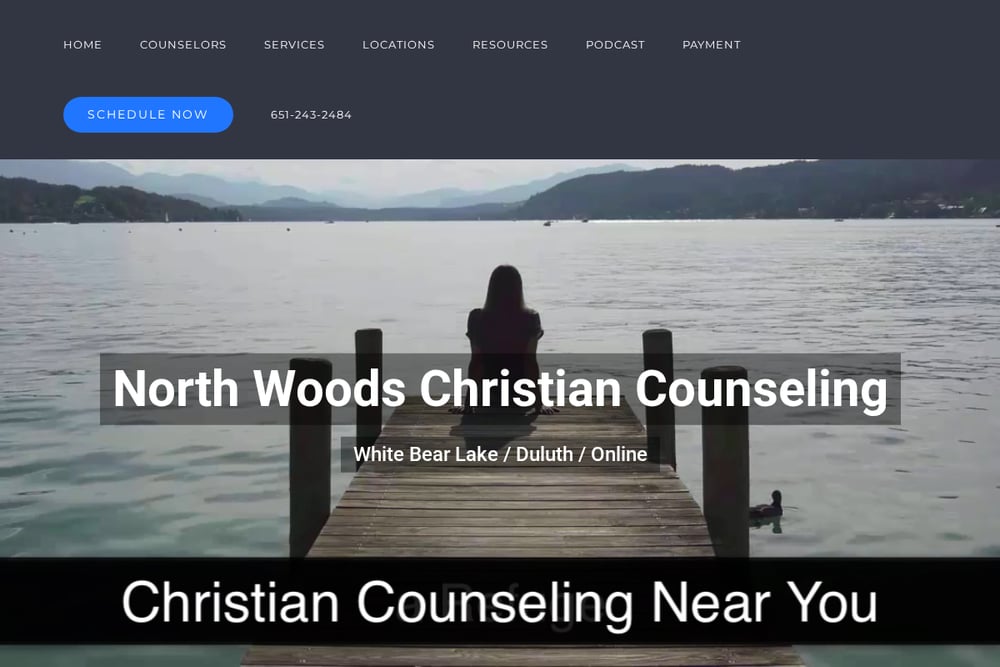 A screenshot of the North Woods Christian Counseling website.
North Woods brings volume and structure to faith-based trauma care. The practice reports 20,000+ therapy sessions, which tells you they have sat with a lot of pain. Their Christian EMDR therapy page describes an explicit blend of science and biblical truth, integrating scripture and prayer into the protocol. You also get a full service menu: individual, marriage, children and family, wellness coaching, and the Safe and Sound Protocol. Online counseling and a podcast round out the resources. If you want a practice with deep bench strength and a teaching arm, start here.
#2 Shema Christian Counseling | Christian counseling and professional coaching in Bothell WA
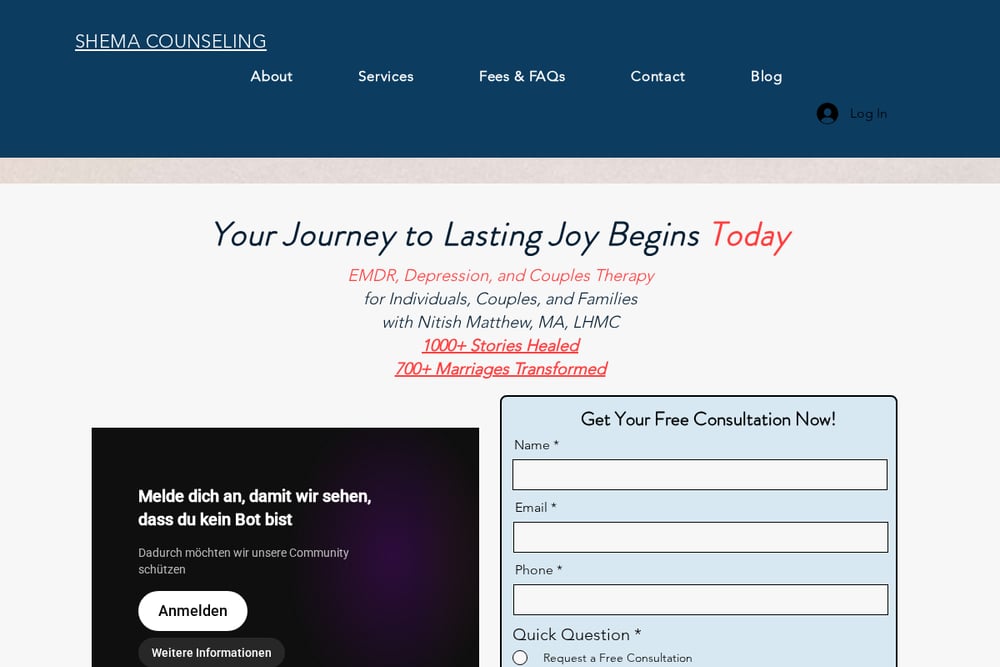 A screenshot of the Shema Christian Counseling website.
Shema is the featured practice here, and the numbers are hard to ignore: 1000+ stories healed and 700+ marriages transformed. Nitish Matthew, MA, LMHC, brings 20 years of experience to EMDR, depression, and couples therapy for individuals, couples, families, and adolescents. What sets Shema apart is the pairing of counseling with professional coaching, so you can work on the marriage and the burnout in the same relationship. Services run in person at the Bothell office or by telehealth, and you start with a free 15-minute consultation. Clients describe him as bringing human connection into the room, with one saying plainly, "Nitish saved my marriage."
#3 Renee Boles Counseling
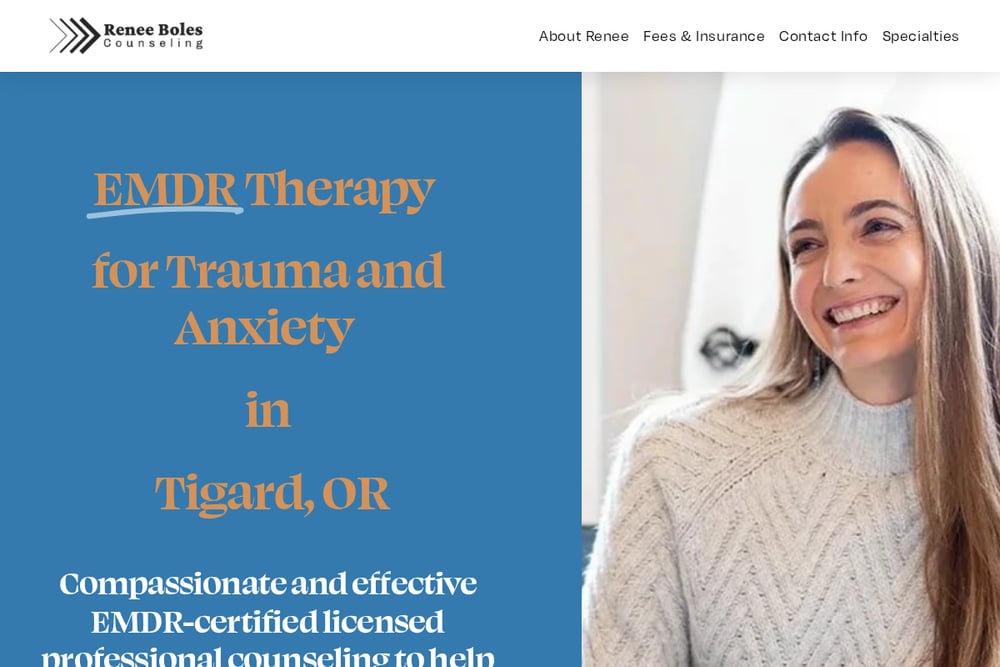 A screenshot of the Renee Boles Counseling website.
Renee Boles built a practice around the idea that your faith is part of your identity, not a topic to bracket off. She offers online and in-person Christian counseling near Portland, Oregon, with a specialty in anxiety, panic, and trauma. The modality list is unusually deep for a solo practice: EMDR, IFS, and Accelerated Resolution Therapy, all under a Christian framework. Her writing speaks directly to the person tired of explaining their convictions to a counselor who does not share them. If you want a therapist who will support your beliefs while doing structured trauma work, this is a strong fit.
#4 Restoration Counseling
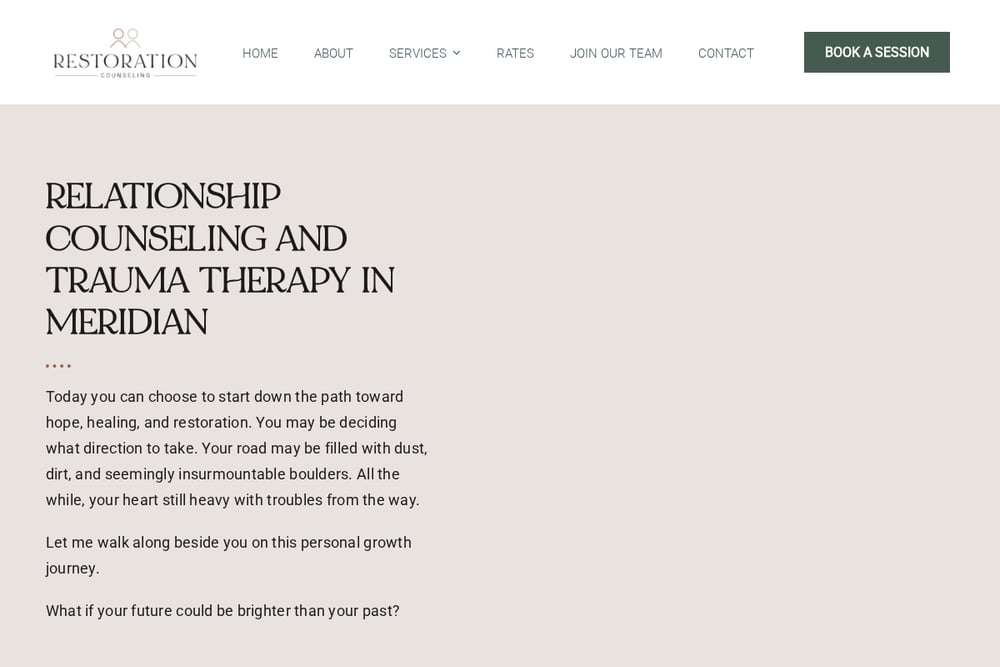 A screenshot of the Restoration Counseling website.
Restoration Counseling in Meridian, Idaho, frames the work around hope and restoration, and the service list backs that up. You will find individual counseling, EMDR and intensives, couples counseling, Christian counseling, teen counseling, and a dedicated betrayal trauma track. That last one matters if you are recovering from relational betrayal and need a counselor who understands the specific wound. The practice also runs EMDR intensives for people who want to compress the work rather than stretch it over months. The tone is warm and unhurried, with an emphasis on a peaceful environment where you can speak freely.
#5 Renew Christian Counseling
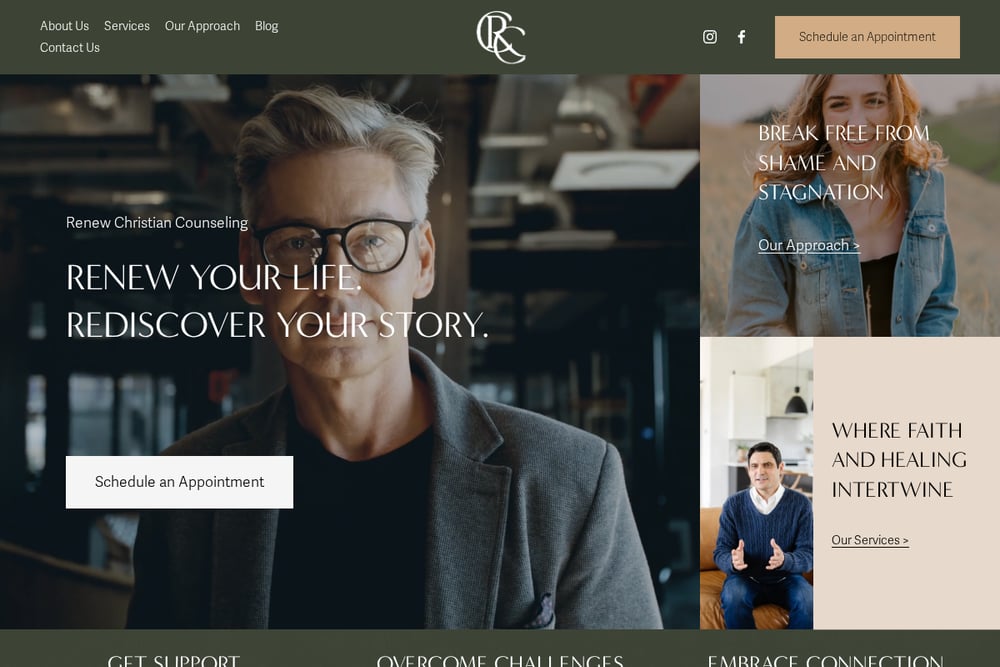 A screenshot of the Renew Christian Counseling website.
Renew Christian Counseling in the Fort Worth area runs one of the broadest menus in this group. Beyond individual, marriage, and family work, it lists depression, anxiety, OCD, porn addiction, trauma, and somatic experiencing, plus group therapy and pre-marital counseling. Their EMDR page positions the modality as a leading evidence-based approach for trauma and PTSD, framed around leaving the past behind. The practice is transparent about its team, with dedicated pages for each counselor. If your situation is specific and you have struggled to find a fit, Renew probably has a lane for it.
How to Pick the Right Counselor for You
Start with the problem, not the brand. If trauma is the core issue, confirm the counselor is trained in EMDR or a comparable modality, and ask how they integrate faith into the protocol. If your marriage is on the line, look for a practice that names couples work as a specialty rather than an add-on. Next, check access. A free consultation tells you more in 15 minutes than an hour of website reading, so use it. Ask about telehealth if distance or schedule is a barrier, and ask about fees up front. Finally, weigh the fit of the person. You are going to talk about hard things with this counselor, so the sense that they get your faith and your story matters more than any credential list.
A Simple Workflow to Narrow the Field
Set up a short tracking sheet with columns for practice, modality, telehealth, free consult, and fee. Fill in the five rows from the sites above, then strike any practice that lacks the modality your situation requires. Book free consultations with the remaining two or three in the same week so your impressions stay fresh. After each call, jot one line on how well the counselor understood your faith context. Pick the one where you felt most understood, and schedule a first session within seven days. Momentum matters more than perfect information.
The Bottom Line
You have five credible options, and none of them is a bad choice. North Woods offers scale and teaching resources. Shema pairs two decades of counseling with coaching and a free consultation. Renee Boles goes deep on trauma modalities for anxious believers. Restoration specializes in betrayal trauma and teens. Renew covers the widest range of specific struggles. Match the practice to your actual problem, use the free consultations, and trust the fit. Your healing is too important to leave to a search result.