
You keep making the same mistakes in your chess games. These five tools help you spot them and fix them.
The Chess Training Landscape
Chess training has moved far beyond books and static puzzles. Today's tools analyze your actual games from platforms like chess.com and lichess, then turn your blunders into personalized practice. The best ones explain not just what went wrong, but why, in plain language. They range from free web apps to subscription services with AI coaches. Whether you're a beginner or a club player, there's a tool that fits your needs and budget.
How We Evaluated These Tools
We looked at five factors: how well each tool analyzes your games, the clarity of its feedback, the range of training features, pricing transparency, and how easy it is to get started. HoneyChess stood out for its no-account free report and plain-language explanations. Chessis impressed with its mobile-first design and bot play. Chessigma offered a generous free tier with on-device analysis. Aimchess provided deep skill breakdowns and personalized lessons. DecodeChess delivered rich AI explanations for every move. Each tool has its own strengths, and the right choice depends on your goals.
Here's a quick look at the five tools we're covering, from free analyzers to full training suites.
| Provider | Best For |
|---|---|
| Chessis: Chess Analysis | Mobile-first players who want game analysis and bot practice in one app. |
| HoneyChess: Chess Trainer | Players who want to identify and fix recurring mistakes without signing up. |
| Chessigma | Budget-conscious players who want unlimited free analysis on any device. |
| Aimchess | Players who want a personalized training plan based on their weaknesses. |
| DecodeChess | Players who want to understand the reasoning behind engine moves. |
A Closer Look at Each Tool
#1 Chessis: Chess Analysis
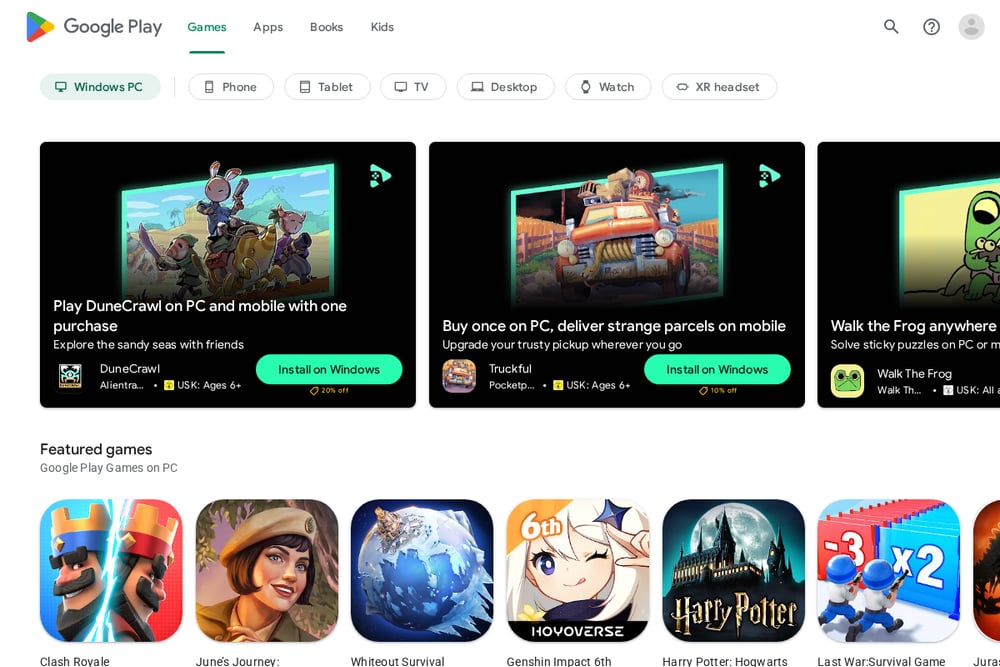 A screenshot of the Chessis: Chess Analysis website.
Chessis turns every game into a lesson. It uses the latest Stockfish engine to give you a full game report with blunders, missed wins, and best moves. You get move badges from Brilliant to Blunder, and a 'Why Blunder?' feature that shows the idea you missed right on the board. The app also includes human-like bots for practice, opening and trap training, and the ability to analyze games from chess.com and lichess. With over 1 million downloads and a 4.6-star rating, it's a popular choice for mobile users. You can find it on the Google Play store.
#2 HoneyChess: Chess Trainer
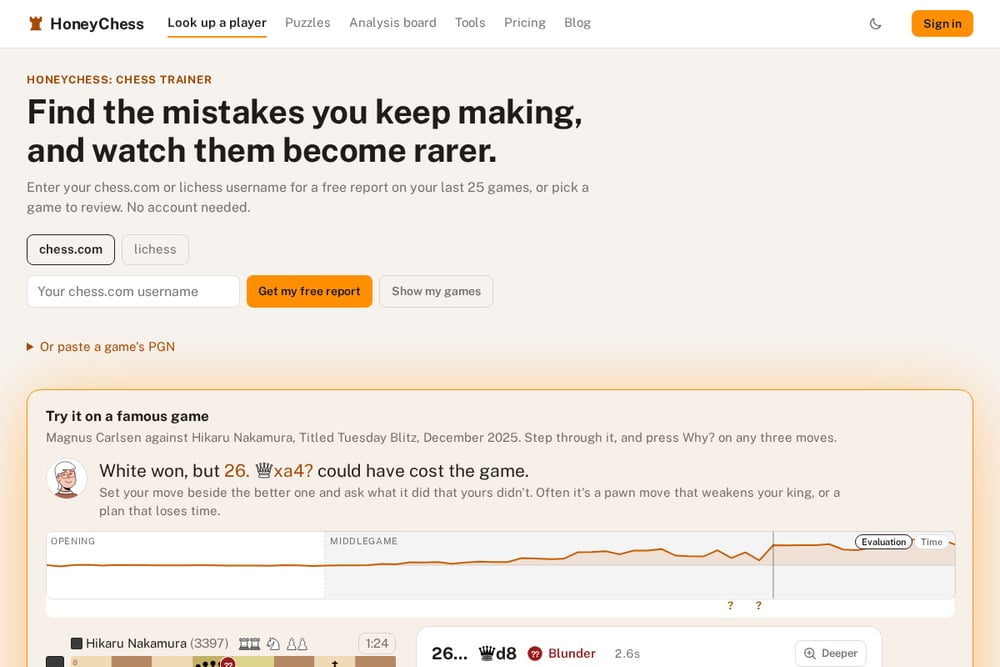 A screenshot of the HoneyChess: Chess Trainer website.
HoneyChess focuses on the mistakes you repeat across all your games. Enter your chess.com or lichess username, and you get a free report on your last 25 games without creating an account. The tool uses Stockfish to review every move and gives you a plain sentence on what each mistake did. It then turns those mistakes into practice exercises from your own positions. You can also paste any PGN or try it on a famous game, like Magnus Carlsen vs Hikaru Nakamura. The interface is clean and dark-mode friendly, making it easy to step through games and ask 'Why?' on any move.
#3 Chessigma
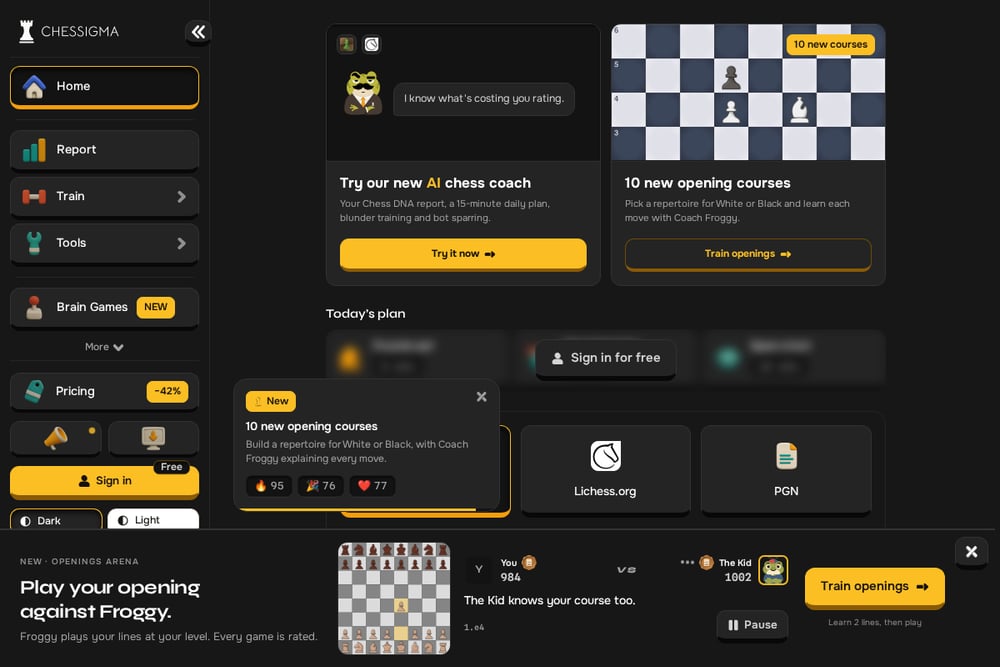 A screenshot of the Chessigma website.
Chessigma is a free chess analyzer that runs on your device. Enter your chess.com or lichess username, pick a game, and get a full report in seconds. Every move gets a grade from Brilliant to Blunder, and you see your accuracy, opening, best and worst moves, and engine top choices. There's no daily limit, no premium tier, and no signup required to start. It also offers training tools like Woodpecker, Blunder Shield, and opening trainers. The site is straightforward and fast, making it a solid choice for quick reviews.
#4 Aimchess
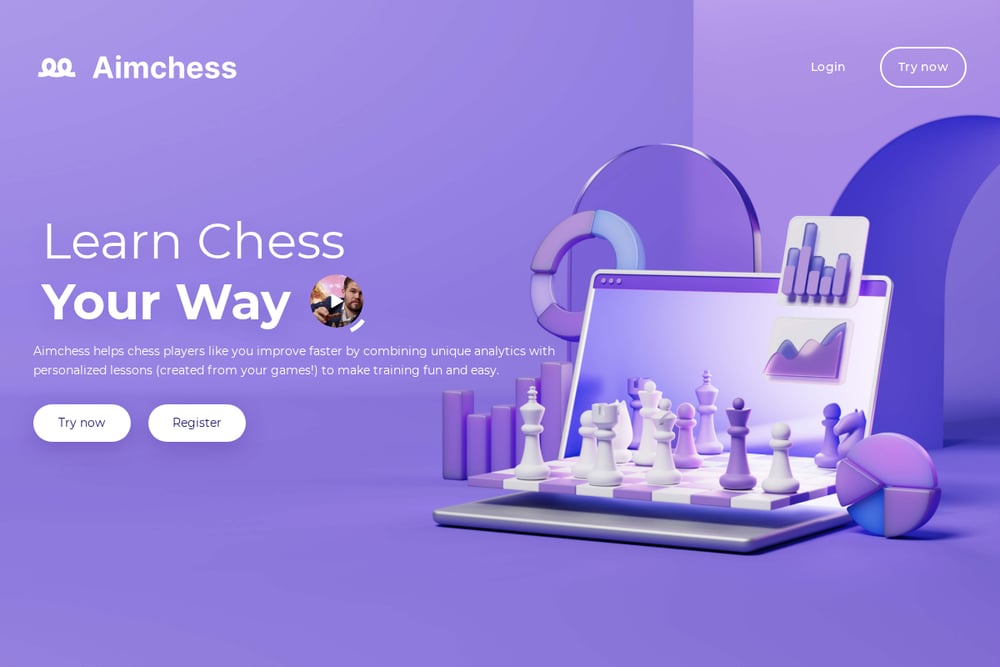 A screenshot of the Aimchess website.
Aimchess takes a personalized approach to improvement. It analyzes your recent games and measures your skills across six core aspects: tactics, endgame, advantage capitalization, resourcefulness, time management, and opening performance. Then it compares you to others at your rating to show what to work on. You get personalized lessons and puzzles built from your own mistakes, plus trainers for advantage capitalization, openings, and visualization. It's a comprehensive training suite for players who want a structured plan. The platform is web-based and requires a subscription for full access.
#5 DecodeChess
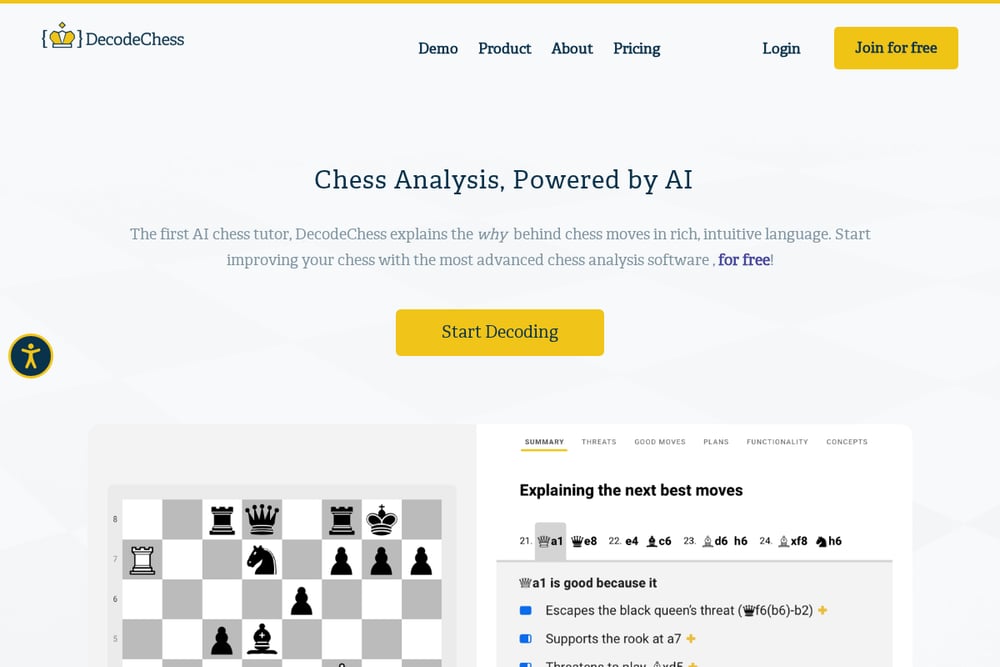 A screenshot of the DecodeChess website.
DecodeChess uses AI to explain the why behind chess moves in rich, intuitive language. It combines Stockfish NNUE with a unique algorithm to provide feedback on your moves. For each position, you get tabs explaining threats, good moves, plans, functionality, and concepts. It's like having a chess master explain the engine's recommendation. Recommended by top players like GM Anish Giri and GM Boris Gelfand, it's a powerful tool for deep understanding. You can try it for free, with unlimited exploration available.
How to Choose the Right Chess Training Tool
Start by identifying your main goal. If you want quick, free analysis of your recent games, HoneyChess or Chessigma are great starting points. If you prefer learning on your phone and want bot practice, Chessis is a strong option. For a structured, personalized training plan, Aimchess offers deep skill assessments and lessons. If you're looking to understand the why behind moves, DecodeChess provides detailed AI explanations. Consider your budget: HoneyChess and Chessigma have free tiers, while Aimchess and DecodeChess require subscriptions for full features. Also think about platform: Chessis is mobile-first, while others are web-based. Try a few and see which fits your workflow.
Automating Your Chess Improvement
You can automate your chess training by connecting these tools to your game accounts. For example, HoneyChess and Chessigma automatically pull your last 25 games from chess.com or lichess when you enter your username. Aimchess analyzes your games and generates personalized lessons without manual input. DecodeChess lets you explore any position with AI explanations. To streamline, set a weekly routine: review your games with one tool, practice the suggested exercises, and track your progress. Many tools offer APIs or integrations, but even without them, the username-based analysis saves you time. The key is consistency: automate the analysis, then focus on practicing the mistakes you repeat.
The Bottom Line
No single tool is perfect for everyone. HoneyChess excels at pinpointing recurring mistakes and turning them into practice, all for free and without an account. Chessis is a powerful mobile app with bot play and detailed reports. Chessigma offers unlimited free analysis on any device. Aimchess provides a personalized training plan with lessons from grandmasters. DecodeChess explains the why behind moves with AI. Your best bet is to try two or three, see which feedback style resonates, and stick with it. Improvement comes from consistent review and practice, not from the tool itself.