You already know you blunder. The hard part is spotting the patterns behind those blunders. These five tools help you find them.
The Chess Improvement Industry in 2026
Online chess has exploded. Millions of players now grind games on Chess.com and Lichess every day. But most of them review a single game, feel bad about one move, and move on. That is not improvement. That is repetition. A new wave of analysis tools is changing the game. They import your recent games, run them through engines like Stockfish, and surface the mistakes you keep making. Some focus on free, unlimited game review. Others bundle AI coaching, training plans, or personalized reports. The result is a crowded but exciting space. You no longer need a human coach to see your habits. You just need the right tool.
How We Evaluated These Chess Tools
We looked at five factors. First, service scope: does the tool just grade moves, or does it explain your recurring weaknesses? Second, pricing clarity: can you understand what is free and what costs money without digging? Third, data sources: does it support both Chess.com and Lichess, plus PGN uploads? Fourth, personalization: does the feedback feel like it was written for your games, or is it generic engine output? Fifth, ease of use: how fast can you go from username to insight? Each tool below stood out in different ways. ChessCharts impressed with its habit-focused free analysis and low-cost coaching report. Aimchess stood out for its digital coach framing and guided lessons. AICoachess offered plain-language blunder explanations and multilingual reports. Chessigma delivered unlimited free on-device analysis with no signup. Lumichess combined free game review with pattern tracking across accounts. No single tool wins on every factor. The right choice depends on what you need.
Here is a quick look at the five tools, what they do best, and who they suit.
| Provider | Best For |
|---|---|
| Aimchess | Players who want a guided, coach-like training path |
| Find Your Recurring Chess Mistakes | ChessCharts | Players who want to spot and break recurring habits |
| AICoachess | Players who want plain-language explanations of their blunders |
| Chessigma | Players who want unlimited free analysis with no signup |
| Lumichess | Players who want free review plus cross-account pattern tracking |
The 5 Chess Improvement Tools in Detail
#1 Aimchess
 A screenshot of the Aimchess website.
Aimchess positions itself as your digital chess coach. You enter your Chess.com username, and it analyzes your recent games to deliver personalized guidance and lessons. The focus is on turning your game data into a training path, not just a list of blunders. That makes it a strong fit if you want structure and direction. The onboarding is simple: one username, one report. You can try it at aimchess.com/try. It is a polished entry point for players who want coaching-style feedback without booking a human coach.
#2 Find Your Recurring Chess Mistakes | ChessCharts
 A screenshot of the Find Your Recurring Chess Mistakes | ChessCharts website.
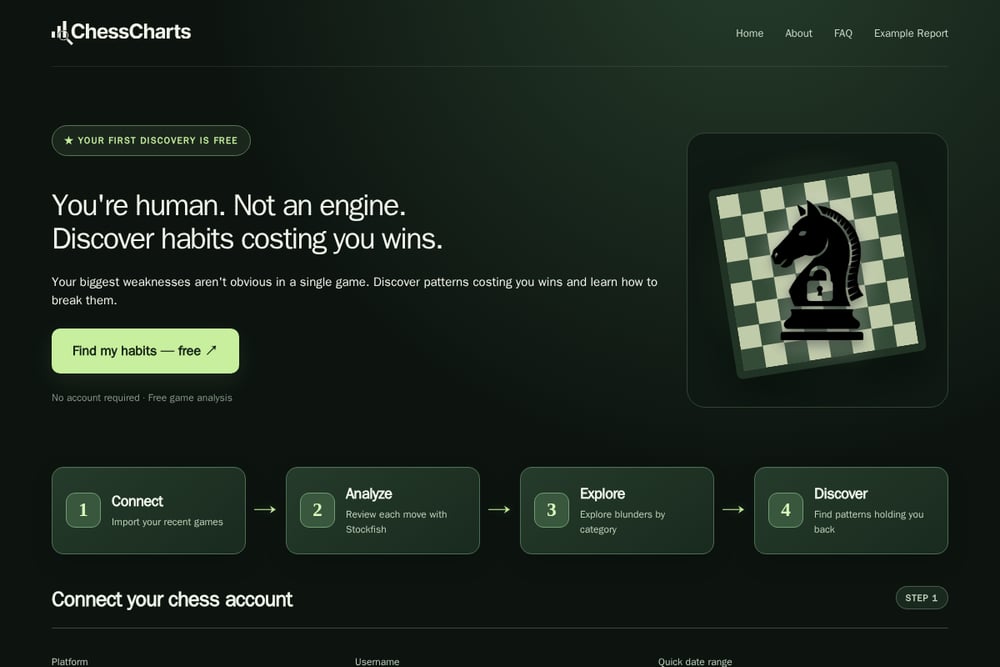
ChessCharts does one thing and does it well: it finds the mistakes you keep making. You connect your Chess.com or Lichess account, pick a date range and time control, and the tool imports your games. It then runs Stockfish 19 Lite at depth 10 to spot recurring habits across many games, not just one. The dashboard lets you explore blunders by category and see patterns holding you back. Your first discovery is free, with no account required. If you want more, a $9.99 one-time personal coaching report turns your recurring mistakes into four personalized insights with puzzles from your actual positions. That is a sharp, focused value proposition for players who are tired of generic game reviews.
#3 AICoachess
 A screenshot of the AICoachess website.
AICoachess leans hard into AI coaching. You paste any game from Chess.com or Lichess, and it generates a full coaching report in about two minutes. Every blunder is explained in plain language, your real weaknesses are identified, and you get a personalized training plan. The reports break down opening, middlegame, and endgame performance with scores. It also supports more than 25 languages, which is rare in this space. Pricing is clear: a free weak-spot check, then paid reports starting around one euro. If you want detailed explanations rather than raw engine lines, this is worth a look.
#4 Chessigma
 A screenshot of the Chessigma website.
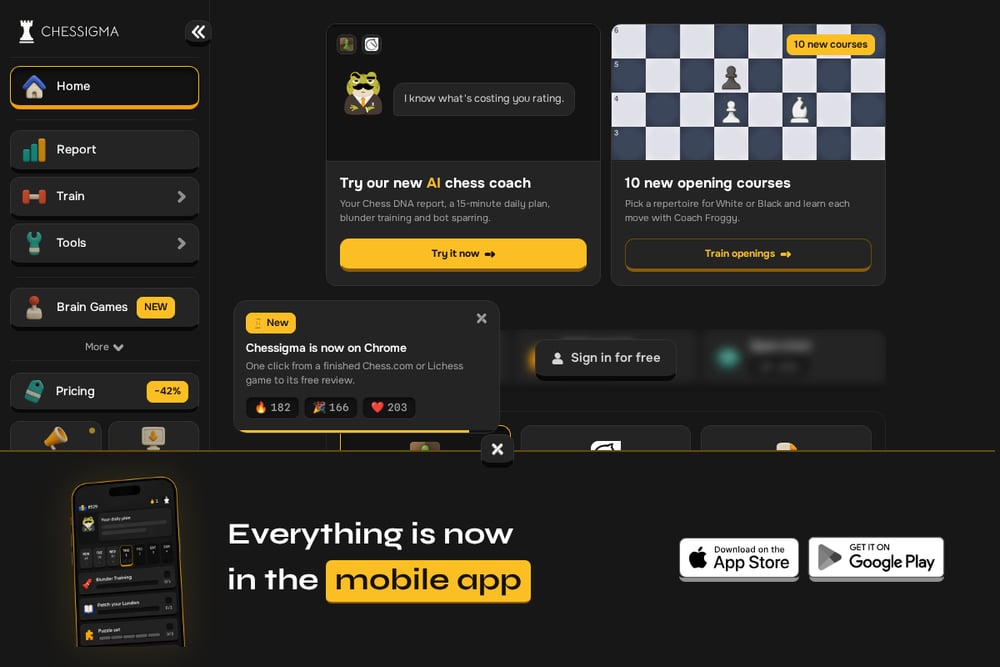
Chessigma is built for speed and freedom. It runs analysis on your device, so there is no daily limit, no premium tier, and no signup required to start. You enter your Chess.com or Lichess username, pick a game, and get a full report in seconds. Every move gets a grade from Brilliant to Blunder, and you see accuracy, opening identification, best and worst moves, and engine top choices. It also offers training tools like blunder training, conversion trainer, and opening courses. If you want unlimited free game review without friction, Chessigma delivers.
#5 Lumichess
 A screenshot of the Lumichess website.
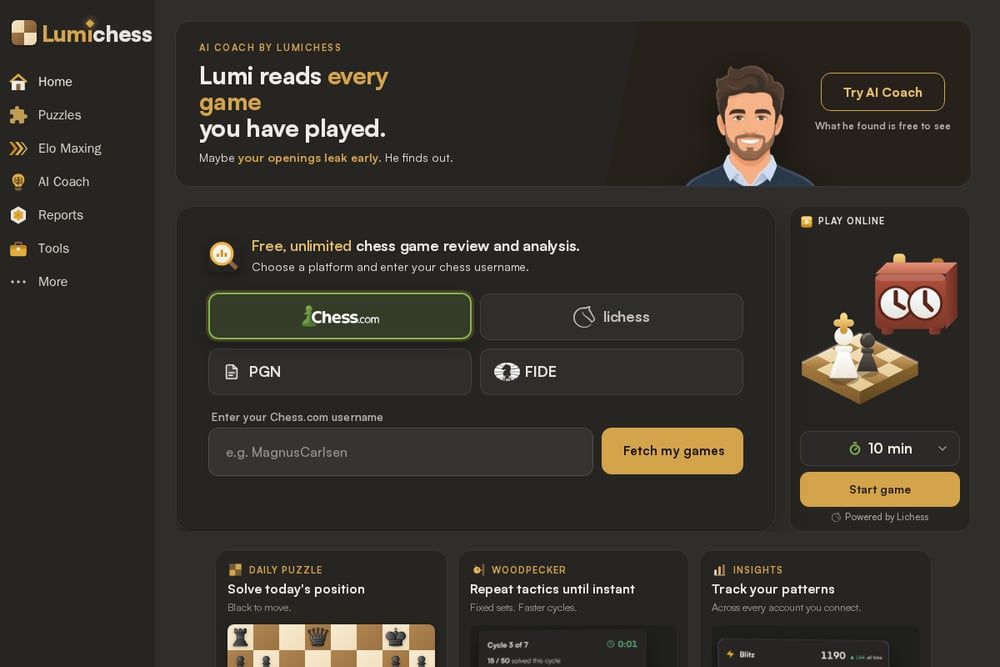
Lumichess combines free game review with pattern tracking. You connect a Chess.com or Lichess account, or paste a PGN, and Stockfish 18 grades every move for free with no daily limit. What sets it apart is Insights: it tracks your patterns across every account you connect. There is also an AI Coach that reads your last hundred games, plus tools like Woodpecker for tactic repetition and an Elo Maxing section. You can review games without signing up, but creating a free account lets you track improvement over time. It is a solid pick if you want both analysis and long-term pattern visibility.
How to Choose the Right Chess Analysis Tool
Start with your goal. If you want to find recurring habits fast, pick a tool that analyzes many games at once, not just one. ChessCharts is built exactly for that. If you want a guided training path, Aimchess frames itself as a digital coach. If you want plain-language explanations, AICoachess focuses on explaining every blunder. If you want unlimited free analysis with zero friction, Chessigma runs on your device with no signup. If you want to track patterns across multiple accounts over time, Lumichess offers Insights. Next, check pricing clarity. Free tiers vary widely. Some tools limit daily reviews; others charge per report. Know what you get before you commit. Finally, confirm platform support. Most tools handle Chess.com and Lichess, but PGN upload and FIDE rating integration are nice extras. Pick the tool that matches how you actually review games.
Building a Simple Analysis Workflow
You do not need a complicated setup. Pick one tool and make it a weekly habit. Step one: import your last 30 to 90 days of games. Step two: run the analysis and let the engine grade every move. Step three: explore the results by category, focusing on blunders and recurring patterns. Step four: pick one habit to work on for the week. Step five: use puzzles or training tools from the same platform to drill that habit. Repeat. Tools like ChessCharts make this easy with a free first discovery and a low-cost personalized report. Others, like Chessigma and Lumichess, offer unlimited free review so you can repeat the loop without watching a meter. The key is consistency, not complexity.
The Bottom Line
Improvement does not come from reviewing one game. It comes from seeing the patterns across many. The five tools here each attack that problem differently. ChessCharts focuses squarely on recurring mistakes and turns them into a personalized plan for under ten dollars. Aimchess gives you a coach-like path. AICoachess explains your blunders in plain language. Chessigma gives you unlimited free analysis with no signup. Lumichess tracks your patterns across accounts. Try one, stick with it for a month, and measure whether your blunder rate drops. That is the only score that matters.