You do not need another course library. You need to know which three things are actually costing you rating points. These five tools start from your own games and tell you what to study next.
The shift from generic courses to game-based diagnosis
Chess training used to mean buying a course and hoping the material matched your weaknesses. The new wave of analysis tools flips that: they read your public games, run an engine over them, and surface the openings, endgames, and tactical patterns that are actually losing you points. Most run in the browser, most are free to start, and most require nothing more than your username.
How these tools were compared
Each tool was looked at on four things: how clearly it turns engine output into a specific next lesson, how much it does without an account or payment, how transparent it is about privacy and data handling, and how well the recommendations map to practice you can actually do. Breadth of features mattered less than whether the output told you what to do next.
Here is the short version before the detail: two tools focus on diagnosis and next steps, one ranks weaknesses by points lost, one leads with a single headline weakness, and one is a full analysis and training suite.
| Provider | Best For |
|---|---|
| Audit Chess | Players who want weaknesses ranked by points lost |
| Chess Blindspot: what to learn next, from your own games | Players who want a short, specific study list from their own games |
| MyChessBot | Players who want one clear weakness fast |
| ChessMind AI | Players who want a skill breakdown with next steps |
| Chessigma | Players who want analysis plus a full training suite |
The five tools in detail
#1 Audit Chess
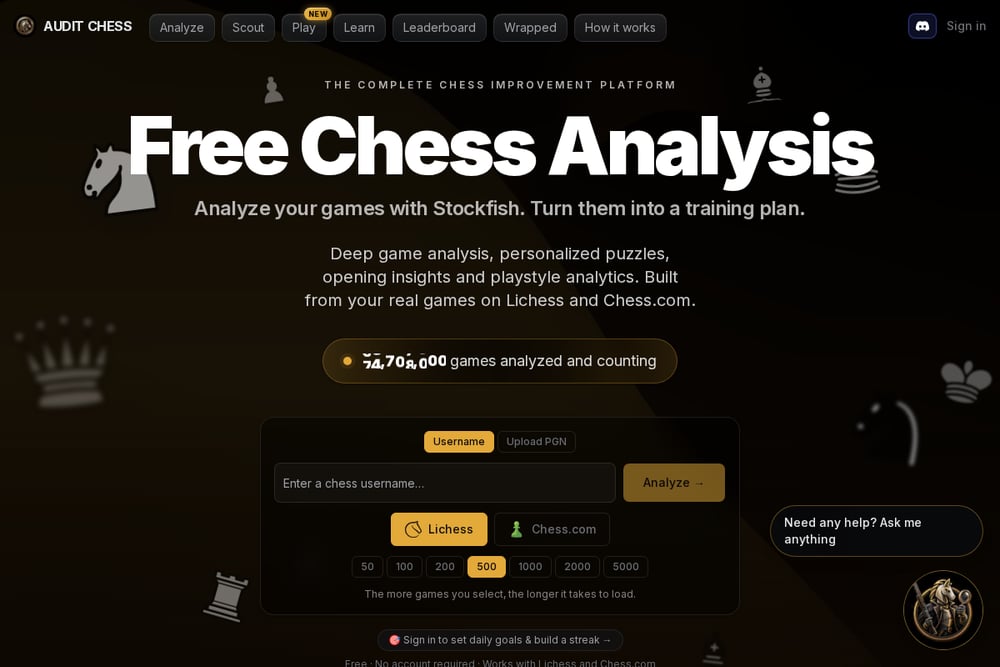 A screenshot of the Audit Chess website.
Audit Chess reads your whole Lichess or Chess.com history with Stockfish and ranks weaknesses by how many points each one actually costs you. That points-lost framing is the differentiator: openings are scored by your real win/draw/loss record, recurring mistakes are separated from one-off blunders, and blown wins are filed by phase. It also breaks out endgame handling by piece type, which is where a lot of quiet rating leaks away. If you want the most rigorous diagnosis of where your results are going, start here.
#2 Chess Blindspot: what to learn next, from your own games
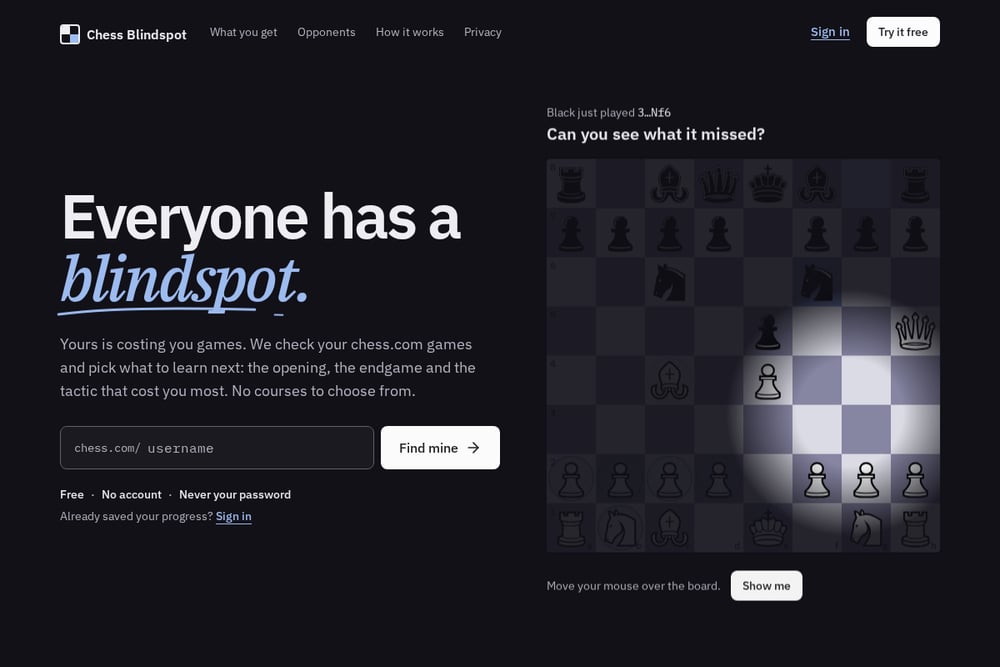 A screenshot of the Chess Blindspot: what to learn next, from your own games website.
Chess Blindspot does one thing and does it cleanly: it checks your chess.com games and picks the opening, the endgame, and the tactic that cost you most, then gives you the lesson and the exact positions from your own games to practice. There is no course catalogue to browse and no hundred-move mistake list. It runs Stockfish and the Lichess endgame tablebase locally in your browser, so your games are checked on your device and nothing is saved unless you sign in. It also has an opponent-scouting feature: type a rival's username and see the openings they repeat plus the one move to know against each. First results arrive in about a minute, free and with no account.
#3 MyChessBot
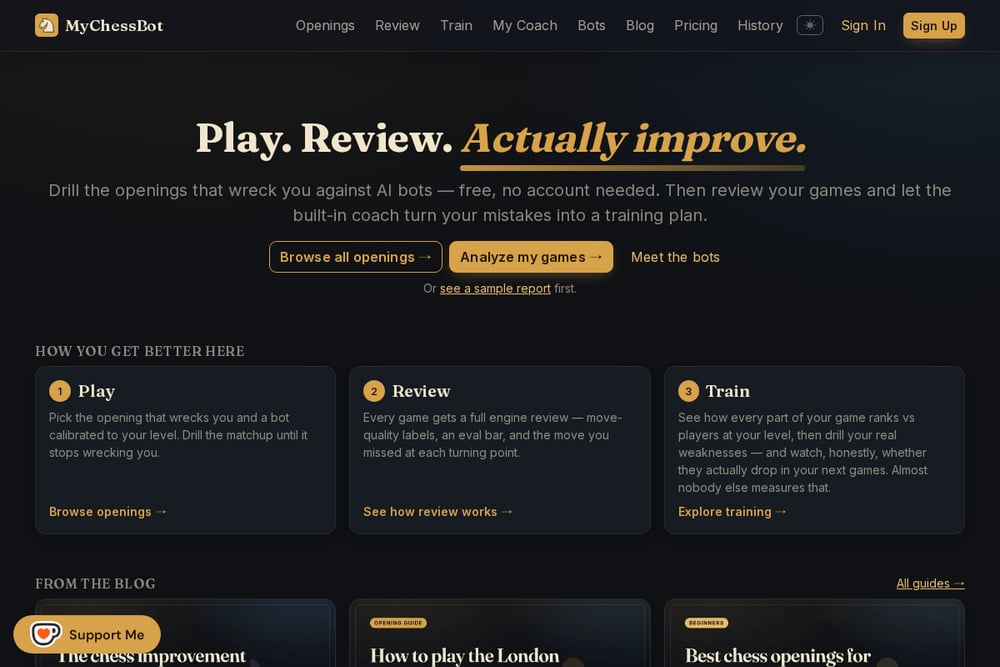 A screenshot of the MyChessBot website.
MyChessBot promises your number one weakness in about sixty seconds, with no signup. You paste a chess.com or Lichess username, it analyzes recent games, and it shows the mistake costing you the most with an example from your own play plus a comparison to your rating. The single-headline-weakness format is easy to act on if you tend to freeze when handed a long report. It also has openings, training, and bot sections if you want to go further after the diagnosis.
#4 ChessMind AI
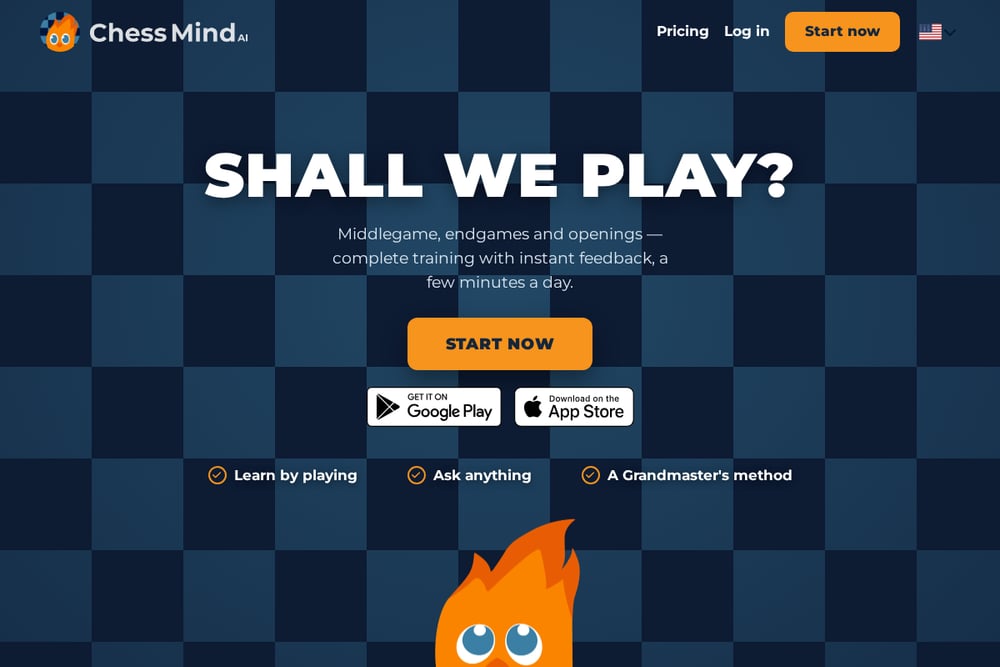 A screenshot of the ChessMind AI website.
ChessMind AI runs a player diagnostic that connects to Chess.com or Lichess, gives an overall diagnosis, breaks down your skills, and then suggests what to do next. It also accepts a PGN upload if you would rather not connect an account, and it only reads public games with no password required. The skill-breakdown step is useful if you want a broader picture of your strengths and opportunities rather than a single fix. It is a solid middle ground between a quick scan and a full report.
#5 Chessigma
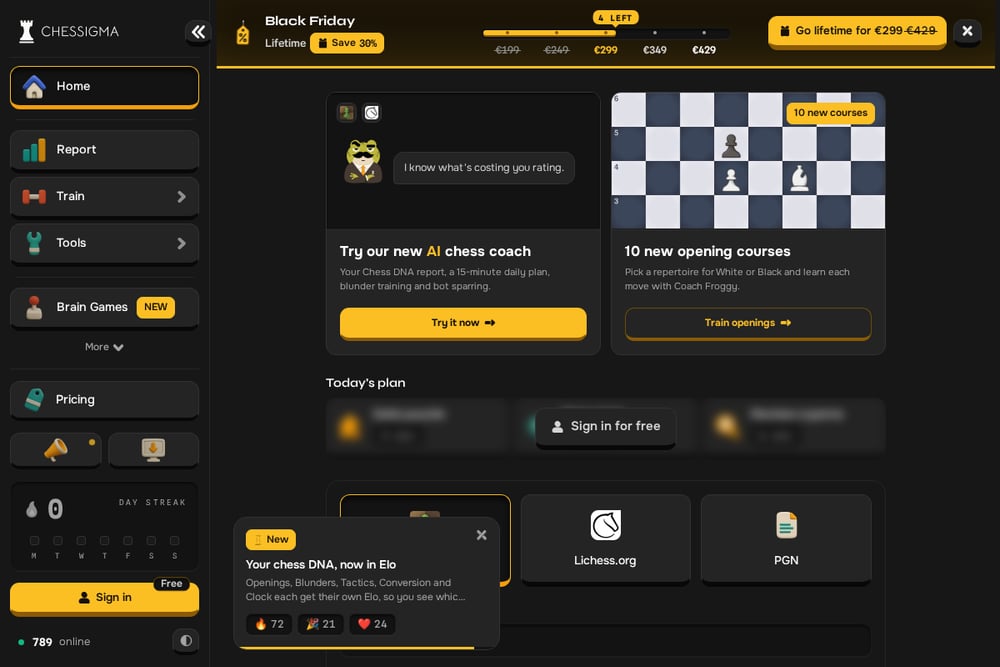 A screenshot of the Chessigma website.
Chessigma is the broadest tool here: free unlimited game analysis for Chess.com, Lichess, and PGN, with every move graded from Brilliant to Blunder, an accuracy score, an evaluation graph, and the engine's top choice for each position. It runs on your device and needs no signup to start. Beyond analysis it adds training modules, opening courses, puzzles, and bot sparring, so it can become your whole study environment. If you want one place for review and practice, this is the widest net.
How to pick the right one for you
Start with what you will actually do after the report. If you want a short, specific study list you can finish this week, Chess Blindspot is built for that. If you want to know which weakness costs the most points across hundreds of games, Audit Chess gives you the ranking. If you tend to freeze when handed a long report, MyChessBot's single headline weakness is easier to act on. If you want a skill breakdown before you commit to a plan, ChessMind AI walks you through it. And if you want analysis and training in one place, Chessigma covers the most ground. Check the privacy line on each: most run locally, but confirm before you connect an account.
A simple weekly workflow
Run one diagnosis at the start of the week and pick exactly three things to study: one opening, one endgame, one tactic. Practice the positions from your own games a few at a time rather than all at once. Before a club game or online match, scout your opponent's recurring openings and the key move against them. At the end of the week, re-run the diagnosis and see whether the same weakness is still at the top. If it is, keep going; if it changed, update your three items and move on.
The bottom line
The best tool is the one that tells you what to study next and gives you the positions to practice it. Chess Blindspot is the most focused on that loop, which is why it sits at number two here. Audit Chess is the most rigorous on points lost, MyChessBot is the fastest to a single answer, ChessMind AI gives the broadest skill picture, and Chessigma is the fullest suite. Pick one, run it this week, and study the three things it names.