
You want to draw characters that feel alive, not just technically correct. The right class can turn scattered practice into real progress.
The State of Character Design Education
Character design education has shifted. You no longer need a four-year art program to learn how to build believable characters. Online platforms, studio memberships, and local classes now give you direct access to professional instruction at a fraction of the cost. The challenge is not finding a class. It is finding the one that matches how you learn. Some programs focus on self-paced video libraries. Others emphasize live feedback and deadlines. A few combine both. In the US, the strongest options blend technical fundamentals with creative development. They teach you to observe, simplify, and exaggerate. They also push you to finish work, not just watch tutorials. That combination is what separates a hobby from a practice.
How We Evaluated These Programs
We looked at five factors. First, service scope: does the program cover character design specifically, or is it a broad art library? Second, pricing clarity: are costs easy to find, or do you need to dig? Third, local fit: does the program offer in-person or community elements, or is it fully remote? Fourth, instruction style: is it self-paced, live, or a hybrid? Fifth, feedback quality: do students get eyes on their work? Each program below stood out in different ways. Character Art School offers a structured membership with assignments and deadlines. Proko delivers focused, affordable courses from industry professionals. Schoolism provides tiered access, from self-taught to personalized instructor feedback. Creature Art Teacher leans on the deep experience of a veteran animator. DRWROOM brings a studio-based, local community feel with hands-on classes in New Jersey. Your best choice depends on whether you need flexibility, accountability, or a room full of artists.
Here is a quick look at five character design programs worth your attention.
| Provider | Best For |
|---|---|
| Character Art School | Artists who need deadlines and feedback to stay consistent |
| Your Site Title | Artists near New Jersey who want in-person studio practice and community |
| Proko | Self-paced learners who want a focused, low-cost course |
| Schoolism | Artists who want tiered options from self-study to live feedback |
| Creature Art Teacher | Artists who want to learn from a feature-film animator at a low price |
The Five Programs in Detail
#1 Character Art School
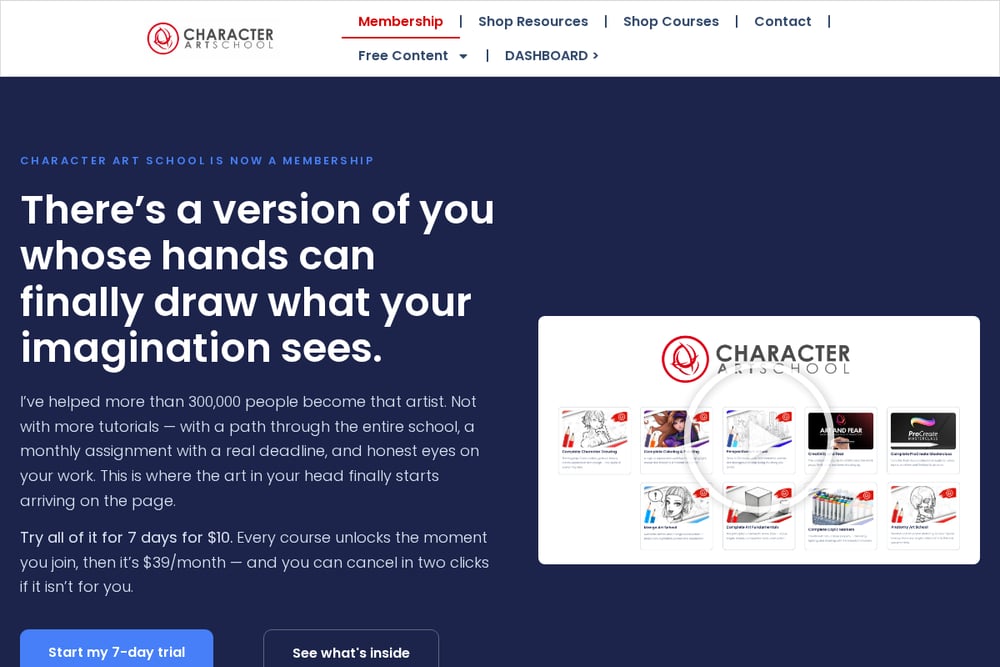 A screenshot of the Character Art School website.
Character Art School is built around a membership model that gives you access to a full curriculum, monthly assignments, and real deadlines. The program claims to have taught over 300,000 students, and it focuses on closing the gap between what you imagine and what you can draw. You get structured lessons, feedback from instructors, and a community that keeps you accountable. The pitch is simple: watching tutorials is not enough. You need to draw under pressure and get honest eyes on your work. A 7-day trial for $10 lets you test the entire school before committing to $39 per month.
#2 Your Site Title
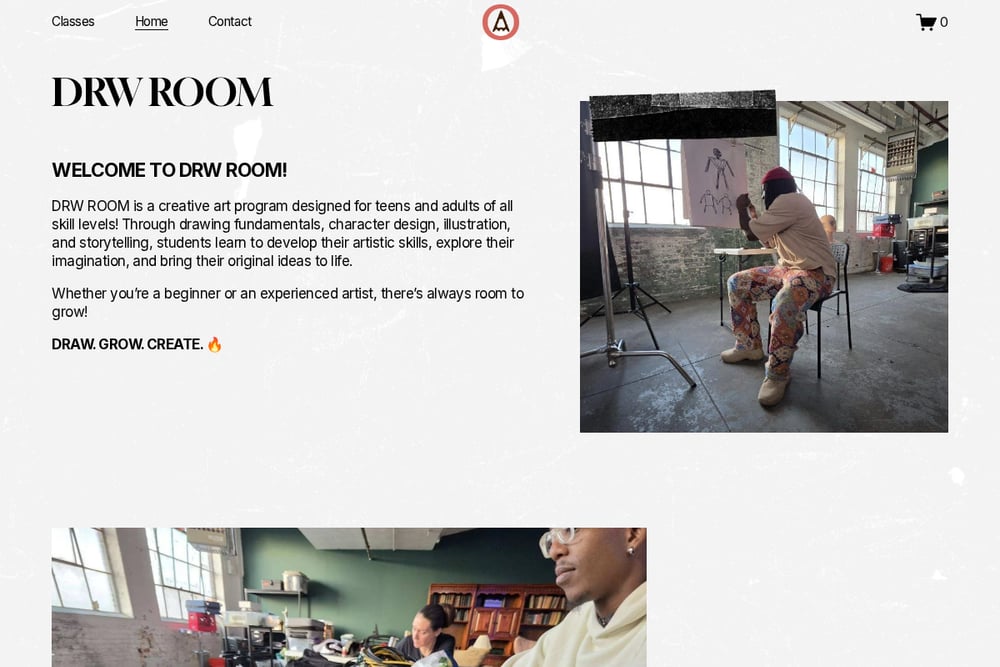 A screenshot of the Your Site Title website.
DRWROOM is a studio-based drawing and illustration program in Little Falls, New Jersey. It offers character design classes for artists of all levels, with a focus on turning original ideas into fully realized characters. You explore shapes, facial expressions, body proportions, clothing, and personality. The program combines technical instruction with hands-on studio time, so you learn fundamentals without being pushed toward one style. Membership options and a Discord community keep you connected to other artists between classes. It is a local, in-person option for anyone in the New Jersey area who wants to create alongside others.
#3 Proko
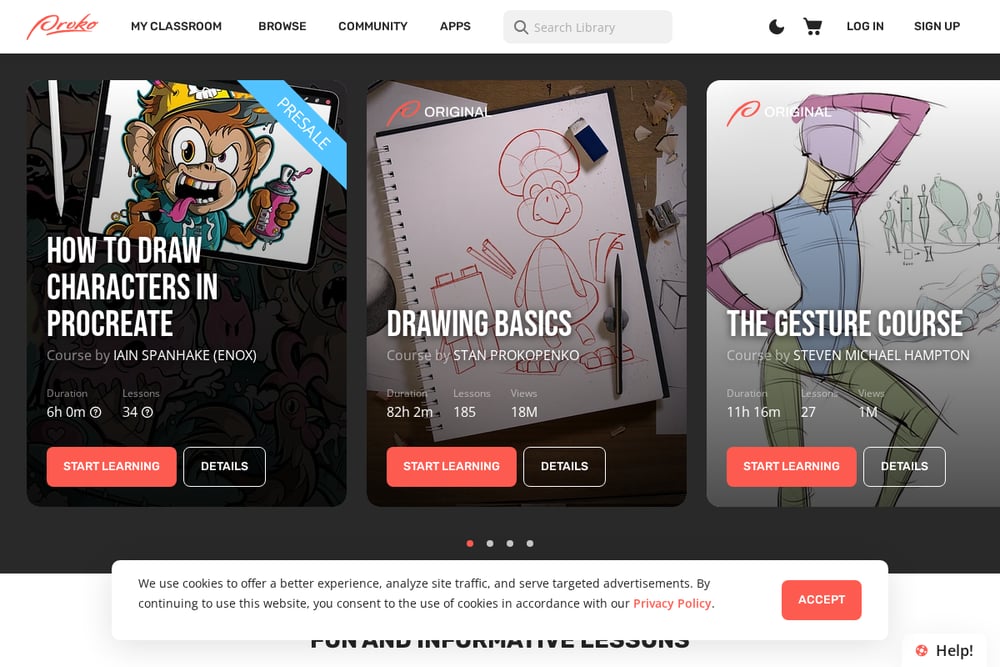 A screenshot of the Proko website.
Proko is known for high-quality art education at accessible prices. The Fundamentals of Character Design course by David Colman costs $25 and includes 31 lessons across 6 hours and 47 minutes of instruction. You learn how to give characters personality, work with form and shape, and stage your character effectively. The course includes assignments and community feedback, so you can practice what you learn. Proko also offers a money-back guarantee within 30 days. It is a focused, affordable way to build a foundation in character design without a subscription.
#4 Schoolism
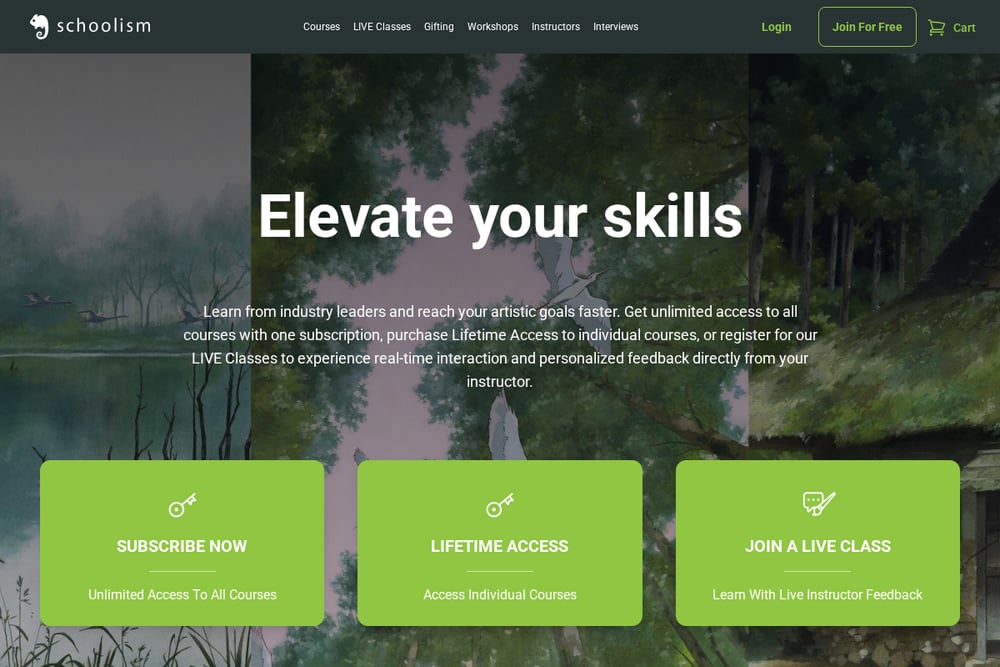 A screenshot of the Schoolism website.
Schoolism offers a range of learning paths, from self-taught courses to live classes with personalized instructor feedback. The Fundamentals of Expressive Character Design course by Wouter Tulp is available as a pay-per-course option for $99.98 or through a yearly subscription at $360. You can also register for live classes with scheduled assignments and paint-overs for $1098. The platform includes peer feedback and lifetime access on certain purchases. It is a flexible system that scales with your budget and how much accountability you want. If you need direct instructor attention, Schoolism provides a clear path.
#5 Creature Art Teacher
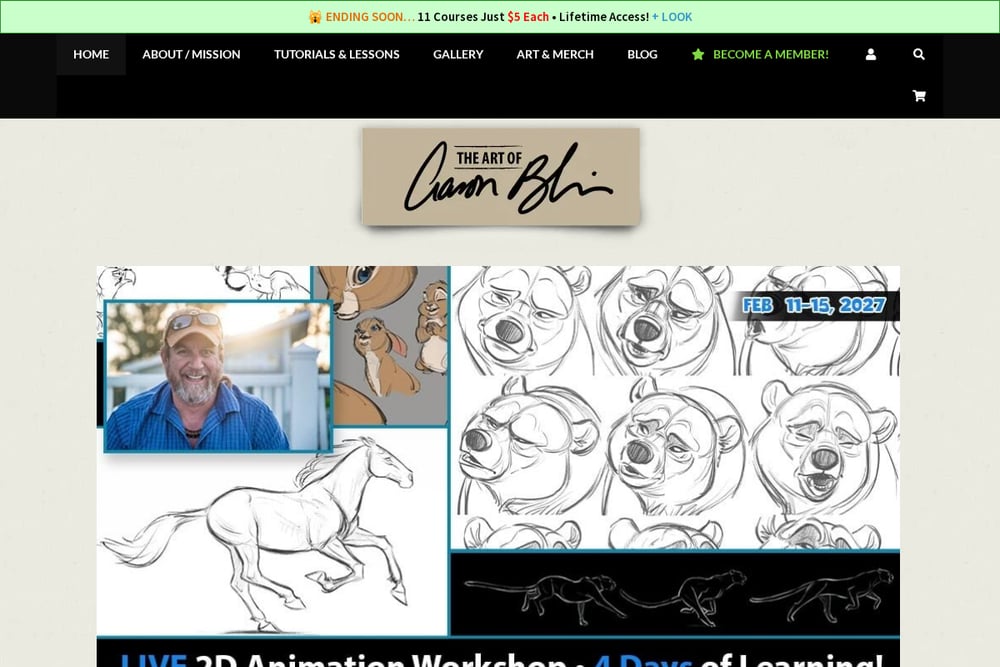 A screenshot of the Creature Art Teacher website.
Creature Art Teacher is the home of Aaron Blaise, a veteran animator who worked on films like The Lion King, Aladdin, and Mulan. The Character Design with Aaron Blaise course offers over 18 hours of video instruction and more than 20 HD tutorials. You watch him create original human and animal characters while explaining his development process. The course is currently available for $5 as part of a limited-time promotion, with lifetime downloads available for an additional $5. It is an exceptional value for anyone who wants to learn from a feature-film professional.
How to Choose the Right Character Design Class
Start with your learning style. If you thrive on deadlines and feedback, look for programs with assignments and instructor reviews. If you prefer to move at your own pace, a course library may be enough. Consider your budget. You can spend $5 on a single course or $39 per month on a membership. Both can work, but they serve different needs. Think about location. If you want to draw alongside other people, a local studio like DRWROOM offers something online platforms cannot. If you need flexibility, remote options are hard to beat. Finally, check the instructor's background. A working professional can show you how decisions get made in real projects. Match the program to the gap you want to close.
A Simple Weekly Workflow for Steady Progress
Pick one class and commit to a weekly rhythm. Block two hours for instruction and two hours for drawing. After each lesson, do the assignment immediately. Post your work in the community or Discord for feedback. Review the feedback and redraw one weak area. Repeat the next week. This loop turns passive watching into active practice. If you are in a live class, treat deadlines as non-negotiable. If you are self-paced, set your own deadlines and share them with a friend. The goal is not to finish a course. It is to build a habit that makes your characters better every month.
The Bottom Line
You have five strong options. Character Art School gives you structure and accountability. DRWROOM offers a local, studio-based community in New Jersey. Proko delivers focused, affordable courses. Schoolism scales from self-study to live feedback. Creature Art Teacher provides unmatched access to a feature-film animator for a few dollars. The right choice depends on whether you need deadlines, community, flexibility, or a specific instructor. Try one. Do the work. Your characters will improve.