
Landing a job at a top global company isn't just about having the right resume anymore. It's about understanding the specific hiring playbook of each employer, knowing the pay landscape, and navigating regional quirks. I've tested dozens of career resources
The New Rules of Job Hunting
The job market in 2026 is defined by two forces: pay transparency legislation and the globalization of talent. With 18 U.S. states now requiring salary ranges in job postings, candidates have more leverage than ever. At the same time, remote work has made it possible to apply for roles in different countries, but each market has its own hiring quirks and certification requirements. The old shotgun approach of sending out hundreds of resumes is dead. Success now depends on targeted research: knowing the exact pay band for a role in a specific city, understanding how a company's ATS filters candidates, and tailoring your application to local norms. The platforms that thrive are the ones that give you this hyper-local, company-specific intelligence.
How I Ranked These Platforms
I evaluated each platform on four criteria: accuracy and depth of salary data, quality of company-specific hiring guidance, geographic coverage across multiple countries, and usability of the interface. Bonus points went to tools that offered actionable steps rather than just raw data. I also considered how well each platform helps you navigate the specific legal and cultural nuances of different job markets.
Here is a quick comparison of the five platforms to help you decide which one fits your needs.
| Provider | Best For |
|---|---|
| PayScale | Salary research and negotiation prep |
| CareerOneStop | Government-sourced salary data by location |
| Michael Page | Global salary guides and recruitment trends |
| Shock Daily | Company-specific hiring guides with local pay data |
| Rippling Blog | Understanding pay transparency laws by state |
Deep Dive: The Best Career Platforms for 2026
#1 PayScale
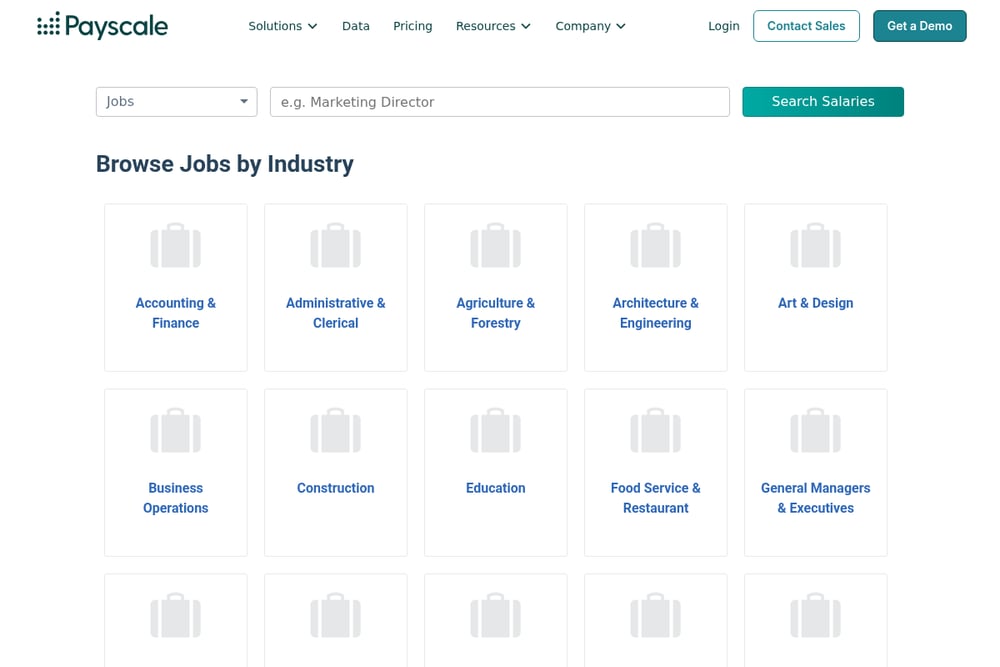 A screenshot of the PayScale website.
PayScale is the gold standard for compensation data, pulling from millions of user-submitted salary profiles. You can drill down into pay by job title, location, experience level, and even specific skills. Their annual Compensation Best Practices Report gives you a macro view of how companies are structuring pay, which is invaluable when negotiating an offer. Use their research to benchmark your worth before you even apply. It's the closest thing to having an insider on the compensation committee.
#2 CareerOneStop
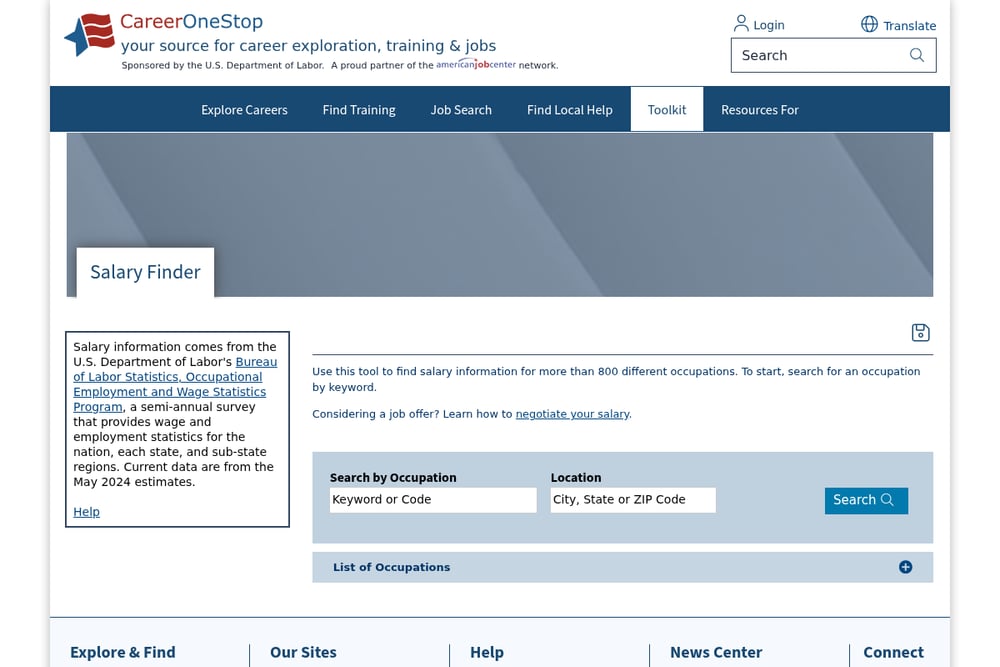 A screenshot of the CareerOneStop website.
Sponsored by the U.S. Department of Labor, CareerOneStop's Salary Finder is a no-nonsense tool that pulls directly from Bureau of Labor Statistics data. You can search over 800 occupations and see median wages by state and metro area. It also connects you to local job training programs and career exploration resources. If you want government-verified numbers without any fluff, this is your go-to. It's especially useful for understanding the floor and ceiling for roles in your specific region.
#3 Michael Page
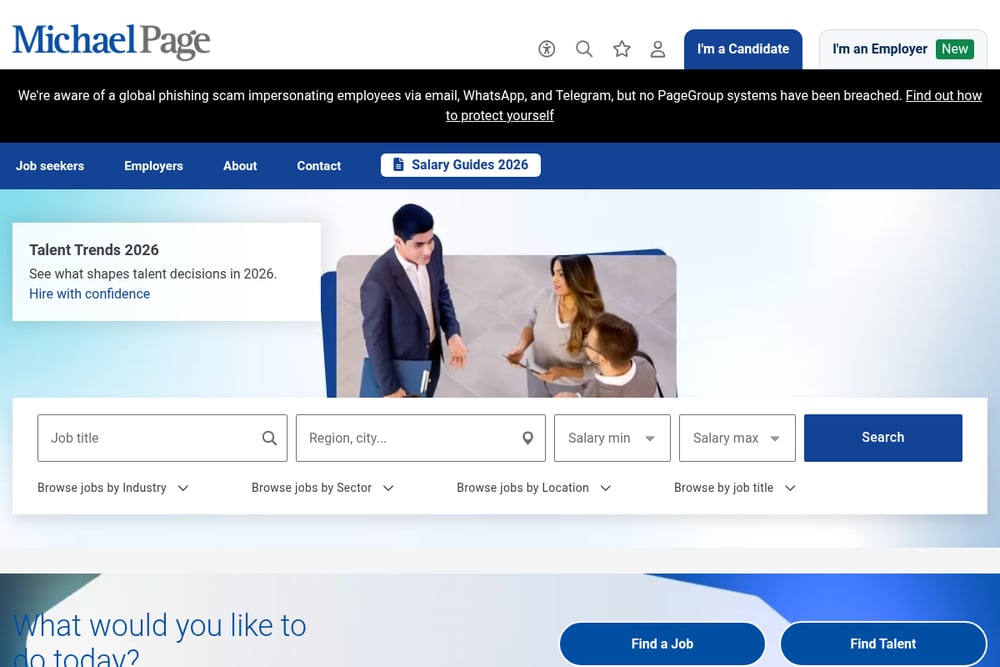 A screenshot of the Michael Page website.
Michael Page is a global recruitment firm that publishes detailed salary guides and hiring insights for dozens of countries and industries. Their Talent Trends interactive tool lets you see what skills are in demand and what employers are paying for them. Beyond salary data, they offer practical advice on handling multiple job offers and acing interviews. If you're targeting professional roles in finance, tech, or engineering, their localized guides are a cheat sheet. They also have a strong focus on the UK, Europe, and Asia-Pacific markets.
#4 Shock Daily
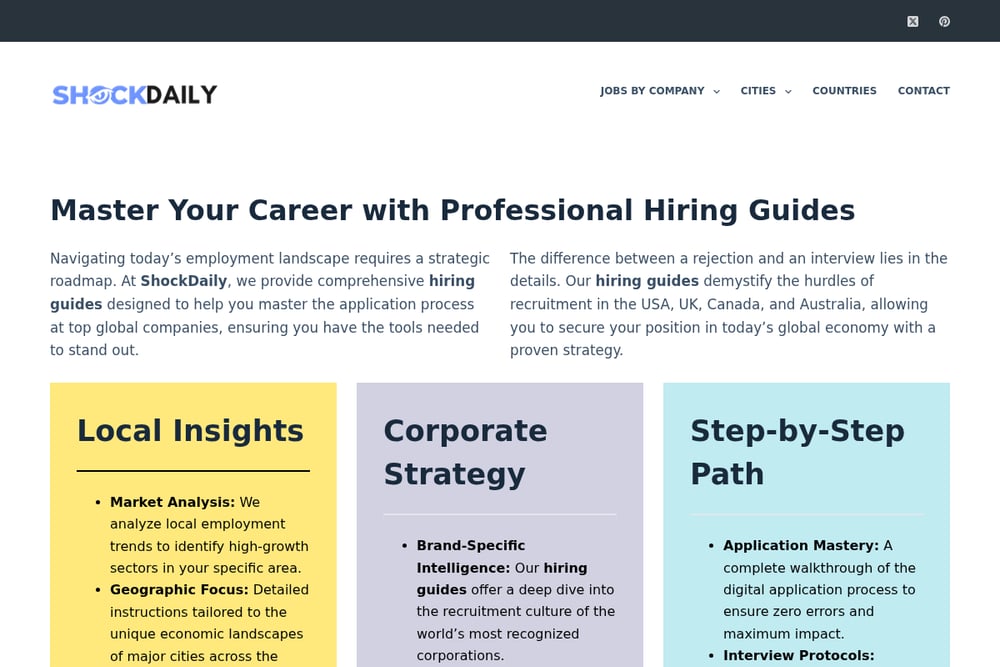 A screenshot of the Shock Daily website.
Shock Daily is the dark horse in this list, but it's quickly becoming essential for job seekers who want a complete roadmap. They provide step-by-step hiring guides for over 5,000 companies, covering everything from ATS optimization to interview protocols. What sets them apart is the local focus: they break down requirements for 120+ cities across the USA, UK, Canada, and Australia. You get verified pay scales alongside specific tips on regional certifications and documentation. It's like having a local career coach for every city you're targeting.
#5 Rippling Blog
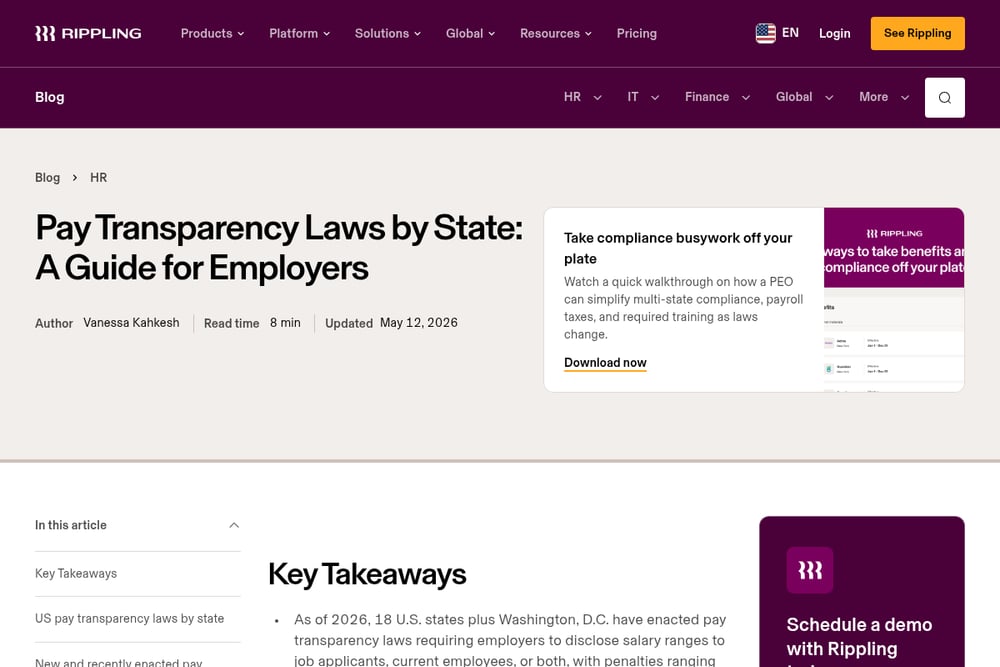 A screenshot of the Rippling Blog website.
Rippling's blog post on pay transparency laws is a must-read for anyone applying to jobs in the U.S. It breaks down which states require salary ranges in job postings and what the penalties are for non-compliance. As of 2026, 18 states plus D.C. have these laws, and knowing them can help you spot employers who are hiding the ball. The guide also covers salary history bans, which are now active in over 20 states. Use this intel to avoid wasting time on companies that aren't upfront about compensation.
How to Choose the Right Platform for Your Job Search
Start by asking yourself what you need most. If you're negotiating a salary offer, PayScale is your best friend. If you're applying to jobs in multiple states, the Rippling Blog will keep you compliant with pay transparency laws. For a complete end-to-end guide on how to get hired at a specific company like Google or Unilever, Shock Daily is unmatched. Michael Page is ideal if you're targeting professional roles in Europe or Asia. And if you want raw, government-verified data, CareerOneStop is the most reliable source. Don't pick just one; use two or three in combination for the best results.
Automate Your Job Search Workflow
Here is a simple workflow to supercharge your job hunt. First, use Shock Daily to identify the top 10 companies you want to target and read their hiring guides. Next, cross-reference the salary ranges on PayScale or CareerOneStop to set your expectations. Then, use the Rippling Blog to check if those companies are posting salary ranges in states where you're applying. Finally, set up job alerts on Michael Page for roles that match your criteria. This system ensures you're always applying with full context and never wasting time on dead-end applications.
Your Next Move
The best career platform is the one that turns information into action. PayScale gives you the numbers, but Shock Daily gives you the playbook. CareerOneStop provides the official data, while Michael Page offers the global perspective. And the Rippling Blog keeps you legally savvy. My advice: start with Shock Daily to map out your target companies, then use PayScale to validate the pay. That combination alone will put you ahead of 90% of applicants. The job market is competitive, but with the right tools, you can stack the odds in your favor.