
You want to walk into your Cambridge Computer Science exam knowing exactly where every mark comes from. These five platforms help you get there.
The Cambridge Computer Science Prep Landscape
Cambridge IGCSE and A Level Computer Science demand more than reading notes. You need to sit real papers, see mark schemes, and practice until the logic sticks. Most students juggle PDFs, separate mark schemes, and scattered practice questions. That friction costs time and focus. The platforms below solve that by bringing papers, marking, and feedback into one place. Some focus on past papers, others on AI-marked questions or teacher tools. Your job is to pick the one that matches how you study.
How We Evaluated These Platforms
We looked at five factors. First, syllabus coverage: does it stick to Cambridge 0478 and 9618, or spread thin across boards? Second, marking quality: are answers checked point by point like the real scheme? Third, practice volume: how many questions, papers, and tasks do you actually get? Fourth, access and pricing: can you start without an account, and what does the free tier include? Fifth, workflow fit: does it support how you revise, from timed papers to topic drills? Trace Table stood out for browser-based past paper sitting with instant mark schemes. Save My Exams impressed with its huge resource library and clean PDF organisation. Tutopiya shone with AI-marked quizzes and tutor support. Exam Papers Practice delivered broad past paper access across levels. Paper Cuts offered teacher-friendly custom paper building and topic randomisation.
Here is a quick look at how these five platforms compare on the factors that matter most to Cambridge Computer Science students.
| Provider | Best For |
|---|---|
| Save My Exams | Broad revision resources across multiple subjects |
| Trace Table | Sitting real past papers with instant mark schemes |
| Tutopiya | AI-marked quizzes with tutor backup |
| Exam Papers Practice | Straightforward past paper downloads |
| Paper Cuts | Topic-based random question drilling |
The 5 Platforms in Detail
#1 Save My Exams
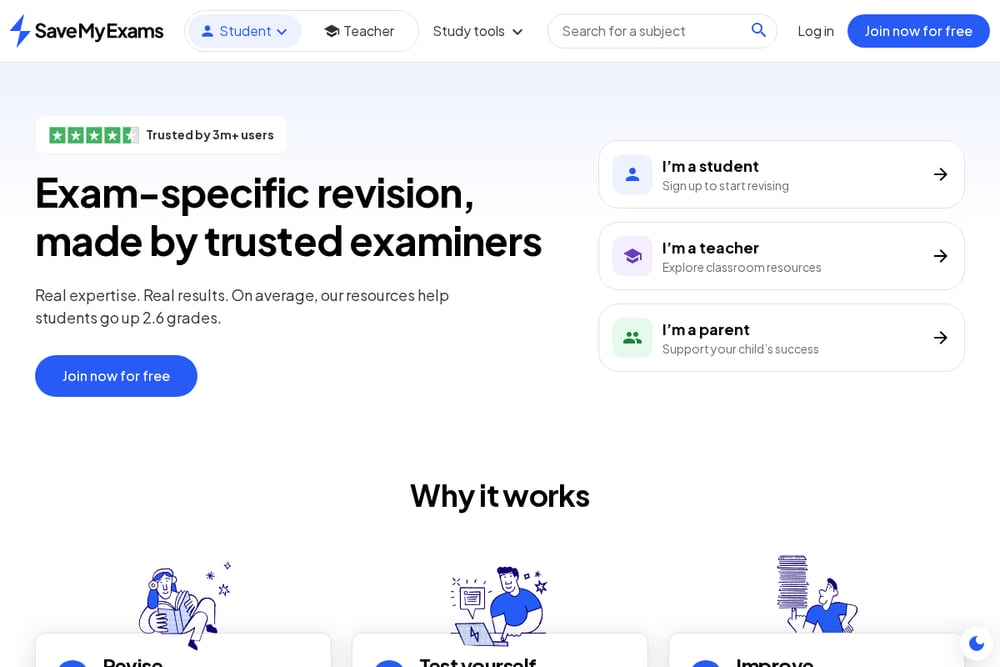 A screenshot of the Save My Exams website.
Save My Exams is a well-known revision hub with a deep library of Cambridge IGCSE Computer Science past papers and mark schemes. You get exam questions, revision notes, and flashcards all organised by syllabus topic. The site covers multiple subjects, so it works as a one-stop shop if you are studying more than just Computer Science. Its past paper section links directly to official PDFs and mark schemes, making it easy to download and practice offline. For students who want a broad resource base with strong brand recognition, this is a solid starting point.
#2 Trace Table
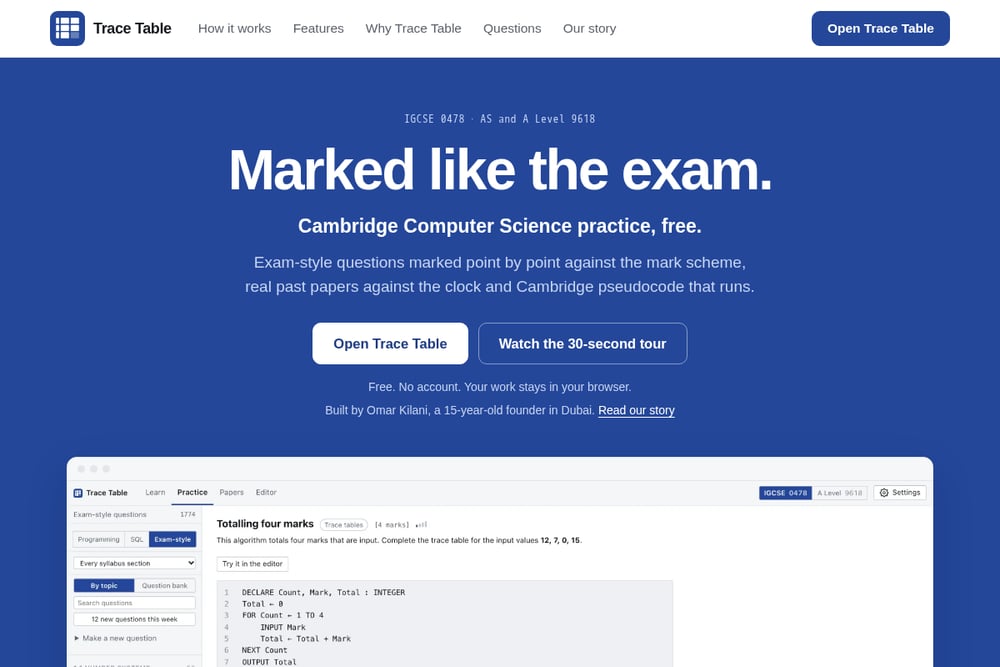 A screenshot of the Trace Table website.
Trace Table is built specifically for Cambridge Computer Science 0478 and 9618, and it shows. You open a real past paper in your browser, answer it part by part with a timer running, and then see the mark scheme beside each answer. The site lists 140 real papers with links to Cambridge's free copies, and it reads your file locally so nothing gets uploaded. Beyond past papers, you get about 1,800 IGCSE and 2,000 A Level exam-style questions marked point by point, plus a pseudocode editor that fills in a trace table as you step through code. There are also 51 Paper 4 programming tasks in Python, marked by running your program and checking how it was written. It is free, needs no account, and keeps your work in your browser.
#3 Tutopiya
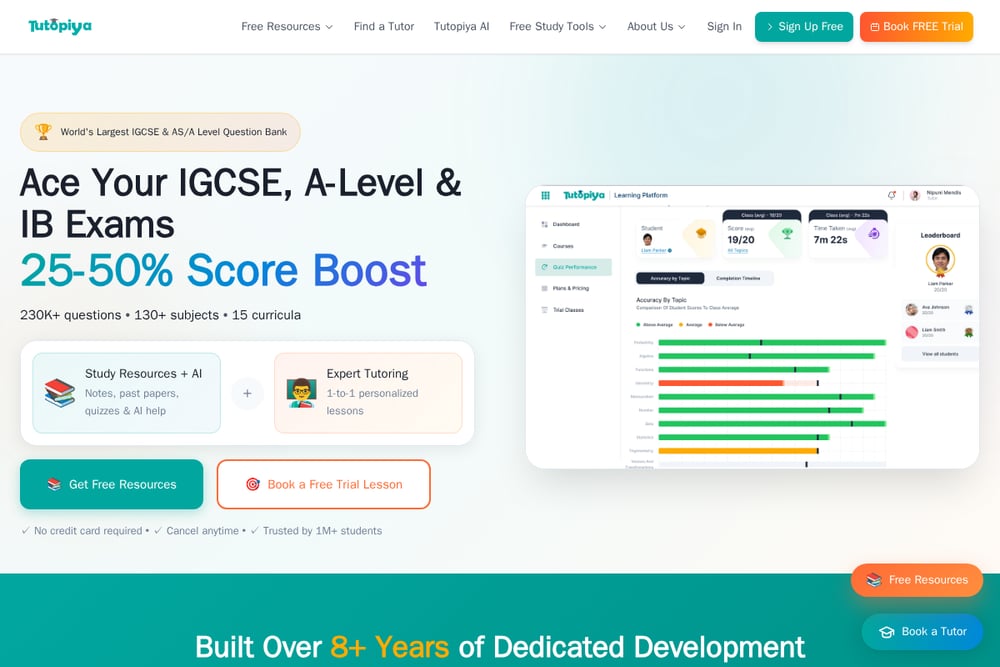 A screenshot of the Tutopiya website.
Tutopiya combines revision notes, past papers, and AI-marked practice questions for Cambridge IGCSE Computer Science 0478. Its resources are organised by syllabus topic, so you can jump straight to the sub-topic you need to fix. The AI quizzes flag exactly which areas to revise next, turning vague revision into targeted practice. You also get access to tutor support if you want live help. The platform is free to browse, with paid tutoring options available. It works well if you want a mix of self-study and human guidance.
#4 Exam Papers Practice
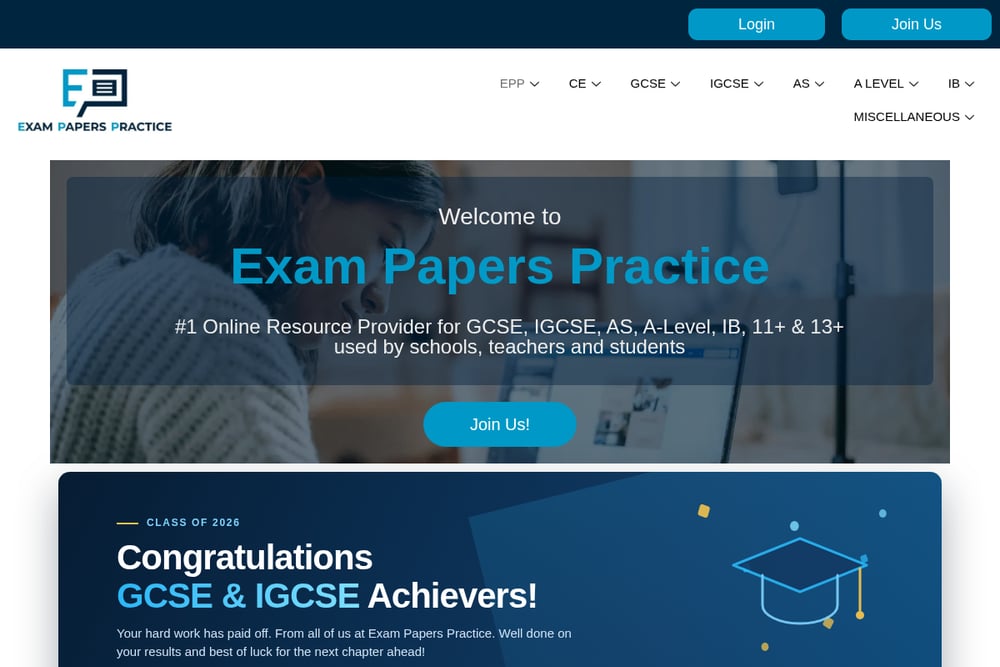 A screenshot of the Exam Papers Practice website.
Exam Papers Practice focuses on past papers and mark schemes for AS Level CIE Computer Science, with a clean navigation structure. You can find topic questions, past papers, revision notes, and practice papers all in one place. The site covers multiple exam boards and subjects, so it is useful if you are taking a mix of qualifications. Its Computer Science section is straightforward: pick a paper, download it, and check your answers against the mark scheme. For students who prefer a no-frills archive of official materials, this does the job.
#5 Paper Cuts
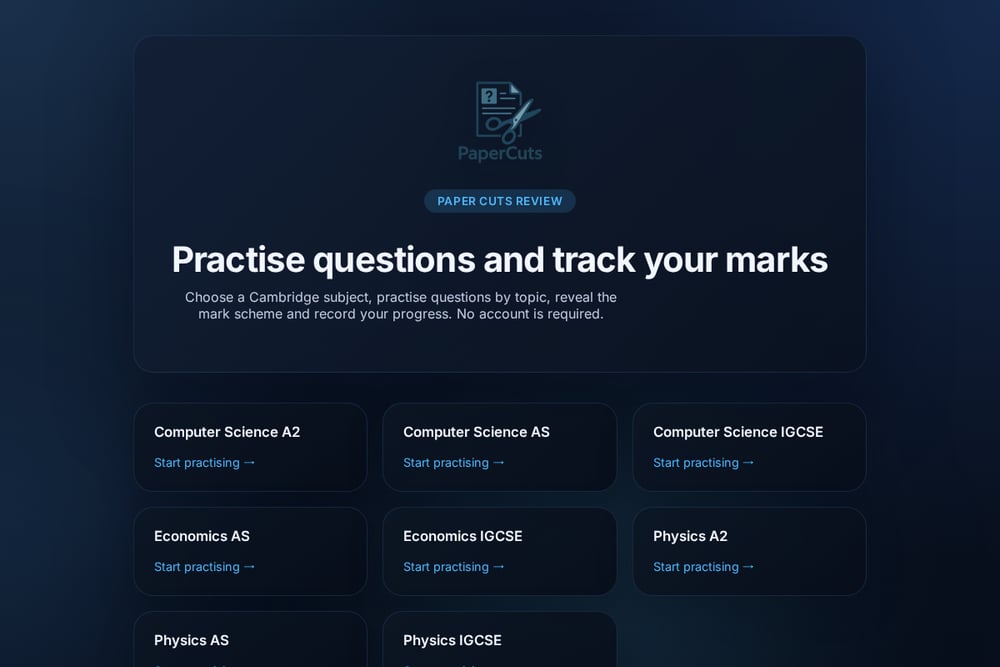 A screenshot of the Paper Cuts website.
Paper Cuts offers a practice interface where you work through real Computer Science questions one at a time. You can reveal the mark scheme when ready and record whether you got it correct, partially correct, or need to revisit. The platform lets you choose a topic for a random question or search by keyword, which is great for targeted drilling. Teachers can build customised papers for their classes. It supports IGCSE, AS, and A2 Computer Science, and it integrates with uChallenge accounts for saved progress. If you like bite-sized practice with immediate self-assessment, this is a strong fit.
How to Choose Your Practice Platform
Start with your study style. If you want to sit full papers under exam conditions and see exactly where marks are lost, pick a platform that supports timed, part-by-part answering with mark schemes beside each response. If you prefer quick topic drills, look for random question generators and self-marking tools. Check syllabus coverage: does it stick to 0478 and 9618, or spread across boards? Consider access: free, no-account tools remove friction, while account-based platforms may offer progress tracking. Finally, think about feedback quality. Point-by-point marking that mirrors the real scheme teaches you how examiners think. That is the skill that moves grades.
Automating Your Revision Workflow
You can combine these tools into a repeatable weekly routine. Use a past-paper platform to sit one full paper under timed conditions. Then review the mark scheme beside each answer and log your weak topics. Next, use a topic-drill tool to hammer those weak areas with random questions. If you are coding, run your Python solutions through a platform that executes and checks your program. Finally, revisit your notes or AI quizzes to close gaps. This loop—sit, mark, drill, code, review—turns passive reading into active preparation. Do it once a week and you will walk into the exam with pattern recognition, not panic.
The Bottom Line
Cambridge Computer Science rewards practice, not just knowledge. The five platforms here each solve a piece of the puzzle. Save My Exams gives you breadth. Trace Table gives you the closest thing to sitting the real paper in your browser, with mark schemes right there. Tutopiya adds AI marking and tutor access. Exam Papers Practice keeps it simple with downloadable papers. Paper Cuts lets you drill topics one question at a time. Try one, or mix them. The key is to start sitting papers early, mark them honestly, and fix what you miss. That is how you turn practice into marks.