A diversified customer list can hide a shared parent. A tiny supplier can hold up your entire production line. If you make capital decisions, you need to see the relationships behind the numbers.
The State of Relationship Risk Intelligence
Credit and investment analysis used to stop at the balance sheet. Today, the sharper questions are relational. Who really owns your borrower's top five customers? Which suppliers are single points of failure? Where do a company's customers and vendors quietly converge under one corporate group?
That shift has created a category of platforms that map counterparties, ownership structures, and supply chains rather than just scoring financials. Some lean on trade contributor networks and bankruptcy data. Others focus on bank and credit union coverage, AI-driven default signals, or regulatory filings.
For private equity, venture capital, private credit, and transaction advisors, the payoff is clarity before commitment. You want exposure risks surfaced while you can still walk away, reprice, or restructure. The five platforms below each approach that problem from a different angle.
How We Evaluated These Platforms
We looked at the same factors across every platform. First, scope: does it cover customer concentration, supplier dependencies, and connected ownership, or just one slice? Second, data depth: public filings, trade contributor networks, regulatory reports, or AI-derived signals.
Third, workflow fit: can you move from a signal to a decision inside the tool, through APIs, Excel add-ins, or alerts? Fourth, audience alignment: is it built for deal teams, credit underwriters, portfolio monitors, or supply chain managers? Fifth, transparency: how clearly does each platform explain where its data comes from and how its scores are produced?
TMR Data stood out for tying all three relationship types together in one view aimed squarely at capital decisions. CreditRiskMonitor stood out for its trade contributor exchange and Fortune 1000 footprint. KFI stood out for granular coverage of 10,000+ US banks and credit unions. AIR Platforms stood out for daily recalibration and early default signals. Counterparty Insight stood out for pulling FDIC, FFIEC, NCUA, and SEC reports into one interface.
Here is a quick look at how the five platforms compare on focus, data sources, and the teams they serve best.
| Provider | Best For |
|---|---|
| CreditRiskMonitor | Credit and supply chain teams monitoring counterparty financial health |
| TMR Data | Economic Intelligence for Investors and Analysts | Deal teams and analysts mapping hidden relationship exposure before investment |
| KBRA Financial Intelligence (KFI) | Benchmarking and monitoring bank and credit union counterparties |
| AIR Platforms | Credit investors who need continuous, early-warning default signals |
| Counterparty Insight | Institutions consolidating regulatory filings and counterparty credit ratings |
The 5 Platforms in Detail
#1 CreditRiskMonitor
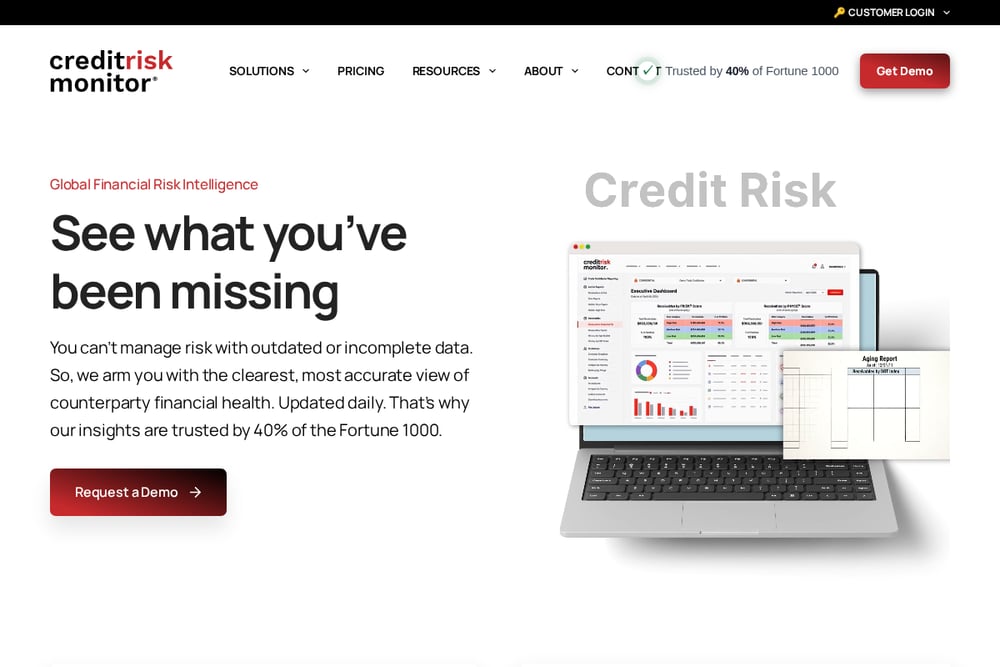 A screenshot of the CreditRiskMonitor website.
CreditRiskMonitor runs web-based risk platforms built around counterparty financial health. Its CreditRiskMonitor and SupplyChainMonitor products track public companies and millions of private ones, drawing on national registries, partner data, and its own trade exchange. The Trade Contributor Program is the differentiator: participating firms feed in accounts receivable data that sharpens everyone's view of private-company risk. The company says it is trusted by 40% of the Fortune 1000, which tells you something about enterprise adoption. If your credit team already lives in trade data, this is a natural fit.
#2 TMR Data | Economic Intelligence for Investors and Analysts
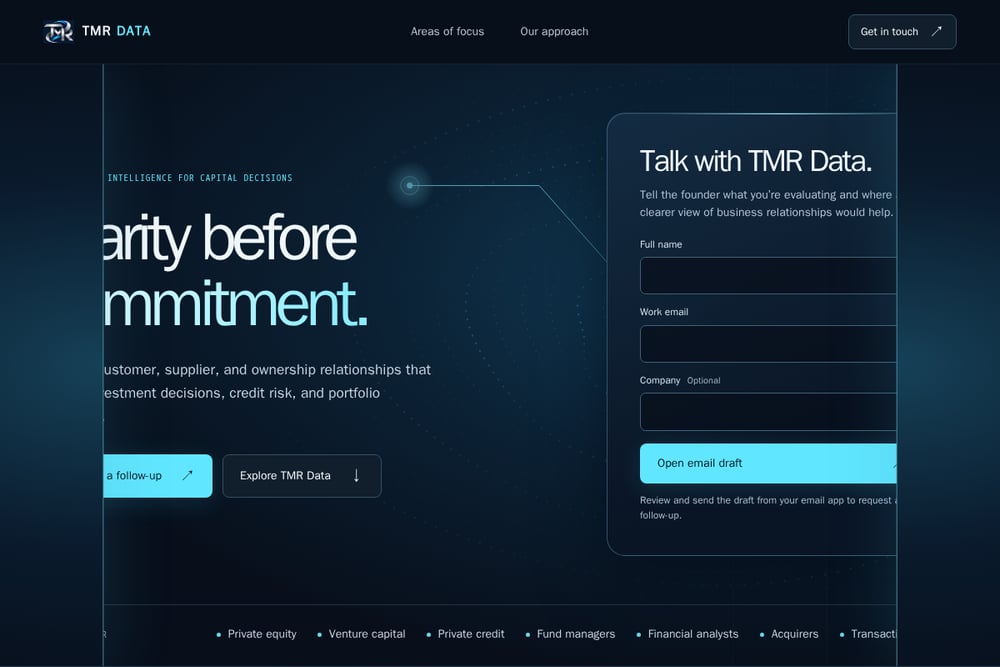 A screenshot of the TMR Data | Economic Intelligence for Investors and Analysts website.
TMR Data is built for the moment before you commit capital. It maps customer, supplier, and ownership relationships so you can see where exposure actually concentrates. The platform separates customer accounts that roll up to a single parent, flags single-source suppliers that keep critical operations running, and surfaces cases where a customer and a supplier sit under the same corporate group. It is aimed at private equity, venture capital, private credit, fund managers, acquirers, and transaction advisors. Founder-led and follow-up driven, it invites you to describe what you are evaluating before a conversation begins.
#3 KBRA Financial Intelligence (KFI)
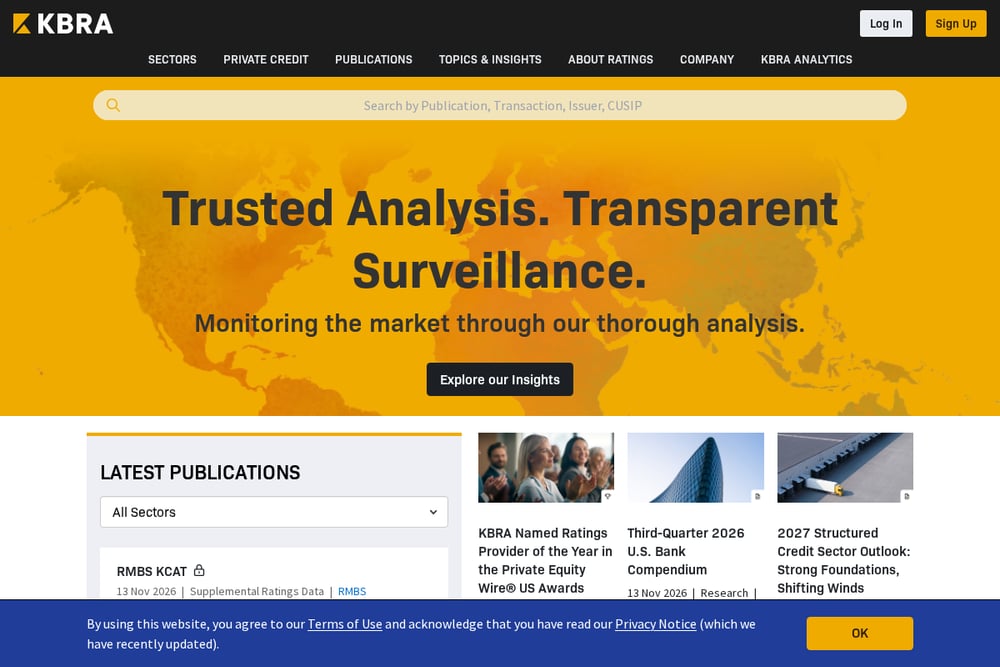 A screenshot of the KBRA Financial Intelligence (KFI) website.
KFI turns bank data into strategic intelligence. The platform covers more than 10,000 US banks and credit unions, with over 500,000 KFI scores produced since 2013 and 35+ years of regulatory data behind it. You get peer benchmarking, counterparty risk scores, and portfolio monitoring in a web application and Excel add-in. It is used by depository institutions, investors, insurers, government agencies, and corporates. If your exposure runs through financial institutions, KFI gives you depth that generalist platforms cannot match.
#4 AIR Platforms
 A screenshot of the AIR Platforms website.
AIR Platforms pitches itself as AI-native credit intelligence, and the pitch is about speed. Issuer fundamentals move daily, but most credit views refresh quarterly. AIR recalibrates continuously, covering 500k+ private issuers beyond the rated universe and scoring $11T+ in corporate debt daily. Its case study on Wolfspeed is telling: a CCC-equivalent risk score assigned in 2019, years before the company's 2025 Chapter 11 restructuring. The platform is used by CLO managers, credit funds, hedge funds, and global banks. If early warning matters more to you than static reports, this is worth a look.
#5 Counterparty Insight
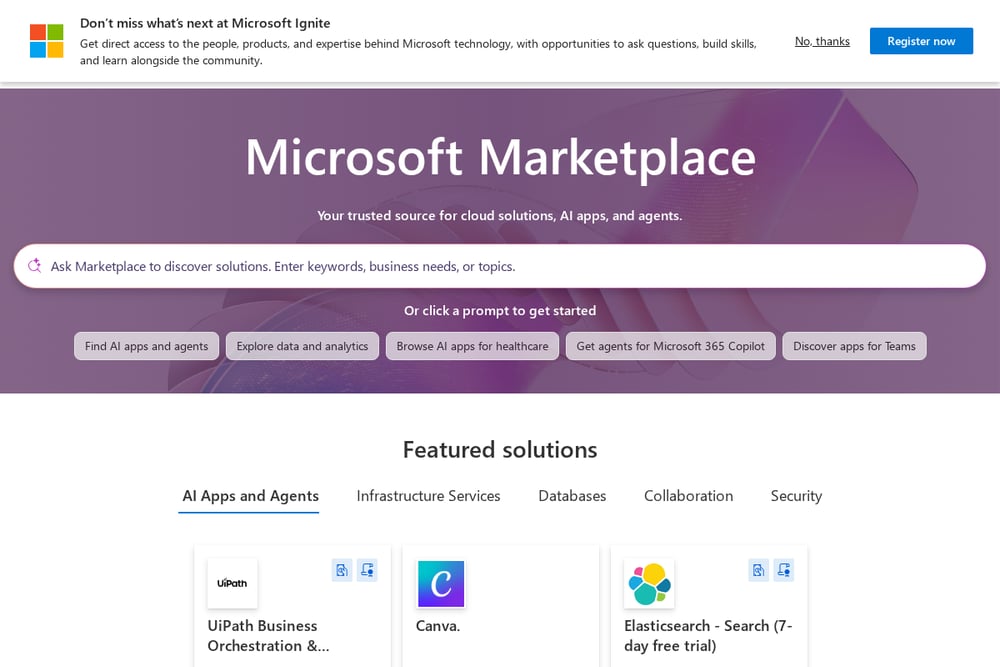 A screenshot of the Counterparty Insight website.
Counterparty Insight offers a unified interface for FDIC Call Reports, FFIEC, NCUA, and SEC filings. It combines quantitative risk ratings, regulatory data integration, and AI-driven research in one platform. The Microsoft Marketplace add-in lets you pull that intelligence directly into your documents and spreadsheets. Plans run from Free through Enterprise, with features varying by tier. It is a practical choice for institutions that monitor counterparty credit risk and want regulatory data without juggling a dozen sources.
How to Choose the Right Platform
Start with the question you actually need answered. If you are underwriting a borrower, you need counterparty financial health and early warning signals. If you are evaluating an acquisition, you need ownership and customer concentration mapping. If you are monitoring a portfolio, you need alerts and refresh frequency.
Then check the data sources against your universe. Platforms built on trade contributor networks shine on private companies. Regulatory-data platforms shine on banks and credit unions. AI-native tools shine when you need daily recalibration across a broad issuer set.
Finally, test the workflow. Can you export to Excel, hit an API, or receive alerts? Does the platform explain how its scores are derived? And does the team behind it understand your use case well enough to have a real conversation before you sign?
Building a Relationship Risk Workflow
You do not need to replace your existing process. Layer relationship intelligence on top of it.
Step one: pull your current portfolio or deal pipeline into a single list of counterparties. Step two: run each name through a platform that maps ownership and customer concentration, so you can flag accounts that roll up to a shared parent. Step three: overlay supplier dependency data for any business with critical operations. Step four: set alerts for ownership changes, new filings, or deteriorating risk scores. Step five: route flagged names to your deal or credit committee with the relationship map attached.
The goal is simple. Catch the hidden dependency while you still have leverage, not after the deal closes.
The Bottom Line
Relationship risk is not a niche concern anymore. It is the difference between a diversified revenue base and one that collapses when a single parent group pulls back.
The five platforms here cover the spectrum: trade-driven counterparty monitoring, relationship mapping for capital decisions, bank-level benchmarking, AI early warning, and regulatory data consolidation. Match the tool to the question, test the workflow, and insist on transparency in the data.
Clarity before commitment beats cleanup after the fact. Pick the platform that gets you there fastest.