
Running a shop or online store in Nigeria shouldn't mean guessing what's in stock or losing orders in a crowded WhatsApp inbox. These five systems help you fix that.
Why Business Automation Is Having a Moment in Nigeria
Nigerian small businesses are moving fast onto digital tools, and the reasons are practical. Manual stock records get lost, orders slip through the cracks, and customer messages pile up faster than any one person can answer them. Software closes those gaps.
The market has responded with a mix of local platforms and consulting-led providers. Some sell you an app. Others build a system around how your business already works. Both approaches have merit, and the right pick depends on whether you want a tool to learn or a partner to set things up with you.
What matters most is fit. Unreliable power, data costs, and tight budgets are real constraints here. The systems worth your time are the ones designed with those limits in mind, not the ones that assume perfect conditions.
How We Evaluated These Systems
We looked at the same factors across every provider so you can compare fairly.
Service scope came first. Some providers focus tightly on inventory and point of sale, while others bundle customer replies, reporting, and social media growth into one connected setup. Broader scope suits businesses that want a single system; narrower scope suits those who only need stock control.
Local fit mattered next. Language support, offline resilience, and pricing built for Nigerian realities all counted. Klakpad speaks directly to unreliable internet and affordability. BizBot AI Solutions designs around power cuts, data costs, and conversations in Hausa, Pidgin, and English.
Pricing clarity and onboarding rounded things out. Obejor Dev lays out automation in clear trigger-to-action steps. Basecode publishes practical buying guides. QClose Inventory keeps its feature list transparent. Each stood out on a different dimension, and none of these factors is a verdict on its own.
Here's a quick look at all five before we dig into each one. Match the description to your situation, then read the full breakdown below.
| Provider | Best For |
|---|---|
| Klakpad | Businesses that want inventory software plus practical guidance |
| BizBot AI Solutions | African businesses that want a hands-on, locally grounded system setup |
| QClose Inventory | Retailers and distributors managing stock across multiple locations |
| Obejor Dev | Teams drowning in manual reminders and repeated status checks |
| Basecode | Growing businesses ready to implement established platforms with expert help |
The Five Systems in Detail
#1 Klakpad
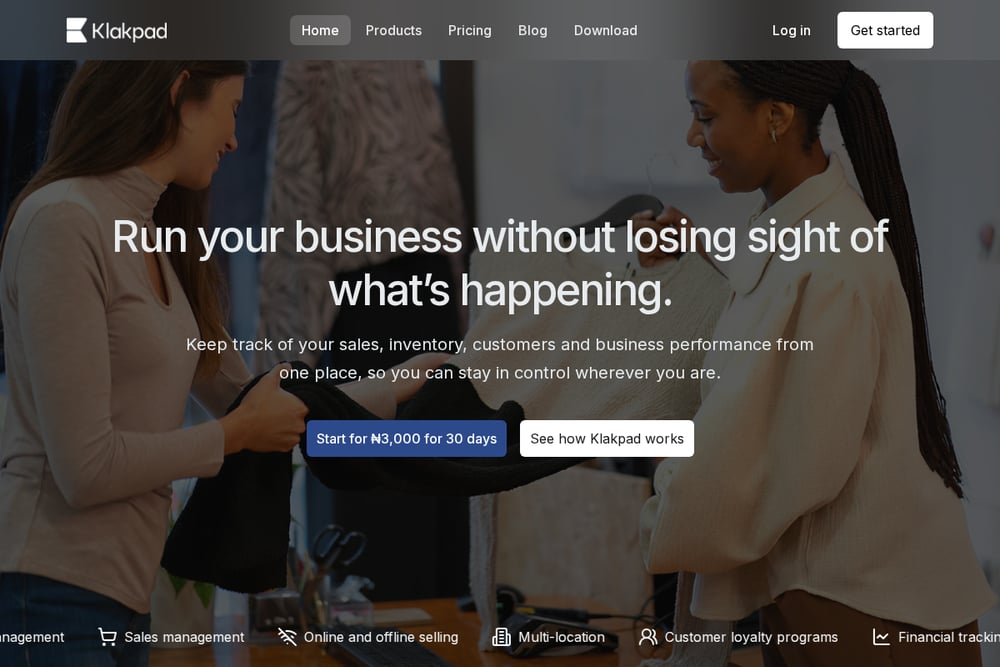 A screenshot of the Klakpad website.
Klakpad is a business process management platform built for African entrepreneurs, with a strong focus on inventory automation. Its blog is a genuinely useful resource, covering topics like how pharmacies can automate stock tracking to avoid expired medications and how to choose the right software for a Nigerian business. The company's Sella product is positioned as a locally developed solution that tackles unreliable internet and affordability head-on. If you want a platform that pairs software with practical education, this is a solid starting point. You can browse their guides at klakpad.com/blog before committing to anything.
#2 BizBot AI Solutions
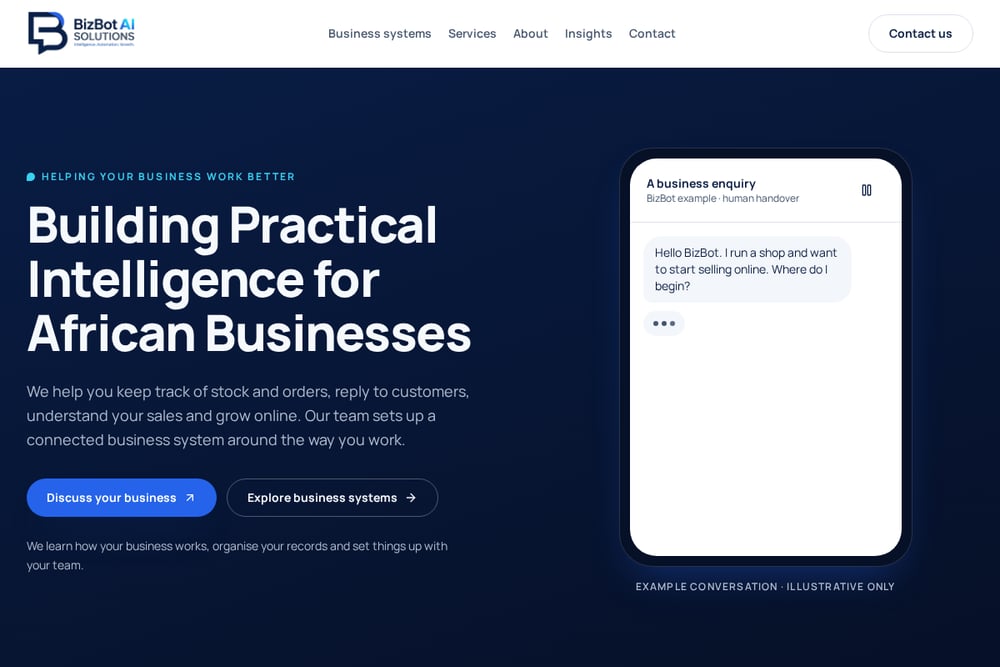 A screenshot of the BizBot AI Solutions website.
BizBot AI Solutions Ltd is a Kaduna-based business-systems provider that builds connected setups around how your business already runs. Its five services cover customer replies, sales and business reports, stock and order tracking, social media growth, and the step-by-step move away from manual records. What sets it apart is the local grounding: conversations in Hausa, Pidgin, and English, shop and online stock kept in one record, and design around power cuts, data costs, and real budgets. The team works directly with your staff through a four-step process, and work, costs, and checks are agreed before anything starts. It also references Deedat, a business assistant that helps you read your figures and choose a next step.
#3 QClose Inventory
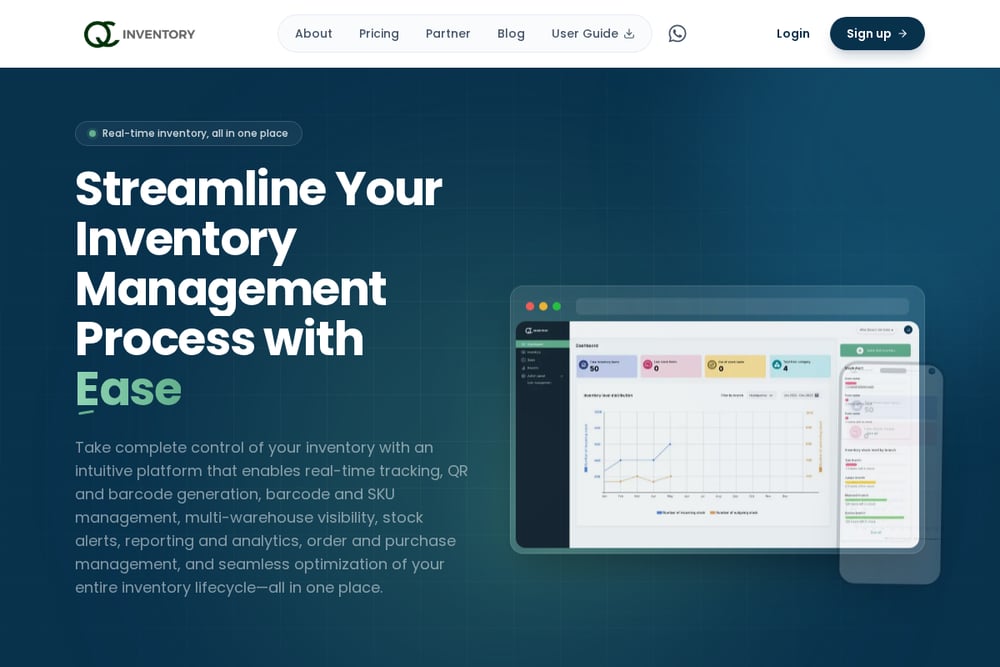 A screenshot of the QClose Inventory website.
QClose Inventory is a cloud-based platform aimed squarely at stock control and warehouse operations. Its feature set is clear and specific: real-time inventory tracking, multi-warehouse management, barcode and QR code support, automated low-stock alerts, purchase order management, and detailed reporting. That combination suits retail stores, warehouses, and distribution businesses that need visibility across locations. The company makes a straightforward case that manual stock management leads to misplaced items, inaccurate counts, and delayed fulfillment. If your core problem is knowing exactly what you have and where it sits, this is a focused answer.
#4 Obejor Dev
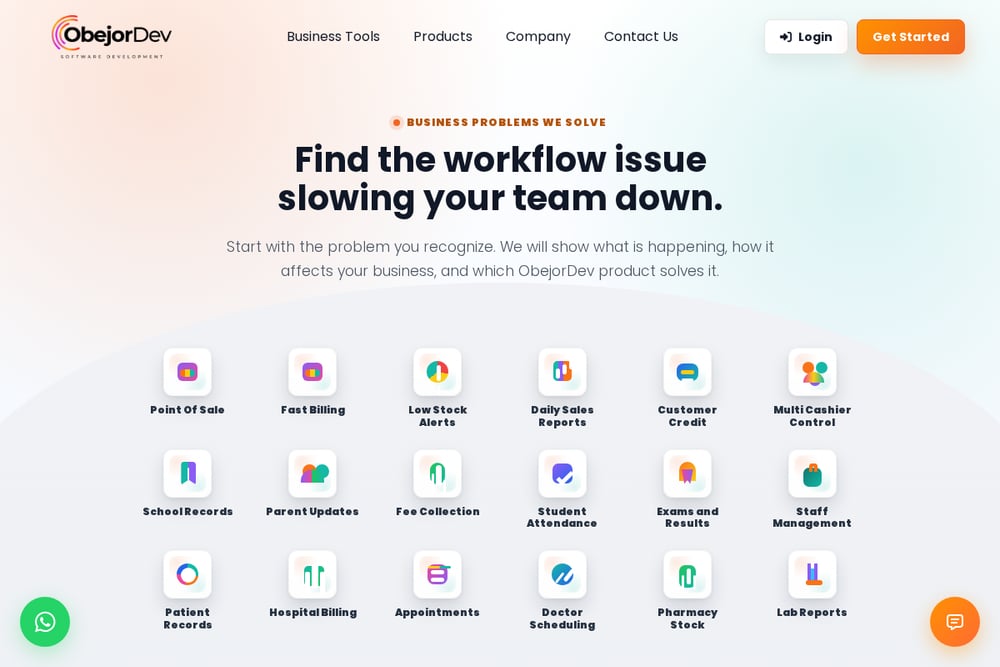 A screenshot of the Obejor Dev website.
Obejor Dev approaches automation from the workflow side rather than the inventory side. Its business automation offering focuses on removing repetitive work: auto reminders for follow-ups, notifications when stock or billing needs attention, and reports generated from real operational data. The company frames automation in three clear steps, from defining a trigger to assigning an action to tracking the result. It also sells point of sale and inventory management tools alongside CRM and operations software. This is a good fit if your bottleneck is manual chasing and handoffs between staff rather than stock accuracy alone.
#5 Basecode
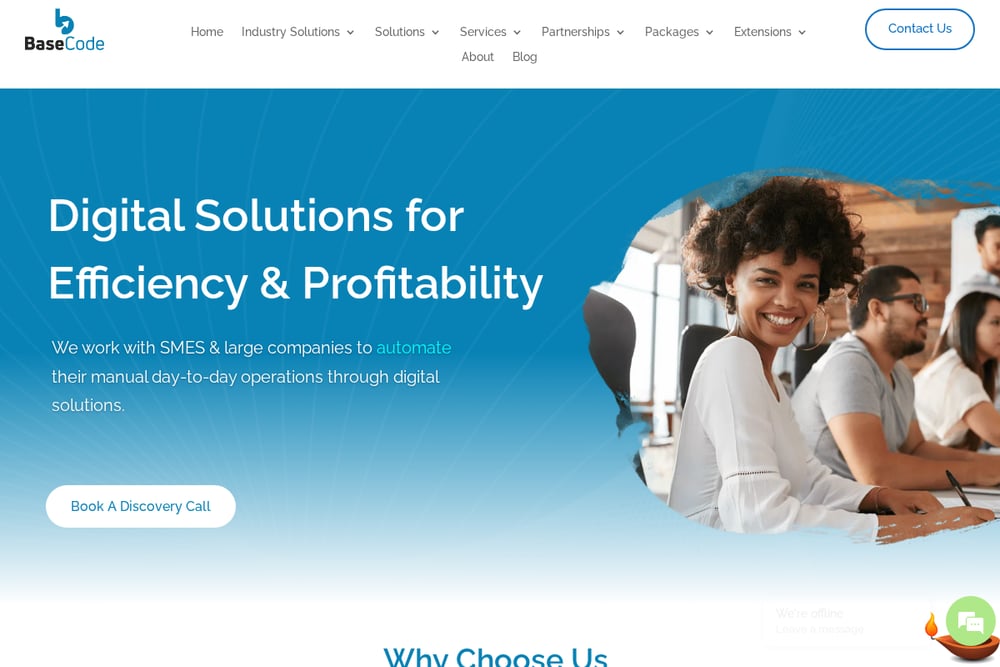 A screenshot of the Basecode website.
Basecode is a consulting-led technology partner offering inventory management systems alongside CRM, ERP, HR, and marketing solutions. It works with platforms like Zoho, Salesforce, and Google Workspace, which makes it a fit for businesses that want established software configured properly rather than a homegrown tool. Its published guide on the top features to look for in an inventory solution for Nigerian businesses is a helpful primer on avoiding overstocking, stockouts, and financial losses. The trade-off is that you're buying implementation expertise, so expect a more involved engagement. For growing companies ready to formalize their systems, that structure can be worth it.
How to Pick the Right Fit for Your Business
Start with your actual bottleneck. If stock accuracy is the problem, a focused tool like QClose Inventory gets you there fastest. If customer messages and scattered records are the issue, a connected setup like BizBot AI Solutions addresses more of the picture at once.
Then think about how much help you want. Buying software is one path. Having someone configure it around your staff and processes is another. Basecode and BizBot AI Solutions both lean toward the hands-on end, while Klakpad and QClose Inventory give you more of a self-serve product experience.
Finally, test the local realities. Ask how the system handles poor connectivity, what languages it supports, and what the total cost looks like after setup. Get the scope and price agreed in writing before you begin. That single step saves more headaches than any feature comparison.
A Simple Automation Workflow You Can Start With
You don't need a big budget to begin. Pick one repetitive task and automate it first.
Step one: choose a trigger. A sale, a low-stock threshold, or a new customer message all work. Step two: define the action. Send a restock alert, log the order, or reply with your current price list. Step three: track the result so you can see what happened and what's still pending.
Run that loop for a month. Once it's reliable, add the next task. This is the same trigger-to-action thinking Obejor Dev describes, and it's how BizBot AI Solutions moves businesses off manual records step by step. Small, consistent automation beats a big overhaul you never finish.
The Bottom Line
There's no single winner here, because these five solve different problems. Klakpad pairs inventory software with real education. BizBot AI Solutions builds a connected, locally grounded system around your staff. QClose Inventory delivers focused, multi-location stock control. Obejor Dev untangles manual workflows. Basecode brings implementation expertise for established platforms.
Match the tool to your bottleneck, confirm the costs upfront, and start with one automated task. Do that, and you'll spend less time chasing records and more time growing.