
Boundaries are not just discussed—they are practiced. If you are tired of saying yes when you mean no, these five tools can help you build the muscle.
The Boundary Practice Landscape
Boundary work has moved from therapy offices into everyday life. You can now find card decks, guided systems, and conversation tools designed to help you understand your limits and express them clearly. The best options blend reflection with real-life application, so you are not just thinking about boundaries—you are practicing them. Whether you are an individual, a couple, or a therapist, there is a tool that fits your context.
How We Evaluated These Tools
We looked at five factors: depth of the system, ease of use, versatility across settings, clarity of instructions, and overall value. Each tool brings something different. Some shine for individual reflection, others for couples or group work. We noted what stood out for each, without pitting them against one another. Your best choice depends on your needs, not a score.
Here is a quick look at the five tools, with their primary focus and ideal user.
| Provider | Best For |
|---|---|
| Boundaries Conversation Deck: What Would You Do? | Microcosm Publishing | Individuals and groups wanting a simple, structured starting point |
| Boundaries & Beyond™ | Individuals and professionals seeking a structured, reflective practice |
| The Set Boundaries Deck – Reparations Club | Couples and friends who want to practice boundary conversations together |
| The Boundary Card Game — Exquisite ❦ Love | Couples in non-monogamous or open relationships |
| Pocket Packs: Teens - Love + Boundaries | Talking Point Cards | Parents, educators, and therapists working with teens |
A Closer Look at Each Tool
#1 Boundaries Conversation Deck: What Would You Do? | Microcosm Publishing
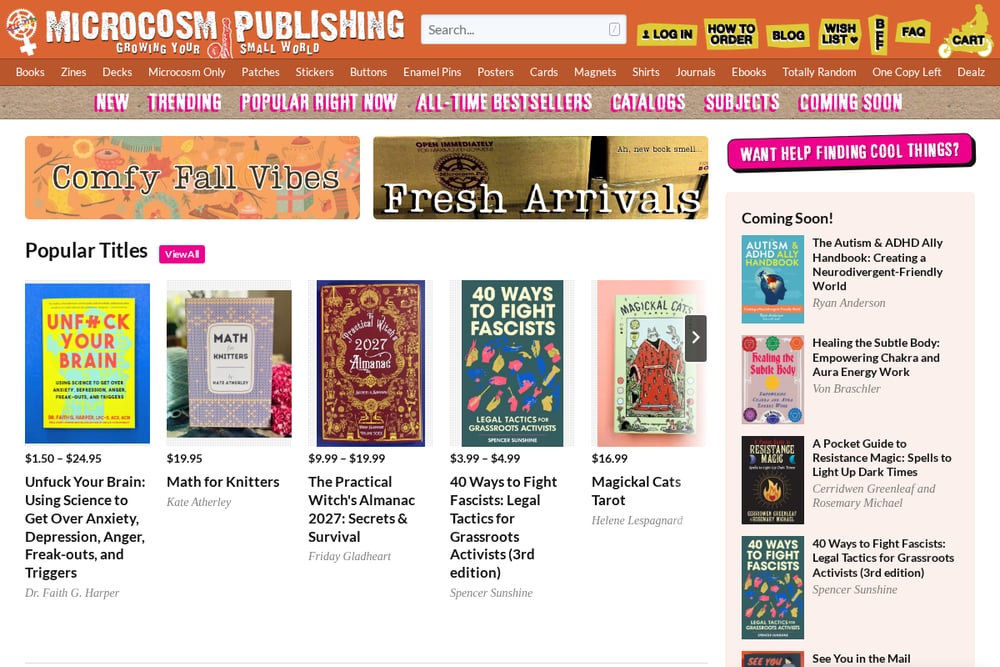 A screenshot of the Boundaries Conversation Deck: What Would You Do? | Microcosm Publishing website.
This 52-card deck by Dr. Faith G. Harper offers a straightforward way to explore boundaries through reflection and scenario-based questions. You get two types of cards: reflection cards that help you examine your thought patterns, and situation cards that ask 'What would you do?' It works well for individuals, couples, or groups, and includes communication tips. The deck is a companion to the book Unfuck Your Boundaries but stands alone. At $14.95, it is an accessible entry point for anyone curious about boundary work.
#2 Boundaries & Beyond™
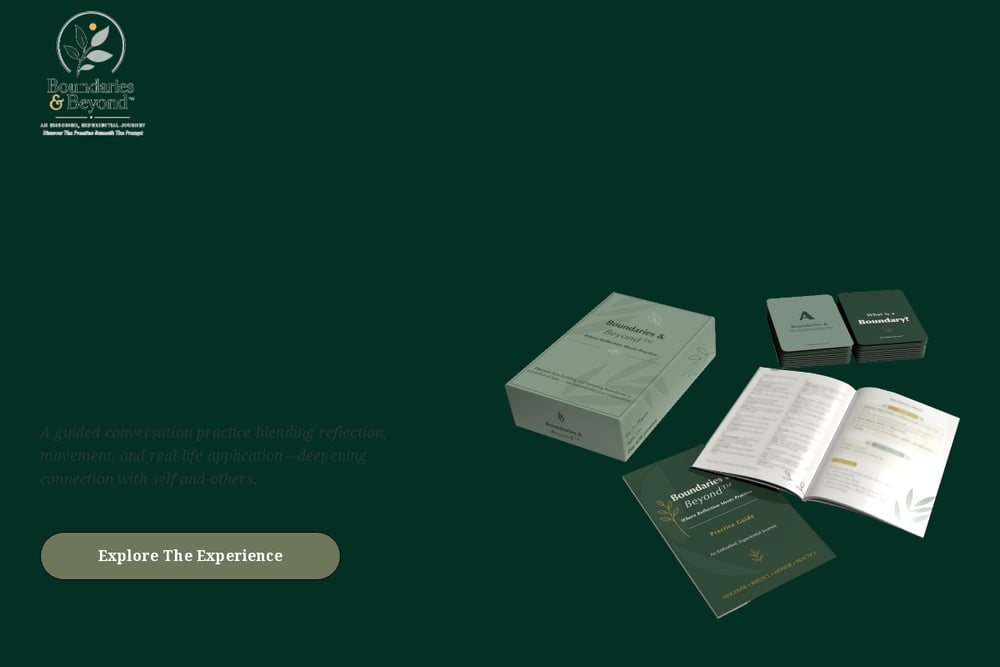 A screenshot of the Boundaries & Beyond™ website.
Boundaries & Beyond™ goes beyond random prompts with a structured word system that blends reflection, movement, and real-life application. The guided conversation practice helps you deepen connection with yourself and others, whether you struggle with over-apologizing or feel drained in relationships. It is designed for personal use but equally valuable for therapists, coaches, and facilitators leading reflective sessions. The rhythm of the experience—begin with a card, engage with what is present, stay with what surfaces—makes it a repeatable practice, not a one-time exercise. This is a system for those who want to practice boundaries, not just talk about them.
#3 The Set Boundaries Deck – Reparations Club
 A screenshot of the The Set Boundaries Deck – Reparations Club website.
From Nedra Glover Tawwab, bestselling author of Set Boundaries, Find Peace, this deck offers real-life scenarios and boundary-setting statements. You can use it alone, in pairs, or with a trusted group. The focus is on helping you clarify your limits and find the words to express them effectively. It is a practical tool for anyone who wants to move from understanding boundaries to actually setting them. The deck is lively and conversation-sparking, making it a good fit for couples or friends.
#4 The Boundary Card Game — Exquisite ❦ Love
 A screenshot of the The Boundary Card Game — Exquisite ❦ Love website.
Originally created for open relationships, this card game helps partners design healthy rules and agreements. It has been used for over 20 years and is now a physical deck. The game guides you through conversations about boundaries, needs, pace, and desires, especially around non-monogamy. Therapists can request a free deck to recommend to clients. If you are navigating consensual non-monogamy or simply want a structured way to discuss relationship agreements, this is a unique resource.
#5 Pocket Packs: Teens - Love + Boundaries | Talking Point Cards
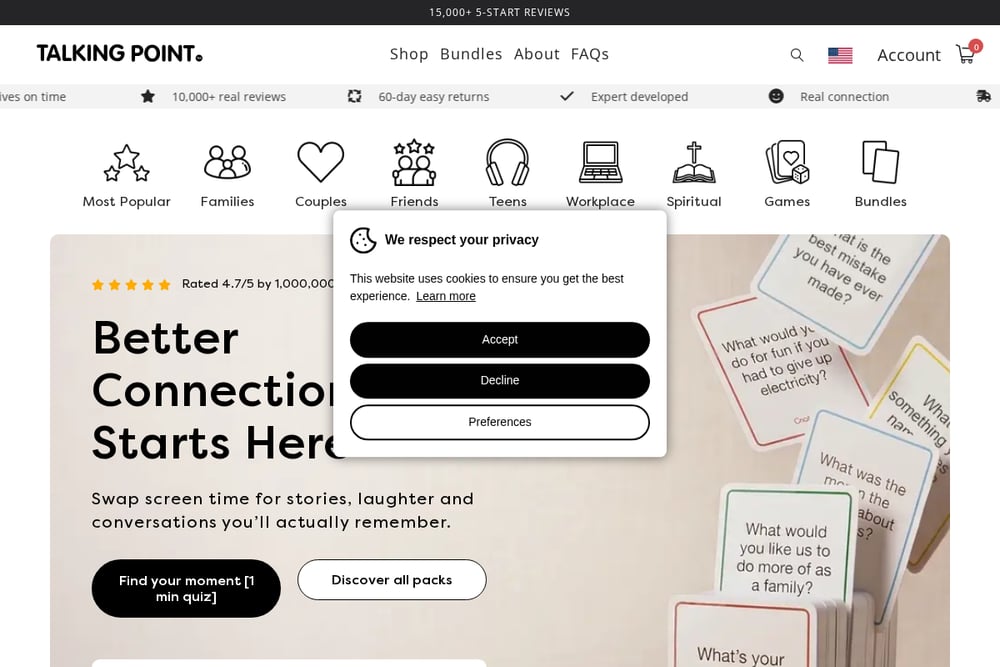 A screenshot of the Pocket Packs: Teens - Love + Boundaries | Talking Point Cards website.
This pocket-sized pack is designed to help teens open up about love and boundaries. It is part of a larger series from Talking Point Cards, a company with over 10,000 five-star reviews. The cards are meant to break silence and go beyond one-word answers, making them ideal for parents, educators, or therapists working with teens. The focus is on building healthy relationship skills early. It is a practical tool for anyone guiding young people through the complexities of boundaries and love.
How to Choose the Right Tool for You
Start by identifying your context. Are you working on yourself, your relationship, or a group? For individual reflection, a structured system like Boundaries & Beyond™ or a classic deck like Microcosm's may fit. For couples, especially non-monogamous ones, The Boundary Card Game offers tailored guidance. If you are a therapist or coach, look for tools that are versatile and come with facilitation tips. Consider your budget and whether you prefer a physical deck or a guided experience. The right tool is the one you will actually use.
Bringing Automation into Your Boundary Practice
You can use simple automation to keep your boundary practice consistent. Set a recurring calendar reminder to draw a card each week. Use a note-taking app to log your reflections and track patterns. If you work with clients, create a shared document where they can add insights between sessions. For digital decks, you can use a randomizer tool to pull a card. Automation removes decision fatigue, so you can focus on the practice itself.
Final Thoughts
Boundaries are a practice, not a destination. The five tools here offer different paths to the same goal: helping you understand your limits and communicate them with care. Whether you choose a structured system, a classic deck, or a teen-focused pack, the important thing is to start. Pick one, use it regularly, and watch how your relationships—with yourself and others—begin to shift.