
You drilled the bore. Now you need to know how much water it can actually deliver, and how the aquifer will respond when you push it. These five services help you answer that question with data instead of guesswork.
Why Pump Testing Is the Step Most Bore Owners Skip
A bore is only as useful as its tested yield. Without a proper test, you are guessing at the pumping rate, the pump setting, and the drawdown you will see after a season of use. That guess gets expensive when irrigation schedules slip, livestock go dry, or a regulator asks for evidence you do not have. Test pumping closes that gap. It combines step-drawdown tests, constant rate tests, and recovery monitoring to reveal how the aquifer behaves under stress. From there, analysis of well efficiency, transmissivity, and storativity turns raw numbers into a recommended long-term pumping rate. The sector now leans on smart telemetry too, holding flow steady and logging water levels in real time so results are defensible. Whether you are commissioning a community bore, sizing a mine supply, or checking an existing irrigation well, the quality of the test design and the clarity of the final report matter as much as the pumping itself.
How We Compared These Services
We looked at the same factors for every provider. First, service scope: does the provider plan the test, run it, analyse the data, and report on it, or only handle one slice? Second, analytical depth: are methods matched to the aquifer type, including confined, leaky, and unconfined systems, plus boundary and directional flow effects? Third, reporting clarity: can an owner and a regulator both read the output and act on it? Fourth, instrumentation: does the provider use steady-rate test pumps and telemetry that log flow and water level throughout? Fifth, sector fit: does the provider speak to water supply, irrigation, mining, and community bores? PureTech Hydro stood out for end-to-end test design through final report with smart pump telemetry built in. BD Water stood out for practical flow testing tied to irrigation and livestock needs. Igne stood out for pairing test pumping with licensing support and broader drilling capability. Wallace Irrigation stood out for a documented, compliance-aware step-by-step process. Umvoto stood out for connecting test pumping to aquifer-scale hydrogeology and sustainable abstraction limits.
Here is the short version. Each entry below covers what the provider does, who it suits, and where it fits in a pump testing program. Use it to shortlist, then dig into the detail.
| Provider | Best For |
|---|---|
| BD Water | Irrigation and livestock bore owners who need a clear yield figure |
| PureTech Hydro · Pump testing and groundwater analysis | Owners who want test design, analysis, and a regulator-ready report in one place |
| Igne | Projects that need test pumping tied to licensing and drilling support |
| Wallace Irrigation | Commercial operators who want a documented, compliance-aware test process |
| Umvoto | Users who need sustainable abstraction limits and aquifer-scale insight |
The 5 Services in Detail
#1 BD Water
 A screenshot of the BD Water website.
BD Water treats flow testing as the cure for bore mystery. The team installs a submersible test pump selected to your bore specs, then runs constant rate or step tests while monitoring flow and water levels over time. That gives you a clear picture of how much water you can confidently abstract and whether the bore can sustain your irrigation or livestock demand. The process is straightforward but thorough, and it is built for commercial and agricultural water users who need answers fast. If you are watering crops, keeping stock hydrated, or supplying public open space, this is a practical starting point. See how they frame it on their flow testing page.
#2 PureTech Hydro · Pump testing and groundwater analysis
 A screenshot of the PureTech Hydro · Pump testing and groundwater analysis website.
PureTech Hydro runs the full arc: plan, pump, analyse, report. Tests are designed around the bore, the aquifer, and your purpose, covering step-drawdown tests, constant rate tests, recovery monitoring, and observation bores. Analysis uses proven analytical methods and numerical modelling matched to the aquifer, including well efficiency and well losses, transmissivity and storativity, and confined, leaky, and unconfined systems. Their smart pump telemetry holds the rate steady and logs flow and water level throughout, sent back for checking as the test runs. You finish with a recommended long-term pumping rate and pump setting, plus the drawdown you can expect over time, in a report written for owners and regulators alike. It suits water supply, irrigation, mining, and community bores.
#3 Igne
 A screenshot of the Igne website.
Igne brings test pumping into a much wider water well practice. The service sits alongside hydrogeological assessments, licensing applications, drilling and lining, water treatment, and water analysis, so a test result can feed straight into a permit or a pump installation decision. They also offer real time digital monitoring systems and borehole pump work, which helps when the test needs to inform long-term operations. For projects where the bore is part of a larger consenting or development package, that integration saves coordination effort. It is a strong fit when you need the test to stand up in a licensing file.
#4 Wallace Irrigation
 A screenshot of the Wallace Irrigation website.
Wallace Irrigation lays out the professional bore test as a structured, step-by-step evaluation. Their write-up walks through pre-test inspection and borehole logging, static water level measurement, and a preliminary flow assessment that flags turbidity, gas bubbles, discolouration, or sediment early. They reference guidelines under AS/NZS 5667.11 and the expectations of water authorities and local councils, which matters if compliance is on your mind. The emphasis on calibrated instruments and comprehensive data logging gives you confidence in the numbers. For commercial operators in mining, agriculture, and industrial settings, this is a useful benchmark for what a proper test should include.
#5 Umvoto
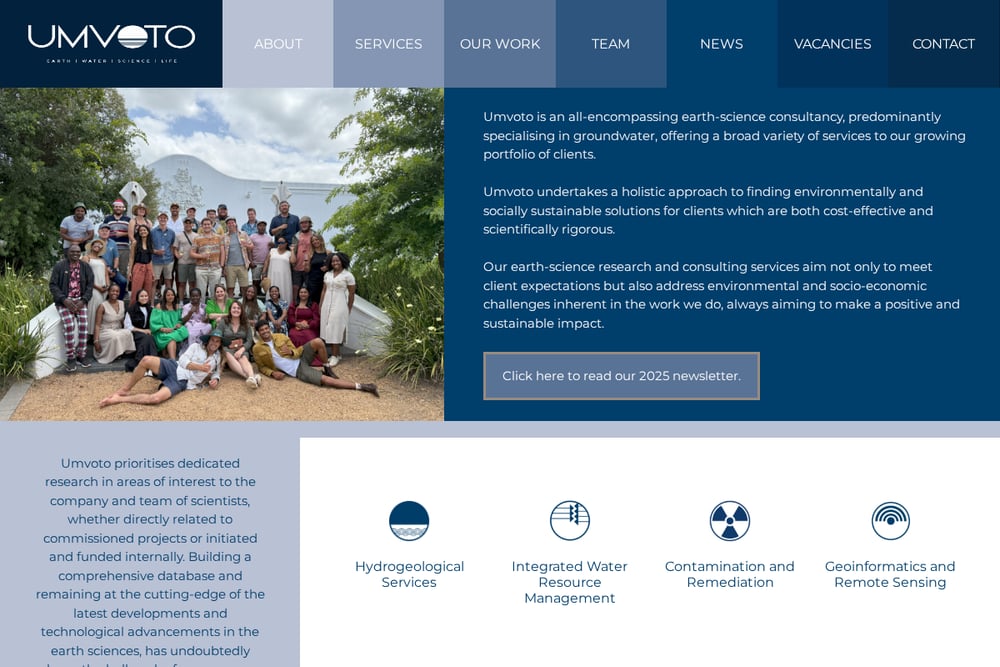 A screenshot of the Umvoto website.
Umvoto frames test pumping as the step groundwater users most often neglect after drilling. Their position is that testing reveals the yield capabilities of both the borehole and the wider aquifer, and that it should happen before the pump is selected and production begins. That framing leads naturally to setting safe or sustainable abstraction rates and operational pumped water levels, which protects the resource over time. The practice sits within a broader hydrogeology and integrated water resource management offering, so results can be read at aquifer scale rather than bore scale alone. It is a good match when sustainability limits and long-term aquifer behaviour are the real questions.
How to Choose the Right Testing Partner
Start with the question you need answered. If you want a single number for how much water your bore can supply, a focused flow testing service gets you there quickly. If you need a defensible pumping rate for a licence, a regulator, or a long-term supply contract, look for a provider that designs the test, analyses the data with methods matched to your aquifer, and writes a report both owners and regulators can read. Check the instrumentation. A test pump that holds the rate steady and logs flow and water level throughout produces cleaner data than manual dips. Ask which aquifer type you are dealing with and whether the provider handles confined, leaky, and unconfined systems, plus boundary and directional flow effects. Confirm what you receive at the end: charts, results, a recommended pumping rate, and a pump setting. Finally, match the provider to your sector. Irrigation, mining, community supply, and licensing-driven projects each put different weight on speed, documentation, and analytical depth.
Where Smart Telemetry Fits In
Modern test pumping is not a person with a stopwatch. A smart test pump holds the flow rate steady through the step and constant rate stages, then keeps logging through recovery. Flow and water level data stream back for checking while the test is still running, so a problem shows up in hours rather than after the report is written. That continuous record feeds the analysis directly, whether the method is analytical or numerical modelling. The payoff for you is a cleaner dataset, fewer repeat tests, and a recommended pumping rate you can defend. When you compare providers, ask how the data is captured and whether you get the underlying record alongside the report.
The Bottom Line
Pump testing is the difference between hoping your bore delivers and knowing it will. The five services here cover the range: practical flow testing for irrigation, end-to-end test design and analysis with telemetry, licensing-integrated testing, a documented compliance process, and aquifer-scale sustainability work. Match the provider to the decision in front of you, insist on steady-rate instrumentation and a clear report, and you will walk away with a pumping rate you can plan around.