A cloned hull number can turn your dream boat into a paperwork nightmare. These five services help you check a HIN, spot duplicates, and buy with confidence.
The quiet rise of hull number verification
Boat cloning is a small but stubborn problem: a stolen or damaged vessel gets a fresh identity, and the buyer inherits the risk. HIN verification services range from free community registers to paid history reports and official police searches. Each covers a different slice of the puzzle, so knowing what each one actually checks matters more than the price tag.
How we compared them
We looked at four things: what the service actually checks (duplicate HINs, theft, damage, title), how clear the pricing is, how easy it is to run a search, and how well it fits a private buyer or owner. Free tools and paid reports were judged on their own terms, not against each other.
Here is the short version before the detail. Each entry below covers a different angle on hull number verification, from a free duplicate-HIN register to paid history reports and official police searches.
| Provider | Best For |
|---|---|
| Boat History Report | Buyers who want a full damage and title history before purchase |
| CloneBoat – find out if your boat has been cloned | Owners who want a free early-warning system on their own HIN |
| Boat-Alert | Budget-conscious buyers who want broad database coverage |
| Canadian Police Information Centre - Search boats | Canadian buyers who need an official police check |
| StolenBoats.info | Quick visual checks against reported stolen vessels |
The five services in detail
#1 Boat History Report
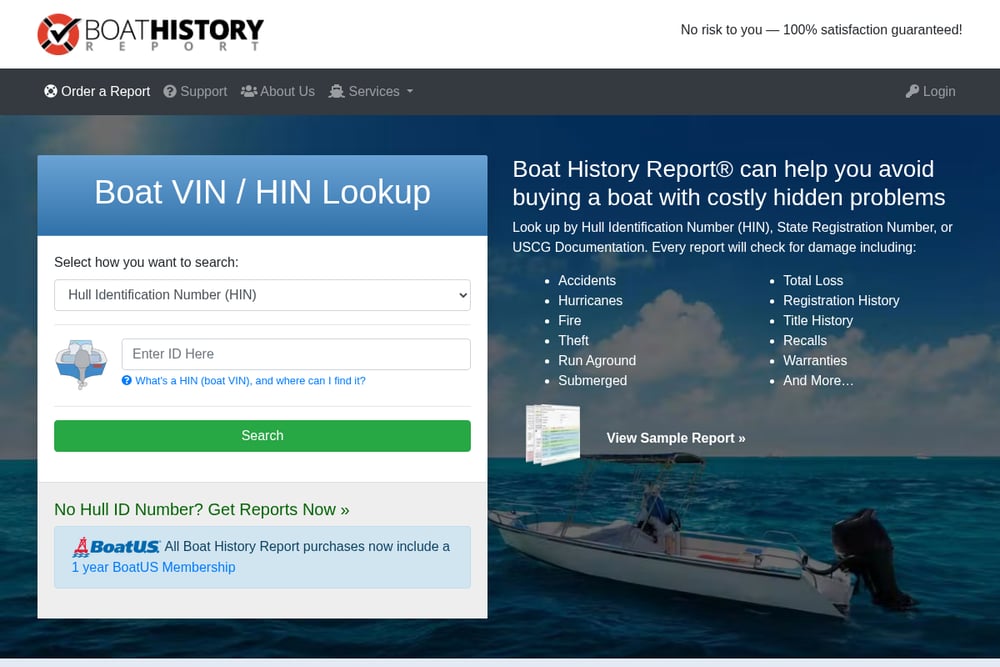 A screenshot of the Boat History Report website.
Boat History Report is the closest thing the marine world has to a Carfax. You search by HIN, state registration number, or USCG documentation number and get a report covering accidents, hurricanes, fire, theft, grounding, submersion, total loss, title history, recalls, and warranties. It is widely cited by Forbes and the Sun Sentinel, and the U.S. Coast Guard has named it to its National Boating Safety Advisory Committee. Every purchase includes a one-year BoatUS membership, and the site backs reports with a satisfaction guarantee. If you are about to hand over money for a used boat, this is the report to order first.
#2 CloneBoat – find out if your boat has been cloned
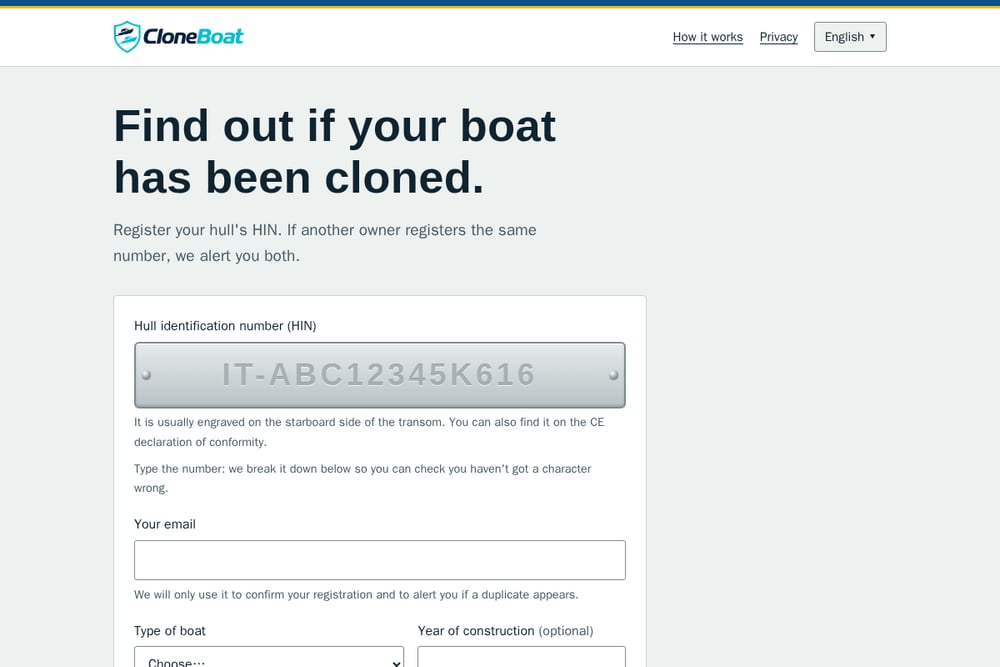 A screenshot of the CloneBoat website.
CloneBoat takes a different approach: it is a free, non-profit register built specifically to catch duplicate HINs. You enter the number engraved on the starboard side of your transom plus your email, confirm the link, and the register keeps watch. If another owner registers the same HIN, everyone involved gets an alert, and nobody sees anyone else's data. It works for any CE-marked boat, new or used, and you can delete your registration at any time. The site is refreshingly honest that a duplicate is not proof of cloning, which is why each alert explains what to check.
#3 Boat-Alert
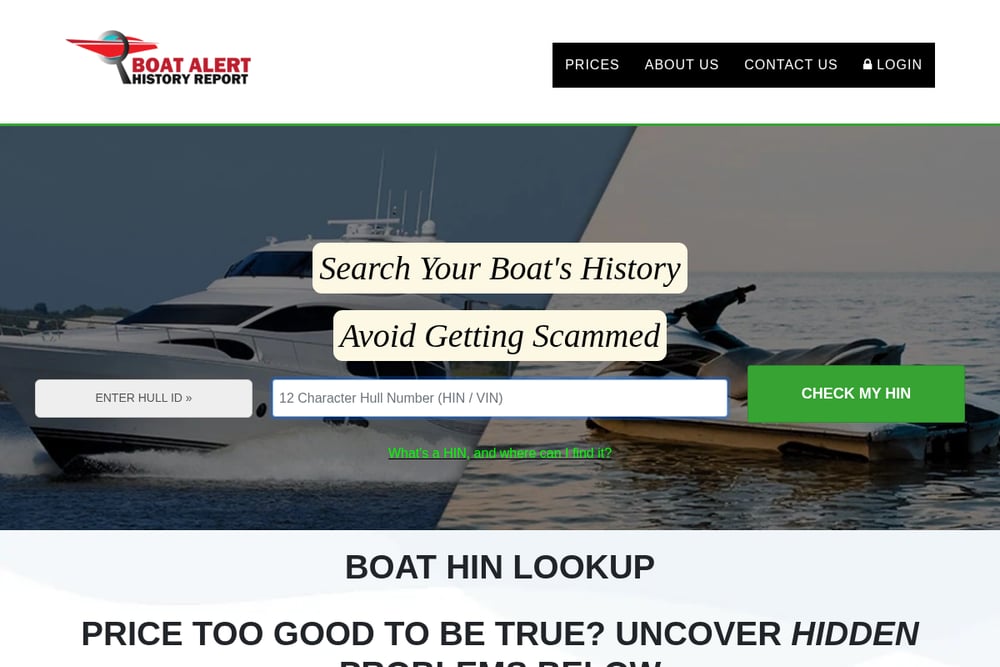 A screenshot of the Boat-Alert website.
Boat-Alert sells a nine-page HIN history report for $29.99, viewable instantly and backed by a money-back guarantee. It searches 90 public databases covering U.S. and Canadian accidents, theft, salvage and total loss, U.S. Customs imports, NMVTIS, recalls, auctioned vessels, and branded titles. You also get a full HIN decoder, a boat value calculator, and a 60-day share link you can send to a lender or insurer. The company says it has served more than 29,000 boaters and donates two percent of revenue to charity. It is a solid middle ground between a free register and a premium report.
#4 Canadian Police Information Centre - Search boats
 A screenshot of the Canadian Police Information Centre website.
The Canadian Police Information Centre runs an official search for boats by name, hull identification number, licence number, or registration number. It is a government service, so the data carries a weight that commercial reports cannot match. You must accept the terms of use before searching, and any positive result should be confirmed with your local police before you act on it. Searches may be shared with law enforcement agencies on request. If you are buying in Canada or importing from it, this is a mandatory stop.
#5 StolenBoats.info
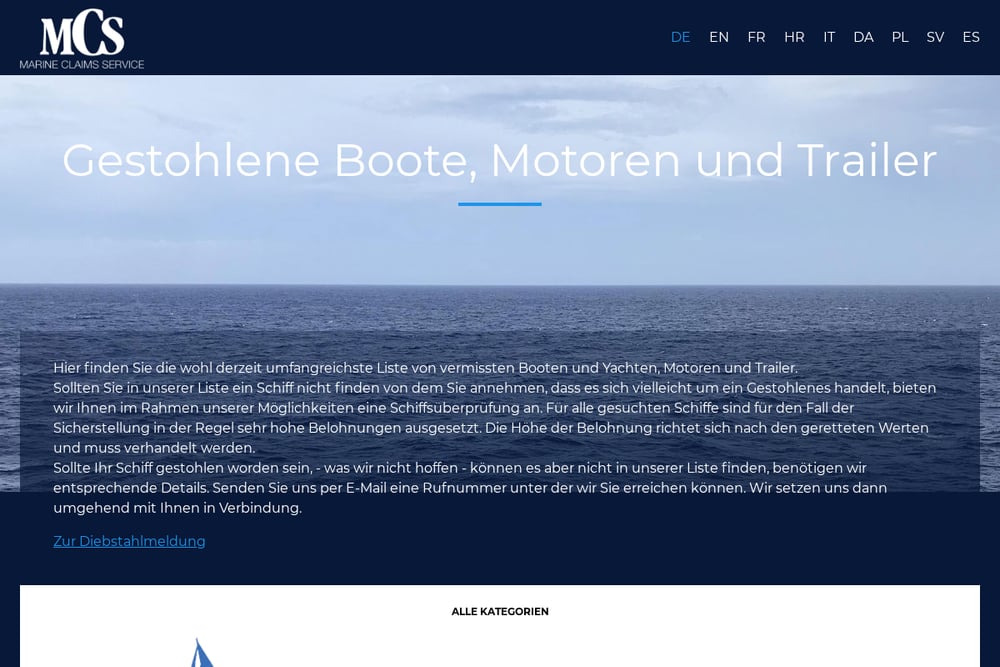 A screenshot of the StolenBoats.info website.
StolenBoats.info, run by Marine Claims Service, hosts one of the largest public listings of missing boats, yachts, engines, and trailers, with entries updated through November 2026. The listings are free to browse and free to submit, and the site offers a vessel verification check if you suspect a boat is stolen but cannot find it in the list. Rewards are offered for recovered vessels, negotiated against recovered value. It is not a formal registry, but it is a fast way to eyeball a suspicious hull before you commit.
How to pick the right check
Start with what you are trying to learn. If you already own the boat and want to know whether someone else is using your HIN, a free register like CloneBoat is the natural first move. If you are buying, pair a paid history report with an official police search where one exists. In Canada, the CPIC search is a must; elsewhere, check the equivalent national or state database. Then cross-check against a stolen-vessel listing like StolenBoats.info. No single source is definitive, so two or three together give you a real picture.
Building a repeatable pre-purchase routine
Set up a simple checklist you run on every boat you seriously consider. Step one: photograph the HIN on the transom and confirm it matches the paperwork. Step two: register the HIN with CloneBoat so you are alerted if a duplicate ever appears. Step three: order a history report from Boat History Report or Boat-Alert and read the title and damage sections closely. Step four: run the official police search for the boat's country of registration. Step five: scan StolenBoats.info for the make, model, and engine. Save each report as a PDF in a folder named after the hull number, and repeat the register check once a year for boats you already own.
The bottom line
Cloning is rare, but the cost of missing it is high. The good news is that verification is cheap and fast: a free register, a paid report, and an official search together cost less than a tank of fuel. Start with CloneBoat to protect the HIN you already own, then layer in a history report and a police check before any purchase. Do that, and you will spot the red flags before they become your problem.