Your lab results shouldn't read like a foreign language. These five tools turn confusing PDFs into clear, trackable health data you can actually use.
The blood test tracking landscape
Blood test tracking has quietly become one of the most practical corners of consumer health tech. People are testing more often, ordering their own panels, and switching labs, which leaves results scattered across portals and paper printouts. A new wave of tools now extracts markers from any report, charts them over time, and explains what the numbers mean. The category is young, so pricing, lab compatibility, and privacy practices vary widely.
How these tools were evaluated
Each tool was assessed on lab compatibility, marker coverage, clarity of visual reports, trend tracking, sharing options, privacy handling, and pricing transparency. Free tiers and worldwide support carried extra weight, since lab access varies so much by country. The goal was to reflect what a real user juggling results from multiple labs would care about most.
Here's a quick look at how the five stack up before the deeper breakdown.
| Provider | Best For |
|---|---|
| Carrot Care | iPhone users who want guidance on what to test next |
| SmarterBlood - Free Blood Test Analysis | Clear Reports from Any Lab | Anyone who wants a free, lab-agnostic report fast |
| BloodGPT | Clinicians and labs that need white-label reports |
| BloodTrack | Australian users who want a free browser-based start |
| KeepMD | Privacy-focused users managing family records |
The five tools, in detail
#1 Carrot Care
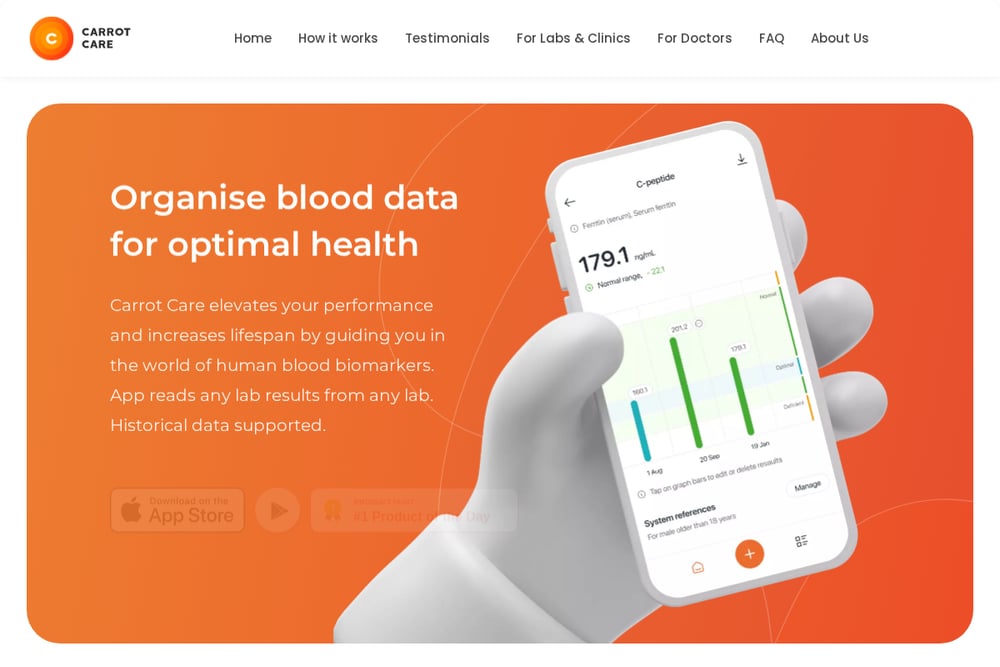 A screenshot of the Carrot Care website.
Carrot Care is an iPhone app built for people who want to organize blood data and act on it. It reads results from any lab and supports photos, PDFs, and OCR extraction, so a paper printout works as well as a portal download. The app organizes 1,000+ biomarkers and layers on evidence-based guidance about what to test next, from hormonal balance to mineral deficiencies. Historical data is supported, which makes it easy to see how a marker has moved across years. A 4.5/5 App Store rating and a steady stream of user testimonials suggest the approach resonates with performance-focused users.
#2 SmarterBlood - Free Blood Test Analysis | Clear Reports from Any Lab
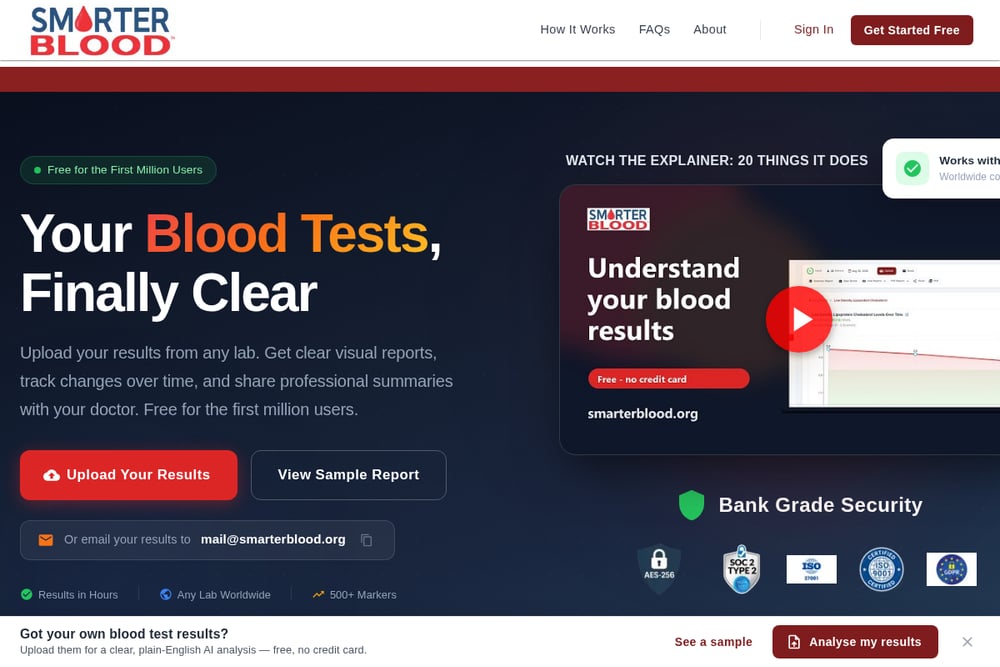 A screenshot of the SmarterBlood - Free Blood Test Analysis | Clear Reports from Any Lab website.
SmarterBlood takes the friction out of the first step: you upload a blood test PDF from any lab worldwide, or email it in, and get a visual report back within hours. It tracks 500+ markers, combines results from every lab you've used, and shows the most urgent findings first. Click any term for a plain-language explanation, then share a professional summary with your doctor at your next appointment. The service is free for the first million users and emphasizes bank-grade security with results stored securely. It's a strong fit whether you're managing a condition, chasing a personal best, or monitoring markers through pregnancy.
#3 BloodGPT
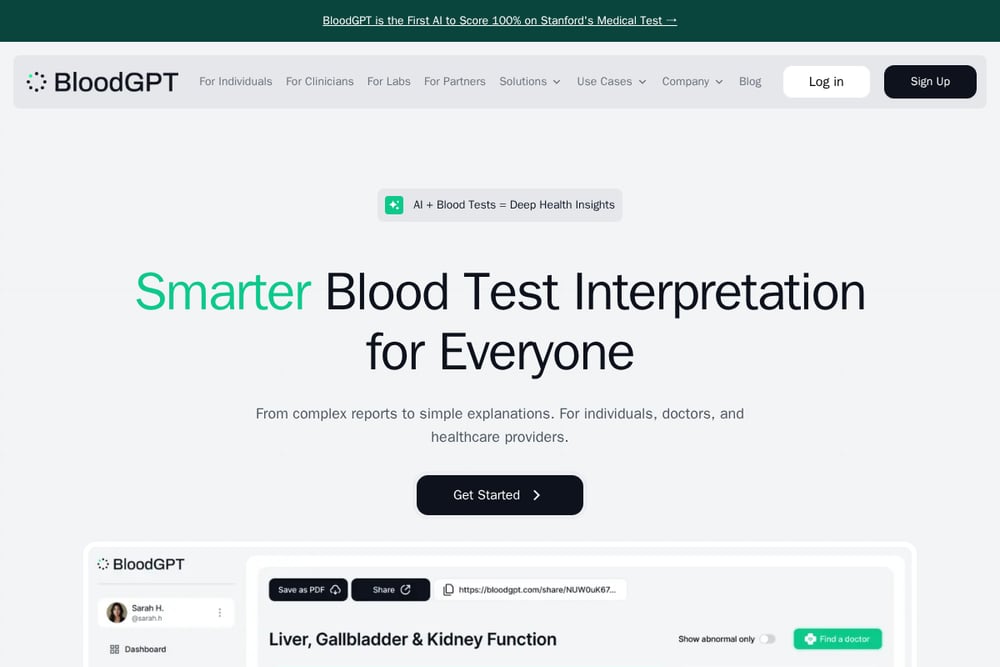 A screenshot of the BloodGPT website.
BloodGPT positions itself as AI-powered blood test interpretation for individuals, clinicians, and labs alike. Individuals get multi-view reports, biomarker trend tracking, and an AI chat for instant questions about their results. Doctors and small practices can generate branded interpretation reports for patients, while labs get white-label integration and report automation. The company says reports are available in 80+ languages and that your data is never used to train models. It's the most enterprise-ready option of the group, with a privacy-first pitch layered on top.
#4 BloodTrack
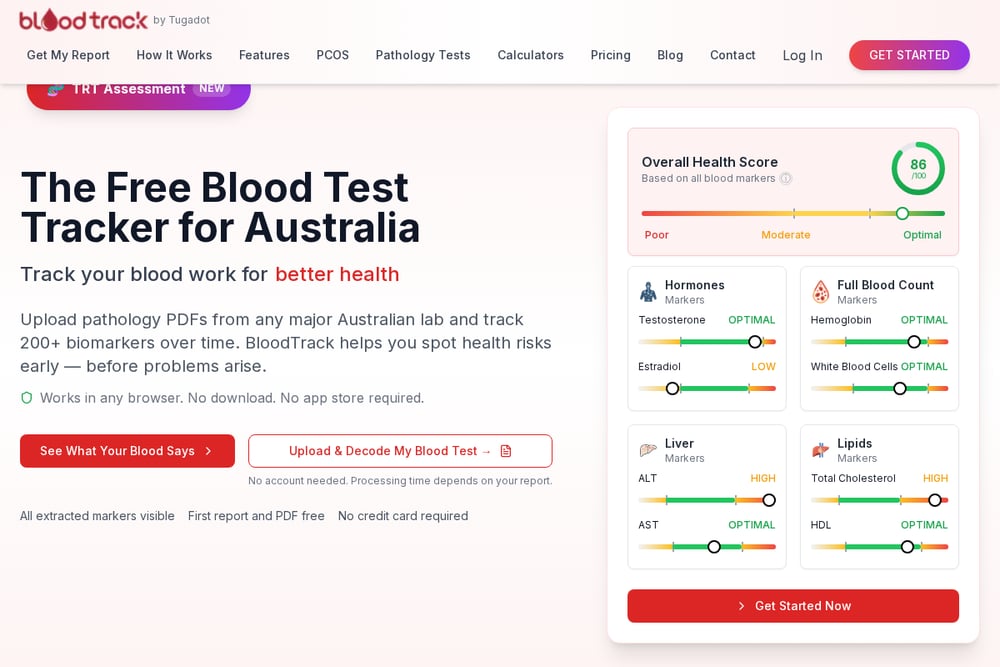 A screenshot of the BloodTrack website.
BloodTrack is a browser-based tracker built for the Australian market, with no app download required. You upload pathology PDFs from major Australian labs and track 200+ biomarkers over time, complete with an overall health score and category breakdowns for hormones, full blood count, liver, and lipids. Smart document processing handles PDFs and images, and comparative analytics show how your values sit against reference ranges. The first report and PDF are free with no credit card required, and you can export your data whenever you like. If you test through Australian pathology providers, the local fit is hard to beat.
#5 KeepMD
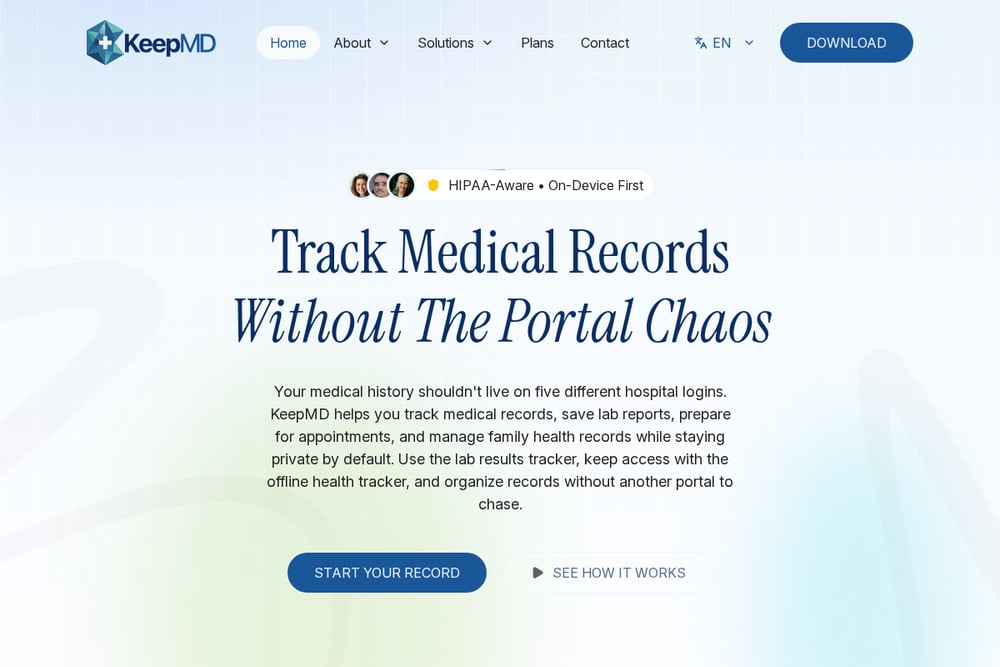 A screenshot of the KeepMD website.
KeepMD is a privacy-first health records app that treats your labs as one continuous timeline. You can scan a paper report, import from a hospital portal, or type a result in manually, and the app lines up the same test across labs and years. Each result is checked against its reference range, with trend views for markers like LDL, A1C, TSH, and vitamin D. Data is encrypted on your phone rather than sitting in the cloud, and family health profiles let you manage records for more than one person. The starter tier is free, which makes it a low-risk way to consolidate years of scattered results.
How to pick the right one for you
Start with where your results come from. If you test across multiple countries or labs, prioritize broad compatibility and combined timelines. If you mainly want to understand a single report quickly, a fast, free analysis tool gets you there without a subscription. Consider who else needs access: a doctor-friendly shareable summary matters more than an AI chat if you're bringing results to appointments. Privacy handling deserves a hard look too, especially if you're storing years of history. Finally, check the pricing model before you upload anything, since free tiers and per-report limits differ sharply.
Building a simple tracking workflow
Set a rhythm instead of scrambling before each appointment. Upload every new lab report the day you receive it, whether that's a PDF from a portal or a photo of a printout. Keep one tool as your source of truth so trends stay comparable across labs. Review your flagged markers monthly and note any lifestyle or medication changes alongside them. Before a doctor visit, export or share a summary so the conversation starts with data rather than guesswork. Over a year, that small habit turns scattered results into a genuine health record.
The bottom line
There's no single winner here, because these tools solve slightly different problems. Carrot Care suits iPhone users who want guidance, SmarterBlood is the easiest free entry point for any lab worldwide, BloodGPT serves clinicians and labs, BloodTrack fits Australian pathology users, and KeepMD wins on privacy and family records. Pick based on your labs, your device, and how much you want to share. Whichever you choose, the real value comes from consistent tracking, not a one-time upload.