You want to learn biomedical engineering without sitting in a lecture hall or buying a lab bench. These five platforms bring simulators, virtual labs, and exam prep straight to your browser.
The Shift to Simulated Learning
Biomedical engineering sits at the intersection of medicine and machinery, and hands-on practice is where most learners get stuck. Physical labs are expensive, equipment is scarce, and scheduling time with a ventilator or ECG trainer is nearly impossible for online students. That gap has fueled a wave of interactive platforms that let you manipulate virtual hearts, lungs, and circuits from your laptop. The result is a crowded field where course depth, simulator quality, and exam alignment vary wildly.
How We Looked at These Platforms
We compared each platform on four practical factors: the breadth of biomedical topics covered, how interactive the learning actually feels, pricing transparency, and whether the content maps to real outcomes like certificates, internships, or exam scores. We also checked how easy it is to start for free and how well the interface supports self-paced study. No single platform wins on every count, so the right pick depends on your goal.
Here is a quick look at the five platforms, ordered by how well they serve learners who want interactive biomedical engineering training without a physical lab.
| Provider | Best For |
|---|---|
| Labster | Immersive biology and tissue engineering simulations |
| Scholaritte: Biomedical Engineering Courses & GATE BM Prep | Simulator-driven biomedical courses and GATE BM prep |
| Vaayaa | Affordable, self-paced diploma-style overviews |
| University of Rochester Pre-College Online Program | High schoolers exploring biomedical engineering |
| Virtual Labs (IIT Roorkee) | Free, open-access instrumentation experiments |
The Five Platforms in Detail
#1 Labster
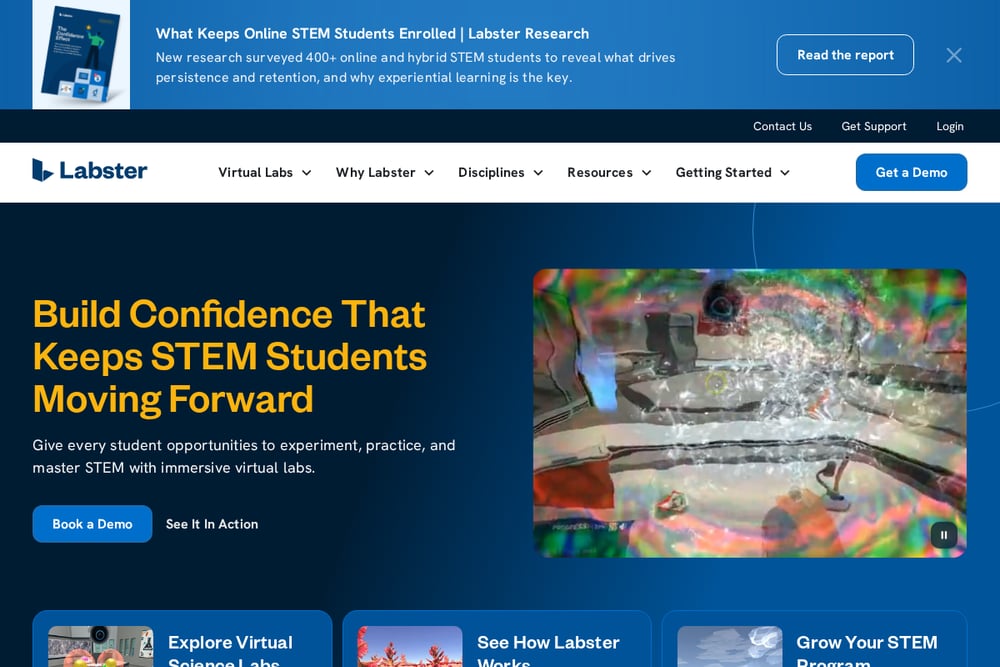 A screenshot of the Labster website.
Labster brings hundreds of immersive virtual lab simulations to your browser, covering everything from synthetic biology to tissue engineering. You step into realistic 3D environments where you design DNA, build scaffolds, and run bioreactor experiments without touching a pipette. The platform is built for institutions as much as individuals, with course-aligned simulation sets and skills mapping to frameworks like ACS and AAPT. Its bioengineering catalog is deep on the biology side, making it a strong fit if your interest leans toward cells and systems rather than devices. The trade-off is that it feels more like a science lab than an engineering workshop, so device-specific topics like ventilators or ECG hardware get less attention.
#2 Scholaritte: Biomedical Engineering Courses & GATE BM Prep
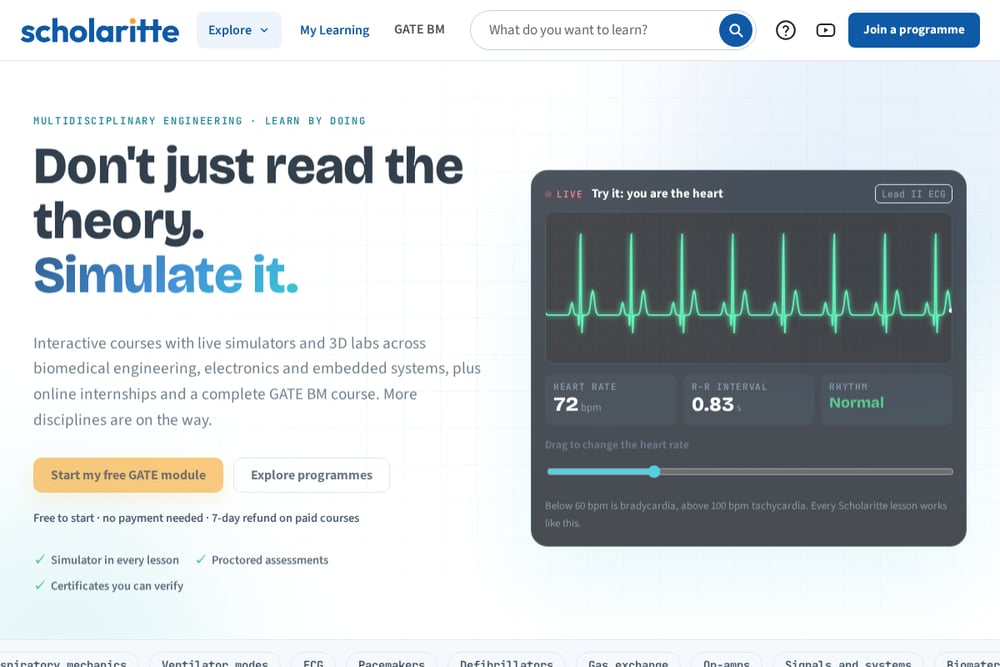 A screenshot of the Scholaritte: Biomedical Engineering Courses & GATE BM Prep website.
Scholaritte is built around a simple promise: don't just read the theory, simulate it. Every lesson includes a live simulator, so you can drag a heart rate slider and watch an ECG trace shift from normal to bradycardia in real time. The course library spans infusion pumps, mechanical ventilators, lung mechanics, cardiac technology, Arduino, and ESP8266 IoT, with a complete GATE BM 2027 program that includes previous-year questions and mock tests. You can start free with no payment needed, and paid courses carry a 7-day refund plus verifiable certificates and proctored assessments. Short internships, like a five-day lungs and ventilators program, add a practical layer that most competitors skip.
#3 Vaayaa
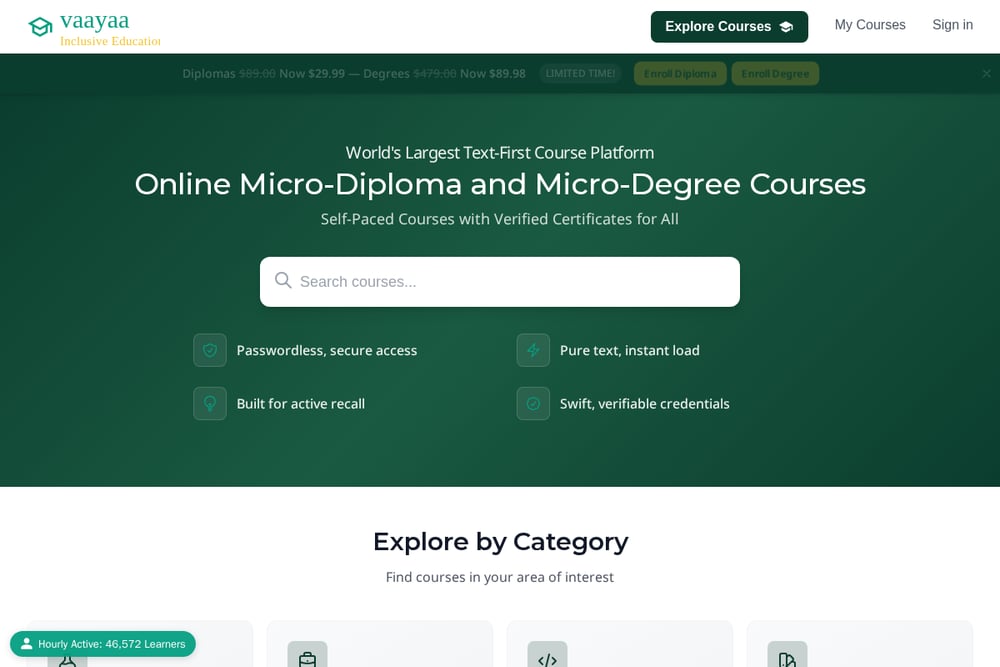 A screenshot of the Vaayaa website.
Vaayaa offers a micro-diploma in biomedical engineering applications for $29.99, down from $89, with five-year access and a certificate included. The curriculum is broad and structured, moving from biosensors and medical imaging to biomaterials, neural engineering, and clinical engineering management. Each module is self-paced and takes roughly a week, which makes it a low-risk way to sample the field. What you won't find is live simulation; the delivery is text-and-video based, so it suits readers who want a structured overview rather than hands-on practice. If you need a credential fast and cheap, it is hard to beat on price.
#4 University of Rochester Pre-College Online Program
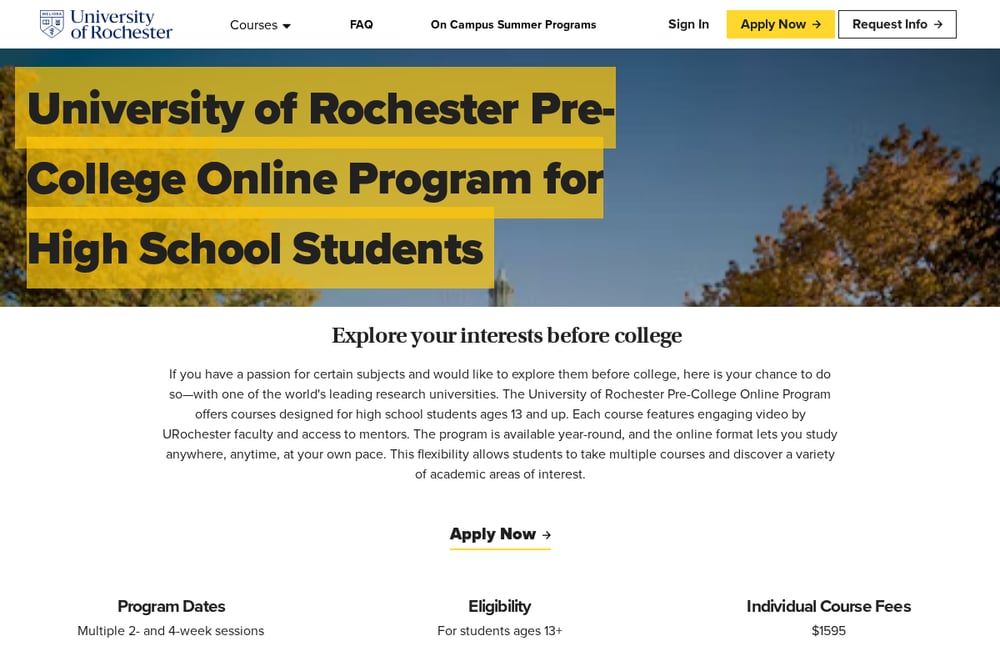 A screenshot of the University of Rochester Pre-College Online Program website.
Rochester's pre-college biomedical engineering course is aimed at high school students ages 13 and up who want an early taste of the field. Over two- or four-week sessions, you explore how engineers measure biological data, model skeletal muscle, and apply design thinking to medical problems. The teaching leans on the engineering design process rather than device simulation, and the $1,595 fee reflects the university-branded experience. It is a strong choice if you are a younger learner or a parent looking for a credible introduction. For working professionals or exam aspirants, the pace and level will feel too introductory.
#5 Virtual Labs (IIT Roorkee)
 A screenshot of the Virtual Labs (IIT Roorkee) website.
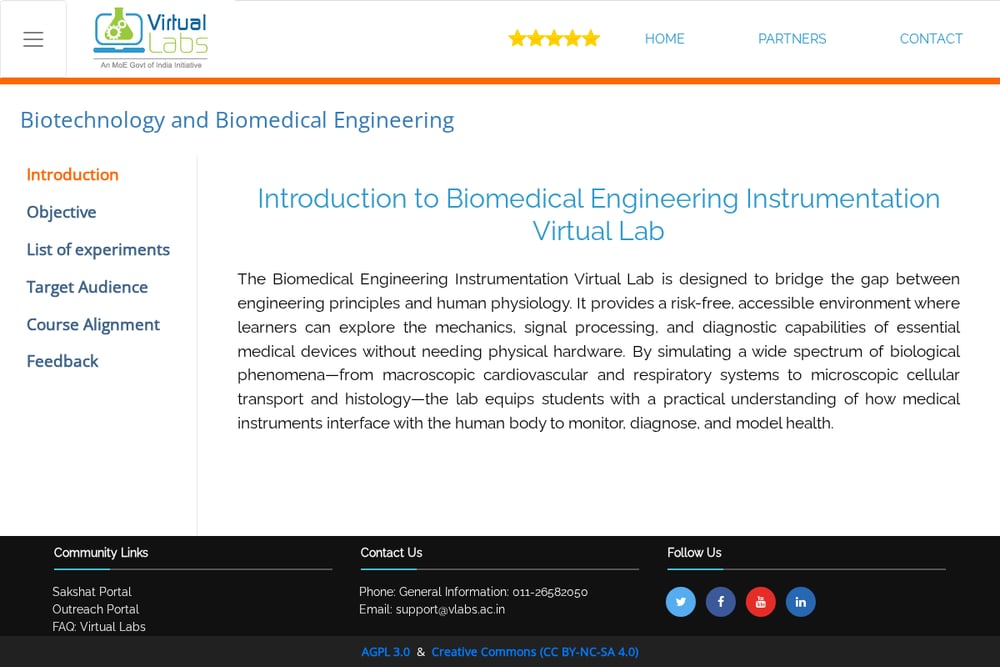
Virtual Labs from IIT Roorkee is a free, government-backed initiative that simulates biomedical instrumentation without physical hardware. You can explore cardiovascular and respiratory mechanics, signal processing, and diagnostic device behavior in a risk-free environment. The content is aligned with academic curricula and released under open licenses, which makes it a useful supplement to a course you are already taking. The interface is functional rather than polished, and there is no structured course path or certificate. Think of it as a free sandbox for experimentation, not a complete learning program.
How to Pick the Right Platform
Start with your end goal. If you are preparing for GATE BM, you need previous-year questions, mock tests, and device-level simulators, which points toward Scholaritte. If you are a high school student curious about the field, a pre-college program gives you structure and a brand name. If you just need a cheap credential for a resume, a micro-diploma gets the job done. And if you are already enrolled somewhere and want free practice, an open virtual lab fills the gap. Check the free tier before you pay, and confirm whether certificates are verifiable, because that matters when employers look.
Building a Study Workflow That Sticks
You can combine these platforms into a single routine. Use a free simulator platform for daily warm-ups, then move to a structured course for theory and assessments. Schedule mock tests weekly if you are exam-bound, and log your simulator settings so you can revisit tricky scenarios. Keep a simple spreadsheet of topics covered and scores, and review it every Sunday. The goal is not to collect courses but to build repetition around the concepts that show up in exams and interviews.
The Bottom Line
There is no shortage of biomedical engineering content online, but interactive depth is still rare. Scholaritte stands out for putting a working simulator inside every lesson and pairing it with a focused GATE BM track, while Labster leads on immersive biology simulations for institutional learners. Vaayaa wins on price, Rochester on early exposure, and Virtual Labs on free access. Pick the one that matches your goal, start with the free tier, and let the simulators do the teaching.