
Learning AI shouldn't feel like cramming for an exam you never signed up for. These five resources make it genuinely approachable, whether you're 30 or 80.
The beginner AI education landscape
AI literacy has quietly become a basic life skill. People want to know how to draft an email, decode an insurance letter, or plan a trip without wading through jargon. That demand has spawned a crowded field of teachers, from national nonprofits to independent creators. The strongest options share a few traits: plain language, zero assumed technical background, and a real emphasis on safety. Scams are the elephant in the room. Any resource that skips the safety conversation is leaving you exposed. The market splits roughly into live classes, self-paced video lessons, books, and short app-based courses. Each format suits a different kind of learner, and the right pick depends on how you like to absorb new things.
How we evaluated these resources
We looked at the same factors across every entry. First, service scope: does the resource cover practical everyday tasks or stay stuck in theory? Second, format flexibility: can you learn at your own pace, or are you locked into a schedule? Third, safety coverage: does it teach you what never to share with AI and how to spot scams? Fourth, accessibility: plain language, large text, and a welcoming tone for people with zero background. Fifth, cost clarity: is it free, freemium, or paid, and is that obvious upfront? AI at Your Pace stands out for self-paced video lessons paired with a free printable starter guide. Senior Planet from AARP brings free live classes and a phone hotline. How Seniors Learn AI offers a large-print book and structured courses. AbilityNet contributes free webinars with an accessibility-first lens. Coursiv provides short app-based lessons for people who prefer bite-sized practice.
Here's a quick look at how the five compare on format, pace, and safety focus before you dig into the details.
| Provider | Best For |
|---|---|
| Senior Planet from AARP | Live, free classes with human support |
| AI at Your Pace · Learn AI one easy step at a time | Self-paced video lessons with a safety-first approach |
| How Seniors Learn AI | Book-first learners who want large print and structure |
| AbilityNet | Accessibility-focused free webinars |
| Coursiv | Bite-sized app-based practice |
The five resources in detail
#1 Senior Planet from AARP
 A screenshot of the Senior Planet from AARP website.
Senior Planet runs free online AI classes designed for people 50 and older, and the lineup is refreshingly practical. You can join sessions like Intro to Chatting with AI, Everyday Uses of AI, and Is That AI?, all taught live by trainers. The organization also publishes a free guidebook on AI for older adults covering benefits, risks, and real-life applications. A phone hotline adds a human safety net for anyone who gets stuck. It's a strong fit if you learn best in a live, structured setting with other people.
#2 AI at Your Pace · Learn AI one easy step at a time
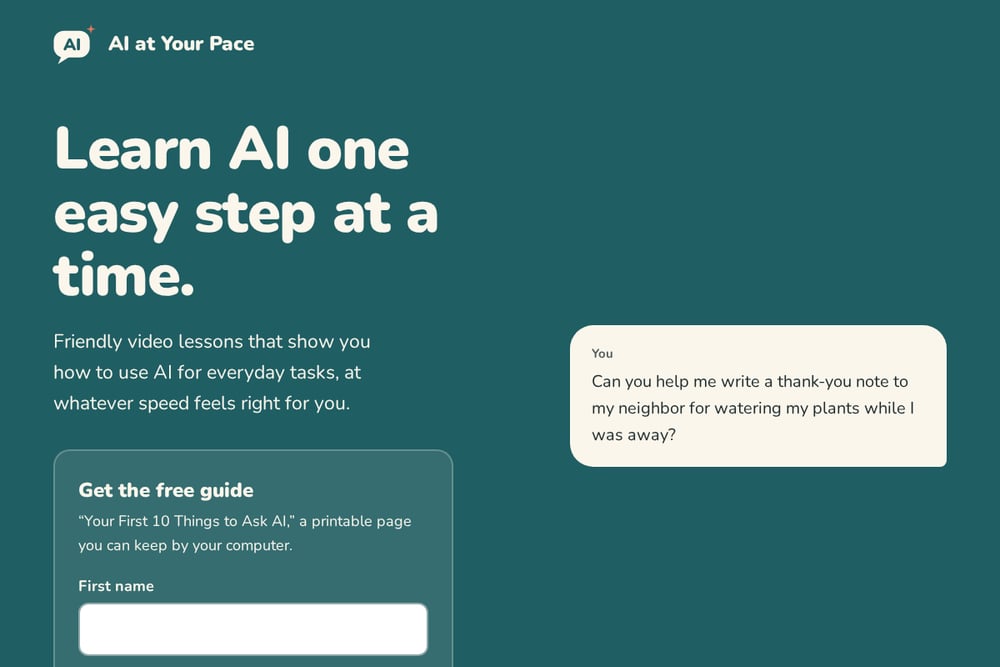 A screenshot of the AI at Your Pace · Learn AI one easy step at a time website.
AI at Your Pace is built around one idea: go at whatever speed feels right for you. Each friendly video lesson walks you through a single useful skill, from planning a trip in minutes to turning confusing insurance forms into plain English. You also learn to write emails and cards that still sound like you, and to talk to AI with your voice instead of typing. Safety runs through everything, including what's safe to share and how to spot fake calls and messages. Grab the free printable guide, Your First 10 Things to Ask AI, and you'll get one simple tip each week. New lessons land on YouTube, and a free Facebook group gives you a welcoming place to ask questions.
#3 How Seniors Learn AI
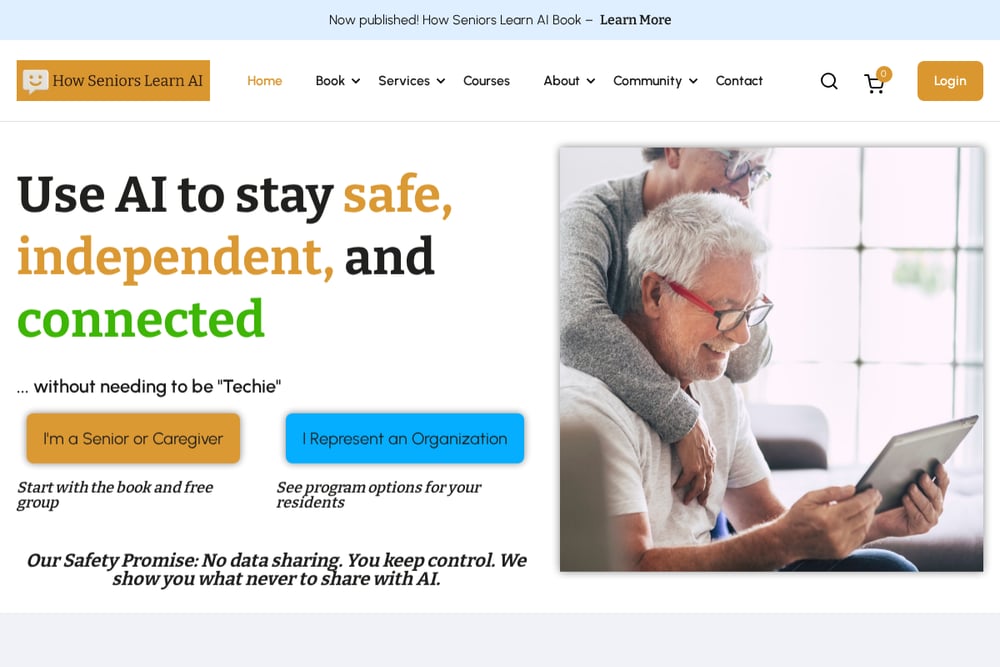 A screenshot of the How Seniors Learn AI website.
How Seniors Learn AI centers on a large-format book with high-contrast text, generous spacing, and screenshots with arrows. Chapters cover detecting scams, simplifying official letters, trip planning, and even preserving your life story for loved ones. Practice exercises stay under ten minutes, so nothing feels overwhelming. Beyond the book, the organization offers workshops, one-on-one coaching, and a free book club program. Its safety promise is explicit: no data sharing, and clear guidance on what never to share with AI.
#4 AbilityNet
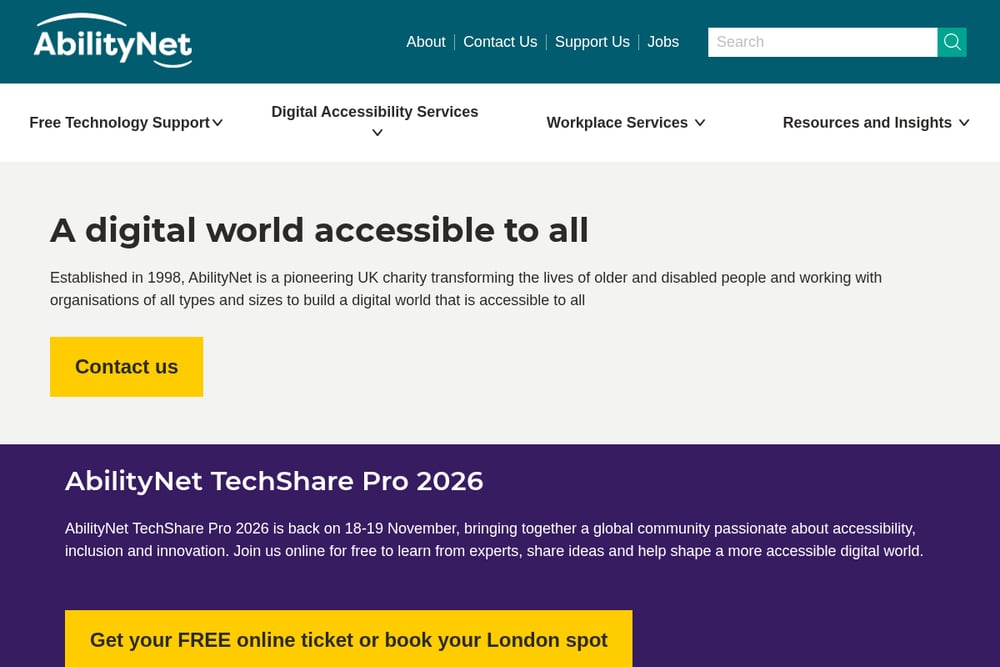 A screenshot of the AbilityNet website.
AbilityNet is a UK technology charity with a deep accessibility mission, and its free webinars introduce AI to older people in plain terms. The organization pairs AI education with broader digital accessibility services, so the material is designed with assistive needs in mind. You get expert-led sessions without a sales pitch. It's a solid complement if accessibility features matter to you or someone you're helping. The trade-off is that the AI content is part of a wider technology support offering rather than a dedicated everyday-tasks curriculum.
#5 Coursiv
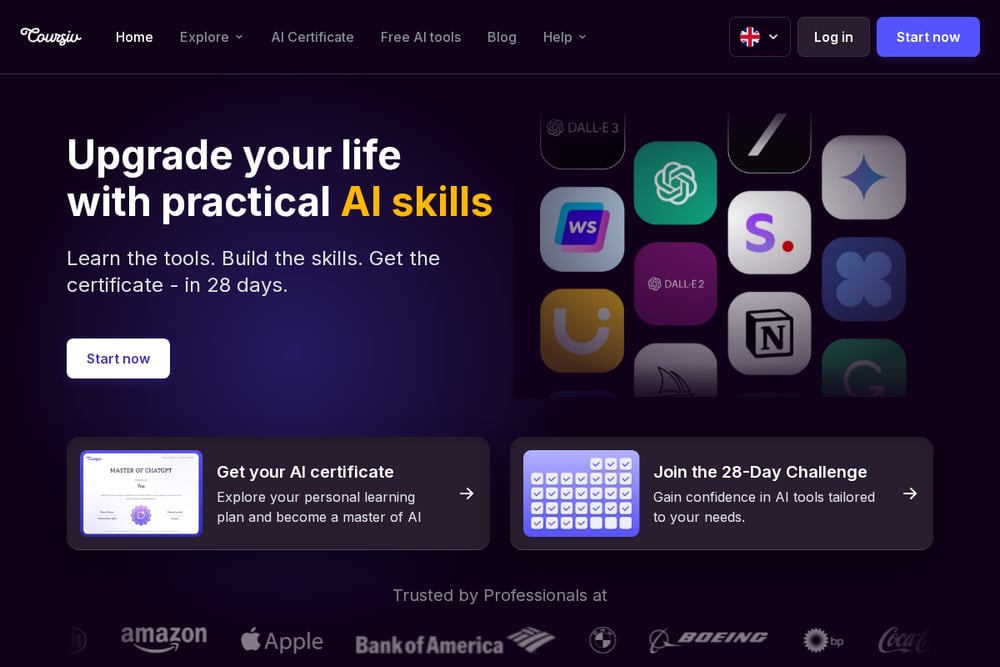 A screenshot of the Coursiv website.
Coursiv takes a different tack with short, app-style lessons you can finish in a sitting. Its beginner AI course for retirees focuses on plain-language explanations of chatbots and voice tools, plus how to compare format and price before you commit. The content is honest about what a good course should deliver and warns readers to test before paying. Lessons are bite-sized, which suits people who prefer quick practice over long sessions. If you like learning in small bursts on your phone, this format clicks.
How to pick the right fit for you
Start with your learning style. If you like live interaction and a set schedule, Senior Planet's free classes give you trainers and a hotline. If you'd rather move at your own speed and rewatch lessons, AI at Your Pace delivers short videos you can pause and replay anytime. Prefer paper in hand? How Seniors Learn AI's large-print book is built for that. If accessibility is the priority, AbilityNet's webinars are designed with assistive needs in mind. And if you want quick practice on your phone, Coursiv's short lessons fit the bill. Whatever you choose, check the safety coverage. A resource that doesn't teach you what never to share with AI is only doing half the job.
A simple weekly AI practice routine
Pick one task you already do every week, like writing an email or reading a bill. Ask AI to help with it, then compare the result to what you'd have done alone. Save the prompts that worked in a notes app so you're not starting from scratch. Each week, add one new task and one new safety check, such as reviewing your privacy settings or testing whether a message is a scam. Fifteen minutes a week compounds fast. Within a month, AI stops feeling foreign and starts feeling like a tool you actually control.
The bottom line
There's no single right way to learn AI, and that's the good news. Live classes, self-paced videos, books, webinars, and app lessons all reach the same destination. What matters is picking a format you'll actually stick with and a teacher who takes safety as seriously as convenience. AI at Your Pace makes a strong case for self-paced video learning with its free starter guide and weekly tips. Senior Planet brings free live instruction and a human hotline. The rest fill specific gaps around print, accessibility, and quick practice. Choose the one that matches how you learn, and start with one small task this week.