
Learning banking English shouldn't feel like a lecture. These five tools turn vocabulary drills into something you'll actually finish.
The State of Banking Vocabulary Training
Banking vocabulary is a gatekeeper skill. Without it, opening an account, reading a statement, or asking about fees becomes a guessing game. Most tools in this space fall into two camps: static word lists and interactive games. The static lists are free and easy to find, but they rarely simulate the pressure of a real teller conversation. Interactive tools add drag-and-drop mechanics, audio, or character-based scenarios, which helps you recall terms under mild stress. The gap is context. Knowing the word 'deposit' is not the same as knowing when to say it, what document to bring, or how to respond when a banker asks a follow-up question. The tools below each attack that gap differently, from quick vocabulary refreshers to full scenario practice with multilingual guidance.
How We Evaluated These Tools
We looked at five factors. First, scope: does the tool cover basic terms only, or does it extend into transactions, account types, and borrower language? Second, interactivity: is it a passive list, a quiz, or a simulation where your choices matter? Third, language support: can non-native English speakers get guidance in their first language while still learning English banking terms? Fourth, feedback: does the tool tell you why an answer was wrong, or just mark it incorrect? Fifth, practical fit: does it prepare you for a real bank visit, or is it purely academic? Each tool below stood out on at least one of these factors. Banking Bestie stood out for scenario depth and multilingual scaffolding. My English Pages stood out for drag-and-drop simplicity. English Media Lab stood out for quiz variety. Boggles World ESL stood out for video-based borrowing and debt language. Randall's ESL Cyber Listening Lab stood out for audio-first vocabulary in context.
Here is a quick look at how the five tools compare on format, language support, and scenario depth.
| Provider | Best For |
|---|---|
| Banking Vocabulary Game | Interactive ESL Word Game | Quick vocabulary matching practice |
| Banking Bestie — learn banking by doing | Scenario-based practice with multilingual guidance |
| ESL Business English, Money, Banking Vocabulary Quiz | Testing your baseline banking vocabulary |
| Banking and Borrowing Money Language Video | Learning borrowing and debt language by ear |
| Banking Services - Vocab - Randall's ESL Cyber Listening Lab | Audio-based vocabulary in context |
The Five Tools in Detail
#1 Banking Vocabulary Game | Interactive ESL Word Game
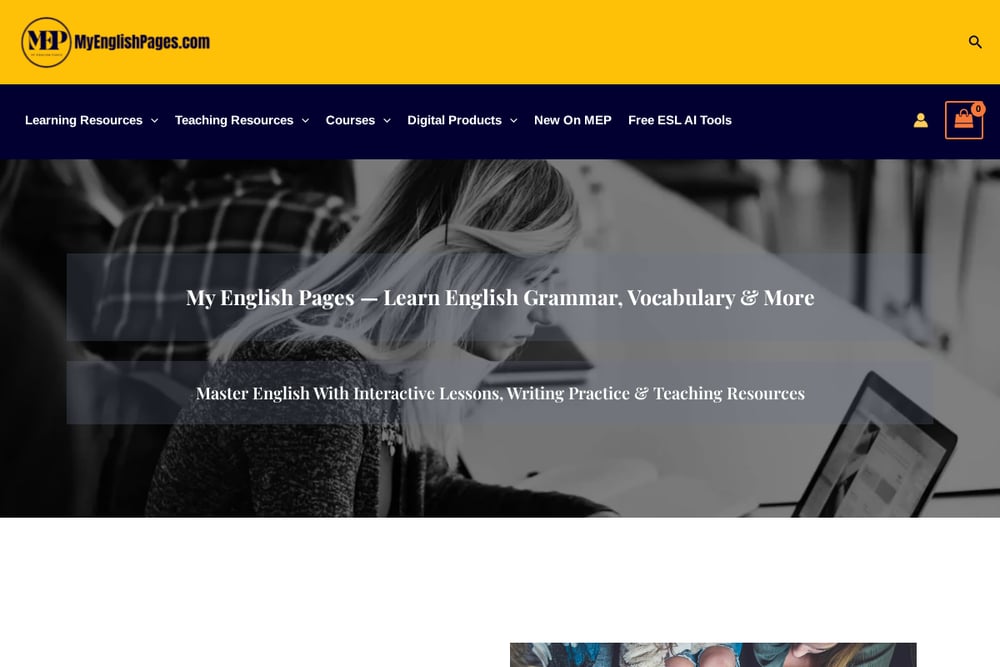 A screenshot of the Banking Vocabulary Game | Interactive ESL Word Game website.
This is the drag-and-drop option. You see a set of banking words and a set of definitions, then match them by dragging. It is fast, low-pressure, and works well on a phone. The vocabulary recap covers account, deposit, withdraw, balance, loan, and interest. There is no audio and no scenario branching, so it stays at the word level. If you need a five-minute refresher before a bank visit, this is a clean choice. It pairs well with more scenario-heavy tools when you want to drill raw terms first.
#2 Banking Bestie — learn banking by doing
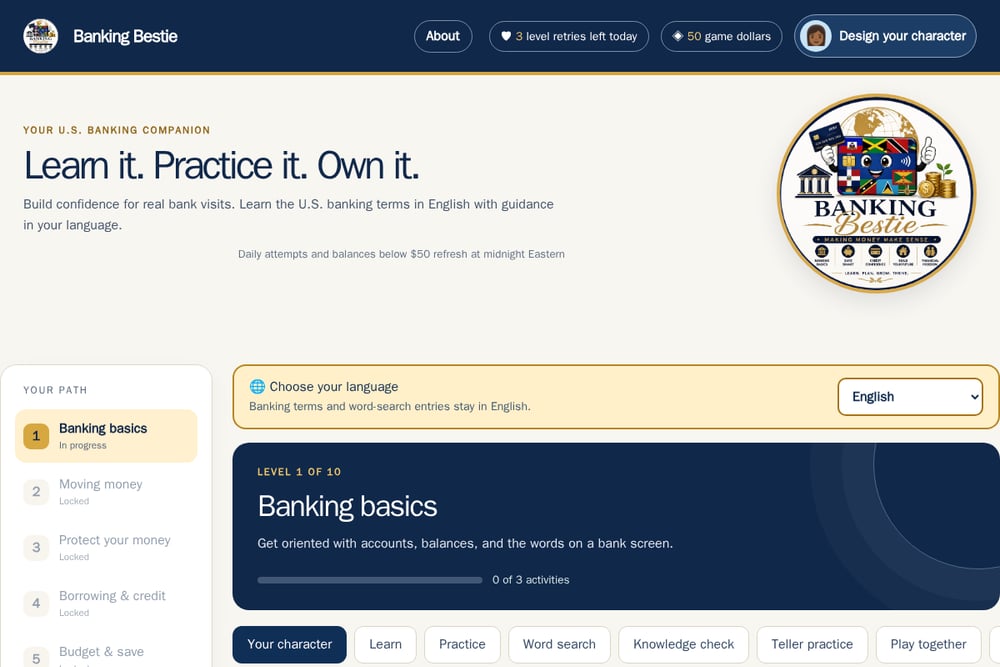 A screenshot of the Banking Bestie — learn banking by doing website.
Banking Bestie is the only tool here that puts you inside a scenario. You design a character, choose a language for guidance, and then work through levels that simulate bank visits. The banking terms and word-search entries stay in English, but guidance is available in English, Kreyòl ayisyen, and Español. That design choice matters: you practice the English term while getting support in a language you already know. Daily attempts and balances below $50 refresh at midnight Eastern, which gives you a reason to come back. Knowledge checks use four answer choices, and progress saves on your device. It is educational, not a substitute for your bank's disclosures, but it builds the confidence you need before you walk in.
#3 ESL Business English, Money, Banking Vocabulary Quiz
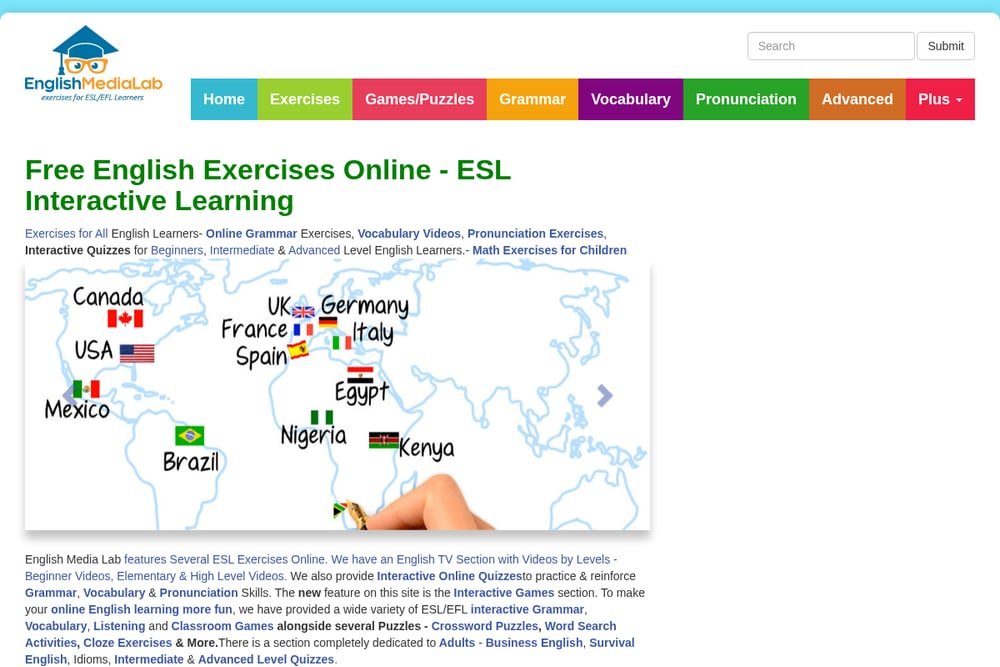 A screenshot of the ESL Business English, Money, Banking Vocabulary Quiz website.
This is a straightforward multiple-choice quiz hosted on English Media Lab. It tests money and finance words in a business English context. The format is familiar: read the question, pick the answer, get a score. There is no character design and no branching dialogue, but the quiz covers terms that show up in workplace banking situations. It works well as a diagnostic. Take it once, see what you miss, then go practice those terms elsewhere. The site also links to crossword puzzles, word searches, and cloze exercises if you want more variety.
#4 Banking and Borrowing Money Language Video
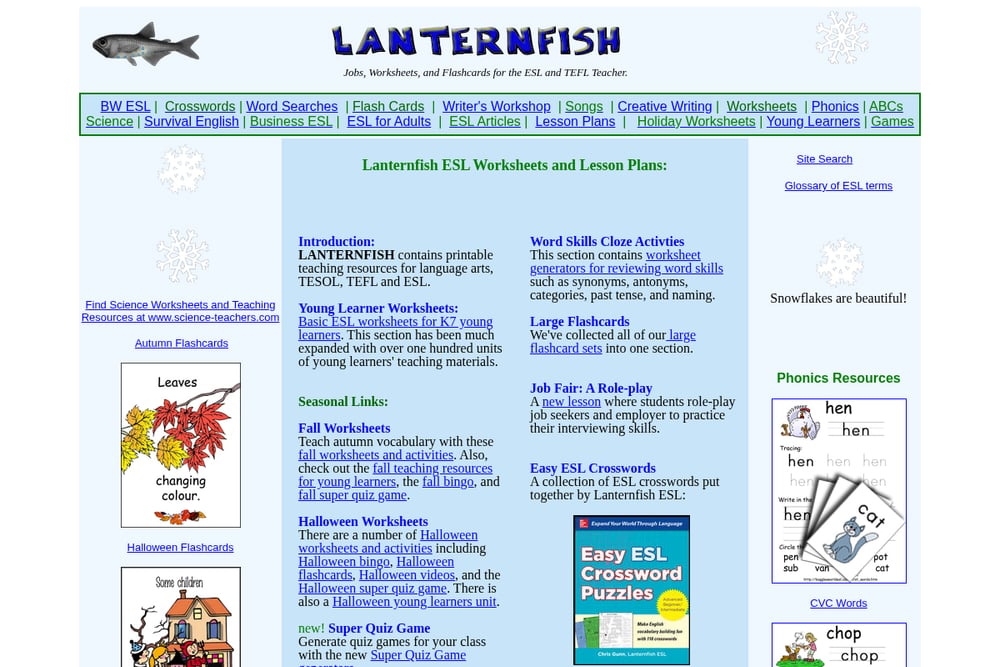 A screenshot of the Banking and Borrowing Money Language Video website.
Boggles World ESL offers a video that focuses specifically on borrowing money, making payments, and paying off debt. That narrow scope is useful. Most vocabulary tools lump borrowing in with general banking, but debt language has its own phrases: 'pay off a loan,' 'make a payment,' 'interest rate,' 'principal.' The video teaches these in context, which helps you hear how they sound in natural speech. It is not interactive, so you will not get feedback on your own answers. Use it as a listening supplement alongside a quiz or scenario tool. The related resources include a saving money vocabulary presentation and a banking roleplay.
#5 Banking Services - Vocab - Randall's ESL Cyber Listening Lab
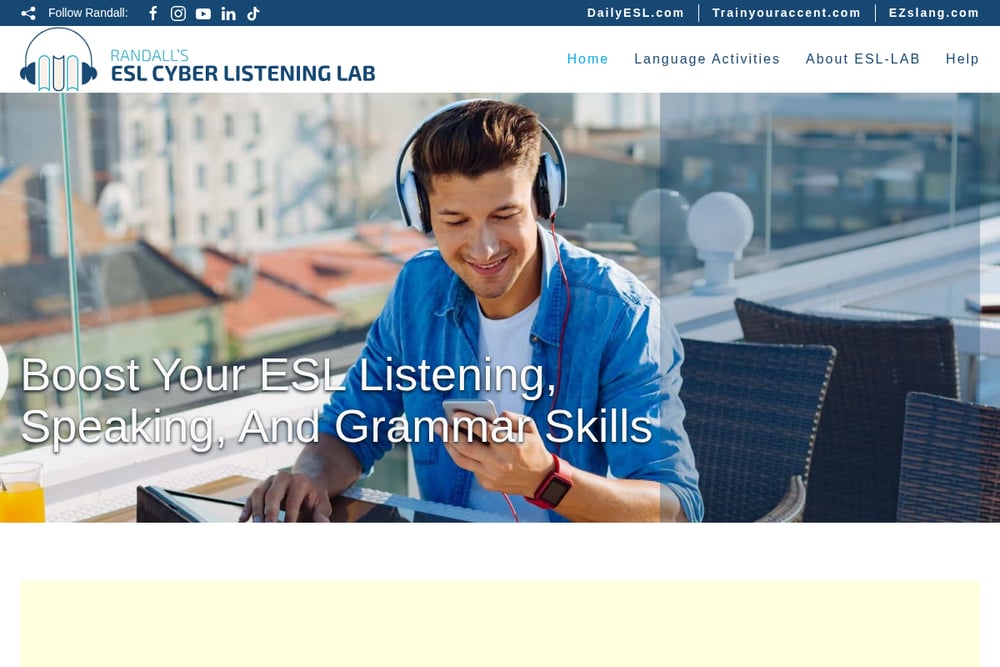 A screenshot of the Banking Services - Vocab - Randall's ESL Cyber Listening Lab website.
Randall's ESL Cyber Listening Lab takes an audio-first approach. You listen to a recording of banking vocabulary, then answer questions. The word list includes practical phrases: apply for a credit card, cash a check, check your account balance, fill out a withdrawal slip, open a checking account, pay off a loan, rent a safety deposit box, and talk with a bank teller. The listening exercise forces you to process the terms at natural speed, which is closer to a real bank visit than reading a list. There is no character simulation, but the audio context is strong. It is a solid bridge between vocabulary drills and real conversation.
How to Choose the Right Tool for You
Start with your goal. If you need to pass a citizenship interview or open your first U.S. account, scenario practice matters more than word matching. Banking Bestie is built for that. If you already know the basics and want to sharpen borrowing language, the Boggles World ESL video and Randall's audio lesson are better fits. If you are a teacher looking for a quick classroom warm-up, the drag-and-drop game and the multiple-choice quiz are easy to project. Consider your language background too. If English is not your first language, look for tools that offer guidance in your language while keeping the banking terms in English. That combination is rare, and it is the fastest path to real confidence. Finally, check the feedback loop. A tool that explains why an answer is wrong teaches more than one that just shows a red X.
Building a Practice Routine That Sticks
You do not need to use all five tools every day. A simple rotation works better. On Monday, run the drag-and-drop game for five minutes to warm up. Tuesday, take the English Media Lab quiz and note the words you miss. Wednesday, watch the Boggles World ESL video and repeat the borrowing phrases out loud. Thursday, do the Randall's listening exercise and write one sentence for each term. Friday, open Banking Bestie and run a scenario level. The daily refresh at midnight Eastern gives you a natural reset point. Keep a running list of terms that trip you up, and review that list before each session. This routine takes about fifteen minutes a day and covers reading, listening, and decision-making.
The Bottom Line
Banking vocabulary is not about memorizing a list. It is about walking into a bank and knowing what to say when the teller asks a question. The five tools here each cover a different slice of that skill. Banking Bestie gives you the closest thing to a rehearsal, with character design, scenario levels, and multilingual guidance. The other four fill in gaps: quick matching, baseline testing, borrowing language, and audio comprehension. Use them together, and you will build the kind of confidence that makes a real bank visit feel routine.