
Your backtest looks perfect. That is exactly why you should be suspicious. These five tools exist to break your strategy before the market does.
Why Backtest Stress Testing Became Essential
Most retail traders still treat a backtest as proof. It is not. It is a single historical path, and a strategy tuned to that path can look brilliant while carrying no real edge. Research cited across the space puts live failure rates for over-optimized strategies anywhere from 60 to 95 percent. That gap between backtest and reality is the entire reason this category exists. Stress testing tools attack your results from multiple angles. They reshuffle trade sequences, permute prices, split data into walk-forward windows, and stress cost assumptions. The goal is not to make your strategy look worse. It is to find out whether anything survives when the assumptions change. Prop firm traders feel this most acutely. Evaluations usually end on a drawdown limit, not a missed profit target, and every failed attempt is another fee. A tool that flags thin cost buffers or path risk before you pay that fee can be worth more than the evaluation itself.
How We Evaluated These Tools
We looked at the same factors across every tool. Service scope mattered first: does it test one failure mode or many? StressTestQuant runs fifty tests across eight named failure modes, while BacktestBase centers on Monte Carlo simulation and Build Alpha advertises sixteen-plus robustness tests. Pricing clarity came next. StressTestQuant offers a free analyzer report with no card required and a paid Prop Firm Check, BacktestBase promotes a free Monte Carlo analysis, and Build Alpha and LuxAlgo sit behind licensing or subscription tiers. Integration mattered too. StressTestQuant reads exports from TradingView, NinjaTrader, MetaTrader, Tradovate, and Interactive Brokers, and can re-run Pine or Python scripts. Backtrex leans toward a visual no-code workflow, while LuxAlgo bundles stress testing into a broader charting and orderflow platform. Finally, we weighed how plainly each tool explains its verdict. A pass, warning, or fail with the evidence behind it is more useful than a single opaque score.
Here is the short version before the deep dive. Each tool below approaches the same problem from a different angle, and the right pick depends on how you trade and what you already have on your desk.
| Provider | Best For |
|---|---|
| BacktestBase | TradingView users who want a fast, free robustness grade |
| StressTestQuant — we try to break your strategy | Prop firm traders who need a verdict before paying another evaluation fee |
| Build Alpha | Algorithmic traders who want to run the full test battery themselves |
| Backtrex | No-code traders who want validation built into the backtesting workflow |
| LuxAlgo | Traders who want stress testing inside a full charting and orderflow platform |
The Five Tools in Detail
#1 BacktestBase
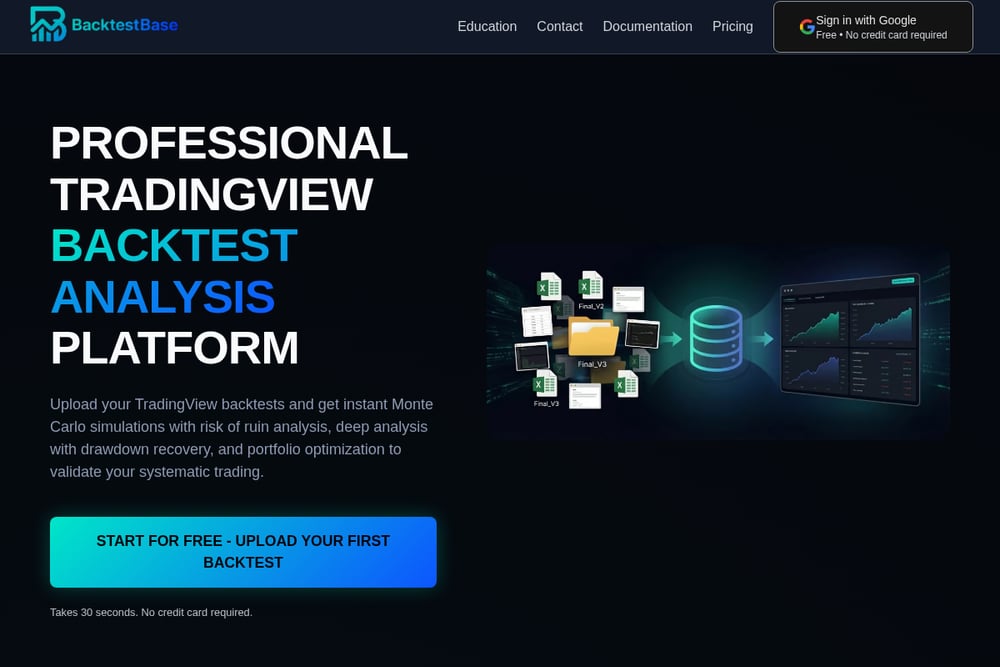 A screenshot of the BacktestBase website.
BacktestBase leads with a free, instant Monte Carlo stress test aimed squarely at TradingView users. It runs over a thousand randomized scenarios on your strategy, skipping trades and shuffling sequences to expose drawdown risk that a single backtest hides. The pitch is blunt: a 9.97 percent drawdown in your backtest could be 26 percent or more under realistic conditions. It returns a 30-point robustness score graded A+ to F, which gives you a fast read on whether your results are likely curve-fitted. The whole analysis takes about two minutes and requires no credit card. If you want a quick sanity check on a TradingView strategy before you commit capital, this is the most frictionless entry point in the group.
#2 StressTestQuant — we try to break your strategy
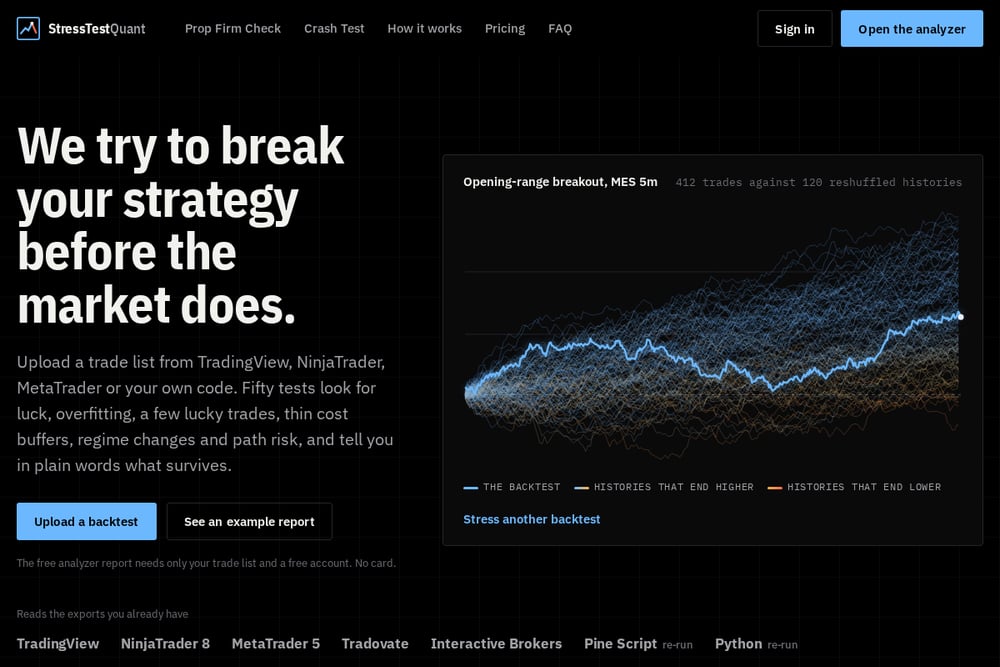 A screenshot of the StressTestQuant — we try to break your strategy website.
StressTestQuant takes the most aggressive stance of the five. Its tagline says it plainly: we try to break your strategy before the market does. You upload a trade list from TradingView, NinjaTrader, MetaTrader, Tradovate, Interactive Brokers, or your own Pine and Python code, and fifty tests hunt for luck, overfitting, a few lucky trades, thin cost buffers, regime changes, and path risk. Every report checks the same eight failure modes, each with its own tests and thresholds, and returns a pass, warning, or fail verdict with the evidence behind it. The free analyzer report needs only your trade list and a free account, no card. There is also a Prop Firm Check built for evaluation risk, since most evaluations end on a drawdown limit rather than a missed target. From export to verdict takes about a minute, with no column mapping or settings to learn first.
#3 Build Alpha
 A screenshot of the Build Alpha website.
Build Alpha is the deepest technical resource in this group. Its robustness testing guide walks through sixteen-plus tests, including out-of-sample splits, versus-random comparisons, noise tests, Monte Carlo permutation, parameter permutation, walk-forward, and Taguchi robust design. The framing is educational as much as it is tooling: it explains what each test proves and when to use it. That makes it valuable if you want to understand the mechanics rather than just receive a score. The platform itself is a licensed desktop tool aimed at algorithmic traders who build and optimize their own systems. If you are the type who wants to run the full battery yourself and read the width of the results, not just the pass, this is your reference point.
#4 Backtrex
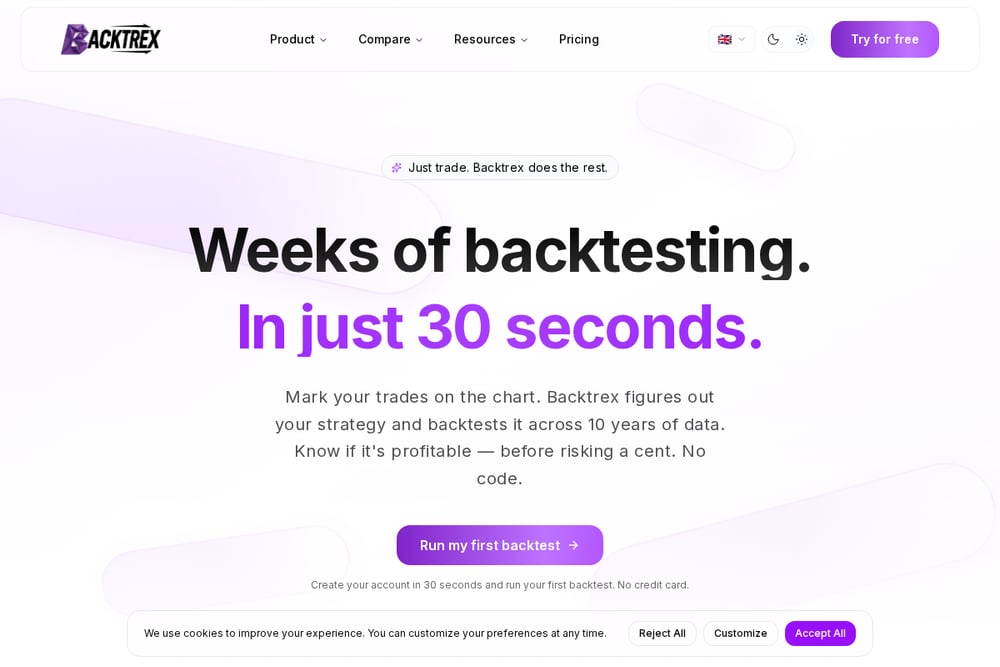 A screenshot of the Backtrex website.
Backtrex comes at the problem from the education and workflow side. Its guide on backtesting without overfitting lays out seven red flags to watch, and it cites the research showing live performance collapses in 60 to 85 percent of cases depending on how many parameters you optimized. The platform itself is a visual, no-code backtesting environment, which means stress testing sits inside the same place you build and test your strategy. That is a real advantage if you do not want to export files between tools. It is less of a dedicated attack engine than StressTestQuant or Build Alpha, and more of a place to build cleanly from the start. If you are newer to systematic trading and want guardrails baked into your workflow, this fits well.
#5 LuxAlgo
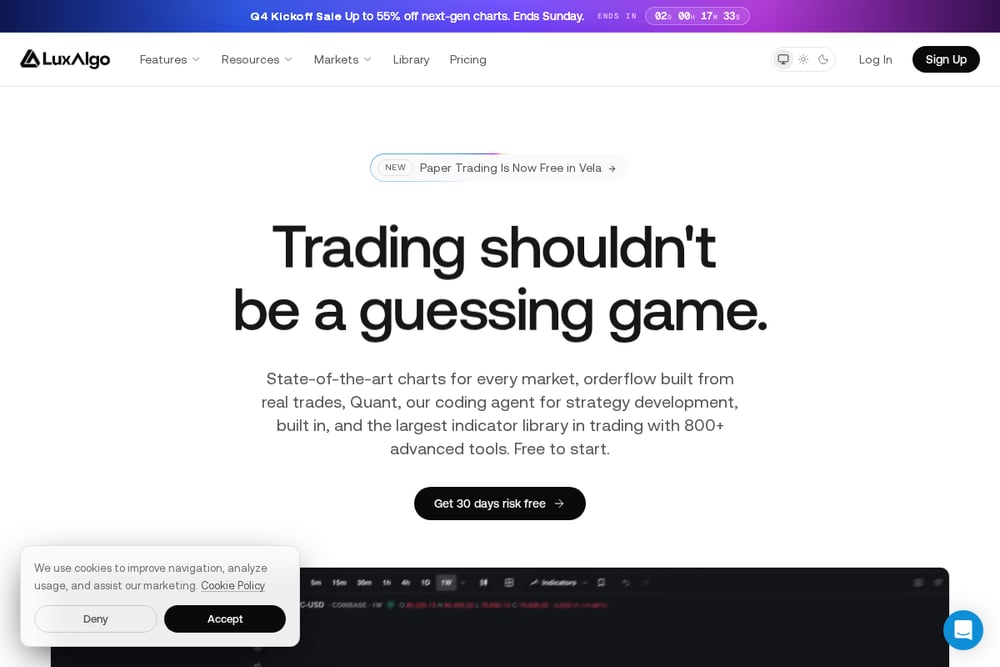 A screenshot of the LuxAlgo website.
LuxAlgo is the broadest platform here, and stress testing is one feature inside a much larger ecosystem. Its guide to stress-testing algorithmic strategies covers overfitting, walk-forward analysis, parameter sensitivity heatmaps, and Monte Carlo trade sequencing. The wider product includes charting, orderflow tools, a coding agent, a trade journal, and a Prop Firm Sim that estimates your odds before you pay a fee. That breadth is the appeal: you can chart, build, test, and journal in one place. The tradeoff is focus. If you want a single-purpose tool that does nothing but try to break your backtest, this is more platform than you need. If you want stress testing as part of a full trading stack, the integration is the point.
How to Choose the Right Tool for You
Start with what you already have. If your trades live in TradingView, BacktestBase gets you a free robustness grade in about two minutes with almost no setup. If you trade prop firm evaluations, StressTestQuant is built for exactly that risk, and its free analyzer report costs you nothing but an account. If you build your own systems and want to understand every test, Build Alpha gives you the deepest bench and the clearest explanations. If you are newer and want validation baked into a no-code workflow, Backtrex keeps you from exporting files between tools. And if you want stress testing as one part of a larger charting and orderflow stack, LuxAlgo covers more ground. One practical rule: run at least two of these before you deploy real capital. Different tools attack different failure modes, and agreement between them is more meaningful than any single score.
Turning Stress Testing Into a Habit
The traders who survive are not the ones who stress test once. They build it into the loop. A simple workflow: finish a backtest, export the trade list, run it through a free analyzer, and read the verdict before you touch position sizing. If a failure mode comes back as a warning or fail, fix that specific issue and re-run. Only then move to a paid evaluation or live capital. Tools like StressTestQuant compress this into about a minute, which matters because friction is what kills good habits. BacktestBase gives you a fast second opinion on the same trade list. Build Alpha lets you go deeper when a strategy matters enough to justify the time. The point is not to run every test on every idea. It is to make breaking your strategy a routine step, not an afterthought you skip when you are excited about a result.
The Bottom Line
A backtest is a hypothesis, not a verdict. The five tools here all exist to test that hypothesis before the market does it for you, and they do it from different angles. BacktestBase gives you speed and a free grade. StressTestQuant gives you fifty tests, eight named failure modes, and a prop firm focus. Build Alpha gives you depth and education. Backtrex gives you a clean no-code workflow. LuxAlgo gives you breadth inside a full platform. Pick the one that matches how you already work, then actually use it. The cost of a stress test is trivial next to the cost of a blown account, and the traders who internalize that are the ones still around in a year.