
You did not start a business to retype invoices and chase reminders. These five services help you hand that work off without handing off your whole budget.
The quiet cost of running the back office
Every small business has a back office, and almost every one of them leaks. Supplier invoices get keyed in by hand. Records get checked against each other twice. The same reminder goes out every Monday because nobody built a system. None of this shows up as a line item, which is exactly why it hurts. The money and hours slip out quietly, and the usual fix is a new hire. That is changing. A wave of consulting services now targets the repetitive work directly, running automation on your own records so you can see it work before you pay for it. The range is wide, from enterprise-grade process reviews to hands-on workflow builds for owners who just want Monday back.
How we looked at these five
We judged each service on the same factors. First, service scope: does it cover the whole back office or a narrow slice? Second, proof before commitment: can you see results on your own data before signing anything? Third, pricing and setup clarity: is there a long engagement, a big upfront promise, or a short path to something working? Fourth, fit for a small business: does it assume a team of specialists or an owner with email and a phone? Fifth, transparency: can you watch the work happen after it is running? SARP stood out for running automation on real client records before any commitment and for framing the pitch around avoiding a hire. Eagle Hill Consulting stood out for a structured, data-driven assessment across people, process, and technology. Axendi stood out for extending automation into unstructured documents and case preparation. Kanerika stood out for a platform-backed approach with tiered packages and usage-based fees. Moxo stood out for a clear explanation of what an automation consultant does and when a platform alone is enough.
Here is the short version of how these five compare before you read the details.
| Provider | Best For |
|---|---|
| Eagle Hill Consulting | Organizations wanting a structured, data-driven back-office assessment |
| SARP | Small business owners who want to avoid an unnecessary hire |
| Axendi | Businesses with document-heavy, judgment-adjacent back-office work |
| Kanerika | Businesses planning to scale automation across multiple functions |
| Moxo | Owners deciding between a consultant and a platform |
The five, one by one
#1 Eagle Hill Consulting
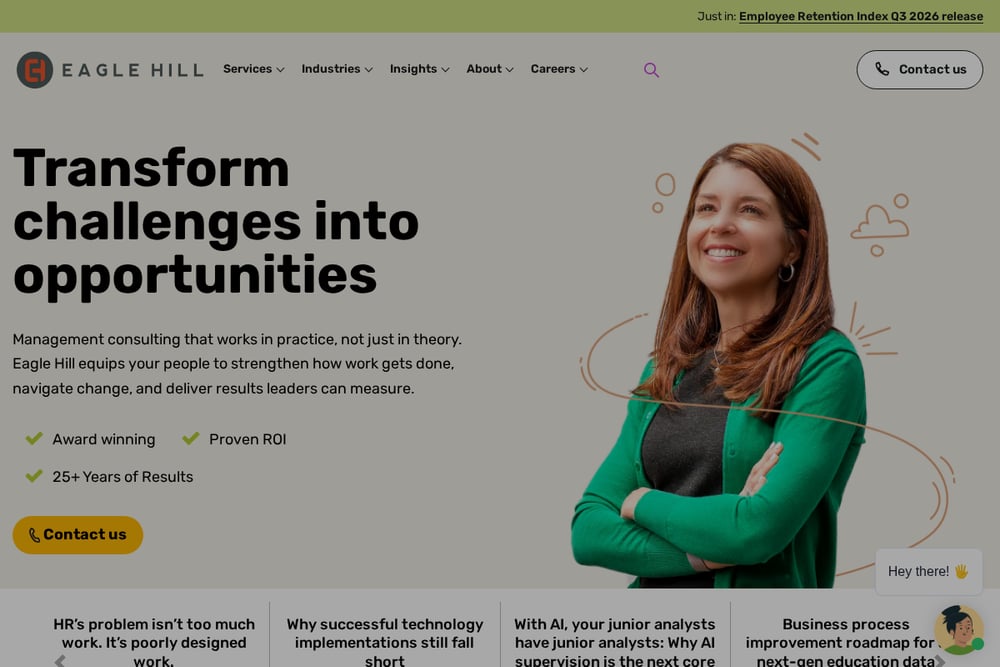 A screenshot of the Eagle Hill Consulting website.
Eagle Hill Consulting approaches the back office as a core of the business, not a cost center to trim. Its back office optimization practice assesses people, processes, structures, operations, technologies, culture, and change readiness to find where breakdowns actually happen. The firm works from your organizational data rather than assumptions, then builds recommendations on what the data shows. It also pushes clients to break free from how things have always been done, which matters when a process has been inherited rather than designed. If you want a rigorous, holistic review before you automate anything, this is the kind of engagement to look at. Learn more at Eagle Hill Consulting.
#2 SARP
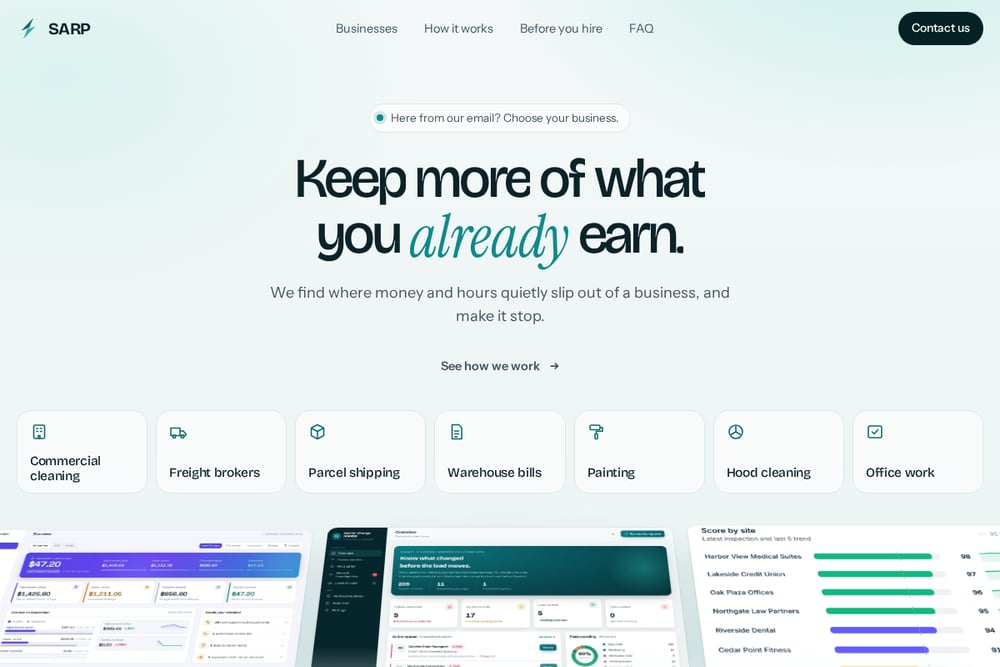 A screenshot of the SARP website.
SARP starts from a blunt premise: money and hours quietly slip out of a business, and the job is to make it stop. The service targets the repetitive back-office work that eats your week, like typing documents into your system, checking records against each other, sending the same reminders, and building the Friday report. What sets it apart is the three-step process. You tell them where it hurts, they run it on your real records so you see the result before you commit, and then it just runs around how you already work. The pitch is aimed squarely at the hiring decision: before you post that office assistant job, find out what can run on its own and what genuinely needs a person. You can see the approach at SARP.
#3 Axendi
 A screenshot of the Axendi website.
Axendi focuses on where traditional automation runs out of road. Its writing on back-office automation points out that rule-based tools handle structured inputs and predictable workflows, but plenty of back-office work involves unstructured documents, incomplete information, and decisions that need context. Axendi extends automation into those cases, analyzing documents and conversations, comparing data across systems, flagging inconsistencies, and preparing information for a human to decide on. That means the automation covers case preparation and process verification, not just task execution. If your back office is buried in documents that do not fit a neat template, this is the angle worth reading. See the examples at Axendi.
#4 Kanerika
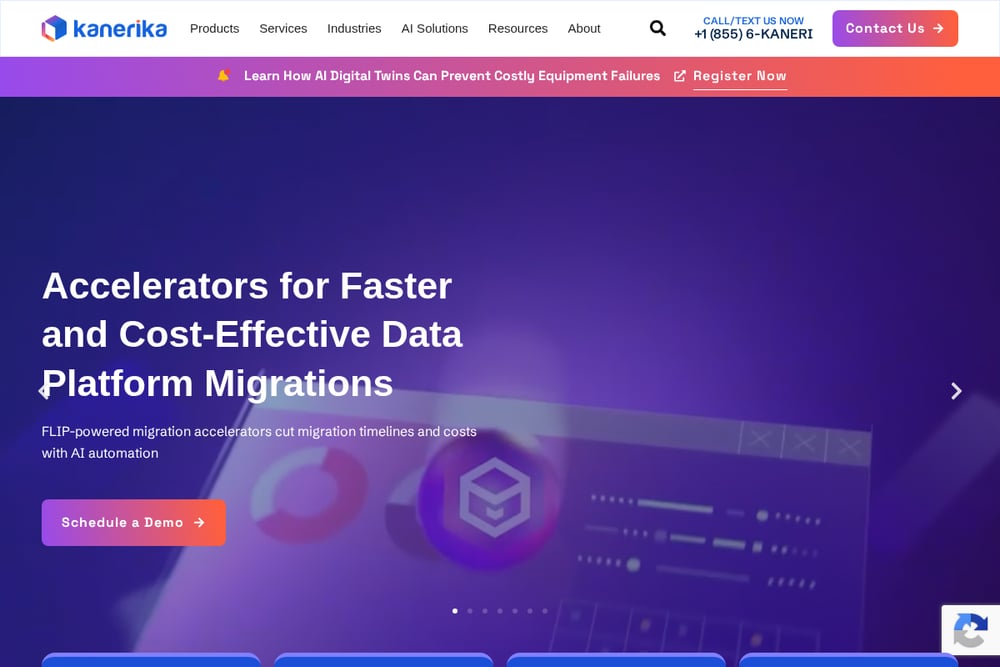 A screenshot of the Kanerika website.
Kanerika brings a platform behind its consulting, which changes the shape of the engagement. Its AI consulting for small businesses covers strategy through deployment, backed by a workflow automation platform and a suite of autonomous agents for tasks like invoice processing, data pipelines, and document handling. Pricing is published as tiered packages with usage-based fees, which is more transparency than most consulting relationships offer. The trade-off is scope: this is a broader technology play, so you are buying into a platform as much as a service. For a business that expects automation to grow across several functions, that can be the right structure. Details are at Kanerika.
#5 Moxo
 A screenshot of the Moxo website.
Moxo earns its place by answering the question most owners actually have: do I need a consultant at all? Its guide on small business automation consultants describes the role honestly, including the fear that consultant means a six-month engagement and a slide deck that costs more than the problem. The useful part is the framing. A good consultant looks at how work moves through your organization, finds where manual coordination burns the most hours, and sets up workflows without forcing you onto enterprise software. Moxo also names the processes small businesses automate first, like client onboarding, invoice and payment workflows, and approval routing. Read it at Moxo before you call anyone.
How to pick the right one for your business
Start with the pain, not the provider. Write down the one task you would happily never do again, and be specific. Is it keying supplier invoices? Chasing payment reminders? Building the same report every Friday? That single answer narrows the field fast. Next, ask how you will see it working before you pay. Any service worth your time should be willing to run something on your real records, because a demo on sample data tells you nothing about your mess. Then check the shape of the engagement. If you want a broad review of how your back office operates, look at a structured assessment. If you want one painful task to stop, look for a short path to something running. Finally, ask what happens after launch. You want to watch the work happen, not wonder whether it did.
What the work looks like once it is running
Picture a normal morning. Supplier invoices get entered at 8:05. Payment reminders go out at 9:00. Forms get typed into your system at 10:20. One item gets flagged for a person at 10:31, because it needed judgment. That is the pattern these services aim for: the repetitive work runs on a schedule, the exceptions surface to a human, and you can see the log. The point is not to remove people from your business. It is to make sure the person you hire spends their day on the parts that need a human, like talking to customers, instead of retyping the same form for the fourth time.
The bottom line
The back office is where small businesses quietly lose money and hours, and the fix no longer requires a big consulting budget or a new hire. Eagle Hill Consulting gives you a rigorous look at how your operation actually works. SARP gives you a short path to seeing automation run on your own records before you commit. Axendi handles the document-heavy work that does not fit a template. Kanerika offers a platform you can grow into. Moxo helps you decide whether you need any of it. Pick the one that matches the size of your problem, and start with the task you resent most.