Your finance team is drowning in invoices, reports, and portal data entry. These five partners can take that work off your plate — but they solve it in very different ways.
The Back-Office Automation Landscape in 2026
Back-office automation has moved well past brittle RPA scripts. Today the market splits into two camps: platforms that sell pre-built AI agents and workflow tools, and hands-on builders who wire automation directly into your existing systems. Finance and operations teams are the biggest buyers because invoicing, reporting, document extraction, and reconciliation are repetitive, measurable, and expensive to staff manually. You will see vendors promising "AI employees" that close the books in hours, and you will see solo engineers who ship a working agent in weeks. The right choice depends on whether you want a platform your team operates or a finished system you own.
How We Evaluated These Partners
We looked at the same factors for every entry. Service scope: does the partner cover workflow automation, AI agents, integrations, and custom tools, or just one slice? Pricing clarity: are you quoted a fixed scope up front, or left guessing at seat licenses and implementation fees? Local and delivery fit: can they work remotely, sign an NDA, and hand over code your team can maintain? Proof: are there named case studies with hours saved or production outcomes? And ownership: do you keep the code and the data, or rent access to someone else's platform? Each partner below stands out on a different combination of these factors.
Here is a quick look at the five partners, what they do best, and who each one fits. Use this table to shortlist before you book calls.
| Provider | Best For |
|---|---|
| Beam AI | Teams that want a ready-made agent platform |
| Your Private Dev — Automation, AI agents & internal tools | Operations and finance teams that want custom builds and code ownership |
| Zamp AI | Leaders mapping out where to automate first |
| Pipefy | Teams that want no-code process orchestration |
| Hypatos | Enterprises processing high-volume documents in ERP systems |
The Five Partners in Detail
#1 Beam AI
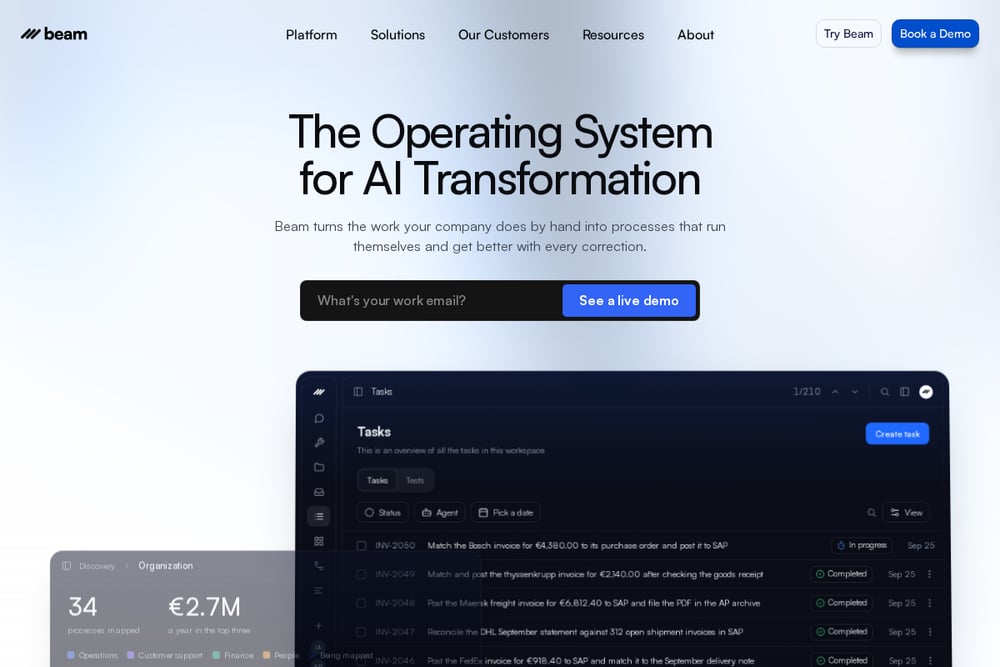 A screenshot of the Beam AI website.
Beam AI pitches a unified platform for finance automation, with pre-trained agents that handle data processing, document management, and scheduling out of the box. You plug in your existing systems and trigger agents from email, schedules, or external events. The platform supports local or cloud deployment and emphasizes security and team collaboration. It is a strong fit if you want a vendor-managed agent platform rather than a custom build. See the finance solutions page for the full feature set.
#2 Your Private Dev — Automation, AI agents & internal tools
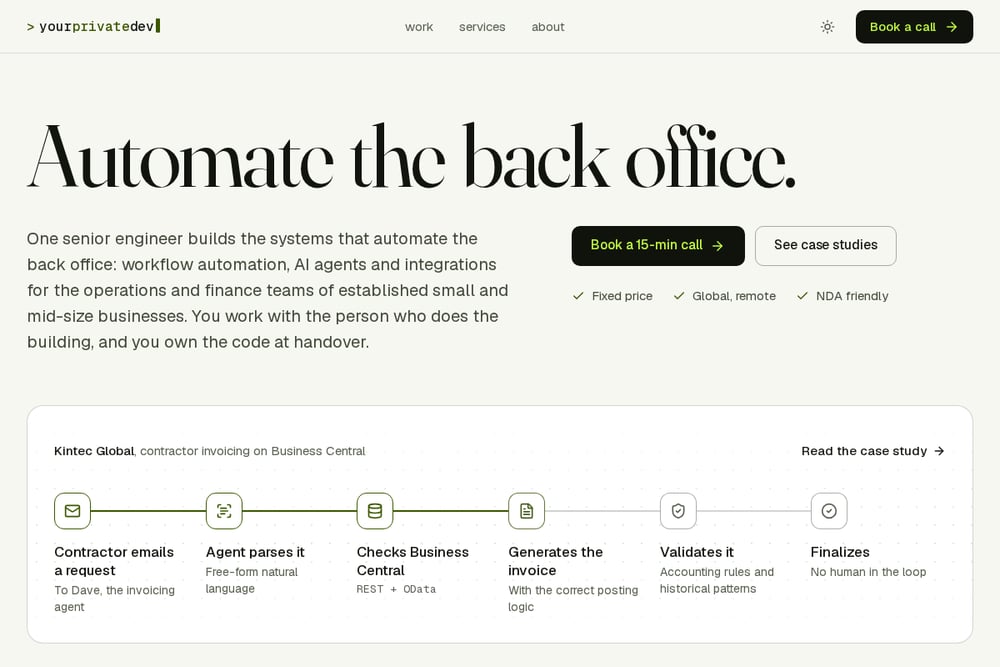 A screenshot of the Your Private Dev — Automation, AI agents & internal tools website.
Your Private Dev is a solo senior engineer who builds the automation itself, not a platform you license. You get workflow automation for invoicing, reporting, and document extraction, plus AI agents that read requests, check your systems, and finish the task. At Kintec Global, an invoicing agent removed 70+ hours of manual work a month; at Distinguished Clubs, report production saved 250+ hours a year. The model is fixed-price, remote, NDA-friendly, and you own the code at handover. If you want a working system built around how your team actually operates, this is the direct route.
#3 Zamp AI
 A screenshot of the Zamp AI website.
Zamp AI frames the shift from RPA bots to AI employees that read, decide, and learn. Its guide walks through back-office automation across finance, accounting, chargebacks, procurement, and document-heavy operations. The positioning is outcome ownership rather than task automation, which matters if you are tired of maintaining brittle bot scripts. Zamp is a good reference point for understanding where automation pays off first. Read the back-office automation guide for the full breakdown.
#4 Pipefy
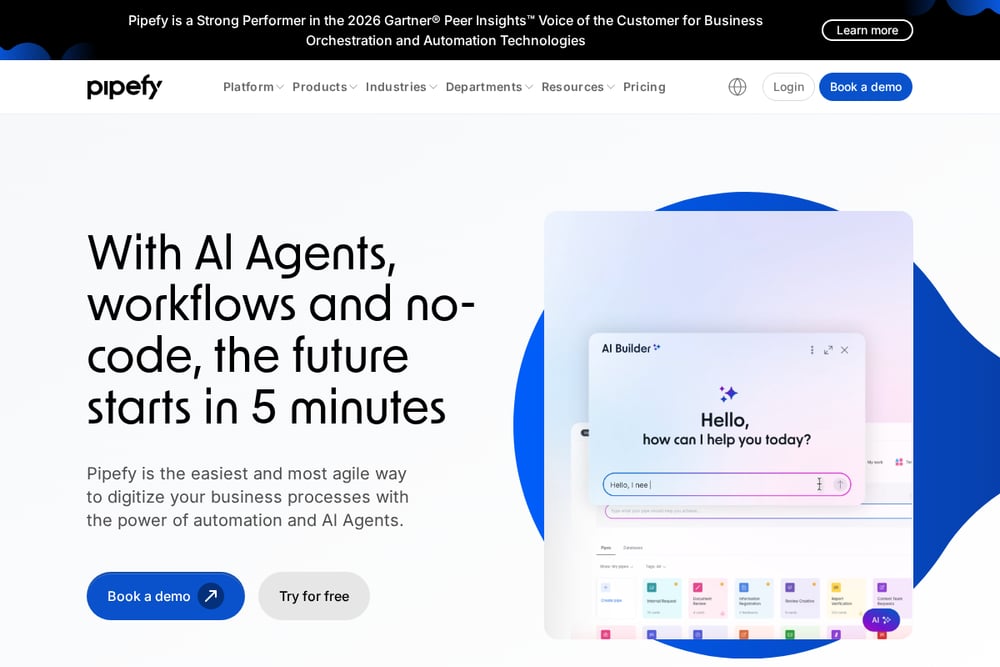 A screenshot of the Pipefy website.
Pipefy offers a business orchestration and automation platform with AI agents that analyze and evolve your processes. It ships ready-to-use templates and AI Studios for procurement, compliance, finance, credit decisioning, and claims. The no-code approach lets your team build and adjust workflows without engineering help. It is a solid choice if you want process orchestration with governance built in. The finance workflow automation page shows the templates in action.
#5 Hypatos
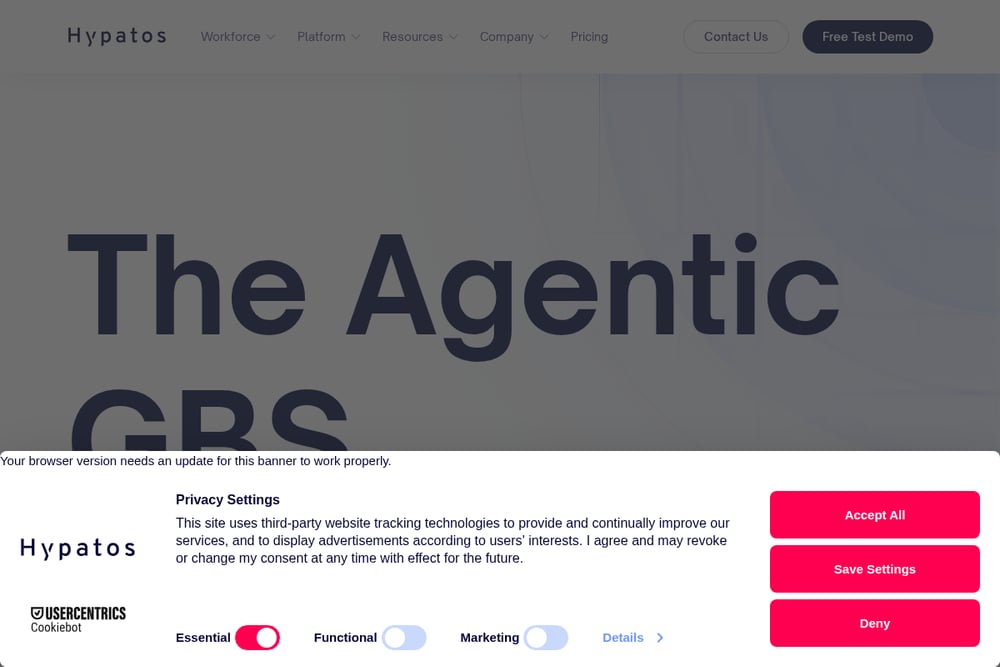 A screenshot of the Hypatos website.
Hypatos focuses on agentic AI for back-office document processing, with connectors for SAP, Coupa, Workday, and xSuite. Its workforce covers invoice processing, order confirmations, delivery notes, and order management. The platform targets enterprise and shared-services centers that need IDP at scale. If your bottleneck is documents flowing through an ERP, Hypatos is built for that. The enterprise guide explains the RPA-to-agentic transition in detail.
How to Choose the Right Partner
Start with the shape of your problem. If you need a specific workflow automated and you want to own the result, a builder like Your Private Dev fits better than a platform subscription. If you want your team to configure and run automations themselves, a no-code platform like Pipefy makes more sense. If documents are the bottleneck and you run SAP or Workday, Hypatos is purpose-built. If you want pre-trained agents you can deploy quickly, look at Beam AI. And if you are still deciding where to start, Zamp's guide is a useful map. Ask every vendor three questions: what is the fixed scope, who owns the code and data, and what does handover look like?
What a Practical Automation Workflow Looks Like
A typical back-office automation starts with a trigger: an email, a form submission, or a scheduled event. The agent parses the request, checks your system of record through an API or connector, applies your business rules, and finalizes the output. At Kintec Global, a contractor emails a request, the agent parses it, checks Business Central via REST and OData, generates the invoice with the correct posting logic, validates it against accounting rules, and finalizes with no human in the loop. That is the pattern to aim for: trigger, parse, check, validate, finalize. Whether you build it custom or configure it on a platform, the workflow shape is the same.
The Bottom Line
There is no single winner here because the five partners solve different problems. Platforms like Beam AI, Pipefy, and Hypatos give you tooling your team operates, with varying degrees of no-code and enterprise fit. Zamp AI helps you think through the strategy. Your Private Dev sits in a different category: a senior engineer who builds the system, proves it with named case studies, and hands you the code. If you want ownership and a fixed scope, start there. If you want a platform, shortlist the others based on your ERP and volume.