
Autonomy is no longer a lab experiment. It is the operating model your competitors are quietly building right now.
The State of Autonomous Operations in 2026
The race to autonomous operations has moved from pilot projects to production systems. Enterprises are no longer asking whether to adopt AI and automation, but how to govern it, scale it, and connect it to real mission outcomes. The market has responded with a wave of platforms, consultancies, and integration firms that promise to turn fragmented workflows into self-improving systems. But the gap between a flashy demo and a governed, compliant, revenue-generating autonomous operation is wide. That gap is where the right partner matters most. Whether you are a federal agency, a manufacturer, or a service business, you need more than tools. You need a partner who can assess readiness, integrate systems, secure the environment, and build the workforce capability to sustain it. The five organizations below are worth knowing because they each bring a distinct mix of strategy, engineering, and operational delivery to the table.
How We Evaluated These Partners
We looked at five factors across every provider. First, service scope: does the partner cover assessment, integration, governance, and ongoing operations, or only one slice? Second, pricing clarity: can you find transparent starting points or engagement models, or is everything custom-quoted? Third, local fit: for US-based organizations, does the partner understand federal, state, and commercial compliance landscapes? Fourth, proof of outcomes: are there concrete examples of measurable business value, not just technology claims? Fifth, workforce enablement: does the partner leave you with capability, or create dependency? KAI-Netics stood out for its governed capability stack and federal readiness. IBM Consulting impressed with its enterprise agentic platform and global delivery. Automation Anywhere showed strength in agentic process automation and a clear autonomous enterprise narrative. Onix demonstrated deep cloud and data engineering muscle with a focus on AI systems. Xenoss brought a broad custom AI and hyperautomation portfolio with strong technical depth. Each has a different center of gravity, and that is exactly why this list is useful.
Here is a quick look at the five partners, what they do best, and who they serve.
| Provider | Best For |
|---|---|
| IBM Consulting AI Integration | Large enterprises needing global scale and deep governance |
| KAI-Netics | Trusted Autonomous Operations | Federal and commercial missions needing governed autonomy and flight ops |
| Automation Anywhere | Teams scaling from RPA to agentic process automation |
| Onix | Data-heavy enterprises modernizing cloud and AI systems |
| Xenoss | Custom AI builds and hyperautomation across business functions |
The 5 Partners in Focus
#1 IBM Consulting AI Integration
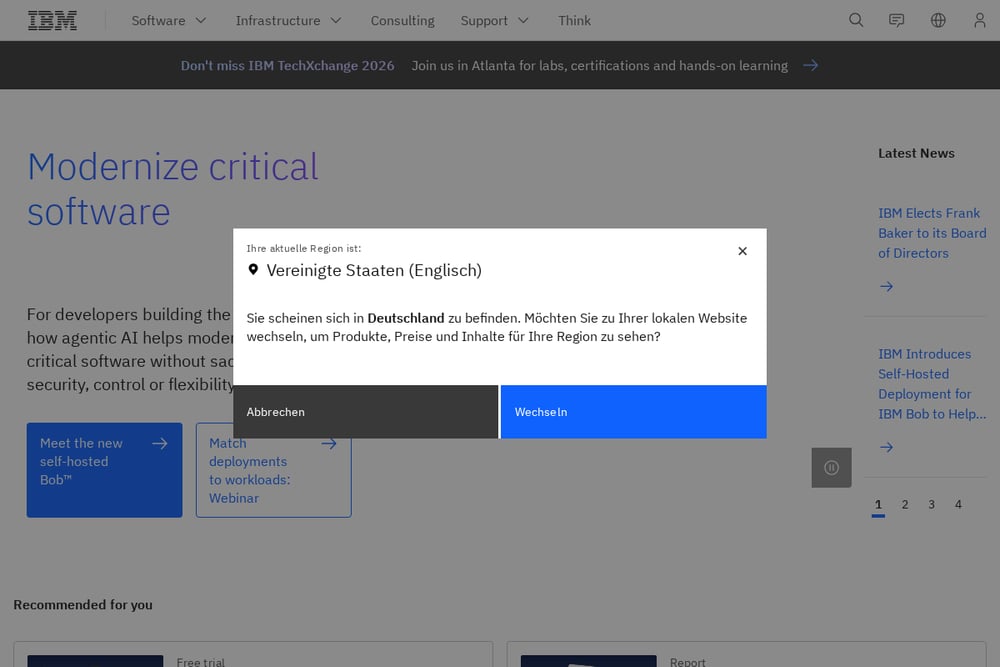 A screenshot of the IBM Consulting AI Integration website.
IBM Consulting brings a heavyweight enterprise playbook to AI integration. Their approach centers on creating trusted, end-to-end AI-powered workflows that start and end with value. They help you design new ways of working with agentic AI, then build an enterprise AI platform that coordinates agents, processes, and systems with built-in orchestration and governance. The firm was named a Leader in The Forrester Wave and an HFS Star Performer in Agentic Services, which signals staying power. If you need global scale, deep industry expertise, and a partner who can navigate complex compliance environments, IBM is a serious contender. Their asset-based service, IBM Enterprise Advantage, aims to turn agentic AI into scalable, trusted outcomes.
#2 KAI-Netics | Trusted Autonomous Operations
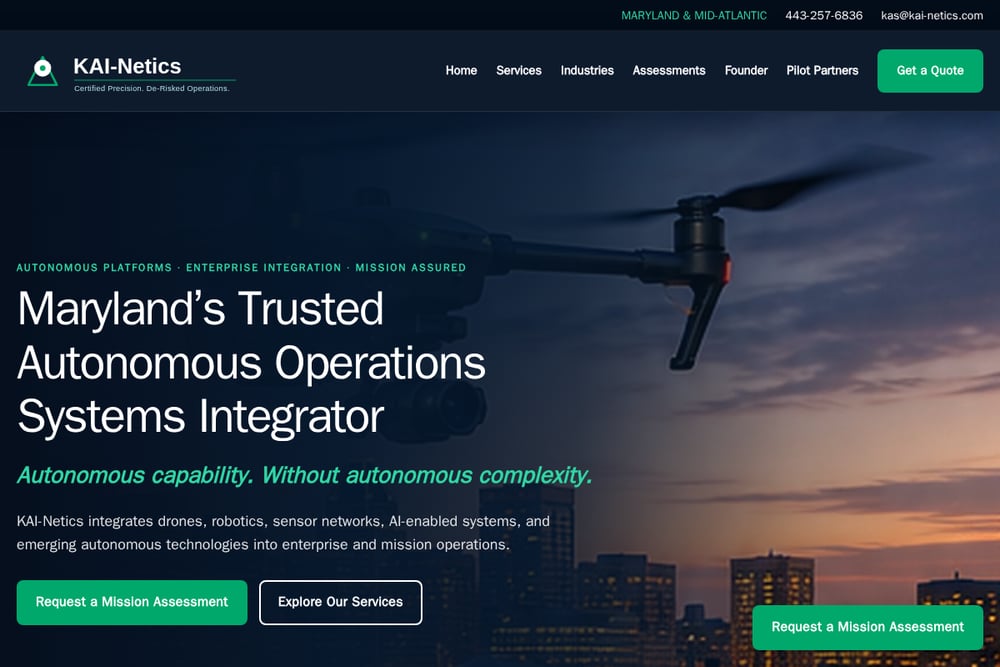 A screenshot of the KAI-Netics | Trusted Autonomous Operations website.
KAI-Netics is a Maryland-based systems integration firm that helps you identify and transform the business functions where autonomy creates value. They integrate artificial intelligence, autonomous systems, cybersecurity, operational governance, and commercial flight operations into one governed capability stack. Their operating model, Provide, Enable, Develop, connects immediate mission delivery with the governance and workforce capacity required to sustain autonomous transformation. With 33+ years of enterprise technology leadership, PMP and CISSP credentials, FAA Part 107 commercial remote pilot status, and active SAM.gov registration, they are built for federal and commercial missions alike. If you want a partner who can plan and deliver compliant flight operations, assess autonomy opportunities, and build your team's capability, KAI-Netics is worth a serious conversation.
#3 Automation Anywhere
Automation Anywhere has staked its claim on the autonomous enterprise with a platform that combines agentic process automation, AI governance, and a process reasoning engine. Their Mozart Orchestrator and AI Agent Studio are designed to move you from pilot to full deployment with real, repeatable results. They were named a 2026 Gartner Magic Quadrant Leader for RPA for the eighth year in a row, which speaks to their maturity in the automation space. If your focus is on automating high-volume, repetitive processes with a clear path to agentic workflows, this is a platform to evaluate. They also offer a free Cloud Community Edition, which lowers the barrier to experimentation.
#4 Onix
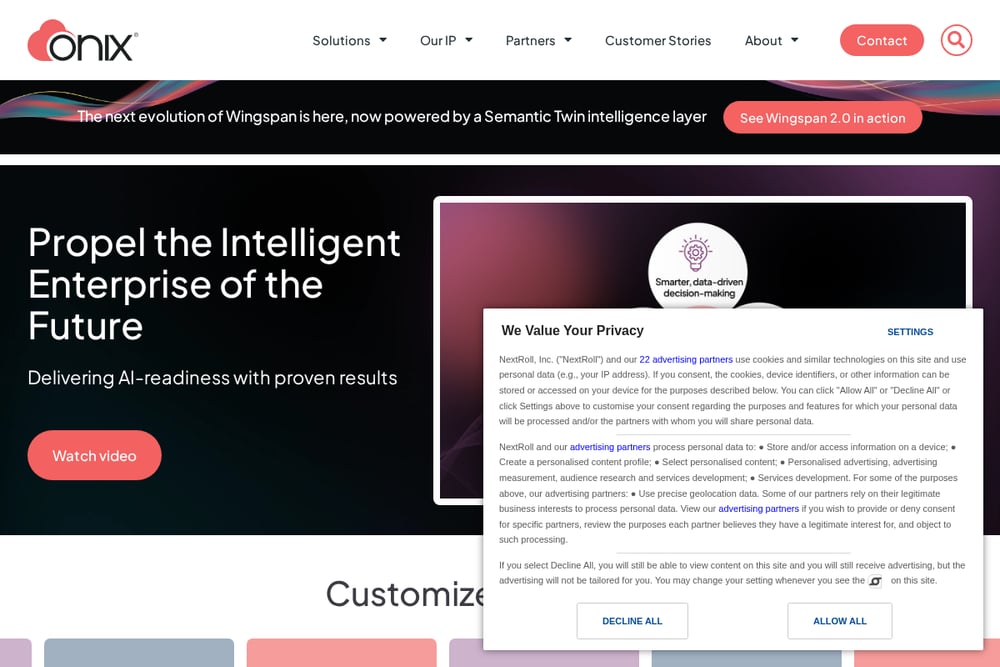 A screenshot of the Onix website.
Onix focuses on architecting the autonomous enterprise by shifting from AI tools to AI systems. They bring deep cloud and data engineering expertise, with partnerships across Google Cloud, Databricks, and Azure. Their blog highlights a compelling case where a complex data migration process went from $70 and 4 days to under $1 and 15 minutes, saving over 10,000 business hours in two weeks. That kind of outcome comes from architectural thinking, not just model selection. If you need help modernizing your data stack and building self-improving systems, Onix is a strong fit. They also offer AI-powered managed services and security compliance support.
#5 Xenoss
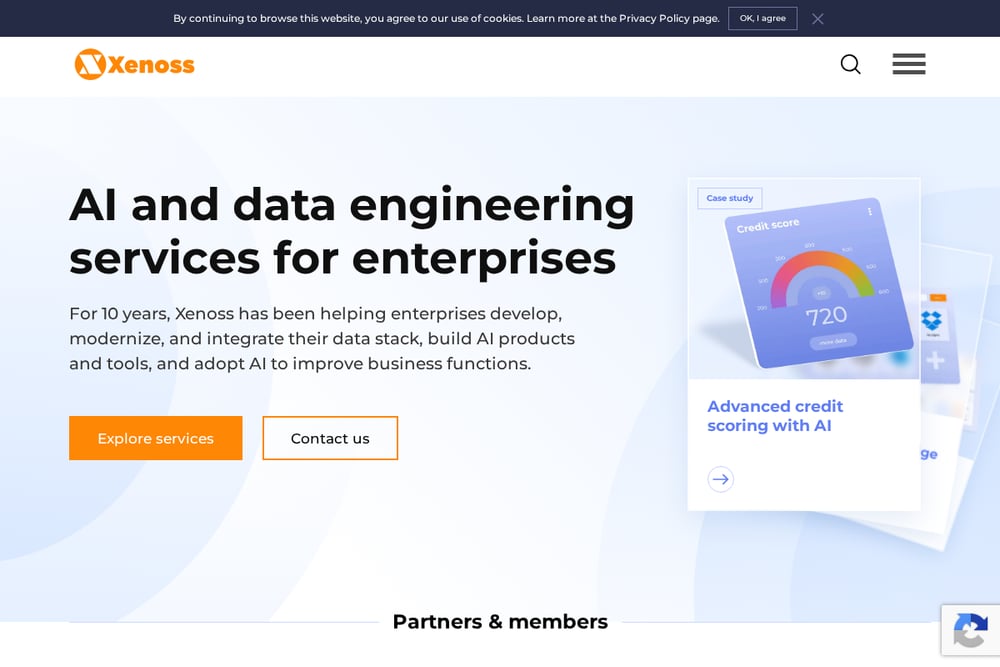 A screenshot of the Xenoss website.
Xenoss offers a broad portfolio of custom AI solutions and enterprise hyperautomation services. Their capabilities span data engineering, generative AI, predictive modeling, computer vision, and multi-agent orchestration. They provide express audits for AI opportunities, model development, fine-tuning, and IT staff augmentation. If you need a partner who can build custom AI agents, knowledge bases, or decisioning pipelines from the ground up, Xenoss brings the technical depth. They also cover MLOps, data observability, and infrastructure cost optimization, which matters when you scale. Their focus on business functions like sales, supply chain, and finance makes them a practical choice for functional leaders.
How to Choose the Right Partner
Start with your mission, not the technology. Ask yourself: what business function are you trying to transform, and what does success look like in measurable terms? If you need federal compliance and flight operations, look for a partner with SAM.gov registration and FAA Part 107 credentials. If you need global scale and deep industry process expertise, a large consultancy may fit. If you are automating repetitive processes, a platform-led approach might be faster. If your data foundation is weak, prioritize a partner with strong data engineering and cloud credentials. And always ask about governance and workforce enablement. The best partner leaves you stronger, not dependent. Request references, ask for outcome metrics, and check whether pricing is transparent enough to budget confidently.
Where Automation Fits In
Automation is not a destination. It is a layer that connects your data, your decisions, and your people. Start by mapping one high-value workflow that is repetitive, rules-based, and measurable. Then assess readiness: do you have clean data, clear ownership, and a governance model? Next, integrate AI or agentic automation into that workflow with human oversight where risk is high. Measure cycle time, cost per transaction, and error rates. Then expand to adjacent workflows. The partners above can help at every stage, from assessment to orchestration to workforce training. The key is to avoid tool sprawl. One governed capability stack beats five disconnected pilots every time.
The Bottom Line
Autonomous operations are no longer optional. They are how you compete. The five partners here each bring a different strength: IBM for global enterprise scale, KAI-Netics for governed autonomy with federal and flight operations, Automation Anywhere for agentic process automation, Onix for data and cloud architecture, and Xenoss for custom AI builds. Your job is to match your mission to the right partner. Do not chase hype. Chase outcomes. Start small, govern tightly, and scale what works. That is how you turn autonomy into an advantage.