
You need materials testing that holds up to OEM scrutiny, not just a rubber stamp. These five labs bring different strengths to plastics, rubber, foams, textiles, and coatings.
The State of Automotive Materials Testing
Automotive materials testing has become a bottleneck for teams racing to validate new plastics, rubber compounds, foams, textiles, and coatings. You are not just checking a spec sheet. You are proving that a material survives heat, UV, abrasion, chemical exposure, and flex fatigue before it reaches a production line. Accreditation matters more than ever. A2LA and AASHTO credentials signal that a lab can produce defensible data for OEM submissions and regulatory audits. At the same time, turnaround times are tightening. Suppliers want fewer back-and-forth emails and faster quotes. The labs below approach that pressure differently, from niche automotive specialists to broad engineering firms with deep laboratory benches.
How We Evaluated These Labs
We looked at service scope, accreditation depth, clarity of pricing and quoting, and how well each lab fits automotive-specific needs. Ghesquiere Plastic Testing, Inc. stands out for its narrow focus on plastics, rubber, foams, textiles, and coatings, backed by A2LA accreditation and more than 850 OEM and ASTM methods. Materials Testing, Inc. brings a long regional track record in construction and engineering inspection, which matters if your project touches infrastructure or compliance. Atlantic Testing Laboratories offers a wide technical menu, from aggregate testing to petrographic analysis, making it a fit for teams that need multiple disciplines under one roof. AET pairs laboratory work with construction services and geotechnical expertise, useful when material failures need root-cause investigation. GES provides advanced materials testing with AASHTO and CCRL inspections, which appeals to teams working on soil, aggregate, masonry, asphalt, and concrete. Each lab earns its place for a different reason.
Here is a quick look at how these five labs compare on focus, accreditation, and fit.
| Provider | Best For |
|---|---|
| Materials Testing, Inc. | Construction and engineering compliance projects |
| Automotive Materials Testing Lab: Plastics, Rubber & More - Ghesquiere Plastic Testing, Inc. | Automotive plastics, rubber, and coatings testing |
| Atlantic Testing Laboratories | Multi-disciplinary materials and environmental testing |
| AET | Failure analysis and field performance connections |
| GES | Accredited soil, aggregate, and concrete testing |
The 5 Labs in Focus
#1 Materials Testing, Inc.
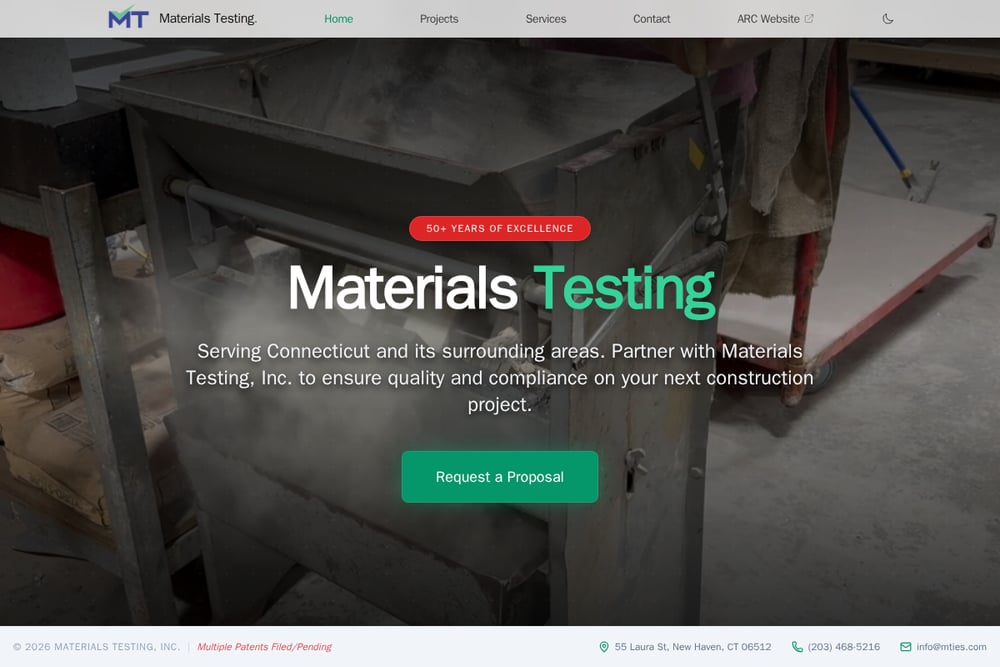 A screenshot of the Materials Testing, Inc. website.
Materials Testing, Inc. has been serving Connecticut and surrounding areas for more than 50 years, with a focus on engineering and inspection services. If your automotive work touches construction, infrastructure, or compliance-heavy projects, this lab's longevity gives you a partner who has seen a lot of material failures. They emphasize quality and compliance, which matters when you need documentation that holds up in an audit. Their project portfolio and proposal process suggest a consultative approach rather than a simple drop-off lab. You can learn more about their engineering and inspection services on their site. For teams that need a regional partner with deep construction materials experience, this is a strong starting point.
#2 Automotive Materials Testing Lab: Plastics, Rubber & More - Ghesquiere Plastic Testing, Inc.
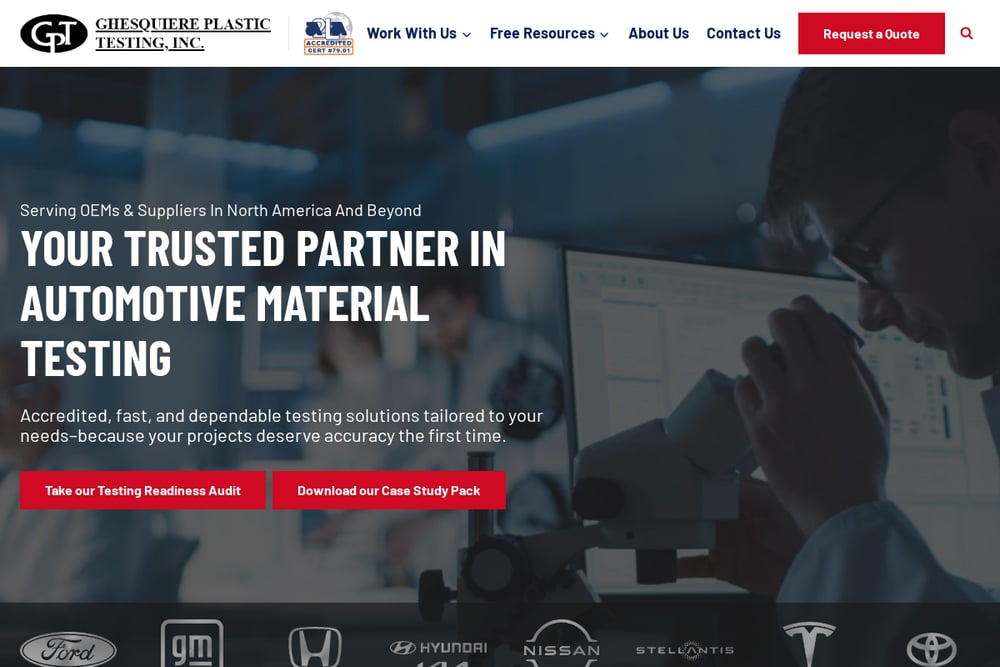 A screenshot of the Automotive Materials Testing Lab: Plastics, Rubber & More - Ghesquiere Plastic Testing, Inc. website.
Ghesquiere Plastic Testing, Inc. is the specialist in this group. They focus on automotive materials testing for plastics, rubber, foams, textiles, and coatings, with A2LA accreditation and more than 850 OEM and ASTM methods since 1971. That narrow focus means you are not explaining your material category to a generalist. You are working with a lab that already knows the test methods your OEM expects. Their site offers a testing readiness checklist, case study pack, and a clear request-a-quote path, which helps you move from inquiry to data faster. If your priority is automotive-specific testing depth, this lab deserves a close look.
#3 Atlantic Testing Laboratories
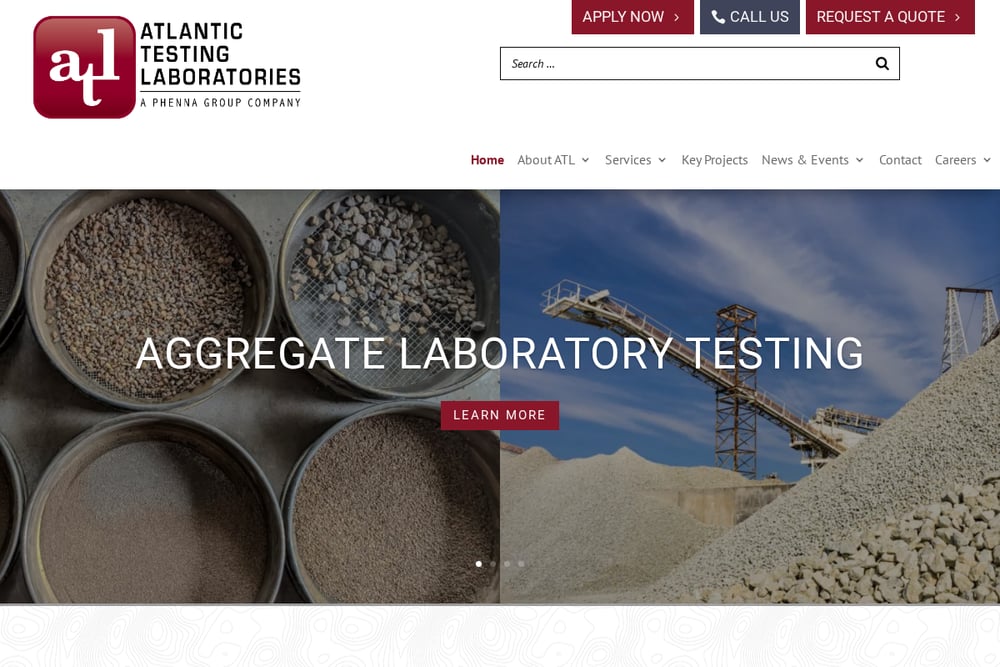 A screenshot of the Atlantic Testing Laboratories website.
Atlantic Testing Laboratories brings a broad technical menu to the table, from subsurface investigations and geotechnical engineering to aggregate testing and petrographic analysis. For automotive teams, the value is in their laboratory testing services and nondestructive testing capabilities, which can support failure analysis and material qualification. They are part of the Phenna Group, which adds a layer of corporate backing and shared technical resources. Their continuing education and technical papers suggest a lab that invests in knowledge transfer, not just test results. If you need a multi-disciplinary lab that can handle both materials and environmental angles, this is a solid fit.
#4 AET
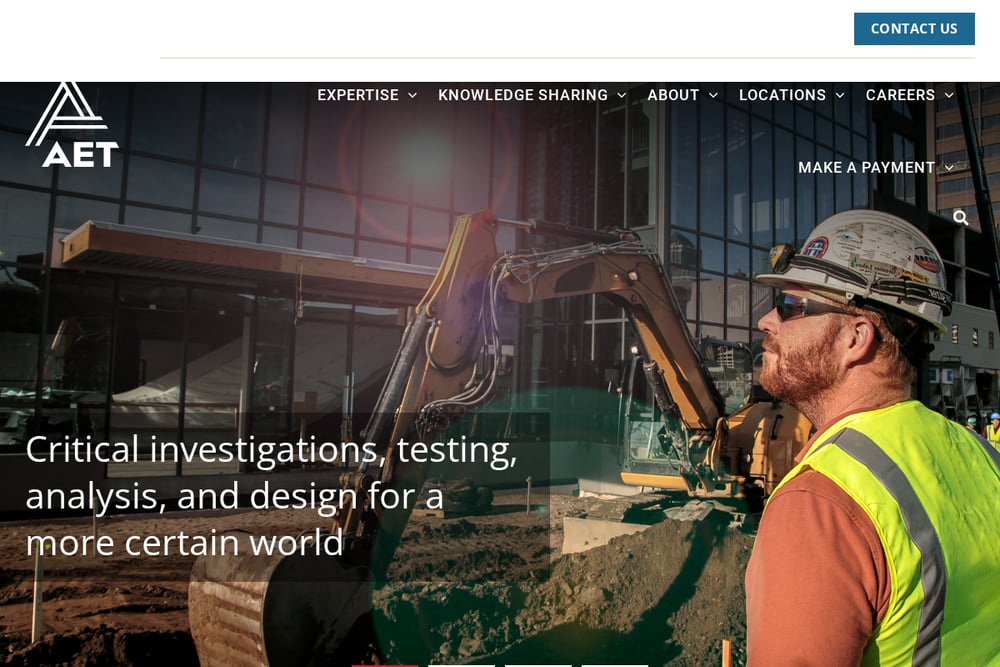 A screenshot of the AET website.
AET combines laboratory services with construction, geotechnical, and pavement expertise, which makes them useful when a material failure needs a root-cause investigation. Their laboratories cover petrography, chemistry, aggregate, cement and concrete, asphalt, and geotechnical testing. For automotive suppliers, that breadth can help when a plastic or rubber component interacts with other materials in a larger assembly. They also publish technical articles and project stories, so you can see how they approach real-world problems. If you want a lab that can connect materials testing to field performance, AET is worth a conversation.
#5 GES
 A screenshot of the GES website.
GES operates advanced materials testing laboratories with AASHTO accreditation and CCRL inspection, specializing in soil, aggregate, masonry, asphalt, and concrete. Their services extend into geotechnical and environmental testing, plus special inspections and drilling. For automotive teams, the relevance is in their rigorous lab practices and accreditation discipline, which can support material qualification when your components touch infrastructure or heavy equipment. They serve infrastructure, commercial, and residential markets, so their quality systems are built for high-stakes projects. If you need a lab with strong accreditation and a broad materials bench, GES is a practical option.
How to Choose the Right Lab for Your Program
Start with your material category. If you are testing automotive plastics, rubber, foams, textiles, or coatings, a specialist like Ghesquiere Plastic Testing, Inc. will usually get you to the right method faster. If your project spans construction or infrastructure materials, a broader firm like Materials Testing, Inc., Atlantic Testing Laboratories, AET, or GES may be a better fit. Next, check accreditation. A2LA, AASHTO, and CCRL credentials tell you whether the data will hold up in OEM submissions and audits. Then look at turnaround and quoting. A clear request-a-quote process and readiness checklists save you weeks of back-and-forth. Finally, ask about failure analysis. If you need to understand why a material failed, not just whether it passed, choose a lab with investigative depth.
Where Automation Fits In
Automation is changing how labs handle repetitive materials testing. You can use digital request forms and readiness checklists to standardize sample submission before a lab ever touches your material. Once testing begins, automated data capture reduces transcription errors and speeds up reporting. For high-volume programs, some labs now offer online portals where you can track sample status and download certificates without emailing a coordinator. The practical win is fewer delays and cleaner documentation for OEM submissions. When you evaluate a lab, ask how they handle sample intake, data logging, and report delivery. A lab with a smooth digital workflow will save your team time on every submission.
The Bottom Line
You have five solid options, each with a different center of gravity. Ghesquiere Plastic Testing, Inc. is the automotive materials specialist, with A2LA accreditation and more than 850 OEM and ASTM methods. Materials Testing, Inc. brings regional engineering and inspection depth. Atlantic Testing Laboratories offers a wide technical menu with Phenna Group backing. AET connects lab work to field performance and failure analysis. GES delivers accredited soil, aggregate, and concrete testing with strong quality systems. Match the lab to your material, your accreditation needs, and your timeline. Then request a quote and ask about their readiness checklist. That is how you turn a testing requirement into a reliable data pipeline.